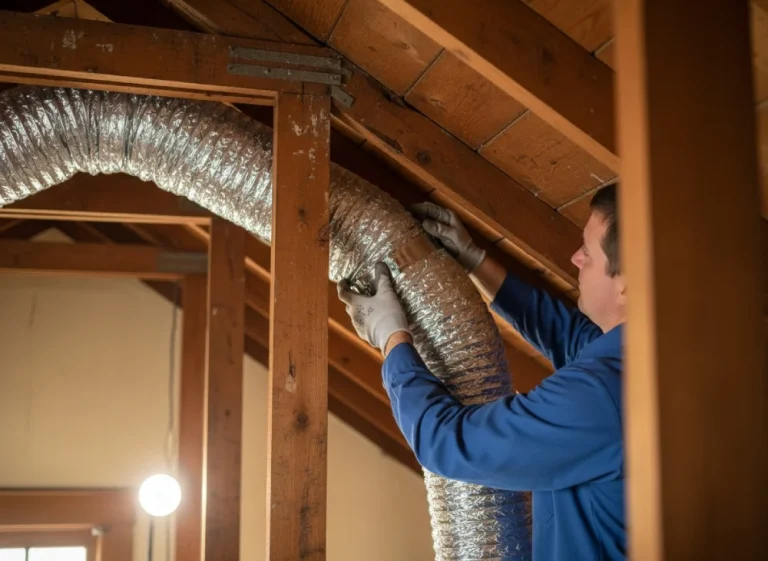
Installing HVAC in historic Houston homes requires specialized approaches including ductless mini-split systems that need only 3-inch wall penetrations, high-velocity small-duct systems using 2-inch flexible tubing through tight wall cavities, or premium VRF systems for maximum efficiency, with all solutions designed to preserve original plaster walls, woodwork, and architectural character while addressing challenges like pier-and-beam foundations, absent ductwork, and historic district preservation requirements.
Houston's historic housing stock in neighborhoods like Greater Heights, Montrose, River Oaks, and West University Place presents unique HVAC challenges. These homes—from turn-of-the-century bungalows to mid-century structures—were built before central air conditioning existed, lacking the wall cavities, ceiling plenums, or attic space designed for traditional ductwork.
Professional Houston HVAC installation for historic homes requires contractors experienced with ductless systems, preservation requirements, and the nuanced challenges of solid plaster walls and pier-and-beam construction.
Why Historic Houston Homes Present Unique HVAC Challenges
Houston's historic neighborhoods share characteristics that complicate standard HVAC installation, requiring specialized approaches that differ significantly from modern home installations.
No existing ductwork: Homes built in the early 1900s through the 1940s predate residential air conditioning and lack infrastructure for traditional ducted systems. Wall cavities, ceiling spaces, and attic configurations weren't designed to accommodate ductwork routing.
Solid construction materials: Many historic homes feature solid plaster walls (not drywall), heavy wire mesh lath, brick construction, and balloon framing that make cutting and routing ducts extremely labor-intensive. Standard installation methods can damage original finishes, trim, and architectural details.
Pier-and-beam foundations: Unlike modern slab construction, pier-and-beam homes offer crawl space access for creative routing solutions but also create air infiltration and insulation challenges affecting HVAC sizing and performance.
High cooling loads with poor envelopes: Original single-pane windows, minimal insulation, and significant air leakage create extreme cooling demands. Historic homes can experience up to 10 air changes per hour due to leaks, making accurate load calculations essential.
Historic preservation requirements: Properties in Houston's 22 designated historic districts may require Certificate of Appropriateness (COA) approval for exterior alterations visible from the street, though interior HVAC changes and properly placed equipment are typically exempt.
| Challenge | Impact on HVAC | Solution Approach |
| No existing ductwork | Can't install traditional central air easily | Ductless mini-splits or high-velocity systems |
| Solid plaster walls | Difficult to cut without damage | Minimal penetrations, creative routing |
| Pier-and-beam foundation | Air infiltration, insulation gaps | Seal envelope first, route lines under house |
| Single-pane windows | High cooling loads | Air seal, insulate, then right-size equipment |
| Historic district rules | Exterior visibility restrictions | Place equipment on secondary elevations |
Three Primary HVAC Solutions for Historic Homes
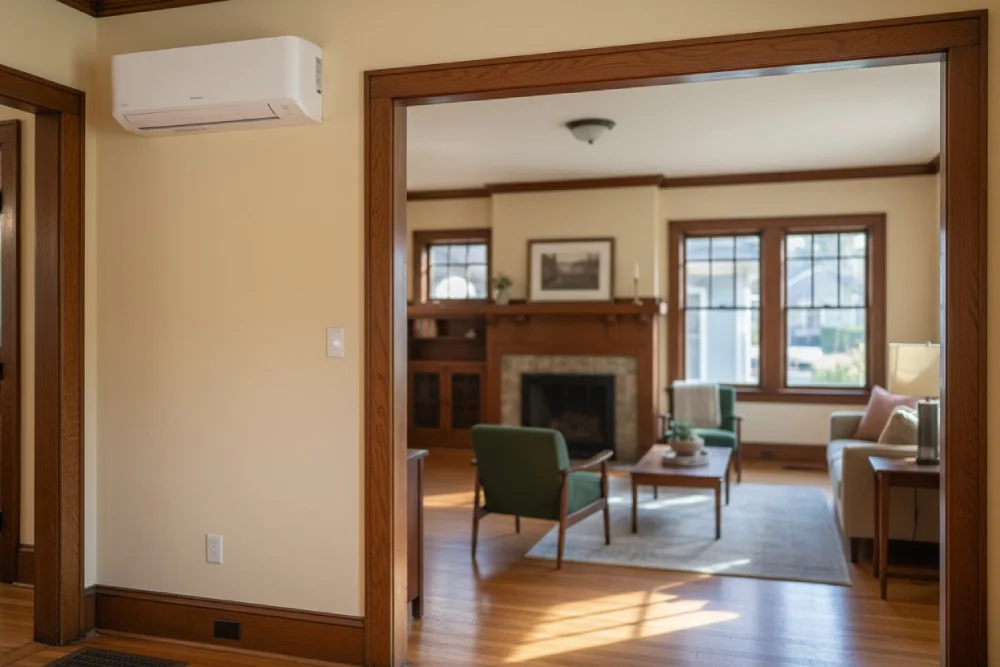
Ductless Mini-Split Systems (Most Popular)
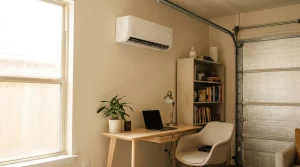
Ductless mini-split heat pumps have become the dominant solution for historic homes in Houston due to their minimal impact on original architecture while delivering excellent efficiency and comfort.
How they work: Each system pairs one or more indoor air handlers with an outdoor condenser unit, connected by refrigerant lines passing through small wall penetrations—typically just 3 inches in diameter. No ductwork is required.
Why mini-splits fit historic homes:
- Minimal disruption requiring only small holes per indoor unit
- Preserves plaster, woodwork, and original trim
- Flexible routing under pier-and-beam homes or through closets
- Refrigerant lines can follow discreet exterior pathways
- Room-by-room zone control ideal for compartmentalized floor plans
- Eliminates 20-30% energy loss typical of ducted systems
- SEER ratings from 16 to 25+ for maximum efficiency
Indoor unit options:
- Wall-mounted: Most common, sleek units mounted high on walls
- Ceiling cassettes: Recessed into ceiling for discreet appearance
- Floor consoles: Sit at floor level, work well under windows
- Concealed duct units: Hidden in attic or closet, serving multiple rooms via short flexible ducts
Best for: Homeowners wanting the most cost-effective, energy-efficient solution who don't mind visible wall-mounted units or can use concealed options. Particularly well-suited for pier-and-beam construction allowing easy line routing underneath.
High-Velocity (Small-Duct) Systems
High-velocity HVAC uses compact 2-inch flexible tubing instead of traditional 6-8 inch rigid ductwork, making it viable for homes where ductless wall units are undesirable but standard ducts would be too invasive.
How they work: These systems move less air at much higher velocity through small, flexible ducts that snake through tight wall cavities, between ceiling joists, and through confined spaces. High-speed airflow compensates for reduced volume, delivering effective conditioning.
Advantages for historic homes:
- 2-inch ducts fit inside standard wall cavities without major demolition
- Supply outlets roughly the size of a CD, far less obtrusive than traditional registers
- Provides whole-house central air without visible indoor units
- Maintains architectural integrity with minimal visual impact
Considerations:
- Higher installation cost than mini-splits due to specialized equipment and labor
- Generally lower SEER ratings than modern mini-splits
- Can be noisier without proper sound attenuators
- Requires experienced contractors familiar with proper routing and balancing
Best for: Homeowners who strongly prefer no visible indoor units, have sufficient wall and ceiling cavities, and are willing to pay premium prices for whole-house central air aesthetics.
Variable Refrigerant Flow (VRF) Systems
VRF technology represents the premium end of HVAC solutions, typically reserved for custom homes or high-end renovations in neighborhoods like River Oaks where maximum efficiency justifies higher costs.
How they work: A single outdoor heat pump connects via refrigerant piping to multiple indoor air handlers. VRF systems use inverter-driven compressors that modulate refrigerant flow precisely to match loads in each zone, and can simultaneously heat one area while cooling another.
Why consider VRF:
- Exceptional efficiency with SEER ratings from 18 to 29.3
- Superior humidity control from inverter compressors
- Indoor units available in ducted and ductless configurations
- Simultaneous heating and cooling capability
- Heat recovery redirects warmth from cooled areas to heated spaces
Best for: Major renovations with premium budgets, homeowners wanting highest efficiency and best humidity control, or those building custom homes requiring advanced zone control.
Professional AC installation in Houston includes system selection guidance based on your historic home's specific characteristics, budget, and aesthetic preferences.
| System Type | Installed Cost Range | Best For | Efficiency |
| Mini-split (single zone) | $3,500–$6,000 | Single room or addition | 16-25+ SEER |
| Mini-split (multi-zone, 3-4 heads) | $8,000–$15,000 | Whole-house, 1,500-2,000 sq ft | 16-22+ SEER |
| High-velocity system | $12,000–$20,000 | No visible units preferred | 14-18 SEER |
| VRF system | $15,000–$25,000+ | Premium efficiency, major renovation | 18-29+ SEER |
Pre-HVAC Priorities: Envelope Work First

HVAC contractors and building science experts consistently emphasize that air sealing and insulation must precede HVAC installation in older homes. Skipping this step leads to oversized equipment, poor humidity control, and wasted energy.
Air Sealing (Most Critical)
Old homes can experience dramatic air infiltration that undermines HVAC performance regardless of equipment quality. Seal these areas before installing new systems:
- Tops of interior walls where drywall or plaster meets attic framing
- Around plumbing and electrical penetrations through ceilings
- Attic access doors and hatches with weatherstripping
- Existing ductwork joints and seams
- Window and door frames with caulk and weatherstripping
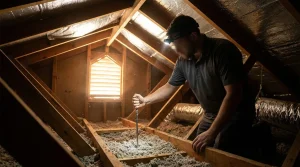
Critical sequence: Always air seal before adding attic insulation. Blowing insulation first makes accessing and sealing penetrations nearly impossible without removing insulation later.
Attic Insulation
Houston's extreme summer heat creates attic temperatures exceeding 130°F, placing enormous stress on HVAC systems—especially when equipment sits in unconditioned attic spaces.
Recommended approach:
- Insulate attic floor (not roof deck) unless fully conditioning attic as living space
- Use blown-in cellulose or fiberglass to R-49 for maximum performance
- Install radiant barrier on underside of roof rafters to reflect 97% of radiant heat
- Reduce attic temperatures by 20-30°F with proper radiant barrier
- Ensure proper soffit and ridge venting for airflow and moisture control
Why Envelope Work Matters for Sizing
Oversized HVAC systems short-cycle (turn on and off frequently), fail to dehumidify properly, and waste energy. Sealing and insulating first allows contractors to perform accurate Manual J load calculations and right-size equipment for actual conditions rather than worst-case scenarios.
A properly sealed historic home might need a 3-ton system where an unsealed home would require 5 tons—saving thousands in equipment costs while delivering better comfort and humidity control.
Historic Preservation and Permitting
Certificate of Appropriateness Requirements
Houston has 22 designated historic districts including Houston Heights East, West, and South, Old Sixth Ward, and portions of Montrose. Properties classified as "contributing structures" face stricter rules than non-contributing properties.
Requires COA approval:
- Exterior alterations visible from the street
- Facade changes, window replacement, siding modifications
- Relocation or demolition of contributing structures
- New construction in historic districts
Exempt from COA (good news for HVAC):
- Interior changes including HVAC installation
- Routine maintenance
- Air conditioning units placed on secondary elevations or screened appropriately
- Light fixtures, fans, and solar panels
Practical implication: Most HVAC work in historic homes doesn't require COA approval if you place outdoor units on secondary elevations (side or rear of house) away from primary street-facing facades and route refrigerant lines discreetly.
Standard Mechanical Permits
All HVAC replacements and new installations inside Houston city limits require mechanical permits pulled by licensed, city-registered contractors regardless of historic designation. The permitting process and inspection requirements are identical for historic and non-historic homes.
Comprehensive Houston HVAC services include permit handling for historic home installations with proper documentation and inspection coordination.
Selecting Contractors for Historic Home HVAC
Not all Houston HVAC contractors have experience with historic homes, ductless systems, or the nuanced challenges of solid plaster and pier-and-beam construction.
What to Look For
Choose contractors who:
- Specialize in ductless mini-splits with documented historic home installations
- Understand preservation requirements and discreet routing techniques
- Offer Manual J load calculations customized for older homes with high infiltration
- Can coordinate envelope improvements or refer qualified insulation contractors
- Have experience with Heights, Montrose, River Oaks, or West University properties
Questions to Ask
Experience: "How many ductless mini-split systems have you installed in historic or pier-and-beam homes?"
Load calculation: "Will you perform a room-by-room Manual J that accounts for high infiltration and original windows?"
Envelope coordination: "Do you recommend air sealing and insulation before HVAC installation, and can you coordinate that work?"
Aesthetics: "How will you route refrigerant lines and place the outdoor unit to minimize visibility?"
Indoor options: "Can you show me examples of wall-mount, ceiling cassette, and concealed-duct configurations?"
Humidity: "How does your recommended system handle Houston's humidity?"
Installation Timeline for Historic Homes
Expect a more involved timeline compared to standard HVAC replacement in modern homes.
Phase 1: Envelope Assessment and Air Sealing (1-2 weeks) Hire an insulation contractor to seal attic penetrations, tops of walls, and major air leaks throughout the home.
Phase 2: Attic Insulation and Radiant Barrier (1-2 days) Blow in insulation to R-49 and install radiant barrier after sealing work is complete.
Phase 3: HVAC Load Calculation and Design (1 week) HVAC contractor performs Manual J calculation and designs system based on improved envelope conditions.
Phase 4: HVAC Installation (1-3 days) Contractor installs outdoor unit, indoor heads, refrigerant lines, and electrical connections. Timeline varies by system complexity and number of zones.
Phase 5: City Inspection (Scheduled after install) Mechanical permit inspection, typically 30 minutes, verifying code compliance.
Professional heating installation coordinates with envelope contractors to ensure proper sequencing for optimal results in historic homes.
Cost Expectations for Historic Home HVAC
Historic home installations typically cost more than standard replacements due to specialized equipment, creative routing requirements, and additional labor for working with older construction.
HVAC system costs:
- Single-zone mini-split: $3,500–$6,000
- Multi-zone mini-split (3-4 heads): $8,000–$15,000
- High-velocity system: $12,000–$20,000
- VRF system: $15,000–$25,000+
Envelope preparation costs:
- Professional air sealing: $800–$2,000
- Blown-in insulation plus radiant barrier: $1,500–$3,500
Total project investment for comprehensive envelope work plus whole-house mini-split system typically ranges $12,000–$22,000 depending on home size and system complexity.
| Cost Component | Typical Range | Notes |
| Air sealing | $800–$2,000 | Critical first step, professional service |
| Insulation + radiant barrier | $1,500–$3,500 | Depends on attic size, R-value target |
| Multi-zone mini-split | $8,000–$15,000 | 3-4 zones for typical historic home |
| High-velocity system | $12,000–$20,000 | Premium for no visible indoor units |
| VRF system | $15,000–$25,000+ | Maximum efficiency, major renovations |
Neighborhood-Specific Considerations
Greater Heights
Heights bungalows and Victorians feature diverse construction ranging from pier-and-beam to early slab foundations. Many have been renovated with varying degrees of modernization. Historic district rules apply in designated areas, requiring careful outdoor unit placement on secondary elevations.
Montrose
Montrose includes everything from early 1900s homes to mid-century apartments and townhomes. Mixed construction types and varying historic designations require case-by-case assessment. Many properties have been extensively remodeled, sometimes with partial ductwork that may be salvageable.
River Oaks
River Oaks homes tend toward larger floor plans with higher budgets supporting premium VRF systems or extensive multi-zone mini-split configurations. Aesthetic expectations are high, often favoring concealed-duct options or high-velocity systems that eliminate visible indoor units.
West University Place
West University features many mid-century homes with pier-and-beam construction ideal for mini-split refrigerant line routing. Smaller lot sizes sometimes create outdoor unit placement challenges requiring creative solutions.
Key Takeaways
- Ductless mini-splits are the preferred solution for most historic Houston homes, requiring only 3-inch wall penetrations while delivering 16-25+ SEER efficiency, room-by-room zone control, and minimal disruption to original plaster, woodwork, and architectural details
- Air sealing and insulation must precede HVAC installation because old homes can experience up to 10 air changes per hour from leaks, and addressing the envelope first allows accurate load calculations and properly sized equipment
- Historic district properties typically don't need COA approval for HVAC as interior changes and properly placed outdoor units on secondary elevations are exempt, though standard mechanical permits are still required for all installations
- High-velocity systems suit homeowners wanting no visible indoor units using 2-inch flexible ducts through tight wall cavities with CD-sized outlets, though at higher cost and lower efficiency than mini-splits
- VRF systems represent the premium option for major renovations in neighborhoods like River Oaks, offering 18-29+ SEER efficiency, superior humidity control, and simultaneous heating and cooling capability
- Envelope preparation adds $2,300–$5,500 for air sealing plus insulation but enables proper equipment sizing, better humidity control, and long-term energy savings that typically offset the additional investment
Frequently Asked Questions
What is the best HVAC system for old Houston homes?
Ductless mini-splits are the most popular choice, requiring minimal wall penetrations while delivering high efficiency and zone control. They preserve original architecture and work well with pier-and-beam construction allowing easy refrigerant line routing.
Can I install central air in a historic home?
Yes, using high-velocity small-duct systems with 2-inch flexible tubing or concealed-duct mini-splits. Traditional large ductwork typically isn't feasible without significant damage to plaster walls and original construction.
Do I need special permits for HVAC in Houston historic districts?
Interior HVAC work and properly placed outdoor units on secondary elevations are typically exempt from Certificate of Appropriateness requirements. Standard mechanical permits are required regardless of historic designation.
Should I insulate before installing HVAC in an old house?
Yes. Air sealing and insulation should always precede HVAC installation. This allows accurate load calculations, proper equipment sizing, and prevents oversized systems that short-cycle and fail to control humidity.
How much does HVAC cost for a historic Houston home?
Multi-zone mini-splits typically cost $8,000–$15,000 for whole-house coverage. Add $2,300–$5,500 for envelope preparation. Total projects range $12,000–$22,000 depending on system type and home complexity.
Are mini-splits efficient enough for Houston summers?
Yes. Modern mini-splits offer 16-25+ SEER ratings, exceeding most traditional central air systems. They eliminate duct losses and provide excellent humidity control through variable-speed operation.
Where should outdoor units be placed in historic districts?
Place condensers on secondary elevations (side or rear of house) away from primary street-facing facades. This typically satisfies historic preservation requirements without requiring COA approval.
Can pier-and-beam construction make HVAC installation easier?
Yes. Crawl space access allows routing refrigerant lines underneath the house rather than through walls, minimizing penetrations and preserving interior finishes. This is a significant advantage for mini-split installations.
How long does historic home HVAC installation take?
Allow 4-6 weeks total including envelope preparation (1-2 weeks), insulation (1-2 days), load calculation and design (1 week), and installation (1-3 days). Timeline varies by project complexity.
Do mini-splits work for whole-house cooling?
Yes. Multi-zone systems with 3-5 indoor heads can effectively cool entire historic homes. Strategic placement and proper sizing ensure consistent comfort throughout, often with better zone control than traditional central air.
Conclusion
Historic Houston homes in Greater Heights, Montrose, River Oaks, and West University Place deserve climate control solutions that respect their architectural heritage while delivering modern comfort. Ductless mini-splits have emerged as the preferred solution, offering minimal disruption, high efficiency, and excellent humidity control through small wall penetrations that preserve original plaster, woodwork, and character.
Success requires proper sequencing: air seal and insulate first, then install right-sized HVAC equipment based on accurate load calculations. Work with contractors experienced in historic homes who understand preservation requirements, creative routing techniques, and the unique challenges of older construction.Ready to explore HVAC options for your historic Houston home? Contact VeriChill for expert guidance on preservation-friendly solutions tailored to your home's specific architecture and your comfort priorities.