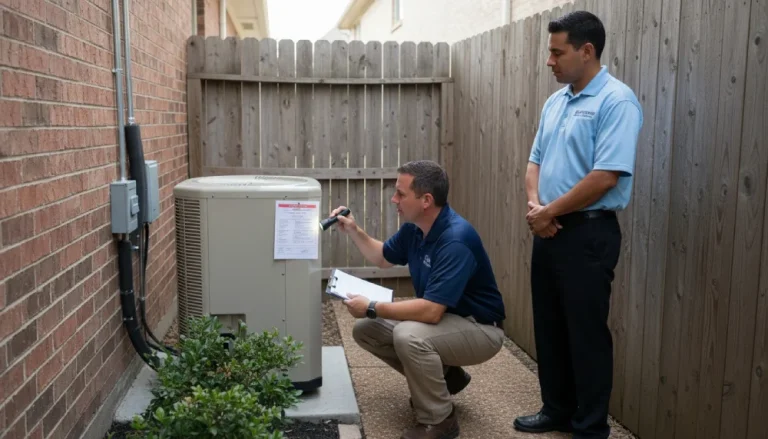
Houston requires mechanical HVAC permits for most system replacements, new installations, and major modifications within city limits, with permits pulled exclusively by licensed contractors registered with the City of Houston who hold valid Texas TDLR air conditioning and refrigeration (ACR) licenses, followed by mandatory city inspections verifying equipment sizing, ductwork, electrical connections, and code compliance before work receives final approval.
Understanding Houston HVAC permit requirements protects homeowners from safety issues, insurance problems, and resale complications. The City of Houston emphasizes permitting for "almost all" HVAC and ventilation work, making it essential to work with properly licensed contractors who handle the entire permitting and inspection process as part of your installation project.
Professional Houston HVAC installation includes complete permit handling, ensuring your new system meets all City of Houston codes and passes required inspections without hassle or delays.
Do I Need a Permit to Install AC in Houston?
Yes, Houston requires mechanical permits for most AC and HVAC work. The City of Houston Permitting Center mandates permits when you:
- Replace an HVAC system (AC condenser, furnace, air handler, or full system)
- Install a new HVAC system in new construction, additions, or previously unconditioned spaces
- Add, remove, or modify any part of an existing HVAC system
- Make major ductwork changes or relocate equipment
- Install new refrigerant lines or modify existing ones
Minor like-for-like repairs such as small part swaps without system changes may not require new mechanical permits. However, you must confirm with the City or your contractor because Houston emphasizes permitting for nearly all HVAC and ventilation work.
The bottom line: If you're replacing your AC unit, installing a new system, or making significant modifications, you need a permit. Working without required permits is illegal in Houston and creates problems with safety, home resale, insurance claims, and liability.
| Work Type | Permit Required? | Notes |
| Full system replacement | Yes | AC, furnace, air handler replacements all require permits |
| AC condenser replacement | Yes | Even like-for-like equipment swaps need permits |
| New construction HVAC | Yes | Required for all new homes and additions |
| Major ductwork changes | Yes | Adding, removing, or significantly modifying ducts |
| Minor repairs (small parts) | Usually no | Confirm with City—rules emphasize broad permit coverage |
| Equipment relocation | Yes | Moving indoor or outdoor units requires permits |
Who Can Pull HVAC Permits in Houston?
Houston requires HVAC permits to be pulled exclusively by licensed contractors—homeowners cannot pull their own mechanical permits for HVAC work.
Contractor requirements include:
- Valid Texas Department of Licensing and Regulation (TDLR) air conditioning and refrigeration (ACR) license
- Registration with the City of Houston Permitting Center before pulling permits
- Current contractor registration fees paid (typically $20–$200 depending on municipality)
- Proper insurance and bonding as required by Texas regulations
For residential HVAC projects inside Houston city limits, homeowners hire licensed contractors who include permitting in the job scope. Reputable contractors handle the entire permit application, installation, and inspection process as part of their standard service.
Why this matters for homeowners:
- You cannot legally hire unlicensed workers for permitted HVAC work
- Contractors who skip permits may not carry proper licensing or insurance
- Unpermitted work creates liability that falls on the homeowner
- Future buyers and insurance companies may require permit verification
When getting quotes, confirm your contractor is TDLR-licensed and City of Houston registered. Ask if permit costs are included in the estimate or billed separately.
Professional AC installation in Houston includes complete permit handling by licensed technicians registered with the City of Houston Permitting Center.
The Houston HVAC Permit and Inspection Process

Understanding the permit process helps you know what to expect and ensures your project proceeds smoothly from start to finish.
Step 1: Contractor Registration
Before pulling permits, contractors must register with the City of Houston Permitting Center. This registration verifies:
- Valid TDLR license credentials
- Business registration and insurance
- Compliance with local contractor requirements
Contractors also register with nearby municipalities where they work. Registration fees typically range $20–$200 depending on the specific city or jurisdiction.
Step 2: Permit Application
After you accept a proposal, your contractor applies for a mechanical permit through the Houston Permitting Center or iPermits online system before work begins. The application includes:
- Project scope and equipment specifications
- Property address and owner information
- Contractor license and registration numbers
- Permit fee payment
Permit fees are commonly calculated as a percentage of the job price. Current estimates suggest approximately 6% of the total invoice covers permit and inspection costs, though this varies by project scope and contractor.
Step 3: Installation
Once the permit is approved, your contractor installs the HVAC system following applicable codes. Houston adopts and enforces the International Mechanical Code along with local amendments and building criteria.
Code-compliant installation addresses:
- Proper equipment sizing for your home
- Secure mounting and support
- Correct venting and combustion air
- Ductwork connections and sealing
- Condensate drain routing
- Electrical connections and disconnects
- Refrigerant line installation
- Required clearances around equipment
Step 4: City Inspection
After installation, your contractor schedules a city inspection through the Houston Permitting Center. During the inspection:
- A city inspector visits your property (typically 30-minute visits)
- The inspector verifies work meets code requirements
- Results are recorded as pass or fail
- Failed inspections include notes on required corrections
If the inspection fails, your contractor must correct identified issues and reschedule until the work passes. Reputable contractors rarely fail inspections because they install to code standards from the start.
Step 5: Final Approval
Once your installation passes inspection, the permit is closed and your project receives final approval. This documentation proves your HVAC work was completed legally and to code—important for insurance, resale, and warranty purposes.
Houston HVAC Permit Costs
Permit costs vary based on project scope, equipment value, and current City of Houston fee schedules.
Typical permit cost factors:
- Percentage-based calculation (approximately 6% of total job cost is one current estimate)
- Base permit fees set by the City
- Inspection fees (usually included with permit)
- Re-inspection fees if work initially fails
Example cost ranges:
- Basic AC replacement permit: $150–$400
- Full system replacement permit: $300–$600
- Complex projects with ductwork: $400–$800+
Most reputable contractors include permit costs in their installation quotes. Always ask whether permits are included or billed separately when comparing estimates. Contractors who don't mention permits may be planning to skip them—a major red flag.
Comprehensive Houston HVAC services include transparent pricing with all permit and inspection costs clearly identified in written estimates.
| Permit Cost Factor | Typical Range | What's Included |
| Basic permit fee | $100–$300 | Application processing, permit issuance |
| Inspection fee | Usually included | Initial inspection visit |
| Percentage-based calculation | ~6% of job cost | Varies by contractor and project scope |
| Re-inspection fee | $50–$150 | If initial inspection fails |
What Inspectors Check During HVAC Inspections
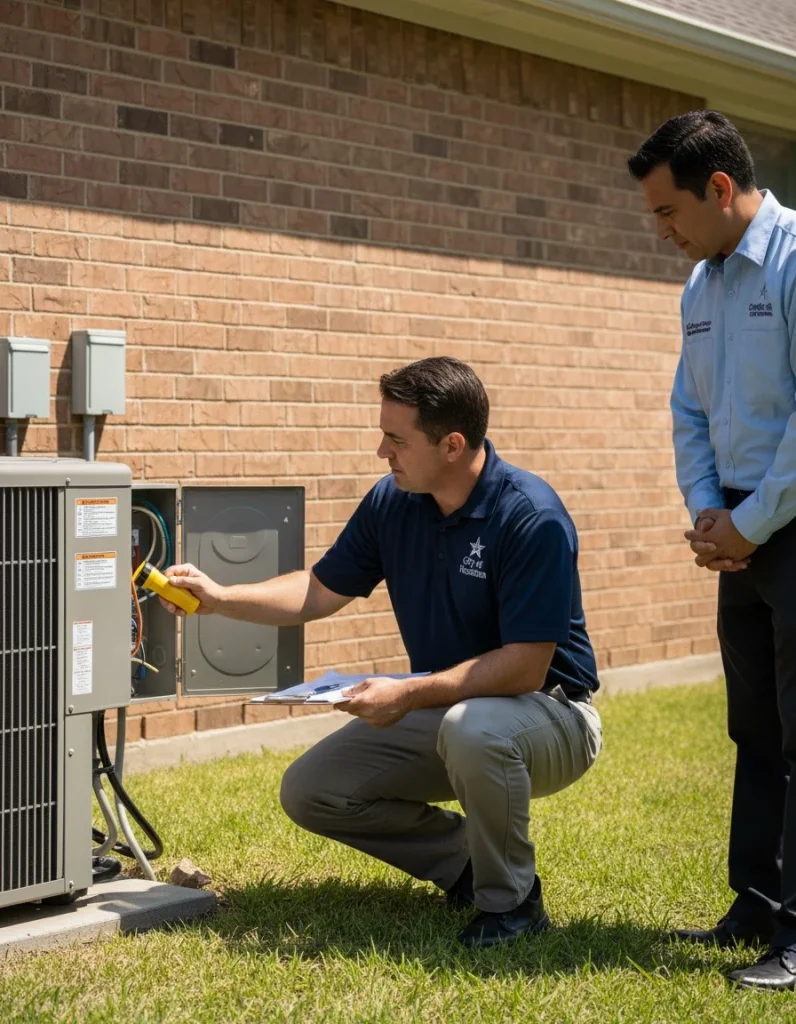
City of Houston inspectors verify your HVAC installation meets safety, efficiency, and ventilation standards under the International Mechanical Code.
Key inspection points include:
- Equipment sizing: System matches load calculations for your home
- Mounting and support: Units properly secured and supported
- Venting: Combustion appliances correctly vented to exterior
- Ductwork: Connections sealed, properly sized, and supported
- Condensate drains: Proper routing with required traps and termination
- Electrical: Correct wire sizing, disconnects, and connections
- Clearances: Required space around equipment for service access
- Refrigerant handling: Proper line installation and connections
- Gas connections: Safe piping for furnaces and gas appliances
Inspectors also verify permit information matches installed equipment. Installing different equipment than specified on the permit can cause inspection failures and require permit amendments.
Consequences of Skipping HVAC Permits
Installing or replacing HVAC without required permits is illegal in Houston and creates serious problems.
Safety risks:
- Improperly installed systems can cause fires, carbon monoxide leaks, or electrical hazards
- No third-party verification of code compliance
- Potential refrigerant leaks affecting health and environment
Financial consequences:
- City fines and penalties for unpermitted work
- Required removal or correction of non-compliant installations
- Permit fees plus additional penalties to legalize work after the fact
- Insurance claim denials if problems relate to unpermitted work
Resale complications:
- Buyers may require permit verification during due diligence
- Title companies may flag unpermitted improvements
- Appraisers may note unpermitted work affecting value
- Required disclosure of unpermitted modifications
Warranty issues:
- Manufacturer warranties may be voided by improper installation
- No recourse if unlicensed contractors disappear or refuse callbacks
- Equipment damage from incorrect installation not covered
The small cost of permits protects your investment, safety, and home value. Never hire contractors who suggest skipping permits to save money.
Inside Houston City Limits vs. Surrounding Areas
Houston HVAC permit requirements apply within city limits. Properties outside Houston follow different jurisdictional rules.
Inside Houston city limits:
- City of Houston Permitting Center handles all permits
- Mechanical permits required for HVAC replacements and installations
- City inspectors verify code compliance
- iPermits online system available for applications
Unincorporated Harris County:
- Harris County may have different or fewer requirements
- Some areas may not require city inspections
- Verify requirements with Harris County permits office
- Work should still meet code standards regardless of permit requirements
Nearby cities (Sugar Land, West University, Pearland, etc.):
- Each municipality has its own permitting requirements
- Most require similar mechanical permits for HVAC work
- Contractors must register with each city where they work
- Permit fees and processes vary by jurisdiction
How to verify your jurisdiction:
- Check your property tax statement for taxing entities
- Contact the City of Houston Permitting Center to confirm address coverage
- Ask your contractor—experienced local contractors know jurisdictional boundaries
- Use Harris County Appraisal District address lookup
Professional heating installation services include verification of permit requirements for your specific property location and handling of all applicable permit applications.
How to Verify Your Contractor Is Properly Licensed
Protecting yourself starts with verifying contractor credentials before signing any agreement.
Check TDLR licensing:
- Visit the Texas TDLR license search website
- Search by contractor name or license number
- Verify license is current and in good standing
- Confirm license type covers air conditioning and refrigeration work
Verify City of Houston registration:
- Ask contractor for their City of Houston registration number
- Contact the Houston Permitting Center to verify registration status
- Confirm registration is current for the year
Additional verification steps:
- Request proof of insurance (general liability and workers' compensation)
- Check Better Business Bureau ratings and complaints
- Read online reviews from verified customers
- Ask for references from recent Houston-area projects
- Verify physical business address (not just P.O. box)
Red flags to watch for:
- Contractors who can't provide license numbers
- Suggestions to skip permits to "save money"
- Cash-only requests with no written contracts
- Pressure to decide immediately without written estimates
- No physical business location or only cell phone contact
| Verification Step | Where to Check | What to Confirm |
| TDLR License | Texas TDLR website | Current, valid ACR license |
| City Registration | Houston Permitting Center | Active registration for current year |
| Insurance | Request certificates | General liability and workers' comp coverage |
| Business Status | Texas Secretary of State | Registered business entity |
| Reviews/Complaints | BBB, Google, Yelp | Reputation and complaint history |
Key Takeaways
- Houston requires mechanical permits for most HVAC work including system replacements, new installations, and major modifications within city limits, with the City emphasizing permitting for "almost all" HVAC and ventilation projects
- Only licensed contractors can pull HVAC permits in Houston, requiring valid Texas TDLR air conditioning and refrigeration licenses plus registration with the City of Houston Permitting Center before beginning any permitted work
- The permit process includes four main steps: contractor registration, permit application through iPermits or Houston Permitting Center, code-compliant installation, and mandatory city inspection before final approval is granted
- Permit costs typically run 6% of project cost or $150–$600+ depending on scope, with fees usually included in contractor quotes covering application processing and inspection visits
- Skipping permits creates serious consequences including city fines, insurance claim denials, resale complications, voided warranties, and safety risks from unverified installations that may not meet code requirements
- Jurisdiction matters for permit requirements with Houston city limits following City of Houston rules while unincorporated Harris County and surrounding cities like Sugar Land or Pearland have their own permitting processes and requirements
Frequently Asked Questions
Do I need a permit to install AC in Houston?
Yes. Houston requires mechanical permits for AC replacements, new installations, and major modifications within city limits. Only licensed contractors registered with the City can pull permits. Minor repairs may be exempt, but confirm with your contractor.
Does Houston require a permit for AC installation?
Yes. The City of Houston Permitting Center requires mechanical permits for nearly all HVAC and AC installation work. This includes replacements, new systems, and equipment modifications. Permits ensure code compliance and safe installation.
How much do HVAC permits cost in Houston?
Permit costs typically run approximately 6% of total project cost, ranging $150–$600+ depending on scope. Most contractors include permits in their quotes. Always confirm whether permit fees are included or billed separately.
Can I pull my own HVAC permit in Houston?
No. Houston requires mechanical permits to be pulled by licensed contractors with valid TDLR air conditioning licenses and City of Houston registration. Homeowners cannot pull their own permits for HVAC work.
What happens if I install HVAC without a permit?
Unpermitted work is illegal and creates problems including city fines, insurance claim denials, resale complications, and voided warranties. You may be required to remove work or pay penalties to legalize it after installation.
How long does the Houston HVAC permit process take?
Permit approval typically takes 1–5 business days for straightforward residential projects. Inspections are scheduled after installation, usually within a few days. Total timeline depends on permit office workload and project complexity.
What do Houston HVAC inspectors check?
Inspectors verify equipment sizing, proper mounting, venting, ductwork connections, condensate drains, electrical work, clearances, and refrigerant handling. They ensure installation meets International Mechanical Code standards adopted by Houston.
Do I need a permit for HVAC work outside Houston city limits?
Requirements vary by jurisdiction. Unincorporated Harris County and surrounding cities have their own rules. Some areas may not require permits, but work should still meet code standards. Verify requirements for your specific address.
How do I verify my HVAC contractor is licensed?
Check Texas TDLR website for valid air conditioning license. Verify City of Houston registration with the Permitting Center. Request insurance certificates and check BBB ratings. Avoid contractors who can't provide license numbers.
Are permit costs included in HVAC installation quotes?
Reputable contractors include permit costs in their quotes. Always ask specifically whether permits are included or billed separately. Contractors who don't mention permits may be planning to skip them—a major warning sign.
Conclusion
Houston HVAC permit requirements exist to protect homeowners through verified, code-compliant installations. The City requires mechanical permits for most replacements, new installations, and modifications, with permits pulled exclusively by TDLR-licensed contractors registered with the Houston Permitting Center. The process includes permit application, professional installation, and city inspection before final approval.
Working with properly licensed contractors who handle all permitting ensures your installation meets safety codes, maintains warranty coverage, and avoids problems with insurance or future home sales. Never hire contractors who suggest skipping permits—the small permit cost protects your much larger investment in comfort and home value.Ready for a properly permitted HVAC installation? Contact VeriChill for a comprehensive quote including all permit handling by our licensed, City of Houston registered installation team.