
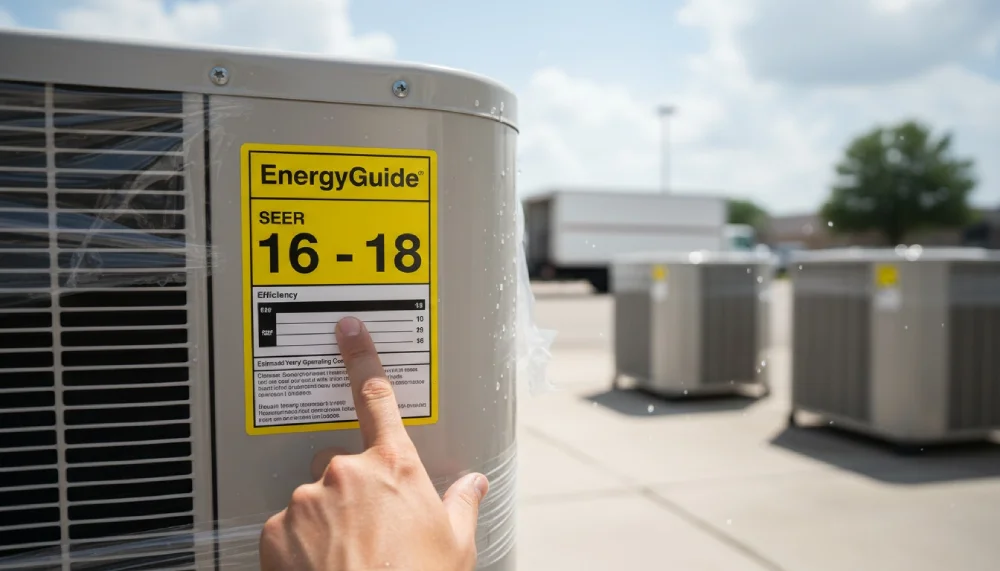
Houston's hot, humid climate is best served by AC units in the 16–18 SEER range, balancing long-term energy savings and superior humidity control against upfront equipment costs, with this efficiency sweet spot offering two-stage or variable-speed operation that runs longer on low speed for better comfort compared to minimum-efficiency single-stage units, while very high SEER ratings (19–22+) provide only marginal additional savings at significantly higher purchase prices.
Choosing the right SEER rating directly impacts your monthly utility bills, indoor comfort, and long-term return on investment. With Houston AC systems running 8+ months annually, higher efficiency ratings have more operating hours to pay back their premium cost compared to moderate climates where systems run less frequently.
Professional Houston HVAC installation includes efficiency recommendations tailored to your home size, budget, and how long you plan to stay, ensuring you select the SEER rating that maximizes value for your specific situation.
What Is SEER Rating and Why Does It Matter?
SEER (Seasonal Energy Efficiency Ratio) measures how efficiently an air conditioner converts electricity into cooling over a typical cooling season. Higher SEER numbers indicate greater efficiency—a 16 SEER unit uses less electricity to produce the same cooling as a 14 SEER unit.
How SEER is calculated:
- Total cooling output (BTUs) during a season divided by total electrical energy input (watt-hours)
- Tested under controlled laboratory conditions
- Represents average efficiency across varying temperatures
- Higher numbers = lower operating costs
SEER vs. SEER2:
In 2023, the industry transitioned to SEER2 ratings using updated testing procedures that better reflect real-world installation conditions. SEER2 numbers run slightly lower than equivalent SEER ratings:
- 14 SEER ≈ 13.4 SEER2
- 16 SEER ≈ 15.2 SEER2
- 18 SEER ≈ 17.1 SEER2
- 20 SEER ≈ 19.0 SEER2
When comparing equipment, ensure you're comparing the same rating type. Most manufacturers now list both SEER and SEER2 on specifications.
Why SEER matters more in Houston:
- Longer cooling seasons mean more operating hours
- More hours = more opportunities for efficiency savings
- Higher humidity requires systems that run longer cycles
- Electricity costs compound over 15-20 year equipment lifespan
What SEER Rating Is Required in Texas?
Texas falls in the Southern region under federal efficiency standards, requiring higher minimum SEER ratings than northern states due to greater cooling demands.
Current Texas minimum requirements:
- Central air conditioners: 15 SEER / 14.3 SEER2 minimum
- Heat pumps: 15 SEER / 14.3 SEER2 minimum (cooling mode)
- Split systems must meet these minimums to be legally sold and installed
What "minimum" means for homeowners:
- Equipment meeting only minimum standards is legal but represents baseline efficiency
- Minimum-efficiency units cost less upfront but more to operate
- Most Houston HVAC professionals recommend exceeding minimums for this climate
- Builder-grade installations often use minimum-efficiency equipment to reduce construction costs
Regional comparison:
Northern states require only 14 SEER minimum because shorter cooling seasons reduce the payback period for higher efficiency equipment. Houston's 8+ month cooling season justifies higher efficiency investments that wouldn't make financial sense in cooler climates.
| SEER Rating | Classification | Best For | Typical Features |
| 14-15 SEER | Minimum / Entry-level | Budget priority, short-term ownership | Single-stage compressor, basic operation |
| 16-18 SEER | Mid-range / Sweet spot | Long-term ownership, comfort focus | Two-stage compressor, better humidity control |
| 19-22+ SEER | Premium / High-efficiency | Maximum comfort, lowest operating costs | Variable-speed, ultra-quiet operation |
Why 16-18 SEER Is the Sweet Spot for Houston
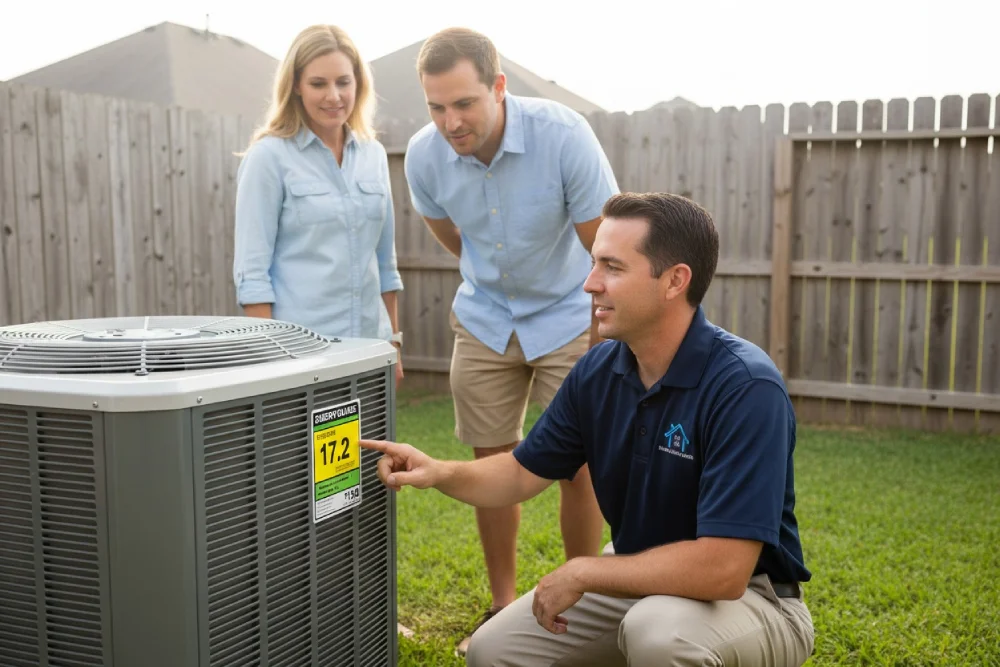
Multiple Houston-area HVAC professionals and Texas sources recommend 16-18 SEER as the optimal efficiency range for this climate. Here's why this range delivers the best value.
Better Payback Period
AC runs for much of the year in Houston, giving higher efficiency systems more hours to recoup their premium cost. A 16 SEER unit might cost $1,000-$1,500 more than a 14 SEER equivalent, but annual savings of $150-$250 can pay back that difference within 5-8 years—well within the system's 15-20 year lifespan.
Superior Humidity Control
Systems in the 16-18 SEER range are often two-stage or variable-speed units that run longer on low speed. This extended runtime removes more humidity from indoor air compared to single-stage units that cycle on and off more frequently.
Houston's humidity makes this especially important:
- Single-stage units cool quickly but may not run long enough to dehumidify
- Two-stage units run longer at reduced capacity, continuously removing moisture
- Better humidity control means you can set thermostats higher while feeling equally comfortable
- Reduced humidity also prevents mold growth and improves indoor air quality
Reasonable Price Premium
The jump from 14-15 SEER to 16-18 SEER typically adds $1,000-$2,500 to system cost depending on brand and capacity. This represents a reasonable investment with strong payback potential in Houston's climate.
Moving from 18 SEER to 20+ SEER often adds another $2,000-$4,000+ with diminishing returns on energy savings. Many local professionals treat 19+ SEER as a premium comfort choice rather than a default recommendation.
Equipment Reliability
Mid-range efficiency equipment (16-18 SEER) often represents manufacturers' highest-volume product lines with well-proven designs. Very high SEER units sometimes use newer, more complex technology that may have less track record or require more specialized service.
Professional AC installation in Houston matches efficiency ratings to your specific goals, whether prioritizing budget, comfort, or maximum long-term savings.
SEER Rating Recommendations by Situation
Different homeowner situations call for different efficiency priorities. Use these guidelines to identify your optimal SEER target.
Budget Priority or Short-Term Ownership (15-16 SEER)
Choose equipment just above minimum efficiency if you:
- Plan to sell your home within 5 years
- Have strict budget constraints
- Are installing in a rental property
- Need immediate replacement with limited funds
What you get:
- Lower upfront cost ($500-$1,500 savings vs. higher SEER)
- Legal, code-compliant equipment
- Adequate cooling performance
- Higher monthly utility bills than mid-range options
What you sacrifice:
- Long-term energy savings
- Superior humidity control
- Quieter operation
- Potential resale value premium
Long-Term Ownership and Comfort Focus (16-18 SEER)
Target the 16-18 SEER sweet spot if you:
- Plan to stay in your home 7+ years
- Value consistent comfort and humidity control
- Want reasonable payback on efficiency investment
- Prefer quieter system operation
What you get:
- Two-stage or variable-speed operation
- Better humidity removal
- Lower monthly utility bills
- Quieter indoor and outdoor operation
- Strong payback within equipment lifespan
What you sacrifice:
- Higher upfront cost ($1,000-$2,500 vs. entry-level)
- Maximum possible efficiency (vs. 19+ SEER)
Maximum Comfort and Efficiency (19+ SEER)
Consider premium high-efficiency equipment if you:
- Prioritize maximum comfort over budget
- Want the quietest possible operation
- Plan to stay in your home 10+ years
- Have high electricity rates or large homes
What you get:
- Variable-speed compressor technology
- Ultra-precise temperature control
- Maximum humidity removal
- Whisper-quiet operation
- Lowest possible operating costs
What you sacrifice:
- Significant upfront premium ($3,000-$6,000+ vs. mid-range)
- Longer payback period (may exceed 10 years)
- More complex equipment requiring specialized service
Energy Savings by SEER Rating
Understanding actual savings helps you calculate whether higher efficiency makes financial sense for your situation.
Estimated annual savings vs. 14 SEER baseline (2,000 sq ft Houston home):
- 16 SEER: Save approximately $150-$200 annually
- 18 SEER: Save approximately $250-$350 annually
- 20 SEER: Save approximately $350-$450 annually
Payback calculation example:
If upgrading from 14 SEER to 17 SEER costs $1,800 more and saves $225 annually:
- Payback period: $1,800 ÷ $225 = 8 years
- System lifespan: 15-20 years
- Net savings over lifespan: $1,575-$2,700 after payback
These estimates assume average Houston electricity rates and typical usage patterns. Larger homes, higher rates, or heavier usage increase savings proportionally.
Comprehensive Houston HVAC services include energy analysis helping you project actual savings based on your home's specific characteristics and usage patterns.
| SEER Upgrade | Typical Cost Premium | Annual Savings (Est.) | Payback Period |
| 14 → 16 SEER | $1,000-$1,500 | $150-$200 | 5-8 years |
| 14 → 18 SEER | $2,000-$3,000 | $250-$350 | 7-10 years |
| 14 → 20 SEER | $4,000-$6,000 | $350-$450 | 10-15 years |
| 16 → 18 SEER | $1,000-$1,500 | $100-$150 | 8-12 years |
Two-Stage and Variable-Speed: Beyond SEER Numbers
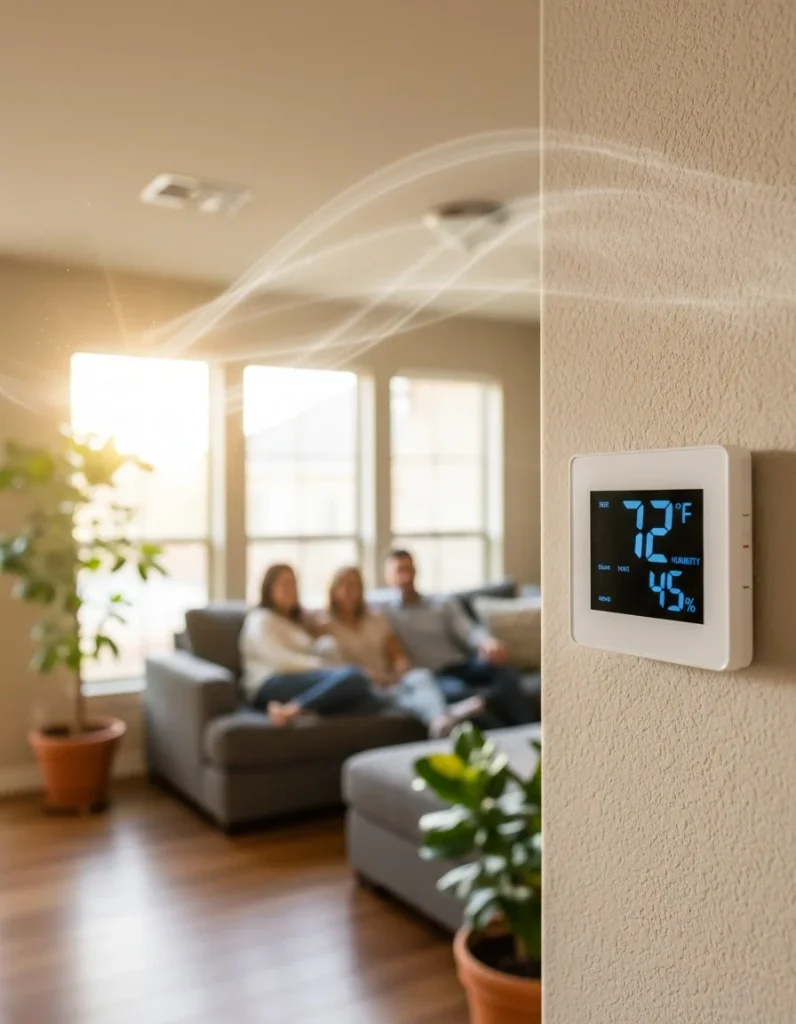
SEER ratings don't tell the whole comfort story. How a system achieves its efficiency matters as much as the number itself.
Single-Stage Systems (Typically 14-16 SEER)
Single-stage compressors operate at one speed—full blast or off. They cool quickly but cycle frequently, which can create:
- Temperature swings between cycles
- Inadequate humidity removal during short cycles
- Louder operation at full capacity
- More wear from frequent starting and stopping
Two-Stage Systems (Typically 16-18 SEER)
Two-stage compressors run at low speed (about 70% capacity) most of the time, switching to high speed only during extreme heat. Benefits include:
- Longer, gentler cooling cycles
- Better humidity removal from extended runtime
- More consistent temperatures
- Quieter operation at low stage
- Reduced wear from fewer start cycles
Variable-Speed Systems (Typically 18-24+ SEER)
Variable-speed compressors adjust output continuously from about 25% to 100% capacity, precisely matching cooling output to current demand. Benefits include:
- Ultra-precise temperature control (±0.5°F)
- Maximum humidity removal
- Whisper-quiet operation
- Lowest energy consumption
- Longest equipment lifespan from reduced stress
For Houston's humidity, two-stage or variable-speed operation often matters more than raw SEER numbers. A 17 SEER two-stage unit may provide better comfort than an 18 SEER single-stage unit despite lower rated efficiency.
Factors Beyond SEER That Affect Efficiency
SEER ratings assume proper installation and ideal conditions. Real-world efficiency depends on several additional factors.
Proper System Sizing
Oversized systems short-cycle (turn on and off frequently), reducing efficiency and humidity control regardless of SEER rating. Undersized systems run constantly without reaching setpoint. Professional load calculations ensure correct sizing.
Quality Installation
Poor installation can reduce actual efficiency by 20-30% compared to rated SEER:
- Improper refrigerant charge wastes energy
- Duct leaks lose conditioned air to unconditioned spaces
- Incorrect airflow reduces heat transfer efficiency
- Poor insulation around refrigerant lines reduces capacity
Ductwork Condition
Leaky or poorly insulated ducts can waste 20-40% of cooling output before it reaches living spaces. Even a 20 SEER system performs poorly with bad ductwork.
Thermostat Programming
Smart or programmable thermostats maximize efficiency by reducing cooling when you're away or sleeping. Consistent manual operation with good habits achieves similar results.
Regular Maintenance
Dirty filters, clogged coils, and low refrigerant reduce efficiency over time. Annual maintenance keeps systems operating near rated efficiency throughout their lifespan.
Professional heating installation ensures all efficiency factors are addressed—not just equipment selection—for maximum real-world performance.
Rebates and Incentives for High-Efficiency Equipment
Higher SEER equipment may qualify for rebates and incentives that reduce effective cost and improve payback calculations.
Potential incentive sources:
- Utility company rebates (CenterPoint, various electric providers)
- Manufacturer rebates and promotions
- Federal tax credits for qualifying equipment
- State and local energy efficiency programs
Typical rebate amounts:
- $200-$500 for 16+ SEER equipment
- $300-$800 for 18+ SEER equipment
- $500-$1,500+ for variable-speed systems
- Additional amounts for complete system upgrades
Rebate availability and amounts change frequently. Your contractor should identify current incentives during the proposal process and help you understand qualification requirements.
| Incentive Type | Typical Amount | Requirements |
| Utility rebates | $200-$800 | Minimum SEER threshold, licensed contractor |
| Federal tax credits | Up to $600 | Meets efficiency standards, primary residence |
| Manufacturer rebates | $100-$500 | Specific brands/models, limited time offers |
| Combination programs | $500-$2,000+ | Multiple qualifying criteria |
Key Takeaways
- Houston's climate is best served by 16-18 SEER equipment which balances energy savings, humidity control, and upfront cost, with this efficiency range offering the strongest payback period for the region's 8+ month cooling season
- Texas requires minimum 15 SEER / 14.3 SEER2 for new installations but most Houston HVAC professionals recommend exceeding minimums due to the extended cooling season and humidity control benefits of higher-efficiency equipment
- Two-stage and variable-speed operation matter as much as SEER numbers because longer, gentler cooling cycles remove more humidity and provide more consistent comfort than single-stage systems cycling on and off frequently
- Budget-focused or short-term owners should target 15-16 SEER accepting higher operating costs in exchange for lower upfront investment, while long-term owners benefit from 16-18 SEER's better payback potential
- Very high SEER (19-22+) provides marginal additional savings at significantly higher cost, making it a premium comfort choice rather than a default recommendation unless maximum efficiency and whisper-quiet operation are priorities
- Real-world efficiency depends on proper installation including correct sizing, quality workmanship, good ductwork, and regular maintenance—a poorly installed high-SEER system may perform worse than a well-installed mid-range unit
Frequently Asked Questions
What SEER rating is required in Texas?
Texas requires minimum 15 SEER (14.3 SEER2) for new central AC installations. This is higher than northern states due to greater cooling demands. Most Houston professionals recommend exceeding this minimum for better comfort and efficiency.
What is the best SEER rating for Houston?
The 16-18 SEER range offers the best balance for Houston's climate. This provides strong energy savings, superior humidity control, and reasonable payback periods compared to minimum-efficiency or ultra-premium options.
Is 20 SEER worth it in Houston?
For most homeowners, 20+ SEER provides marginal additional savings at significantly higher cost. It makes sense if you prioritize maximum comfort, plan to stay 10+ years, or have very high electricity usage. Otherwise, 16-18 SEER offers better value.
How much can I save with higher SEER?
Upgrading from 14 to 16 SEER saves approximately $150-$200 annually for a typical Houston home. Moving to 18 SEER saves $250-$350 annually. Actual savings depend on home size, usage patterns, and electricity rates.
What's the difference between SEER and SEER2?
SEER2 uses updated testing procedures that better reflect real-world conditions. SEER2 numbers run slightly lower than equivalent SEER ratings. A 16 SEER unit is approximately equivalent to 15.2 SEER2.
Does higher SEER mean better humidity control?
Not directly, but higher SEER units often feature two-stage or variable-speed compressors that run longer cycles, removing more humidity. A two-stage 17 SEER may control humidity better than a single-stage 18 SEER.
How long does it take to pay back higher SEER equipment?
Upgrading from 14 to 16 SEER typically pays back in 5-8 years. Upgrading to 18 SEER takes 7-10 years. These periods fall within the 15-20 year equipment lifespan, delivering net savings over time.
Should I get the highest SEER I can afford?
Not necessarily. The 16-18 SEER range offers the best value for most Houston homeowners. Higher ratings have diminishing returns—each additional SEER point costs more while saving less than the previous point.
Are there rebates for high-SEER equipment in Houston?
Yes. Utility companies, manufacturers, and federal programs offer rebates ranging from $200-$1,500+ for qualifying high-efficiency equipment. Your contractor should identify current incentives during the proposal process.
Does SEER matter if my ducts are leaky?
Leaky ducts can waste 20-40% of cooling regardless of SEER rating. Address duct issues before or during AC replacement to ensure your new system operates near its rated efficiency.
Conclusion
For Houston's hot, humid climate, the 16-18 SEER range delivers the optimal balance of efficiency, comfort, and value. This sweet spot provides two-stage or variable-speed operation for superior humidity control, strong energy savings that pay back within the equipment's lifespan, and reasonable upfront costs compared to ultra-premium options.
Budget-conscious homeowners or those planning short-term ownership can choose 15-16 SEER equipment that meets code while minimizing upfront investment. Those prioritizing maximum comfort and efficiency can explore 19+ SEER variable-speed systems, understanding the longer payback period for the premium investment.Ready to find the right SEER rating for your home? Contact VeriChill for personalized efficiency recommendations based on your home size, budget, and comfort priorities.