Your air conditioning system should reach the thermostat set temperature, cycle off periodically, maintain consistent airflow from every supply vent, and operate without unusual sounds or odors. If your Houston AC is not doing all four of those things during mild spring weather, it is telling you something needs attention before summer arrives.
Houston summers do not ease in gradually. One week it is 82 degrees, and the next your system is running 14 hours a day trying to hold 74 inside while it is 98 outside. That transition happens fast, and if your AC has a problem that was manageable in April, it becomes a breakdown in July.
After 14 years of installing and servicing AC systems across the Houston metro area, I can tell you that most mid-summer emergency calls involve problems that were detectable weeks or months earlier. The homeowner just did not know what to look for, or they noticed something minor and assumed it would be fine.
This guide walks you through exactly what to check, what the warning signs mean, and how to determine whether your system is ready for another Houston summer or whether it needs professional attention before the heat arrives.
Warning Signs Your AC Is Not Summer-Ready
Your AC system communicates problems before it fails completely. Here are the signals Houston homeowners should watch for during spring, when the system is running under moderate load, and problems are easier to identify.
Weak or uneven airflow from supply vents
Walk through your home and hold your hand near each supply vent while the system is running. You should feel steady, consistent airflow. If some vents are barely pushing air while others seem normal, you may have a ductwork restriction, a failing blower motor, or a clogged filter. Weak airflow forces your system to run longer to reach temperature, which increases energy costs and accelerates wear.
The system runs constantly without cycling off
Under moderate spring conditions in Houston, your AC should cycle on, bring the space to the desired temperature, and then cycle off. If the system runs continuously without ever reaching the thermostat set point, something is limiting its cooling capacity. Common causes include low refrigerant, dirty evaporator coils, or a compressor that is losing efficiency. This problem will only worsen as temperatures rise.
Unusual noises during operation
A healthy AC system produces consistent, predictable sound. New rattling, buzzing, grinding, or clicking noises indicate mechanical problems. Rattling often points to loose components. Buzzing can indicate electrical issues. Grinding typically means a bearing failure in the blower motor or compressor. Do not ignore new sounds. The components making those noises are under stress, and stress under light spring loads becomes failure under heavy summer loads.
Higher energy bills without usage changes
Compare your spring electricity bills with those from the same period last year. If your bills have increased without a corresponding increase in usage or rate changes from your utility provider, your AC system is working harder than it should to produce the same cooling output. This efficiency decline often indicates dirty coils, refrigerant issues, or aging components that need attention.
Moisture or water around the indoor unit
Check the area around your indoor air handler or furnace for any signs of water. A clogged condensate drain line is the most common cause and is an easy fix if caught early. Left unaddressed, backed-up condensate can cause water damage to walls, ceilings, and flooring, and create conditions for mold growth in Houston's humidity.
What You Can Check Yourself
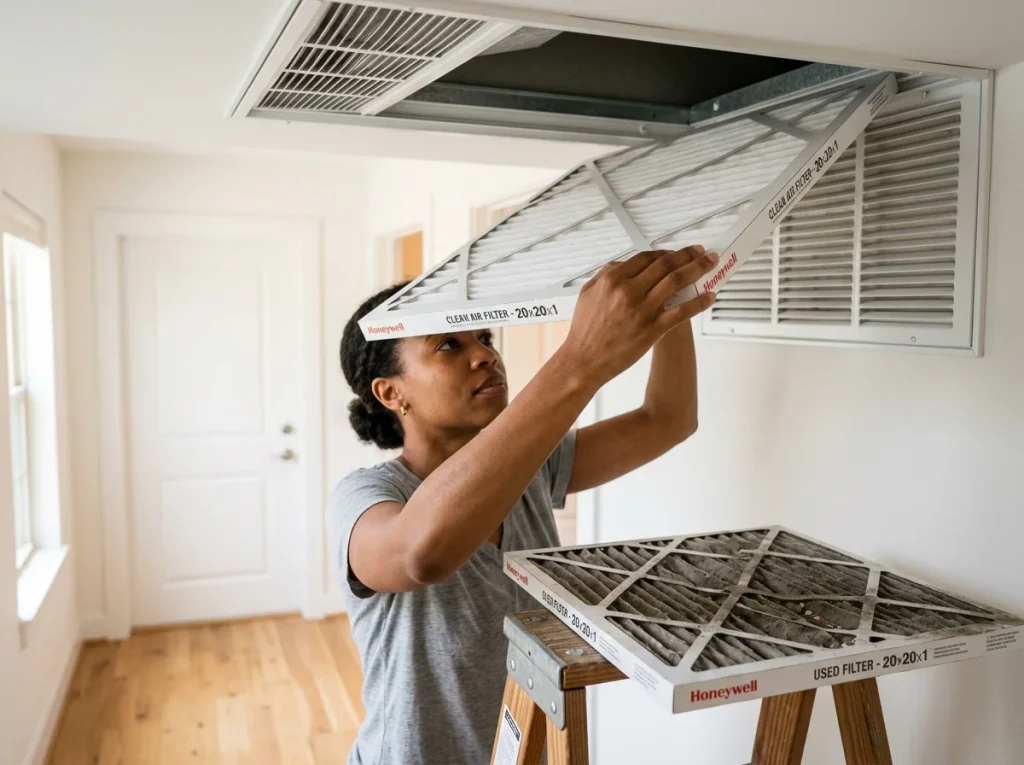
Before calling a professional, several checks are within any homeowner's ability and take less than 30 minutes.
- Replace your air filter. This is the single most impactful maintenance step you can perform. A dirty filter restricts airflow, reduces efficiency, and forces every other component to work harder. In Houston, where the system runs extensively, filters should be checked monthly and replaced at a minimum every 60 to 90 days. During peak summer, monthly replacement is appropriate for most homes.
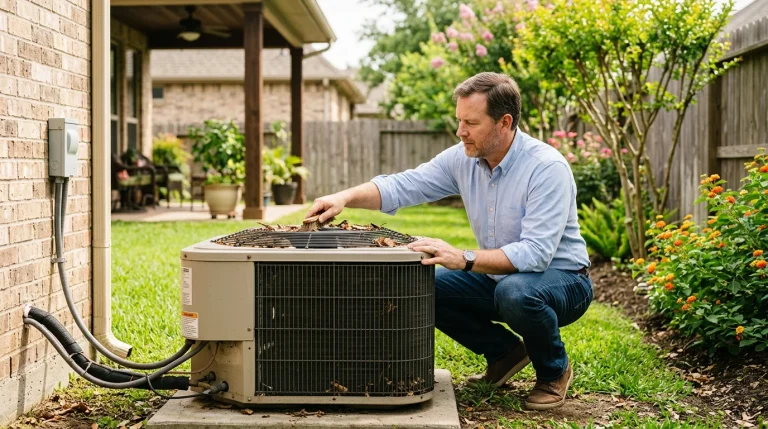
- Clear the outdoor condenser unit. Walk outside and inspect the condenser. Remove any leaves, grass clippings, debris, or vegetation within two feet of the unit on all sides. The condenser needs unrestricted airflow to release heat effectively. If the aluminum fins are visibly matted with dirt or cottonwood seeds, a gentle rinse with a garden hose from the inside out can restore airflow. Do not use a pressure washer, which will bend the fins.
- Open all supply vents. Verify that every supply vent in your home is fully open, even in rooms you do not use regularly. Closing vents does not save energy. It creates pressure imbalances in your ductwork that can reduce system efficiency and cause comfort problems in other rooms. Make sure no furniture, rugs, or curtains are blocking vents.
- Test your thermostat. Set your thermostat to cooling mode, set the temperature 5 degrees below the current room temperature, and verify that the system starts. Let it run for 15 to 20 minutes and confirm that the air coming from supply vents feels noticeably cool. If the system starts but the air never gets cold, there is a refrigerant or mechanical issue that requires professional diagnosis.
- Check the condensate drain. Locate the condensate drain line, typically a PVC pipe near your indoor unit that routes to a drain or exterior exit. Pour a small amount of water into the drain pan. If it drains quickly and exits at the other end, the line is clear. If water sits in the pan or drains slowly, the line may be partially clogged and needs clearing before summer humidity creates continuous condensate flow.
When to Schedule Professional Maintenance
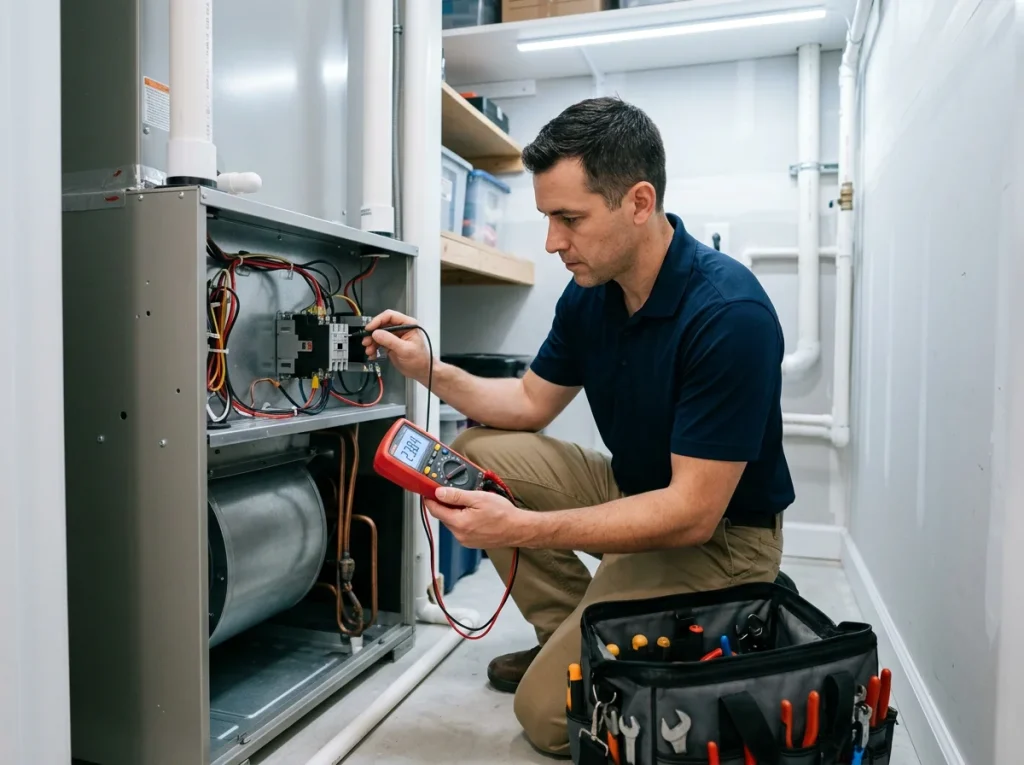
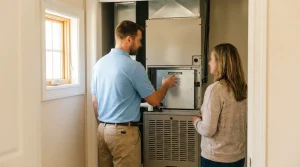
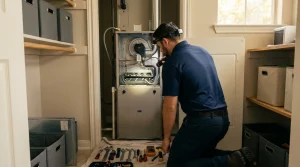
The homeowner's check above covers the basics, but a professional HVAC service in Houston inspection goes deeper into the components you cannot safely or effectively evaluate on your own.
Refrigerant level verification
Only a licensed technician can check refrigerant charge and identify leaks. Low refrigerant reduces cooling capacity and can damage the compressor if the system runs in this condition during heavy summer demand. This is not something to postpone if you suspect a problem.
Electrical connection testing
An HVAC technician will test capacitors, contactors, and wiring connections that can degrade over time. A failing capacitor is one of the most common causes of mid-summer breakdowns. It is inexpensive to replace proactively and expensive to deal with as an emergency on a 100-degree Saturday.
Evaporator and condenser coil cleaning
While you can rinse the outdoor condenser, the indoor evaporator coil requires professional cleaning. Dirty evaporator coils reduce heat-transfer efficiency, increase energy consumption, and impair dehumidification performance, which is especially important in Houston's climate.
Ductwork inspection
According to Energy Star, typical homes lose 20 to 30% of conditioned air through duct leaks, holes, and poor connections. A ductwork inspection identifies these losses before you spend an entire summer paying to cool air that never reaches your living spaces.
The ideal time for professional maintenance in Houston is March through early May, before HVAC companies enter their peak emergency season. Scheduling during this window typically means shorter wait times and the ability to address any findings before the first sustained heat wave.
How Houston's Climate Tests Your AC System
Houston's climate does not just test cooling capacity. It tests every aspect of your AC system simultaneously, in ways that matter for understanding readiness.
Heat and humidity arrive together
Most U.S. markets deal primarily with heat. Houston combines sustained temperatures above 95 degrees with dew points above 70 degrees for months. Your AC system must cool the air and remove moisture simultaneously, which requires both capacity and extended runtime. A system that barely handles spring conditions will not survive July.
Overnight temperatures stay high
Houston's overnight lows during summer often stay in the upper 70s. Your home never fully cools down overnight the way it does in climates with 60-degree summer nights. This means your AC system starts each day with a higher baseline cooling load, and any efficiency problems compound across the entire 24-hour cycle.
The cooling season lasts 8 to 9 months
Houston homeowners run their AC from roughly March through November. That extended runtime accumulates wear far faster than in markets with 4 or 5-month cooling seasons. A system that is on the edge of a problem in spring has 6 more months of heavy operation ahead before it gets a break.
For homeowners considering whether their aging system can handle another summer, AC installation Houston options are worth evaluating before the season starts, rather than after a mid-summer failure forces an emergency replacement.
The Cost of Waiting vs. Preparing
Every year, Houston HVAC companies see the same pattern. Homeowners delay spring maintenance; the first heat wave arrives; emergency service calls spike. The practical difference between preparing now and waiting is significant.
Spring maintenance appointments are easier to schedule, often available within days. Mid-summer emergency calls can mean 24 to 48 hours without cooling in a Houston home while you wait for availability. Spring repairs happen at standard rates. Emergency weekend and after-hours service carries premium pricing.
Beyond the immediate cost difference, a system that fails in July forces a replacement decision under pressure. You have less time to evaluate options, compare equipment, and make an informed choice about system type, efficiency level, and heating installation considerations when doing a complete system upgrade. A spring evaluation gives you the information and time to make a thoughtful decision on your terms.
Key Takeaways
- Test your AC during mild spring weather when problems are easier to identify and cheaper to fix
- Weak airflow, constant running, unusual noises, and rising bills are the four primary warning signs of a system that needs attention
- Replace air filters monthly during peak season, clear debris from the outdoor condenser, and verify all supply vents are open and unobstructed
- Schedule professional maintenance between March and early May for the best availability and to catch issues before summer demand
- Houston's combination of heat, humidity, and 8 to 9-month cooling seasons stresses AC systems more than most U.S. markets
- A spring evaluation gives you time and options that a mid-summer emergency eliminates
Frequently Asked Questions
How often should Houston homeowners replace their AC air filter?
Check your filter monthly and replace it at a minimum every 60 to 90 days. During peak summer months when the system runs extensively, monthly replacement is appropriate for most Houston homes. Homes with pets, allergy concerns, or above-average dust levels may benefit from more frequent replacement. A clean filter is the single most impactful maintenance step you can take for system performance and efficiency.
What temperature difference should I feel between the supply air and room temperature?
When your AC system is operating correctly, the air coming from your supply vents should be 15 to 20 degrees cooler than the air entering the return vent. You can check this with an inexpensive thermometer. If the temperature difference is less than 15 degrees, your system may have a refrigerant issue, a dirty evaporator coil, or an airflow restriction that needs professional evaluation.
Is it worth getting AC maintenance if my system seems to be working fine?
Yes. Many AC problems develop gradually and are not noticeable to homeowners until they become significant performance issues or complete failures. A professional inspection catches early-stage refrigerant leaks, failing capacitors, worn contactors, and dirty coils before they cause breakdowns. The cost of preventive maintenance is a fraction of an emergency repair or a compressor replacement caused by deferred maintenance.
When should I consider replacing my AC system instead of repairing it?
Consider replacement when your system is more than 12 to 15 years old and requiring frequent repairs, when repair costs approach 50% of the cost of new equipment, when energy bills are consistently rising despite maintenance, or when the system cannot maintain comfortable temperatures during moderate weather. A system that struggles in spring will not improve in summer. An honest evaluation of repair history and current performance helps determine whether continued repair or replacement makes better financial sense.
Can I run my AC in spring to test it before summer?
Absolutely. In fact, testing during spring is exactly what I recommend. Set your thermostat to cooling mode and run the system for 30 minutes to an hour during a mild day. Listen for unusual sounds, check airflow at every supply vent, verify the air feels cold, and confirm the system cycles off when it reaches the set temperature. If anything seems off, you have time to schedule service before the summer rush.
Conclusion
Getting your Houston AC ready for summer is not complicated, but it does require attention before the heat arrives. The homeowner's check in this guide takes less than 30 minutes. Professional maintenance takes a couple of hours. Both are small investments compared to a mid-summer breakdown in a Houston home.
At VeriChill, our spring evaluations go beyond basic maintenance. We assess your system's current performance, identify components that are showing wear, and give you a clear picture of what your system can handle this summer. If the system is solid, we will tell you. If it is showing signs that this might be its last season, we will tell you that too and walk you through your options while you still have time to decide.
Ready to find out where your AC stands before Houston's summer arrives? Call us at 281-559-6995 or visit verichill.com to schedule a spring evaluation.