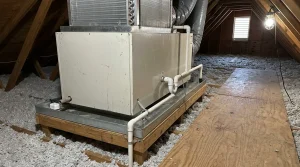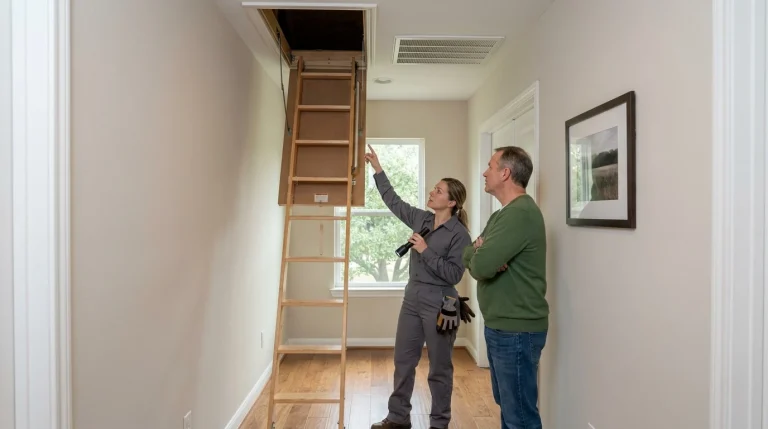
Not always, but you should always have the ductwork inspected when you replace your Houston AC. Replacing ductwork makes sense when the ducts are damaged, leaking, moldy, crushed, or sized for a different system than the one you are installing. If the ducts are in good shape, sealing and a few targeted repairs are often enough. The goal is simple: the new equipment can deliver the comfort and humidity control it was designed for only if the duct system can carry air to every room.
A new air conditioner gets most of the attention in a replacement project. It is the expensive box in the side yard, and its efficiency rating is printed in every quote. The ductwork hidden in your attic gets far less thought, even though every bit of cooling the system produces has to travel through it.
In Houston, that hidden part of the system works in some of the harshest conditions in the house. Attic ducts sit in heat and humidity for most of the year, and our long cooling season keeps air moving through them for months at a time. This guide explains when replacing ductwork with a new AC is worth it, when repairs or sealing will do, and what to look at before you decide.
Why Ductwork Matters as Much as the New AC
Your ducts deliver the air your new system cools and dries. If they leak, sag, or restrict airflow, the new equipment cannot do its job well.
The duct system delivers what the equipment makes
Think of your air conditioner as the engine and the ductwork as the road. Supply ducts carry conditioned air from the air handler to registers in each room, and return ducts bring room air back through a return grille that holds the air filter. When that road has holes, kinks or detours, part of the cooling never reaches the rooms you live in. The equipment keeps running, the energy bill keeps climbing, and some rooms stay warm.
Houston attics are hard on ducts
Most Houston homes run their ductwork through the attic, where summer temperatures climb far above the air inside the house. Flexible duct, the round insulated tube used in most homes here, relies on its outer jacket and insulation to keep that heat out. Over the years, jackets tear, insulation compresses, and connections loosen. Once that happens, the ducts pull attic heat and humid air into the system or push cooled air into the attic.
New equipment can expose old duct problems
A new system is often more sensitive to airflow than the one it replaces. Two-stage and variable-speed equipment rely on long, steady cycles at lower airflow to remove humidity. If the existing ducts are undersized, crushed, or leaky, those systems may run louder, cool unevenly, or lose the dehumidification benefit you paid for. That is why a duct check belongs in every AC replacement, not only in homes with obvious problems.
Signs Your Ductwork Should Be Replaced
Some duct systems only need sealing and adjustments. Others are past the point where repair makes sense, and replacing ductwork is the better use of your budget.
Age and condition of the flex duct
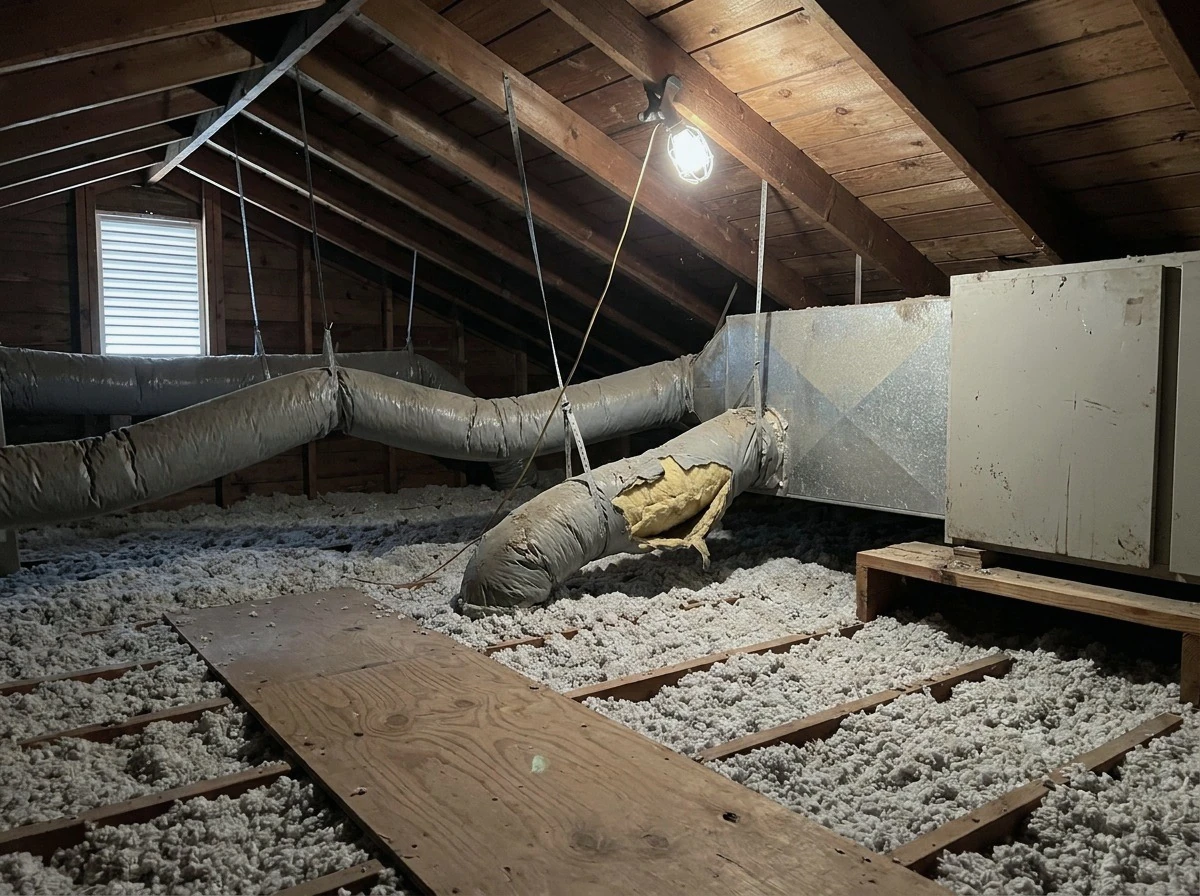
Older flex duct tends to show its age. The outer jacket becomes brittle and cracks, the inner liner can tear, and the insulation flattens where the duct rests on framing or straps. If a technician finds widespread jacket damage, collapsed sections, or runs that have pulled away from their fittings, patching every problem spot often costs more effort than it saves. Age alone is not a reason to replace ductwork, but age combined with visible wear usually is.
Moisture, mold and pest damage
Moisture is a serious warning sign in a humid climate. The EPA guidance on whether to have the air ducts in your home cleaned states that if you have insulated air ducts and the insulation gets wet or moldy, it cannot be effectively cleaned and should be removed and replaced. The same page also lists ducts infested with vermin, such as rodents or insects, and ducts clogged with excessive dust and debris as conditions that call for action. It also notes that controlling moisture is the most effective way to prevent biological growth in air ducts, so you must fix the moisture source along with the ducts.
Leaks, disconnected runs, and crushed ducts
Leaks waste cooling and pull dusty, humid attic air into the system. Common culprits include ducts that slipped off a register boot, joints sealed only with cloth tape that has dried out, and runs crushed by storage boxes or foot traffic during other attic projects. A few loose connections are easy to fix. A system with leaks at most joints, long sagging runs, and kinks in several places is a strong candidate for ductwork replacement.
Rooms that never cool evenly
Hot and cold rooms point to an airflow problem. A back bedroom that stays warm all summer, a second floor that never catches up in the afternoon, or registers that barely move air often trace back to duct design rather than the equipment. Our guide to ductwork problems that sabotage your HVAC walks through the most common layout and sealing mistakes in Houston attics.
Ducts sized for a different system
Duct sizing has to match the airflow the new system needs. If your old system was oversized, undersized, or expanded during a remodel, the ducts may not match the equipment you are installing now. Too little return air, for example, can starve the blower and make the system noisy and less efficient. When the new system is a different capacity or type, the in-home evaluation should confirm whether the existing ducts can carry the right amount of air.
Repair, Seal or Replace: Comparing Your Ductwork Options
You have three main paths when you replace your AC. The right one depends on what the inspection finds, not on a rule of thumb.
Keep and seal the existing ducts
If the ducts are in good shape and sized correctly, sealing the connections and fixing a few problem spots is often enough. The EPA notes that sealing duct air leaks can help save energy on heating and cooling bills, and that ducts should be properly sealed and insulated in unconditioned spaces, such as attics. This is usually the least disruptive option.
Partial ductwork replacement
Partial replacement targets the sections that fail inspection. A crushed trunk line, a few torn runs, a damaged plenum, or a return that is too small can be replaced while the rest of the system stays. This works well when most of the duct system is sound, and the problems are limited to a few areas of the attic.
Full ductwork replacement
A full ductwork replacement makes sense when damage is widespread, the ducts are moldy or contaminated, or the layout never worked well. It is also the right time to fix design problems such as long, twisting runs, missing returns in closed bedrooms, or poorly placed registers. Doing it while you replace the AC keeps the whole system designed as one unit.
Your options at a glance
| Option | When it fits | What it involves | Main tradeoff |
|---|---|---|---|
| Seal and repair | Ducts in good condition and sized for the new system | Sealing joints, reattaching loose runs, fixing small tears | Least disruption, but it does not fix a poor layout |
| Partial replacement | Damage limited to certain runs, the plenum or the return | Replacing failed sections and resealing the rest | Targets the worst problems while keeping sound ducts |
| Full replacement | Widespread damage, moisture or mold, or a layout that never worked | New supply and return ducts, plenums, and connections | Largest project, but the duct system matches the new AC |
What Drives the Cost of Replacing Ductwork
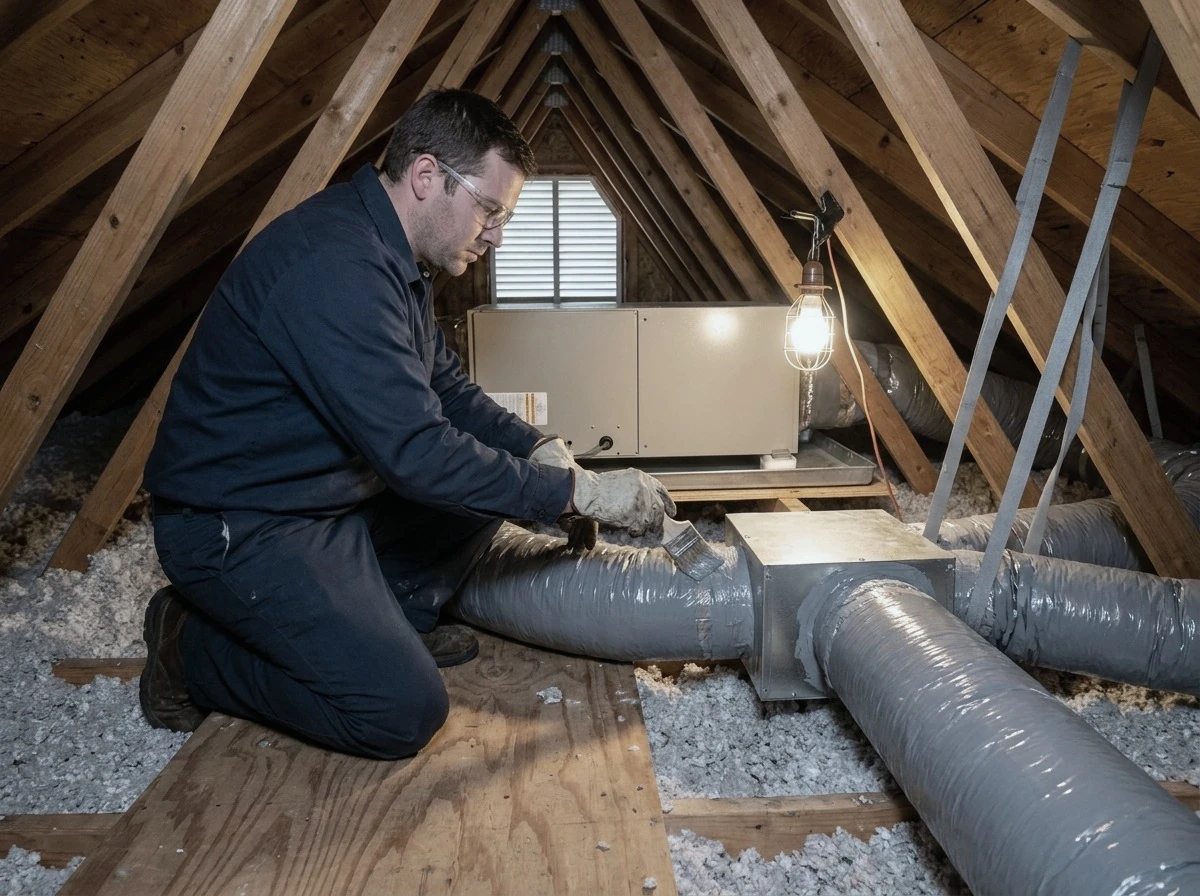
Every home is different, so a duct quote depends on what the job involves. These factors move the cost up or down more than anything else.
Attic access and layout
Easy access keeps the job simpler. A tall attic with a clear walkway and room around the air handler is faster to work in than a low, tight space with limited footing. Homes with a second floor, vaulted ceilings or several attic sections take more time because the crew has to route new ducts around framing and reach rooms from more than one area.
Materials and insulation
Most Houston homes use insulated flexible duct for the branch runs, with sheet metal or duct board for plenums and trunk lines. Duct insulation level, fitting type, and sealing quality all affect cost and performance. Well-supported, properly sealed, and insulated ducts keep attic heat out and protect the cooling your new system produces.
Returns, registers and design changes
Adding a return to a closed bedroom, relocating registers, or rebalancing the layout adds work but can solve comfort problems that equipment alone never will. Replacing grilles and register boots is a small part of the job and often worthwhile when the ducts are new.
Doing both jobs at the same time
Replacing ductwork with a new AC usually makes sense from a scheduling and design standpoint. The system is already shut down, the crew is already in the attic, and the new ducts and equipment can be planned together. Doing the ducts later means a second disruption and a second round of work around equipment that is already installed.
How Our Team Evaluates Ductwork During an AC Replacement
We look at the duct system as part of every AC replacement. VeriChill focuses on new system installations and full replacements for homes across the Houston area.
The in-home evaluation comes first
Every job starts with an in-home evaluation of your insulation, ductwork, ceiling heights, window orientation, and airflow distribution. That tells us how much cooling the house needs and whether the existing ducts can deliver it. For homeowners planning an installation of AC unit equipment, the duct check is part of sizing the system correctly, which helps avoid the problems described in our article on oversized AC units in Houston.
Cooling and heating share the same ducts
Your furnace or heat pump uses the same duct system as your air conditioner, so duct decisions affect both seasons. Our heating and cooling installation services cover heat pumps, gas furnaces, and dual-fuel systems, so we plan the equipment and ducts together. If you are weighing whether to replace hvac system components all at once, we explain the options for your home in plain terms.
Warranty, financing and service areas
Our installations come with a 10-year warranty on parts and the compressor, with VeriChill handling the 90-day registration. Financing is available through Wells Fargo, Synchrony Bank, and Goodleap for qualified homeowners. Texas HVAC licensing is held at the company level, and we serve Houston, Cypress, Katy, Spring, Sugar Land and Tomball. For habits that keep a new system and its ducts performing well, see our guide to how to maximize AC performance and lifespan.
Key Takeaways
- You do not always need new ducts, but every AC replacement should include a duct inspection.
- Houston attic heat and humidity wear out flex duct jackets, insulation and connections over time.
- Wet or moldy insulated ducts cannot be effectively cleaned and should be removed and replaced.
- Sealing and repairs suit sound ducts; partial or full replacement suits widespread damage or poor layout.
- Ducts must be sized for the airflow the new system needs, especially two-stage and variable-speed equipment.
- Replacing ductwork with a new AC lets the ducts and equipment be designed as one system.
Frequently Asked Questions
Should I replace 20-year-old ductwork?
Age alone does not decide it. A 20-year-old duct system that is well supported, sealed, and sized for your new equipment may only need sealing and minor repairs. If the inspection finds brittle or torn jackets, flattened insulation, disconnected runs, moisture damage, or rooms that never cool evenly, replacement is usually the better choice. The best time to decide is during an AC replacement, when the attic is already being worked on, and the new system's airflow needs are known.
Can I replace my own ductwork?
Some handy homeowners can handle small fixes, such as reattaching a loose run or replacing a short damaged section. A full ductwork replacement is a different job. It requires sizing each run for the airflow the system needs, sealing every connection properly, supporting ducts correctly in the attic, and working safely in high heat. Mistakes can reduce airflow, strain the new equipment, and create comfort problems. For a whole duct system, a qualified HVAC contractor is the safer path.
Does homeowners insurance cover air duct replacement?
It depends on your policy and on what caused the damage. Policies generally treat sudden events differently from gradual wear, and duct systems that simply age out are often treated as maintenance. If ducts were damaged by a covered event, such as a storm that damaged the roof and attic, your insurer may consider it as part of that claim. Check your policy and talk with your insurance agent before you assume either way.
Should I replace ductwork at the same time as my AC?
If the ducts need replacing, doing both together is usually the most practical choice. The system is already shut down, the attic work happens once, and the new ducts can be sized for the exact equipment being installed. Waiting means a second project and a second disruption later. If the inspection shows the ducts are sound, sealing and targeted repairs during the AC replacement can be enough, and there is no need to replace ducts that are working well.
Can new ductwork improve indoor air quality?
New ductwork can help when the old ducts are part of the problem. Leaky return ducts in the attic can pull in dust, insulation fibers and humid air, and damaged or moldy duct insulation can affect the air moving through it. Replacing those ducts and sealing the connections keeps the system drawing air from inside the house, through the filter. New ducts will not fix every air quality issue, but they remove a common source of dust and moisture in Houston homes.
Conclusion
Replacing your AC is the right moment to look closely at the ductwork. The new equipment can only deliver its rated comfort and humidity control if the ducts carry air to every room without leaking, kinking, or pulling in hot attic air.
For some Houston homes, sealing and a few repairs are all the ducts need. For others, with torn, moldy, or poorly designed ducts, replacing ductwork with the new AC is the step that makes the whole investment pay off in comfort. An honest inspection is what tells you which group your home falls into.
VeriChill looks at the equipment and the ducts together, so you can make that decision with clear information. Call VeriChill at 281-559-6995 or contact our team to schedule an in-home evaluation.