A residential AC system in Houston is supposed to last 12-15 years. Many don't. We regularly replace 8- and 9-year-old systems that should have another five years of service, and almost every premature failure we see traces back to a handful of root causes, none of which are the equipment brand.
Your AC's lifespan is determined by four things: how well it was sized and installed, how clean and sealed the ductwork is, how consistently it's maintained, and how hard the climate pushes it. You have influence over the first three. The fourth is Houston. Eight to nine months of cooling demand per year, triple-digit heat, and coastal air that accelerates corrosion, the climate is punishing. The systems that survive it are the ones designed and maintained for it.
This is the guide to what actually extends AC performance and lifespan in Houston, what shortens it, and what's worth the money versus what isn't.
How Long Should a Houston AC System Last?
The industry average is 12-15 years for a properly installed central AC or heat pump. In Houston specifically, with the extra runtime and salt air exposure on the Gulf side, the realistic range is 10-14 years. Systems installed well and maintained annually lean toward the top of that range. Systems installed fast and forgotten sit at the bottom sometimes 7for -9 years.
The compressor is almost always the failure point that triggers replacement. Once a compressor fails on a system past its warranty window, repair costs ($2,500-$4,500 installed) are hard to justify against a new system. Everything else , fans, capacitors, contactors, coils , is replaceable piecemeal.
The question isn't really "how long will my AC last?" It's "what can you do to push that lifespan toward 15 and away from 8?"
The Four Factors That Determine AC Lifespan in Houston
1. Correct Sizing From Day One
The most damaging decision in a Houston AC system is made before it's ever installed: sizing.
An undersized system runs constantly, never reaching setpoint on hot days, and wears out prematurely from sustained high-load operation. This is rare in Houston; most contractors err in the opposite direction.
An oversized system, far more common, cools the space too quickly, shuts off, and then cycles back on 10-15 minutes later. Short cycling is the silent killer of AC equipment. Each startup is the hardest moment for a compressor; more startups mean accelerated wear. Oversized systems also never run long enough to dehumidify properly, leaving you with cold, clammy air and the mold and comfort problems that come with it.
It's also what the majority of Houston contractors skip, substituting "one ton per 500 square feet" or whatever the existing system happened to be, which is exactly how oversized AC systems end up in Houston homes. If your current system is the wrong size, no amount of maintenance will give you the lifespan you're paying for.
2. Sealed, Right-Sized Ductwork
Your AC is only as good as what it's breathing through. A perfectly installed 4-ton system on leaky ductwork is essentially a 3-ton system that works twice as hard to do 75% of the job.
Duct issues, disconnects, kinks, undersized returns, leaky plenums, force the blower and compressor to work harder to move a given volume of air. That extra work shortens equipment life and accelerates wear on bearings, motors, and compressors, which is why ductwork problems sabotage HVAC performance in Houston homes more than any single equipment failure we see.
Before any equipment upgrade, get the ductwork inspected and pressure-tested. A healthy duct system has a total external static pressure of around 0.5 in WC. If you're at 0.8 or higher, your new AC will wear out faster than it should, regardless of brand.
3. Annual Professional Maintenance, The Right Kind
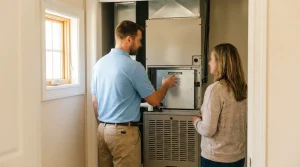
Most annual AC service in Houston is cursory. Someone shows up, hoses off the outdoor coil, glances at the filter, and leaves. That's not maintenance. That's a sales call.
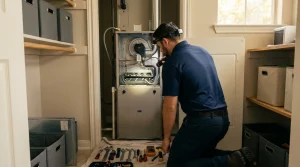
Real annual service in a Houston home includes:
- Refrigerant charge verification using subcooling/superheat measurements (not just looking at pressures)
- Capacitor microfarad readings against spec
- Condenser fan motor amp draw
- Blower motor amp draw and capacitor check
- Evaporator coil inspection (actually looking at it, not just assuming it's fine)
- Condensate drain line flush and float switch test
- Electrical connection torque check
- Static pressure measurement at the air handler
- Thermostat calibration check
- Filter sizing verification (is the filter actually the right size for the slot?)
That work takes 45-90 minutes per system and is the difference between a 10-year AC and a 14-year AC. The 15-minute maintenance visits are the ones that let problems compound.
Early spring is the right time for AC maintenance, before the summer load hits. A pre-summer AC checkup catches the issues that turn into July emergencies.
4. How You Operate the System
Short of maintenance and installation, your day-to-day operation has a real effect on lifespan.
Thermostat strategy. Aggressive setbacks (bumping the temperature up 10°F when you leave for work, back down when you return) make sense in mild climates. In Houston's summer, a 10°F recovery takes an hour of full-load compressor operation, which is harder on the equipment than steady operation would have been. Modest setbacks (3-4°F) are fine. Anything more than that in peak summer is counterproductive.
Thermostat setpoint. Setting the thermostat to 68°F on a 100°F day continuously pushes the system to its design limit. Setpoints in the 74-78°F range with humidity control let the system run in its efficient range and significantly extend lifespan.
Filter changes. Every 60-90 days in normal seasons, every 30 days during peak pollen or with pets. A clogged filter restricts airflow, raises static pressure, and strains the blower. This is the cheapest thing you can do and one of the most valuable.
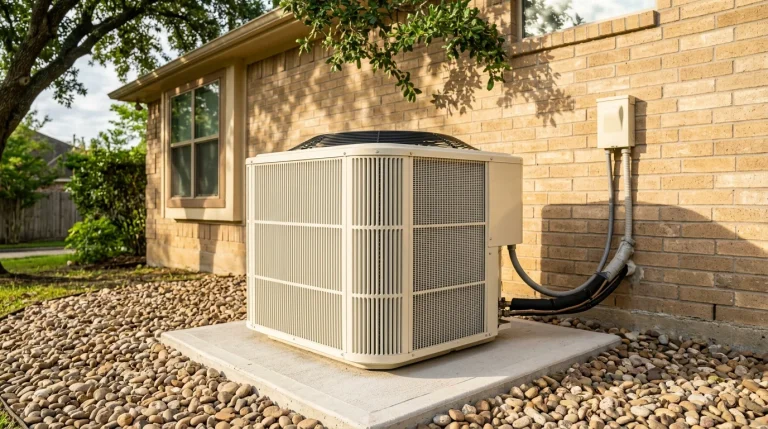
Condenser clearance. The outdoor unit needs 18-24" of clear space on all sides and 5 feet above. We routinely find condensers surrounded by shrubs, mulch piled against the base, and dryer vents aimed at them. Each of those quietly raises the operating temperature and wears the compressor.
Don't shut off the system entirely for extended periods. Going on vacation? Set the thermostat to 82°F, not off. Humidity will otherwise climb to levels that encourage mold growth, and the system will work harder to catch up on return.
Houston-Specific Lifespan Threats
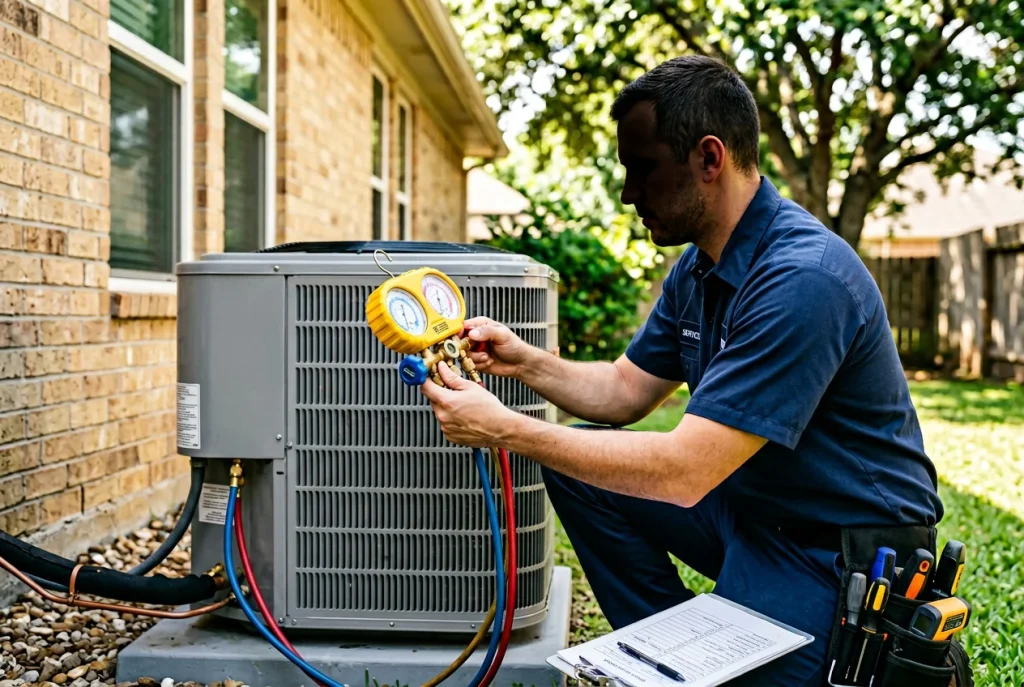
A few environmental factors hit Houston harder than most markets:
Coastal corrosion. Homes within 30 miles of Galveston Bay and the Gulf get measurable corrosion on outdoor coils from salt-laden air. Systems without protective coil coatings show corrosion damage within 5-7 years. Specify coastal-rated equipment or aftermarket coil coatings for replacement.
Hurricane and flood exposure. A flooded condenser or air handler is rarely salvageable. After any named storm event with significant water, have the system inspected before first use.
Cottonwood season. Early summer releases large amounts of cottonwood fluff and pollen, which clog outdoor condenser coils. A condenser hose-down in June is meaningful maintenance in Houston, not a cosmetic task.
Long shoulder seasons. Most Houston systems run in May and still run in October. That extra runtime is cumulative wear compared to a system that gets four months of downtime each year.
Frequent partial-load operation. Shoulder seasons and mild summer mornings put single-stage systems into short-cycle patterns. Variable-speed and two-stage equipment handle partial load without cycling, which is one of the biggest lifespan arguments for that class of equipment in this climate.
What's Worth Spending Money on and What Isn't
Worth it:
- A proper Manual J load calculation before replacement
- Variable-speed or two-stage equipment in Houston's climate
- MERV 11-13 filtration (with airflow verification)
- Annual professional maintenance with documented measurements
- Ductwork sealing if the current static pressure is high
- Coil coating on coastal installations
- A right-sized condensate drain with a float safety switch
Not usually worth it:
- Annual refrigerant "top-offs" on a system that isn't leaking (refrigerant doesn't get consumed, if it's low, it's leaking, and the fix is the leak, not the refill)
- Ultra-premium filtration without ductwork upgrades to match
- Whole-home humidifiers in Houston (we have the opposite problem)
- Extended warranties that cost more than the repairs they'd cover
- Aggressive thermostat setback schedules in peak summer
Signs Your Current System Is Nearing the End
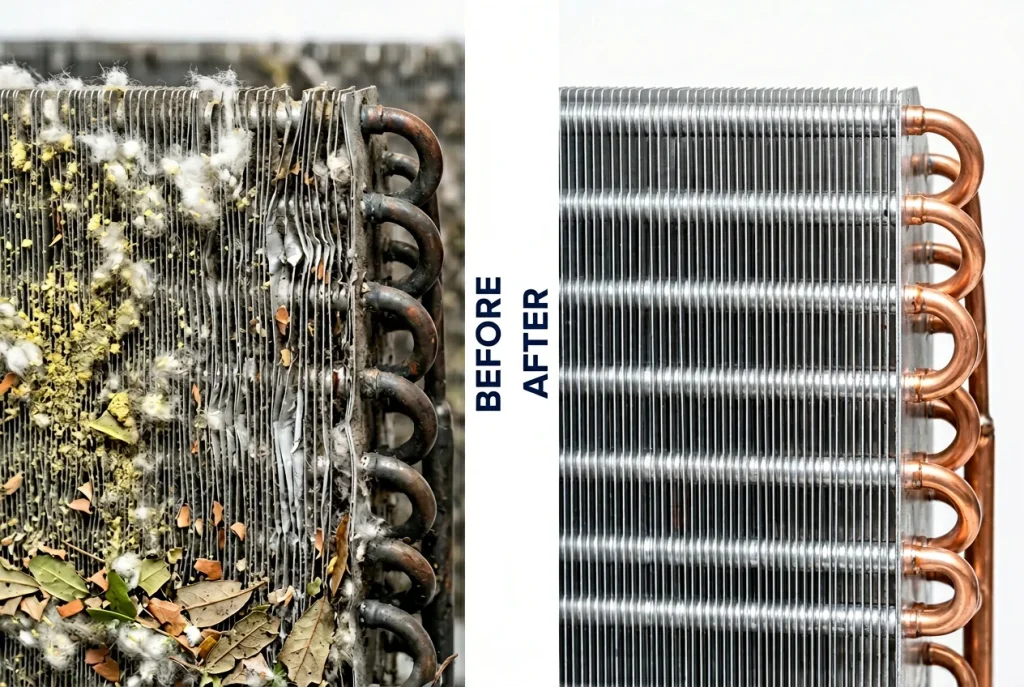
Replacement decisions are easier when the system gives you warnings. Watch for:
- Repair costs are approaching 50% of the replacement cost
- Compressor hum or hard-start conditions on cycle initiation
- Increasing humidity despite normal operation
- Refrigerant leaks (especially R-22 systems, which are being phased out and are expensive)
- Rising energy bills with no other explanation
- Comfort problems (hot rooms) that weren't there a year ago
- Ice on the evaporator coil or refrigerant lines in summer
- System age over 12 years combined with any of the above
Most systems give 12-24 months of warning before complete failure. Planning the replacement during that window means you choose the timing, the equipment, and the contractor, rather than needing a 96-hour emergency install in July.
How VeriChill Thinks About Lifespan
Every system we install starts with a Manual J. Everyone. Ductwork is evaluated before equipment is specified. Variable-speed is our default recommendation for Houston's climate because the lifespan-and-comfort math is straightforward: longer cycles at lower capacity, less startup wear, better humidity control, steadier performance.
We build maintenance plans that actually measure the equipment rather than perform a service appearance. And we tell homeowners the truth when a system has less life left than the repair bill suggests, even when that's not what's easiest to hear.
A 15-year AC isn't luck. It's design plus ducts plus maintenance. When those three line up, Houston's climate still punishes the equipment just not fast enough to matter.
Frequently Asked Questions
How long does an AC last in Houston?
Realistically, 10-14 years, with well-installed and well-maintained systems pushing 15. The extra humidity and longer runtime compared to national averages shorten the upper end of the typical 15-20-year bracket you'll see in drier climates.
What's the most common reason AC systems fail early in Houston?
Oversizing plus poor ductwork plus inadequate maintenance, in roughly that order. Compressor failure triggered by short cycling due to an oversized system on leaky ducts is the pattern we most often see.
Is it worth repairing an 11-year-old AC?
Depends on the repair cost and the failure. Replacing a capacitor in an 11-year-old system is an easy yes. A compressor replacement at the same age is usually a no; dollars spent on an old system buy you limited remaining life.
Do smart thermostats extend AC life?
They can, indirectly. Reasonable setpoints with modest setbacks reduce cumulative compressor runtime and prevent the damaging long-recovery situations that aggressive programs cause. The thermostat is not the biggest factor in lifespan, but it's a meaningful one.
Can I extend my AC's life by running it less?
Sort of. Running it less means fewer hours on the compressor. But running it at extreme setpoints (82°F) in Houston's summer creates other problems: humidity climbs, the equipment has to work harder to catch up when it cools, and indoor air quality degrades. A setpoint in the mid-70s with steady operation is actually easier on the system than wide swings.
Is variable-speed worth the extra cost in Houston?
In most Houston homes, yes. The longer cycles pull more humidity, the partial-load efficiency gain is meaningful with our runtime, and the reduced startup cycling extends compressor life. The payback is comfort plus lifespan, not just energy bills.
What does a good annual AC service in Houston cost?
$129-$189 per system is the typical range for real maintenance, meaning actual measurements, documented readings, and a service report. Anything under $79 is usually a service call disguised as maintenance.
If your Houston AC is more than 8 years old, an annual service call that actually measures the system tells you where it stands and what's worth doing. That's the decision framework we walk every homeowner through, before the July failure forces a rushed replacement.