An AC condensate drain line carries away the water your air conditioner pulls out of the air, and in Houston that adds up to a lot of water over a long, humid cooling season. Most water damage from an AC starts with a drain that was installed poorly: a line with too little slope, no trap or cleanout, no secondary pan under an attic unit, or no overflow safety switch. Getting those installation details right on a new system is the simplest way to keep water off your ceilings and out of your walls.
Most homeowners never think about the small white pipe that runs from their air handler until a brown stain shows up on a ceiling. By then, water may have been collecting in an attic pan or soaking into drywall for days. A clogged or poorly installed condensate drain is one of the most common reasons an air conditioner leaks water inside a house.
In Houston, the drain works harder than in drier parts of the country. Our long cooling season and high humidity mean the indoor coil pulls moisture from the air for most of the year. This guide explains how the AC condensate drain line works, which installation details prevent water damage and what signs tell you the drain needs attention.
How an AC Condensate Drain Line Works
The condensate drain removes the water your AC takes out of the air. It is a simple system, but every part of it has a job.
Where the water comes from
Your air conditioner cools and dries the air at the same time. Warm, humid indoor air passes over the cold evaporator coil, and the moisture in that air condenses on the coil fins the same way water beads on a cold glass. That water drips into a drain pan built into the coil cabinet. On a humid Houston afternoon, the coil can produce a steady trickle for hours.
The primary drain line and trap
From the pan, water flows into the primary condensate drain line, usually PVC pipe that runs to the outdoors or to an approved drain inside the home. Most systems include a trap near the air handler, a U-shaped bend that holds a little water. The trap keeps the blower from pulling or pushing air through the drain, which lets water flow out freely instead of being held in the pan. A cleanout fitting near the trap gives a technician a way to flush the line.
The secondary pan and overflow protection
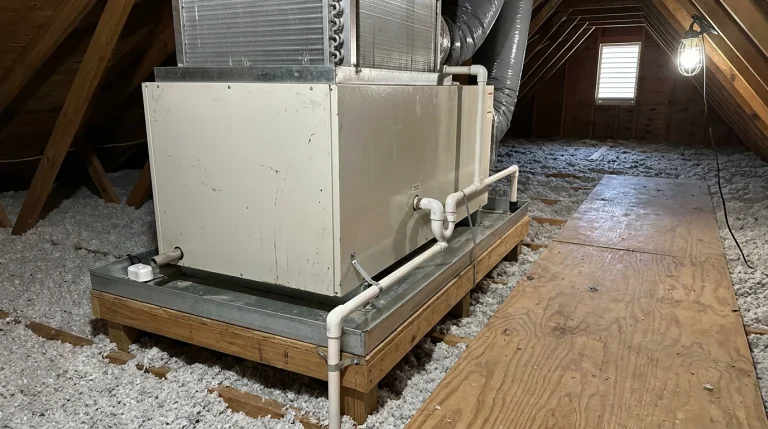
When the air handler sits in an attic or above a finished ceiling, a second layer of protection matters. A secondary drain pan sits under the whole unit to catch water if the primary drain backs up or the coil pan cracks. That pan has its own drain line or an overflow safety switch, often called a float switch, that shuts the system off when water rises. The shutdown is inconvenient, but it is far better than water coming through the ceiling.
Why Condensate Drains Matter So Much in Houston
Houston homes face a higher risk of drain problems than homes in drier climates. Three local factors stack up.
A long, humid cooling season
Our air conditioners run for most of the year, and the more humid the air, the more water the coil removes. More water means more opportunity for algae and slime to grow inside the drain line, and more water to deal with when a clog forms. A drain that would be a minor issue in a dry climate can turn into a soaked ceiling here.
Attic air handlers above living space
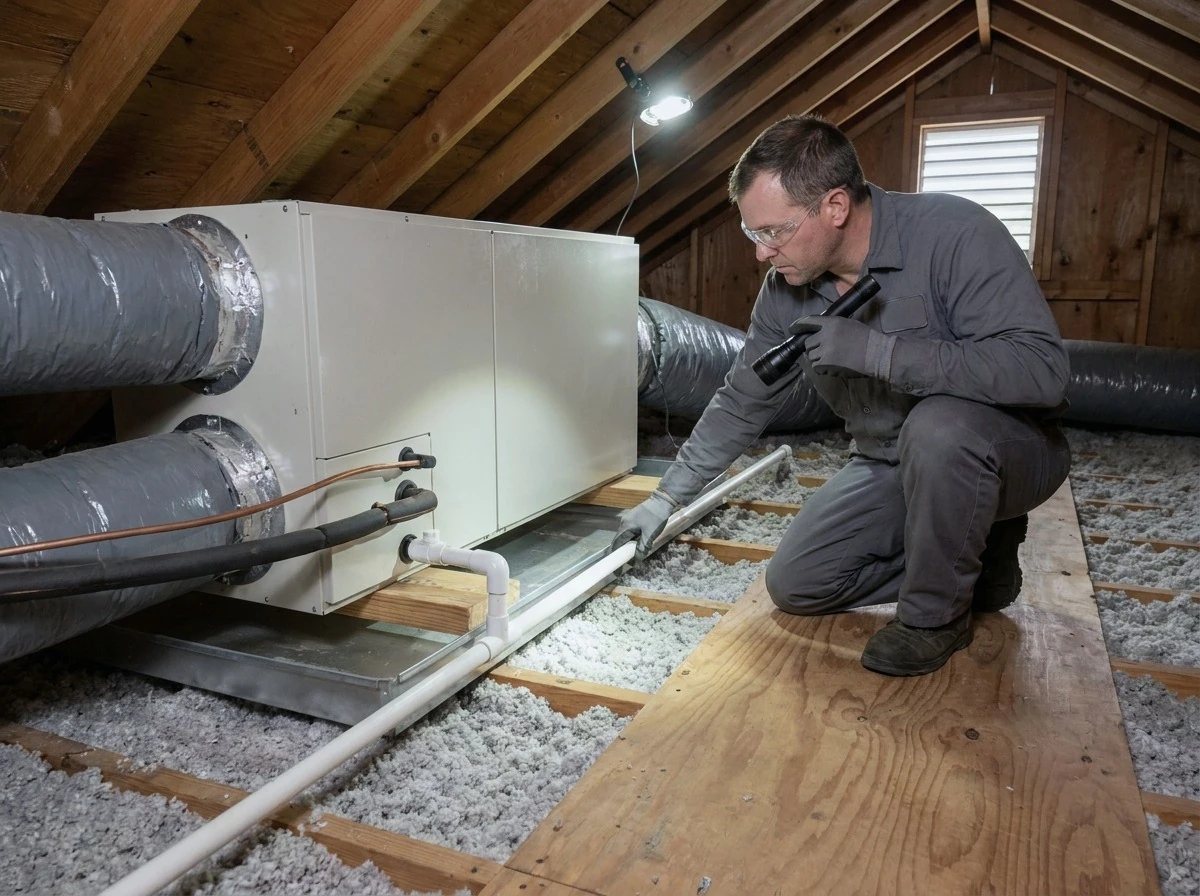
Many Houston homes put the air handler in the attic, directly above bedrooms and hallways. When a drain overflows in an attic, water has nowhere to go but down through insulation and drywall. That is why the secondary pan, its drain and the float switch are not optional extras for attic installations. They are the main line of defense.
Moisture, mold and indoor air
Standing water and damp materials invite mold. The EPA's brief guide to mold, moisture and your home states that the key to mold control is moisture control, and it recommends keeping air conditioning drip pans clean and the drain lines unobstructed and flowing properly. The same guide says to dry water-damaged areas and items within 24 to 48 hours to prevent mold growth, and to keep indoor humidity below 60 percent, ideally between 30 and 50 percent relative humidity. A healthy condensate drain supports all three goals.
Installation Details That Prevent Water Damage
Most drain failures trace back to how the line was installed. These are the details worth checking on any new system.
Steady downward slope
A condensate line drains by gravity. It needs a steady downward slope along its full length, with no sags or flat spots where water and debris can sit. Long attic runs that rest on insulation or sag between supports are a common source of slow drainage and clogs. Proper support keeps the slope consistent for the life of the system.
A properly built trap and cleanout
The trap must be the right depth for the equipment and installed where the manufacturer calls for it. A missing trap can leave water sitting in the coil pan, while a poorly built one can hold debris. A cleanout tee near the air handler, with a removable cap, makes it much easier to flush the line during routine care.
Secondary pan and float switch for attic units
For attic and closet installations above finished space, a secondary pan under the air handler catches overflow. The pan should be level, sized to fit under the whole unit and either drained to a visible location or fitted with a float switch that shuts the system down when water collects. Some installations use both.
Insulating lines that run through hot spaces
Cold condensate running through a hot Houston attic can make the outside of the pipe sweat. Insulating the line where it passes through unconditioned space reduces that condensation, which otherwise drips onto insulation and drywall below.
Where the line ends
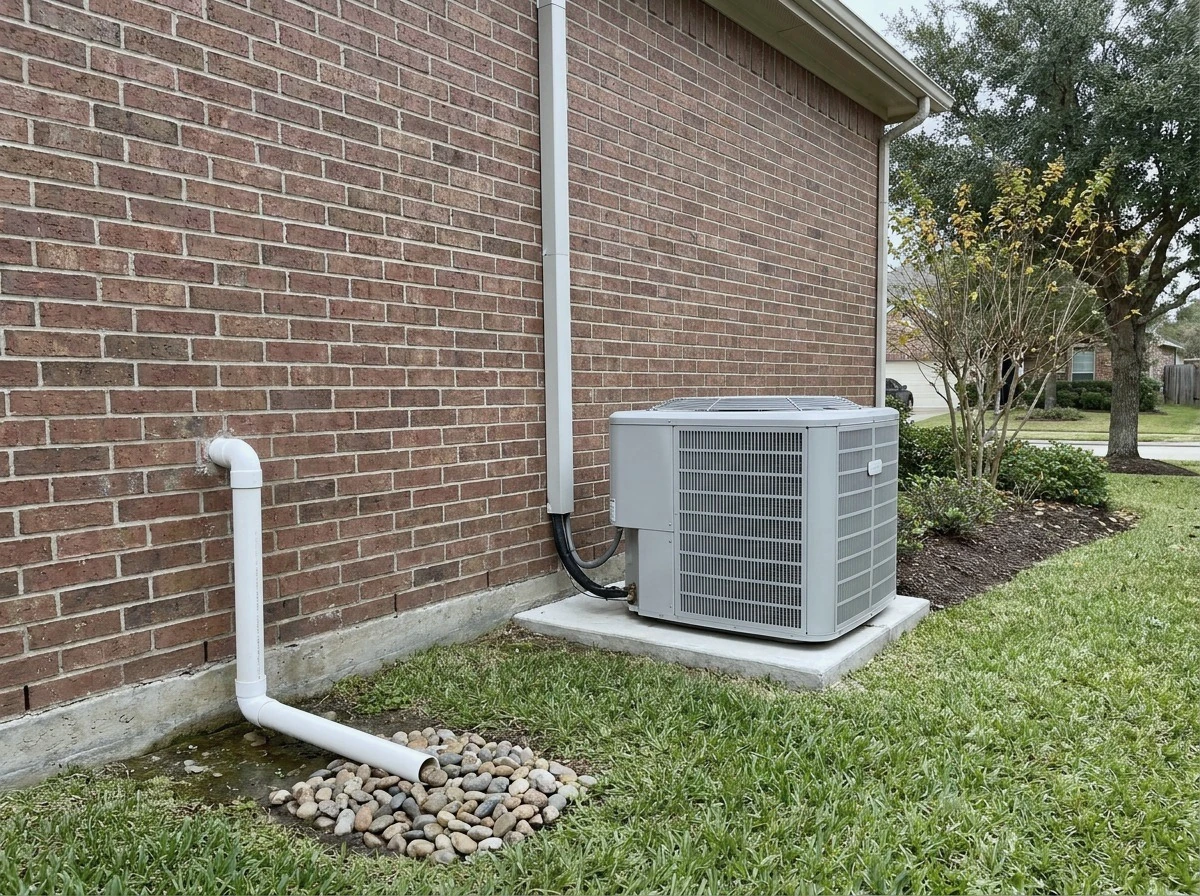
The drain should end where water cannot cause trouble: away from the foundation, walkways and doors, or into an approved drain connection inside the home. A line that dumps next to the slab can keep the soil there constantly wet. If the secondary line ends above a window or door, a drip there is a warning sign that the primary drain is blocked.
Condensate pumps where gravity will not work
Some air handlers sit too low for gravity drainage, such as units in a garage or a closet with no nearby outlet. In those cases a small condensate pump lifts the water to a drain. Pumps need their own overflow safety switch, because a failed pump can flood the pan quickly.
Installation details at a glance
| Component | What it does | What goes wrong without it |
|---|---|---|
| Steady slope | Lets water drain by gravity | Water and debris sit in sags and clog the line |
| Trap | Keeps blower air pressure from holding water in the pan | Pan overflows or drains slowly |
| Cleanout tee | Gives access to flush the line | Clogs are harder to clear |
| Secondary pan | Catches overflow under attic units | Water reaches insulation and ceilings |
| Float switch | Shuts the system off when water rises | Overflow continues unnoticed |
| Line insulation | Prevents sweating in hot spaces | Drips onto attic insulation and drywall |
Signs Your Condensate Drain Line Is Clogged or Failing
A clogged drain usually gives warning before it causes major damage. Knowing the signs lets you act early.
Water in the secondary pan
Water should not sit in the secondary pan under an attic unit. If you see standing water there during a seasonal attic check, the primary drain is likely blocked or the coil pan is leaking. Either way, the system needs attention before the backup protection is overwhelmed.
Ceiling stains and water near the indoor unit
A brown stain or soft spot on a ceiling under the air handler is a classic sign of an overflowing condensate pan. In a garage or closet installation, you may see water pooling around the base of the unit instead. Both mean water is going somewhere it should not.
The system shuts off on its own
If your AC stops cooling and the outdoor unit is silent, a float switch may have tripped because water rose in the pan. Many homeowners mistake this for a major breakdown. Checking the pan and drain first can save worry, but the clog behind it still needs to be cleared.
Musty smells and dripping from the secondary outlet
A musty or damp smell near the return grille or air handler can point to standing water and growth in the pan or drain. Water dripping from a secondary drain outlet above a window or door means the primary drain is blocked and the backup line is doing its job.
How Our Team Handles Condensate Drains on a New Installation
A new air conditioner is the right moment to get the drain system right. VeriChill focuses on new system installations and full replacements for homes across the Houston area.
The in-home evaluation covers the whole system
Every job starts with an in-home evaluation of your insulation, ductwork, ceiling heights, window orientation and airflow distribution. That same visit shows where the air handler sits, how the existing drain runs and whether the location calls for a secondary pan, a float switch or a condensate pump. Homeowners planning a residential aircon installation get a plan for the drain along with the equipment.
Planning cooling, heating and drainage together
Many air handlers and furnaces share a cabinet with the evaporator coil, so drain routing affects both heating and cooling equipment. Our hvac heating installation work covers heat pumps, gas furnaces and dual fuel systems, so the whole indoor setup is planned as one. For homeowners comparing new hvac systems, we explain each option in plain terms. A system that removes moisture well also pairs naturally with the steps in our guide to whole-home dehumidification in Houston.
Warranty, financing and service areas
Our installations come with a warranty of 10 years parts and compressor, with VeriChill handling the 90-day registration. Financing is available through Wells Fargo, Synchrony Bank and Goodleap for qualified homeowners. Texas HVAC licensing is held at the company level, and we serve Houston, Cypress, Katy, Spring, Sugar Land and Tomball. For seasonal habits that keep a system and its drain healthy, see our pre-summer AC checkup and our guide to how to protect your AC's performance and lifespan.
Key Takeaways
- The AC condensate drain line carries away the water the indoor coil removes from humid Houston air.
- Most water damage starts with installation details: slope, trap, cleanout, secondary pan and float switch.
- Attic air handlers above living space need a secondary pan with its own drain or a float switch.
- The EPA advises keeping AC drip pans clean and drain lines unobstructed and flowing properly.
- Water in the secondary pan, ceiling stains or a sudden shutdown point to a clogged drain line.
- A new AC installation is the best time to correct a poorly routed or unprotected condensate drain.
Frequently Asked Questions
Where should an AC condensate drain line drain to?
A condensate drain line should end where the water cannot cause damage. Common options are the outdoors, away from the foundation, doors and walkways, or an approved drain connection inside the home. Local building codes govern which connections are allowed, so the installer should follow them. If the system has a secondary drain line from an attic pan, it is often routed to a visible spot, such as above a window, so a drip there warns you that the primary line is blocked.
What are the signs that my AC drain line is clogged?
The most common signs are water sitting in the secondary pan under an attic unit, water pooling around an indoor unit in a garage or closet, and stains or soft spots on a ceiling below the air handler. Your system may also shut off on its own if a float switch trips. A musty smell near the return grille, or water dripping from a secondary drain outlet above a window or door, also suggests the primary drain line is blocked.
Can I still run my AC if it's leaking water?
It is best to turn the system off if you see water leaking inside the house. Running it keeps producing condensate, which adds more water to a pan or ceiling that is already wet. If a float switch has shut the system down, it is doing its job, so do not bypass it. Once the system is off, clear standing water and dry the area quickly, then have the drain checked so the cause is fixed before you run the AC again.
How do I unclog my AC condensate drain line?
Start by turning the system off at the thermostat. Many homeowners clear a simple clog with a wet and dry vacuum held to the outdoor end of the line, which pulls out algae and debris. A cleanout tee near the air handler can also be used to flush the line with water. Avoid harsh chemicals unless the equipment manufacturer recommends them. If the line clogs again soon after, or water has reached a ceiling, a qualified HVAC technician should look at the slope and trap.
How do you fix an air conditioner leaking water inside?
First, turn the system off and clean up the water to limit damage. Then check the likely causes: a clogged condensate drain line, a cracked or rusted drain pan, a disconnected drain fitting or a failed condensate pump. A dirty filter or low airflow can also freeze the coil, which leaks when the ice melts. Some causes are simple to clear, while others need a technician. If leaks keep returning, the drain installation itself may need to be corrected.
Conclusion
The condensate drain is one of the smallest parts of your air conditioner, but in Houston it handles a large amount of water over a long, humid season. When it clogs or was installed without the right slope, trap, secondary pan or float switch, that water ends up in places it should never be.
A few installation details make the difference between a drain that quietly does its job for years and one that ruins a ceiling. If you are planning a new system, make sure the drain gets as much attention as the equipment itself.
VeriChill plans the drain along with the rest of the installation, so your new system keeps water where it belongs. Call VeriChill at 281-559-6995 or contact our team to schedule an in-home evaluation.