Proper heating system sizing means matching your equipment's capacity to your home's actual heating requirements. In Houston, where oversized systems are the most common installation problem, getting this right determines whether your home heats evenly, controls humidity, operates efficiently, and avoids premature equipment wear from short cycling.
When homeowners think about heating installation, the sizing conversation often gets reduced to "bigger is better." That instinct makes sense on the surface, but it's wrong for Houston homes. Our mild winters, combined with the fact that your heating equipment shares ductwork with your cooling system, create sizing considerations that don't apply in colder climates.
This guide explains why sizing matters so much, what happens when systems are too large or too small, what factors determine the right size for your Houston home, and how the evaluation process should work. If you're still deciding whether your current system needs replacing, our guide on signs you need a new heating system can help with that decision.
Why Is Oversizing the Biggest Heating Problem in Houston Homes?
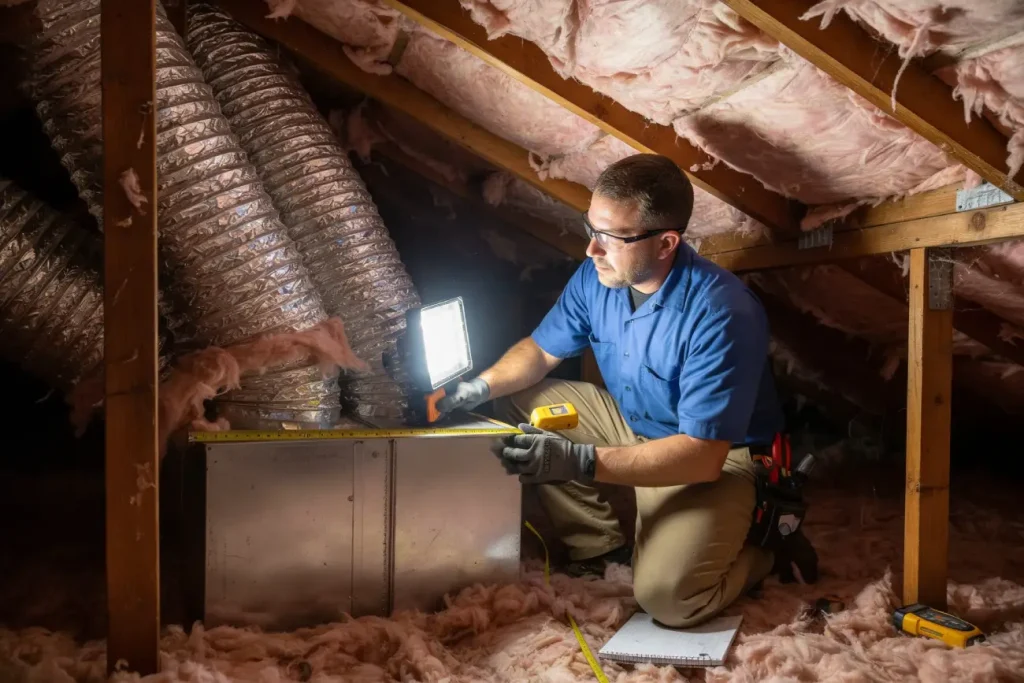
Oversized heating systems are everywhere in Houston because contractors often add capacity "just in case" of hard freezes, use simplified square-footage calculations instead of proper evaluations, or install the same-size unit as the previous system without verifying that it was correct in the first place. An oversized system short-cycles, wastes energy, creates hot and cold spots, and actually makes your home less comfortable.
Here's what short-cycling looks like. Your oversized system fires up, blasts heated air, hits the thermostat target within minutes, then shuts off and repeats. This rapid on-off pattern creates several problems:
- Uneven temperatures: Heated air doesn't have time to distribute through the full ductwork system. Rooms near the furnace get blasted with heat, while bedrooms at the end of duct runs stay cool.
- Wasted energy: Every startup cycle is the least efficient moment of operation. More startups per hour means more energy wasted.
- Humidity issues: In heating mode, short-cycling doesn't allow enough time for airflow to maintain proper humidity levels. Your home can feel stuffy and dry near the system and damp further away.
- Premature wear: The constant starting and stopping stresses on mechanical components lead to earlier failures and shortened equipment life.
- Noise: Repeated startups produce more noticeable noise than a system running steadily at appropriate capacity.
The irony is that homeowners who ask for oversized systems want maximum comfort during cold snaps, but oversizing actually delivers less comfort at a higher operating cost.
| System Sizing | Comfort Level | Efficiency | Equipment Life | Humidity Control |
| Oversized | Poor (hot/cold spots) | Low (short-cycling waste) | Shortened | Poor |
| Undersized | Poor (can't keep up in freezes) | Low (constant operation) | Stressed | Moderate |
| Properly sized | Consistent throughout the home | Optimal | Maximum lifespan | Best |
What Factors Determine the Right Heating System Size for Your Houston Home?
Proper sizing accounts for your home's square footage, insulation quality, ductwork condition, ceiling heights, window orientation, number and type of windows, air infiltration, and Houston-specific climate data. No single factor drives the answer. It's the combination that determines your actual heating load.
Square footage is a starting point, not the answer. Two Houston homes of identical size can have dramatically different heating requirements based on their construction, orientation, and condition. Here's what actually matters:
- Insulation levels: A 1970s Meyerland home with original insulation has far higher heat loss than a 2020 Bridgeland build. Your walls, attic, and floor insulation all affect how quickly heat escapes.
- Ductwork condition: Leaking or poorly insulated ductwork in Houston attics loses conditioned air to spaces that reach 140°F in summer and still radiate heat loss in winter. Ductwork quality directly affects how much heating capacity actually reaches your living spaces.
- Window characteristics: Large windows, single-pane glass, and west or north-facing window walls lose more heat during winter nights. Window area, glazing type, and orientation all factor into the calculation.
- Ceiling heights: Houston homes range from standard 8-foot ceilings to 12-foot and vaulted spaces. Higher ceilings mean more volume to heat, requiring appropriately scaled capacity.
- Air infiltration: Older Houston homes with original weather stripping, uninsulated garage walls, or gaps around penetrations lose heated air more quickly than in tight modern construction.
- Existing hvac system ductwork sharing: Your furnace or heat pump shares ductwork with your AC. The ductwork needs to support both systems, meaning heating capacity must complement cooling airflow requirements rather than being sized independently.
| Factor | How It Affects Sizing | Houston-Specific Note |
| Insulation quality | Higher loss = more capacity needed | Varies widely between decades of construction |
| Ductwork condition | Leaks reduce delivered capacity | Attic ducts in Houston's heat extremes are critical |
| Window area and type | More glass = more heat loss | West/north-facing windows lose most heat |
| Ceiling height | More volume = more capacity | Many Houston homes have 9-12 ft ceilings |
| Air sealing | Gaps increase heating demand | Older homes in established neighborhoods are most affected |
| Duct sharing with AC | Must support both systems | Houston's cooling-dominant climate drives duct sizing |
How Should the Sizing Evaluation Process Work?
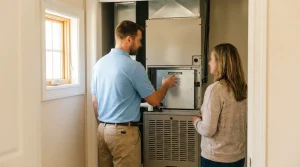
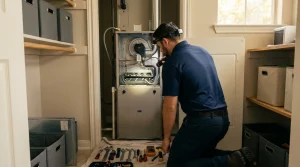
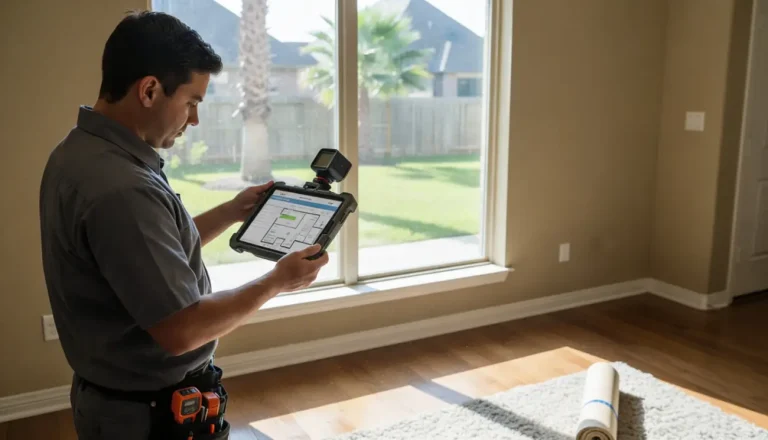
A proper sizing evaluation takes one to two hours in your home and involves measuring, inspecting, and documenting every factor that affects your heating load. This isn't a quick walkthrough. It's an engineering assessment that produces a specific capacity recommendation tailored to your house, not a generic number pulled from a sizing chart.
Here's what your contractor should do during the evaluation:
The process starts with your comfort concerns: rooms that feel cold, temperature differences between floors, and specific problem areas. The technician then systematically works through your home: measuring rooms, checking insulation, evaluating window orientation, inspecting ductwork, and noting ceiling heights. In Houston, attic-mounted equipment and ductwork warrant particular attention, as extreme summer attic temperatures can degrade insulation over time.
After the physical assessment, your contractor should present:
- A specific equipment capacity recommendation (in BTUs or tons)
- The reasoning behind that recommendation
- Options at different efficiency tiers and investment levels
- Any ductwork or infrastructure work needed for optimal performance
- How the heating system sizing coordinates with your cooling system needs
The evaluation should never be a contractor glancing at square footage and recommending the same size or "one step up." That perpetuates the oversizing problem.
| Evaluation Step | What It Determines |
| Comfort discussion | Current problems and priorities |
| Room measurements | Total conditioned volume |
| Insulation inspection | Heat loss rate through walls and attic |
| Window assessment | Heat loss through glazing |
| Ductwork evaluation | Delivery capacity and condition |
| Air sealing review | Infiltration-related heat loss |
| System coordination | Heating and cooling compatibility |
Why Two-Stage and Variable-Speed Systems Help with Houston Sizing

Two-stage and variable-speed heating systems provide a built-in buffer against the sizing challenges Houston presents. A two-stage system operates at lower capacity on mild days and at full capacity during hard freezes. Variable-speed systems continuously adjust output to match your home's real-time heating demand. This flexibility means the system adapts to conditions rather than being locked into one output level.
Single-stage systems run at 100% capacity every time they operate. If sized for Houston's rare hard freezes, they're oversized for most winter days. If sized for typical mild conditions, they can't keep up during freezes. Two-stage and variable-speed systems address this dilemma by operating at the appropriate level for current conditions.
For Houston homes, this means consistent temperatures, better humidity control, quieter operation on mild days, and the ability to handle a 25°F freeze the same week as a 60°F afternoon.
VeriChill evaluates every home for proper heating system installation sizing before recommending equipment. We assess insulation, ductwork, ceiling heights, window orientation, and airflow distribution to determine the right capacity and system type. Every installation includes performance verification and a 10-year parts-and-compressor warranty, with registration completed within 90 days.
Key Takeaways
- Oversizing is Houston's most common heating installation mistake, leading to short cycling, uneven temperatures, wasted energy, and premature equipment wear.
- Square footage alone cannot determine proper sizing. Insulation, ductwork, windows, ceiling heights, and air sealing all affect your heating load.
- Houston homes share ductwork between heating and cooling, so your heating system must complement your AC's airflow requirements.
- A proper evaluation takes one to two hours and involves measuring, inspecting, and documenting your home's specific characteristics.
- Two-stage and variable-speed systems offer more sizing flexibility because they can modulate output to match varying heating demands.
- The contractor's evaluation process tells you everything about whether they'll size your system correctly or default to oversizing.
Frequently Asked Questions
How do I know if my current heating system is oversized?
Signs include frequent short-cycling (turning on and off every few minutes), uneven temperatures between rooms, and rooms near the system being too warm while distant rooms stay cool.
Can I just replace my current system with the same size?
Only if you know the current system was properly sized. Many Houston homes have oversized systems from the original installation. A professional evaluation confirms whether the existing size is correct.
Does my heating system need to be the same capacity as my AC?
Not necessarily. Houston's cooling load is typically larger than the heating load. Your heating system should complement your cooling system's ductwork requirements rather than match its capacity.
How many BTUs per square foot do I need in Houston?
Rules of thumb like "25-30 BTUs per square foot" are unreliable because they ignore insulation, windows, ductwork, and other critical factors. A proper evaluation produces a specific recommendation for your home.
Will a properly sized system keep up during hard freezes?
Yes. Proper sizing accounts for Houston's coldest expected temperatures, typically into the low 20s. The system is sized to maintain comfort during these conditions without being oversized for normal operation.
What's the difference between tons and BTUs for heating?
One ton equals 12,000 BTUs per hour. Residential heating systems in Houston typically range from 40,000 to 100,000+ BTUs, depending on home size and characteristics.
Does insulation quality really affect the size of a heating system?
Significantly. A well-insulated home may need a system one or two sizes smaller than the same floor plan with poor insulation. This is why evaluation matters more than square footage.
Should I size my heating system for current or future conditions?
Size for current conditions. If you plan insulation upgrades or major renovations, discuss these with your contractor so they can advise on how changes might affect your heating needs.
How does ductwork affect heating system sizing?
Leaking or undersized ductwork reduces the effective heating capacity reaching your living spaces. Your contractor should evaluate the ductwork condition as part of the sizing assessment.
Does VeriChill guarantee proper sizing?
VeriChill evaluates every home before recommending equipment. Our sizing process accounts for insulation, ductwork, ceiling heights, window orientation, and airflow distribution to deliver the right capacity for your specific situation.
Conclusion
Getting your heating system sized correctly is one of the most impactful decisions in the entire installation process. It affects comfort, efficiency, equipment longevity, and your monthly energy costs. For Houston homes, where oversizing is the norm rather than the exception, working with a contractor who takes sizing seriously is worth more than any brand name or efficiency rating. If you're considering a new heating installation, contact VeriChill for a consultation. We'll perform a thorough evaluation of your home and recommend the right heating capacity, not just the easy default.