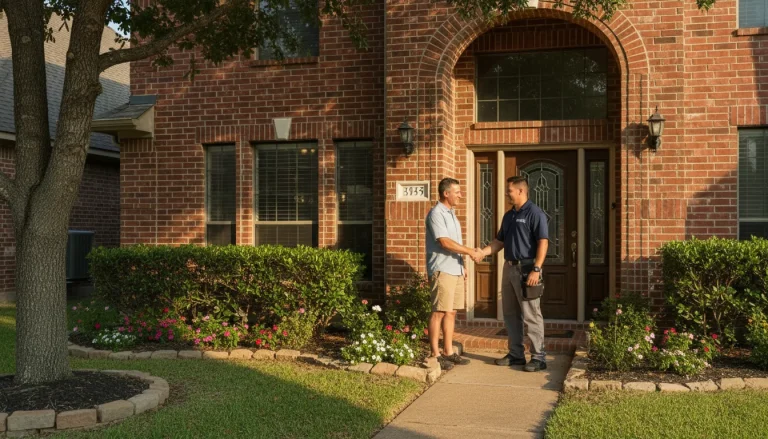
Finding a trustworthy HVAC contractor in Houston means looking beyond the lowest quote. The best contractors carry proper Texas licensing at the company level, provide detailed written estimates, perform thorough home evaluations before recommending equipment, and back their work with strong warranties. In a market this competitive, knowing what to look for protects you from costly mistakes.
Houston has no shortage of HVAC contractors offering installation services, and that's both good news and bad news. Competition gives you options, but it also means sorting through companies with vastly different standards, experience levels, and business practices. A poor installation doesn't just waste money upfront. It creates comfort problems, efficiency losses, and repair bills for years.
This guide walks you through the qualities that separate reliable installers from the rest, questions to ask before signing, red flags to watch for, and what a professional process should look like. For details on what to expect during installation, we covered that separately.
What Makes an HVAC Contractor Trustworthy in Houston?
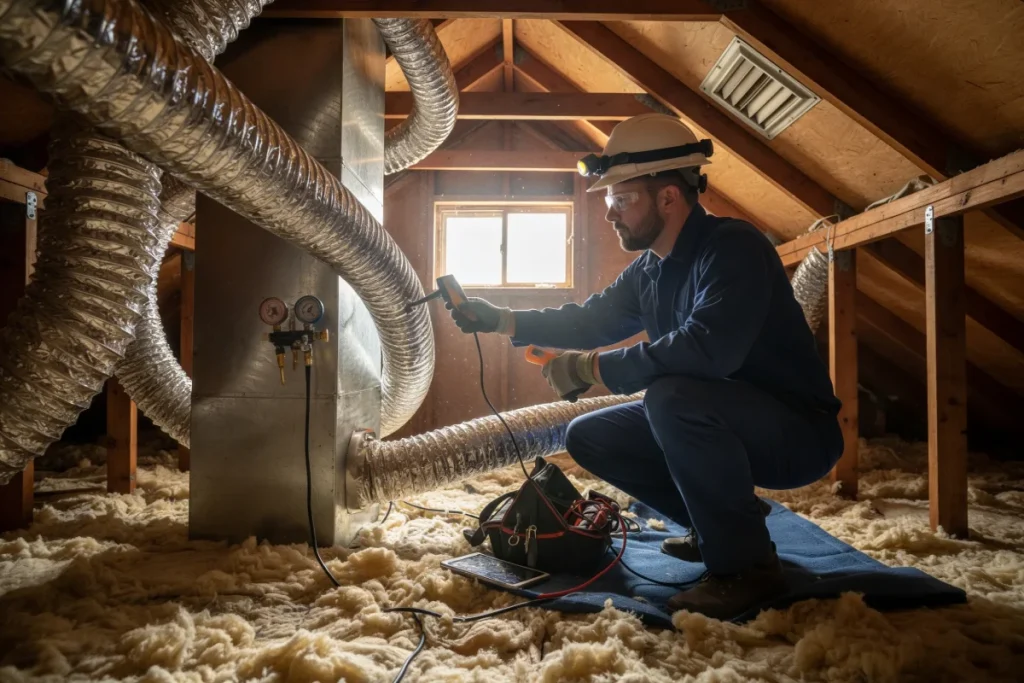
A reliable Houston hvac company will hold proper Texas state licensing at the company level (not just individual technicians), carry adequate insurance and bonding, have a verifiable track record of residential installations, and be willing to provide detailed references. These aren't optional extras. They're the minimum baseline for any contractor you should consider.
Texas requires HVAC contractors to be licensed through the Texas Department of Licensing and Regulation (TDLR). This is a company-level requirement, meaning the business itself must hold the license. Individual technicians work under that company's license. Always verify a contractor's license status before moving forward, and don't accept "we're working on it" as an answer.
Beyond licensing, look for these trust indicators:
- Insurance and bonding: General liability insurance protects you if something goes wrong during installation. Workers' compensation covers the crew. Ask for certificates and verify they're current.
- Residential specialization: A contractor who focuses on residential hvac installation understands the nuances of home comfort, sizing for individual houses, and working in occupied spaces. Generalists who split time between commercial and residential projects may not give your home the same attention.
- Verifiable history: Online reviews help, but ask for direct references from recent residential installations in Greater Houston. A confident contractor will provide them without hesitation.
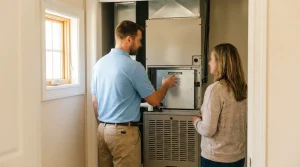
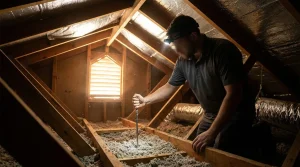
- Professional process: Does the company schedule an in-home evaluation before quoting? Do they assess your ductwork, insulation, ceiling heights, and window orientation? Or do they quote over the phone based on square footage? The evaluation process tells you everything about how they'll handle the installation.
| Trust Signal | What to Check | Red Flag |
| Texas TDLR license | Verify on the TDLR website | No license number provided |
| Insurance certificates | Request current proof | Claims insurance but won't provide docs |
| Written estimates | Detailed, itemized breakdown | Verbal-only or vague line items |
| Home evaluation | In-person before quoting | Phone quotes based on square footage |
| References | Willing to provide recent local clients | Avoids the question or only offers online reviews |
| Warranty terms | Clear, written warranty documentation | Vague promises without written terms |
What Questions Should You Ask Before Hiring an HVAC Contractor?

The right questions reveal whether a contractor will treat your installation as an engineering project or a quick equipment swap. Ask about their evaluation process, sizing methodology, warranty terms, who will perform the actual installation, and how they handle post-installation verification. The answers separate professionals from salespeople.
Here are the questions that matter most, and what good answers sound like:
"How do you determine what size system my home needs?" Good answer: They describe evaluating your home's insulation, ductwork, ceiling heights, window orientation, and airflow distribution. They mention specific assessment practices, not just square footage. Bad answer: "We base it on your home's square footage," or "We'll figure it out when we get there."
"Who actually installs the system?" Good answer: Their own employed, trained technicians. They can describe their team's qualifications. Bad answer: "We use subcontractors depending on the schedule." Subcontracted work often means less accountability.
"What does your warranty cover?" Good answer: Specific written terms, including parts coverage, labor coverage, and duration. A reliable hvac installer will explain exactly what's covered and for how long. Bad answer: "We stand behind our work" with no specifics.
"Do you verify system performance after installation?" Good answer: They describe measuring airflow, checking refrigerant charge, verifying thermostat operation, and confirming the system meets specifications. Bad answer: "We turn it on and make sure it works."
"Can I see a detailed written estimate?" Good answer: Itemized breakdown of equipment, materials, labor, permits, and any additional work. No surprises. Bad answer: A single total with no line items.
| Question | Why It Matters |
| Sizing methodology | Prevents oversized or undersized systems |
| Installation crew | Accountability and quality control |
| Warranty specifics | Protects your investment long-term |
| Post-installation verification | Ensures rated performance is achieved |
| Detailed estimate | Prevents hidden charges and surprises |
What Red Flags Should Houston Homeowners Watch For?
High-pressure sales tactics, "today only" pricing, reluctance to provide written estimates, and contractors who skip the home evaluation are all signs you're dealing with a company that prioritizes sales over quality. In Houston's competitive hvac market, these practices are more common than they should be.
Houston's residential hvac installation market is large enough that some companies operate on volume rather than quality. That model doesn't serve homeowners well when the installation is something you'll live with for 15 to 20 years.
Watch for these warning signs:
- Pressure to decide immediately: "This price is only good today," or "I have a crew available tomorrow," are designed to prevent you from getting competing quotes. Legitimate contractors give you time to decide.
- No home evaluation: Any contractor willing to quote without visiting your home is guessing. Period. They can't know your ductwork condition, insulation quality, or airflow needs from a phone call.
- Dramatically low quotes: If one estimate is significantly lower than the others, that contractor is likely cutting corners on equipment quality, installation practices, or both. You'll pay the difference in comfort problems and early replacement.
- Vague warranty language: "Manufacturer warranty" without explaining what the contractor covers in their labor is incomplete. You need both equipment and installation warranties in writing.
- Unlicensed or uninsured: This is non-negotiable in Texas. If they can't produce current documentation, walk away.
The Better Business Bureau and TDLR are useful verification resources, but the most reliable signal is the contractor's willingness to be thorough, transparent, and patient during the sales process.
| Red Flag | What It Usually Means |
| "Today only" pricing | Pressure to prevent comparison shopping |
| Phone-only quotes | No actual home assessment performed |
| Lowest quote by far | Corners cut on equipment or installation |
| No written warranty | No accountability after the install |
| No TDLR license | Operating outside Texas legal requirements |
What Should a Professional HVAC Installation Process Look Like?
A professional residential hvac installation follows a clear sequence: thorough home evaluation, custom system design, detailed written estimate, scheduled installation by trained technicians, post-installation testing, and homeowner walkthrough. If any of these steps are missing or rushed, the contractor isn't delivering the quality your investment deserves.
The evaluation should cover insulation, ductwork condition, ceiling heights, window orientation, and airflow distribution. This isn't a 15-minute walkthrough. It's how your contractor determines the right equipment and size for your home.
The estimate should be detailed enough that you understand exactly what you're getting: specific equipment models, all materials, labor, permits, and any modifications. You should know the total cost and the scope before work begins.
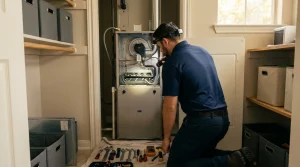
On installation day, the crew should be professional, organized, and respectful of your home. They should protect your floors and furniture, keep a clean work area, and communicate clearly about progress and timeline.
After installation, your contractor should test the system's performance by measuring airflow, calibrating the thermostat, and verifying that every room receives proper conditioned air. This step confirms you're getting what you paid for.
VeriChill follows this exact process for every residential heating and air conditioning installation we perform. We evaluate your home, design a system matched to your specific needs, provide a transparent estimate, install with precision, and verify performance before the job is complete. Every project includes a 10-year parts and compressor warranty, with equipment registration handled within 90 days.
Key Takeaways
- Verify Texas TDLR licensing at the company level before considering any hvac contractor. This is a legal requirement, not a bonus.
- A proper home evaluation before quoting is the single strongest indicator of a quality-focused contractor. Phone quotes mean guesswork.
- Ask direct questions about sizing methodology, warranty terms, installation crews, and post-installation verification. Good contractors welcome these questions.
- Written, itemized estimates protect you from hidden costs and let you compare quotes meaningfully.
- Red flags include high-pressure tactics, dramatically low quotes, no home visit, and vague warranty promises.
- Residential specialization matters. Contractors focused on home installations bring different expertise than commercial generalists.
Frequently Asked Questions
How do I verify an HVAC contractor's license in Texas?
Check the TDLR website for the company's license status. Texas licenses HVAC contractors at the company level, not by individual technician. Ask for the license number directly.
Should I get multiple quotes for HVAC installations?
Yes. Two to three detailed quotes help you compare pricing, equipment recommendations, warranty terms, and the thoroughness of the evaluation.
What's more important: the equipment brand or the installer?
The installer. Even premium equipment underperforms when installed incorrectly. Proper sizing, airflow calibration, and installation quality determine real-world performance more than the brand name.
How much should an HVAC evaluation cost?
Many reputable contractors offer free in-home evaluations as part of the quoting process. Be cautious of contractors who charge for evaluations but then apply pressure to sign immediately.
Do HVAC contractors need insurance in Texas?
Yes. General liability and workers' compensation protect you and the crew during installation. Always request current certificates before work begins.
How long should I expect the quoting process to take?
A thorough contractor needs time for an in-home evaluation, system design, and estimate preparation. Expect a few days between the evaluation and the receipt of your detailed quote.
What warranty should I expect on HVAC installation?
Look for both equipment warranty (covering parts) and labor warranty (covering installation work). VeriChill provides a 10-year parts and compressor warranty with registration handled within 90 days.
Can I negotiate HVAC installation pricing?
You can ask questions about options at different investment levels. Be cautious of contractors who dramatically drop prices under pressure, as this often means the original quote was inflated.
Should I hire a specialist or a full-service HVAC company?
For installation specifically, specialists who focus on residential work tend to deliver more consistent quality than companies that split attention across commercial, repair, and installation work.
Does VeriChill offer free consultations?
Yes. VeriChill provides complimentary in-home evaluations for homeowners throughout Greater Houston, including Cypress, Katy, Spring, Sugar Land, and Tomball.
Conclusion
Choosing the right HVAC contractor in Houston is one of the most important decisions you'll make for your home's comfort. The right contractor treats your installation as an engineering project, communicates transparently, and stands behind their work with strong warranties. If you're looking for a Houston HVAC company that specializes exclusively in residential installation and does it right, contact VeriChill. We'll schedule a comprehensive evaluation, clearly explain your options, and provide a detailed estimate with no pressure and no surprises.