Houston's mild winters and long cooling seasons make heat pumps one of the smartest HVAC choices available to local homeowners. A single system handles both heating and cooling efficiently, eliminates the need for a separate furnace in most situations, and typically costs less to operate year-round than traditional AC-plus-furnace setups.
If you're considering a new heating installation and you haven't looked at heat pumps recently, the technology has changed significantly. Modern heat pumps with variable-speed compressors deliver excellent cooling performance during Houston's intense summers and handle our winter heating needs without breaking a sweat. They're not the underpowered units from a decade ago.
This guide covers why Houston's climate is particularly well-suited to heat pumps, how the installation process works, what to expect in terms of performance, and how to determine whether a heat pump is the right fit for your home.
Why Is Houston's Climate Ideal for Heat Pumps?
Heat pumps work by transferring heat rather than generating it, which is extremely efficient in moderate temperatures. Houston's winters rarely drop below freezing, so a heat pump operates in its efficiency sweet spot for the vast majority of the year. That's a significant advantage over colder markets, where heat pumps often require supplemental heating.
The science behind a heat pump is straightforward. In cooling mode, it moves heat from inside your home to outside, exactly like a traditional air conditioner. In heating mode, it reverses the process, extracting heat from outdoor air and moving it inside. Even air that feels cold to you contains thermal energy that a heat pump can capture.
Houston's winter temperature profile fits heat pump technology perfectly:
- Average winter lows in the 40s and 50s. Heat pumps operate at peak efficiency in this range, delivering two to three times as much heat energy as the electrical energy they consume.
- Freezing temperatures are infrequent and brief. Houston averages only about 15 days per year below 32 degrees, and most of those are overnight lows that recover by mid-morning.
- Extended cold snaps are rare. The week-long freezes that challenge heat pumps in northern markets happen maybe once every several years in Houston.
- Cooling season is dominant. Your heat pump works as your AC for eight to nine months, making the heating efficiency a bonus on top of its primary cooling function.
| Houston Climate Factor | Impact on Heat Pump Performance |
| Average winter temperature (45-60°F) | Peak heat pump efficiency zone |
| Days below 32°F per year (~15) | Minimal need for supplemental heat |
| Cooling season length (8-9 months) | A heat pump functions primarily as an AC |
| Average humidity (75%+) | Variable-speed heat pumps excel at dehumidification |
| Rare hard freezes (below 20°F) | Brief supplemental heat needed, a few hours per year |
What Does the Heat Pump Installation Process Look Like?
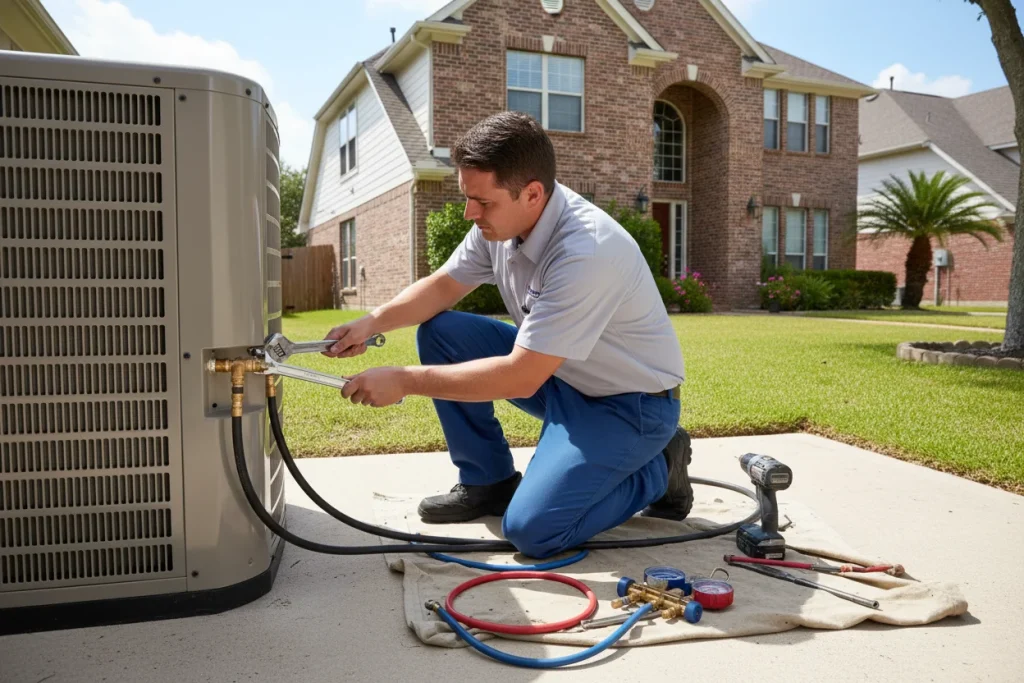
A standard heat pump installation in Houston typically takes one day and involves placing the outdoor unit, connecting refrigerant and electrical lines, integrating it with your indoor air handler and ductwork, and testing the complete system. If you're replacing an existing AC-plus-furnace setup, the transition is straightforward since the ductwork and indoor components largely transfer over.
The installation process follows a logical sequence that a qualified installer manages from start to finish:
Evaluation and Sizing
Before any equipment arrives, your installer evaluates your home's specific requirements. This includes assessing insulation quality, ductwork condition, airflow distribution, window orientation, and ceiling heights to determine the right heat pump capacity for your home. Getting the size right is critical. An oversized heat pump short-cycles and wastes energy. An undersized one can't keep up during peak demand.
Equipment Selection
Based on the evaluation, your installer recommends specific heat pump models that match your home's needs and your efficiency goals. Options range from standard single-stage units to premium variable-speed models that deliver the best humidity control and quietest operation.
Installation Day
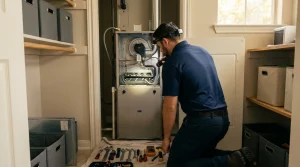
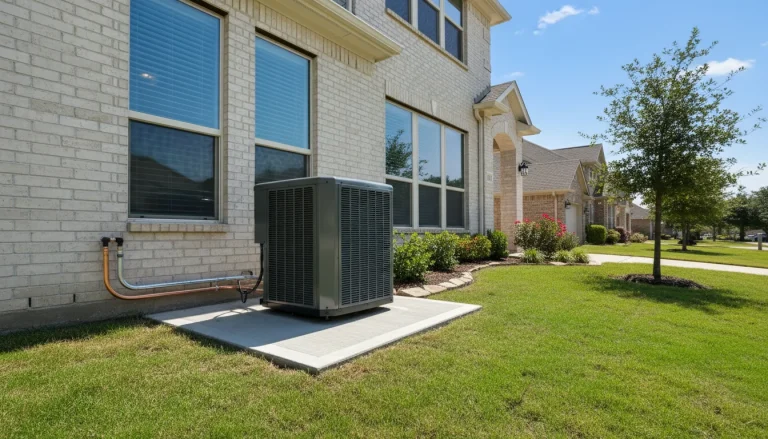
The crew removes your old outdoor unit, installs the new heat pump on a level pad, runs new refrigerant lines if needed, makes electrical connections, and integrates the new heat pump with your indoor air handler. If you're transitioning from a gas furnace, the gas connections are safely capped, and the system is reconfigured for heat pump operation.
Performance Verification
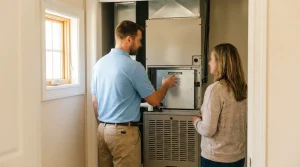
Before the crew leaves, they verify refrigerant charge, test airflow at every register, confirm heating and cooling modes operate correctly, and walk you through thermostat operation. This verification step ensures you're getting the performance the system was designed to deliver.
| Installation Step | What Happens | Typical Duration |
| Old equipment removal | Outdoor unit disconnected and removed | 1-2 hours |
| New heat pump placement | Unit positioned, leveled, and secured | 1-2 hours |
| Refrigerant and electrical | Lines connected, electrical tied in | 2-3 hours |
| System integration | Indoor components connected, thermostat configured | 1-2 hours |
| Testing and verification | Full system test, airflow checks, homeowner walkthrough | 1 hour |
How Do Heat Pumps Save Houston Homeowners Money?

Heat pumps save money by operating more efficiently than traditional heating systems during mild weather, which covers the majority of Houston's heating season. A heat pump with a coefficient of performance (COP) of 3.0 means it produces 3 units of heat for every 1 unit of electricity consumed. That's roughly three times more efficient than electric-resistance heat and often cheaper than running a gas furnace on mild days.
The savings come from two sources: more efficient heating during winter and simplified equipment that reduces maintenance complexity.
For heating efficiency, the comparison is clear. Electric resistance heat, the kind found in electric furnaces or backup heating strips, converts one unit of electricity into exactly one unit of heat. A gas furnace converts 80% to 96% of fuel energy into heat, depending on efficiency rating. A heat pump in Houston's typical winter conditions delivers a COP of 2.5 to 4.0, meaning 2.5 to 4 units of heat per unit of electricity.
The operating cost advantage is most pronounced during the October through March period when Houston homeowners need some heating. During the brief stretches of truly cold weather, efficiency drops closer to 1.5 to 2.0 COP, still competitive with gas in many cases.
For cooling, your heat pump operates identically to a central AC unit with comparable SEER ratings. There's no efficiency penalty to choosing a heat pump over central AC for cooling.
VeriChill backs every heat pump installation with a 10-year parts-and-compressor warranty and handles manufacturer registration within 90 days. Financing through Wells Fargo, Synchrony Bank, and Goodleap makes the investment manageable for Houston homeowners.
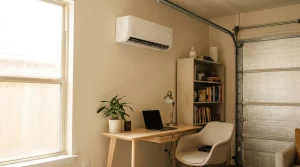
The Department of Energy's ductless mini-split page provides additional context on heat pump technology options, including ductless configurations that work for homes where traditional ductwork isn't practical.
Is a Heat Pump Right for Your Specific Houston Home?
A heat pump is a strong fit for most Houston homes, but the best candidates are homeowners who want a single efficient system, homes without gas infrastructure, new construction projects, and homeowners planning to stay long-term. Homes with existing gas lines and relatively new furnaces might benefit more from a straightforward AC installation that replaces the existing furnace.
Here's a practical decision framework:
- Strong heat pump candidates: All-electric homes, new construction, homeowners seeking maximum efficiency, homes where the furnace and AC both need replacement
- Consider dual fuel instead: Homes with gas lines where the homeowner wants maximum heating speed during cold snaps, plus heat pump efficiency during mild weather
- Stick with AC + furnace: Homes where only the AC needs replacement and the gas furnace is under 10 years old; replacing a working furnace adds cost without proportional benefit
The residential HVAC market in Houston has shifted increasingly toward heat pumps as equipment technology improves and homeowners recognize the efficiency advantages in our climate. Variable-speed heat pumps in particular have closed the gap on heating comfort, delivering warm air that feels comparable to furnace heat in all but the most extreme cold.
Key Takeaways
- Houston's mild winters make heat pumps exceptionally efficient, operating in their optimal performance zone for the vast majority of heating days.
- A single heat pump handles both cooling and heating, eliminating the need for a separate furnace in most Houston homes.
- Modern heat pumps deliver cooling performance identical to central AC at comparable SEER2 ratings, with heating as a built-in bonus.
- Installation typically takes one day for standard replacements, with the outdoor unit, refrigerant lines, electrical work, and system testing completed from start to finish.
- Heat pumps produce two to three times as much heat as the electricity they consume at Houston's typical winter temperatures, delivering real operating savings.
- A professional evaluation is essential to ensure the heat pump is properly sized for your home's specific requirements and Houston's climate.
Frequently Asked Questions
How much can a heat pump save on heating costs in Houston?
Heat pumps typically cost 30% to 50% less to operate for heating compared to electric resistance heat in Houston's mild climate. Compared to gas, savings depend on local utility rates but are often meaningful during mild weather.
Do heat pumps work when it freezes in Houston?
Yes. Modern heat pumps operate down to well below freezing. Efficiency decreases in extreme cold, but Houston's infrequent and brief freezes are manageable, especially with backup heating strips.
How long does a heat pump last in Houston?
With proper care, expect 15 to 20 years. Heat pumps run year-round in Houston, but modern units are designed for that duty cycle and hold up well when properly maintained.
Is a heat pump louder than a central AC?
No. Modern heat pumps operate at similar or lower noise levels than central AC units. Variable-speed models are particularly quiet, running at low speeds most of the time.
Can my existing ductwork handle a heat pump?
In most cases, yes. Heat pumps use the same ductwork as central AC systems. Your installer will evaluate duct sizing and condition during the assessment to confirm compatibility.
What warranty does VeriChill offer on heat pump installations?
VeriChill provides a 10-year parts and compressor warranty on heat pump installations and handles manufacturer registration within 90 days.
Does a heat pump need special maintenance compared to central AC?
Maintenance is similar to central AC: regular filter changes, annual professional checks, and keeping the outdoor unit clear of debris. The reversing valve that enables heating mode is the main additional component.
Can I add a heat pump to my existing gas furnace for a dual fuel setup?
Yes. Dual fuel systems pair a heat pump for primary heating and cooling with your existing gas furnace as backup. This gives you heat pump efficiency during mild weather and gas furnace reliability during cold snaps.
Does VeriChill offer financing for heat pump installation?
Yes. VeriChill works with Wells Fargo, Synchrony Bank, and Goodleap to provide financing options for heat pump installations.
How soon after installation can I use my heat pump?
Immediately. After installation and system testing, your heat pump is ready for both heating and cooling. Your installer will walk you through thermostat operation before leaving.
Conclusion
For Houston homeowners weighing their heating options, heat pumps deserve serious consideration. Our climate practically maximizes their strengths: efficient heating during mild winters, identical cooling performance to central AC, and simplified equipment that handles both functions year-round. The technology has matured, the efficiency advantages are real, and the installation process is straightforward for experienced contractors. Ready to explore whether a heat pump fits your Houston home? VeriChill's team can evaluate your situation and present your options clearly. Call 281-559-6995 to schedule your consultation.