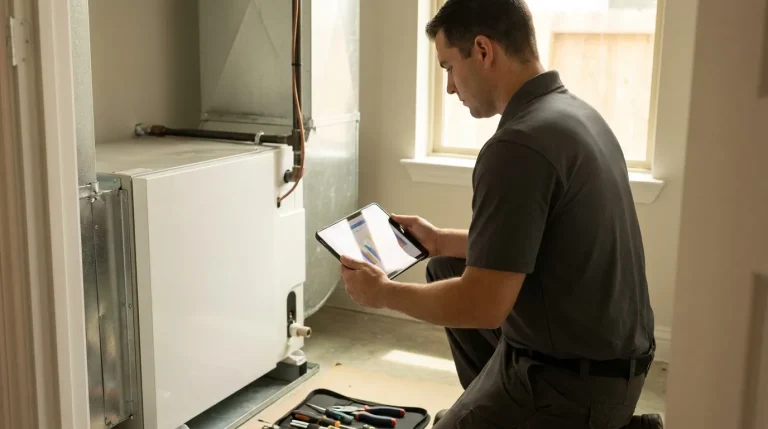
Smart HVAC diagnostics let a system report its own condition continuously instead of waiting for a homeowner to notice something is wrong. Modern equipment tracks runtime, airflow, refrigerant pressures, electrical draw, and component behavior, then flags deviations through fault codes and connected monitoring before they become failures. In Houston, this matters more than almost anywhere, because our systems run eight to nine months a year, and a small problem can become a large one over many operating hours. The practical benefit is not the technology itself; it is catching a declining capacitor or a restricted airflow condition in April rather than during the first 100-degree week.
For most of residential HVAC history, you were the diagnostic system. A system worked until it didn't, and the first sign of a problem was usually discomfort: a house that wouldn't cool down, a strange noise, a bill that jumped. By the time a homeowner noticed, the underlying condition had often been developing for months.
That model is changing, and faster than most people realize. Equipment being installed today monitors its own operation continuously, compares what it observes against expected behavior, and reports deviations. Some systems display a fault code at the thermostat. Some push an alert to an app. Some can share performance data directly with the contractor who installed them.
The reason this matters so much in Houston comes down to arithmetic. In a market with a ten-week cooling season, a slowly degrading component might go unnoticed for years without consequence. Here, with systems running much of the day across eight to nine months, that same component accumulates stress at a rate that turns minor into major quickly. Early detection is worth more when the system has fewer idle hours to hide problems in.
What Smart HVAC Diagnostics Actually Monitor
The term covers a range of capabilities, from basic fault reporting to genuinely sophisticated performance analytics.
Fault detection and error codes
The foundational layer. Control boards on modern equipment monitor sensors throughout the system and generate specific codes when readings fall outside expected ranges. Rather than a technician working backward from a symptom, the system names the condition it detected. That shortens diagnosis considerably and reduces the guesswork that used to characterize troubleshooting.
Runtime and cycling analytics
How long the system runs, how often it cycles, and how those patterns change over time turn out to be remarkably revealing. A system that used to satisfy the thermostat in fifteen minute cycles and now takes twenty five is losing capacity. One that cycles on and off every few minutes is short cycling, which in Houston usually points to oversizing. These patterns emerge from data long before a homeowner would notice a comfort difference.
Airflow and static pressure monitoring
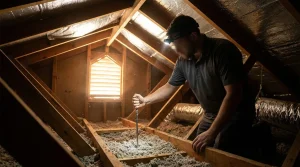
Restricted airflow is one of the most common causes of poor performance and premature component failure, and it is nearly invisible to homeowners. A clogged filter, a collapsed flex duct, a blocked return, or a dirty indoor coil all raise static pressure and reduce airflow. Systems that monitor this can flag the condition while it is still a filter change rather than after it has caused a frozen coil or a stressed compressor.
Electrical and component health indicators
Capacitors weaken gradually before they fail. Motors draw more current as bearings wear. Contactors degrade. Monitoring electrical characteristics catches these trends in progress, which is the difference between a planned part replacement in the fall and a no-cooling call in August.
Refrigerant circuit behavior
Pressure and temperature readings across the refrigerant circuit reveal charge problems, restrictions, and coil issues. A slow refrigerant leak is a classic Houston problem that degrades efficiency for months before it causes an obvious failure, and circuit monitoring surfaces it far earlier than a homeowner ever would.
Why Houston's Climate Makes Monitoring More Valuable
This is where the national conversation about smart HVAC misses what matters locally.
Runtime multiplies the value of early detection
Our cooling season stretches across eight to nine months, and during peak summer the system may run for the majority of each day. A component operating slightly out of spec accumulates damage across an enormous number of hours here. Catching that condition weeks earlier prevents substantially more consequential damage than the same early catch would in a market where the system sits idle most of the year.
Failures cluster in the worst possible window
HVAC systems fail when they are working hardest, which in Houston means July and August, during the exact stretch when losing cooling is least tolerable and demand for service is highest. Diagnostics shift problems out of that window by surfacing them during the milder shoulder seasons, when addressing them is straightforward.
Humidity performance degrades before temperature does
With humidity averaging above 75 percent, moisture removal is half of what a Houston system does, and it is the half that degrades first. A system losing capacity often still hits the temperature setpoint while dehumidifying noticeably worse. Homeowners feel vaguely uncomfortable without knowing why. Runtime and cycling data catch that decline objectively, before it turns into a comfort complaint nobody can quite articulate.
Long seasons hide gradual decline
When a system runs constantly for most of the year, homeowners adapt to slow changes without noticing them. The thermostat gets nudged down a degree, then another. Continuous monitoring provides an objective baseline that human perception simply does not.
| Condition | How it used to be found | How diagnostics find it |
|---|---|---|
| Weakening capacitor | Compressor fails to start on a hot day | Electrical draw trend flags degradation weeks early |
| Restricted airflow | Frozen coil or no cooling call | Static pressure rise flagged at onset |
| Slow refrigerant leak | Gradual comfort loss over a season | Circuit pressure deviation flagged early |
| Capacity decline | Homeowner lowers thermostat repeatedly | Lengthening runtime cycles visible in data |
| Short cycling from oversizing | Persistent humidity complaints | Cycling frequency data identifies the pattern |
What This Means Practically for a Houston Homeowner
Worth separating the genuine benefits from the marketing.
Problems surface as maintenance, not emergencies
The core benefit. A capacitor flagged as degrading in October is a planned part replacement. The same capacitor failing in August is a hot house and an urgent call. Diagnostics do not eliminate component wear, they relocate it in the calendar.
Diagnosis gets faster and more accurate
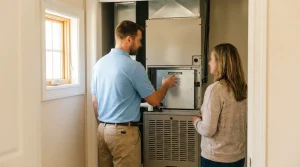
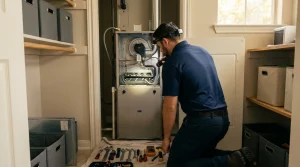
When a technician arrives knowing the system reported a specific fault, the visit starts several steps ahead. That matters for accuracy as much as speed, since it reduces the chance of treating a symptom while missing the underlying cause.
You get objective data instead of impressions
"It does not seem as cold as it used to" is a difficult thing to act on. Runtime trending across two summers is not. Objective performance history makes the repair-versus-replace conversation dramatically better informed, which is exactly when homeowners most need good information.
It does not replace correct sizing and installation
This is the honest caveat. Monitoring tells you what a system is doing. It does not fix a system that was oversized on the day it was installed, and it will not make bad ductwork perform well. The most sophisticated diagnostics on an oversized system will faithfully report that it is short cycling, which you then still have to address. Oversizing remains the most common HVAC problem we see in Houston homes, and no amount of monitoring substitutes for getting the match right up front. A candid conversation with a HVAC specialist about sizing will do more for your comfort than any diagnostic feature.
Capability varies widely between systems
"Smart" covers everything from a two-digit fault code on a control board to full performance analytics with contractor-facing reporting. Communicating systems, where the components talk to each other and to the thermostat over a data connection, sit at the capable end. Equipment performance and rating methods are standardized through the AHRI standards and guidelines portfolio, but diagnostic sophistication is a manufacturer feature rather than a rated specification, so it is worth asking specifically what a given system can actually report.
How Our Team Thinks About Diagnostic Features

We factor these capabilities into recommendations without letting them drive the decision.
Fundamentals first, features second
Correct sizing based on the home's real conditions comes before any feature discussion. That means evaluating insulation, ductwork condition and layout, ceiling heights, window orientation, and airflow distribution. A correctly sized two-stage system with modest diagnostics will serve a Houston home better than an oversized premium system that reports its own short cycling in high resolution.
Diagnostics pair naturally with modulating equipment
The systems with the most capable monitoring tend to be the two-stage and variable-capacity models, which are also the equipment we generally recommend for Houston because longer, gentler run cycles control humidity far better. The diagnostic capability often arrives as a benefit of choosing the right staging rather than as a separate decision.
We set expectations honestly
Monitoring is genuinely useful and it is not magic. It will not predict every failure, and some components fail without warning. What it reliably does is catch gradual degradation, which happens to be the most common failure mode in a climate where systems run this many hours. We would rather a homeowner understand that clearly than expect a guarantee the technology cannot deliver.
It applies to heating too
Houston heating systems sit idle for seven or eight months and then get asked for full output during the first cold snap, which is its own reliability risk. Diagnostics that surface a problem before that transition are valuable, and this is worth folding into any heating system installation service conversation rather than treating it as a cooling-only consideration. The same logic holds when planning a residential AC system installation where both sides of the system are being considered together.
Key Takeaways
- Smart HVAC diagnostics monitor runtime, airflow, electrical draw, and refrigerant circuit behavior continuously, flagging deviations before they become failures
- Houston's eight to nine month cooling season means components accumulate stress fast, making early detection more valuable here than in short-season markets
- Diagnostics relocate problems from peak-summer emergencies into shoulder-season maintenance, which is the core practical benefit
- Humidity performance degrades before temperature performance does, and monitoring catches that decline objectively
- Objective runtime history makes repair-versus-replace decisions substantially better informed
- Monitoring does not compensate for oversizing or poor ductwork, and correct sizing remains the foundation
Frequently Asked Questions
What are smart HVAC diagnostics?
They are monitoring capabilities built into modern HVAC equipment that let the system evaluate its own operation continuously. Sensors track runtime, cycling patterns, airflow and static pressure, electrical draw, and refrigerant circuit pressures and temperatures. The control board compares what it observes against expected values and generates specific fault codes or alerts when readings deviate. Depending on the system, that information appears at the thermostat, in a homeowner app, or in reporting available to the installing contractor.
Are smart diagnostics worth it for a Houston home?
They carry more value here than in most markets, because of runtime. With a cooling season of eight to nine months and heavy summer operation, a component running slightly out of specification accumulates damage across a very large number of hours. Catching that condition weeks or months earlier prevents meaningfully more damage than the same early detection would in a climate with a short summer. The practical payoff is that problems get handled during mild shoulder-season weather instead of during a July failure.
Will smart diagnostics prevent my AC from breaking down?
They reduce the likelihood of surprise failures considerably, but they do not eliminate them. Diagnostics are excellent at catching gradual degradation such as a weakening capacitor, rising static pressure from restricted airflow, or a slow refrigerant leak, and gradual degradation is the most common failure pattern in a high-runtime climate. Some components still fail abruptly without a detectable warning period. The honest framing is that monitoring shifts most problems from emergencies into scheduled maintenance rather than guaranteeing nothing ever fails.
Do I need a smart thermostat to get HVAC diagnostics?
Not necessarily. Diagnostic capability lives primarily in the equipment's control board and sensors, not in the thermostat. A basic thermostat paired with modern equipment can still display fault codes, and a technician can retrieve stored diagnostic data from the system. That said, communicating systems, where equipment and thermostat exchange data over a dedicated connection, generally offer the richest monitoring and the clearest homeowner-facing information. Capability varies widely by manufacturer and model, so it is worth asking specifically.
Can diagnostics tell me if my system is oversized?
Indirectly, and quite reliably. An oversized system short cycles, meaning it satisfies the thermostat quickly and shuts off repeatedly instead of running longer, steadier cycles. Cycling frequency data makes that pattern obvious. What monitoring cannot do is fix it. Correcting oversizing means addressing the equipment match, which is a sizing and replacement conversation rather than a repair. Since oversizing is the most common HVAC problem we see in Houston homes, this is a pattern worth looking for specifically.
Conclusion
The interesting thing about smart HVAC diagnostics is that the benefit is not really about technology. It is about timing. The same capacitor fails either way. The difference is whether you replace it on a mild October morning with a scheduled appointment, or on a Saturday in August with the house at 88 degrees and every contractor in Houston already booked.
In a climate where systems run eight to nine months a year, that timing difference compounds. More operating hours mean more opportunities for small problems to become large ones, and more value in catching them early. This is one of the few HVAC technologies whose benefit is genuinely amplified by Houston conditions rather than diluted by them.
At VeriChill, our team treats diagnostics as a real advantage and keeps it in proportion. Correct sizing based on your home's insulation, ductwork, ceiling heights, window orientation, and airflow distribution comes first, because a system matched properly to the house is the foundation everything else sits on. Choose that well, and the monitoring capability that comes with modern two-stage equipment becomes a genuine ongoing benefit rather than a feature on a brochure.
Curious what your current system could be telling you? Call us at 281-559-6995 or visit verichill.com to schedule a consultation.