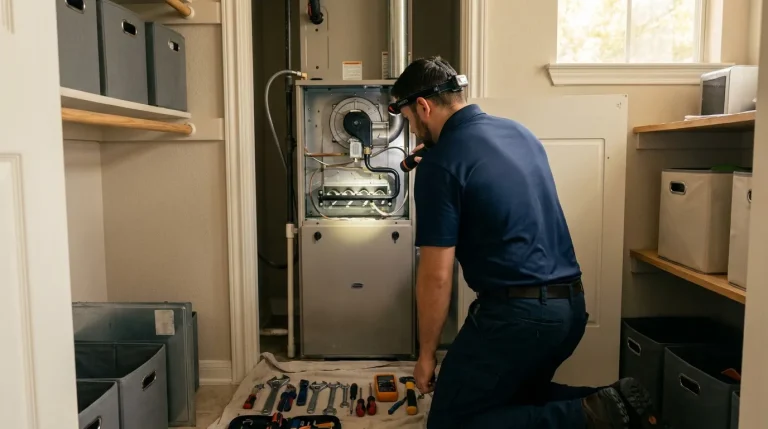
A pre winter heating check Houston homeowners actually need looks different from the seasonal advice written for cold climates. Our heating systems sit dormant for seven or eight months, then are asked to deliver full output with almost no warning when the first front arrives. That transition, from completely idle to full demand overnight, is where Houston heating failures happen. A fall heating inspection is less about winterizing for a long season and more about confirming that equipment that hasn't run since February will start, run safely, and hold up when the temperature drops thirty degrees in an afternoon.
Houston does not really have a heating season. We have a cooling season with cold interruptions.
That distinction matters more than it sounds. In Minneapolis, a furnace starts in October and runs more or less continuously until April, which means problems surface early and gradually while the weather is still forgiving. Here, a system sits untouched from late February until the first real front, which might arrive in November or might wait until December. Then, over the course of a single afternoon, the temperature drops thirty degrees and that dormant equipment is asked for everything it has.
Equipment does not love that. Dormancy lets dust build up, pests move in, connections corrode, and components seize quietly. Combustion systems that have not been checked since last winter may have venting issues nobody noticed. And because the demand arrives suddenly and everyone in Houston discovers their heating problem on the same cold night, that is the worst possible moment to need help.
A pre-winter assessment addresses exactly this. Let us walk through what it should cover.
Why Houston's Heating Pattern Creates Unique Risk
The specific risk profile here comes directly from how little our systems run.
Seven or eight months of dormancy
Equipment that sits idle develops problems that running equipment does not. Dust settles on burners and heat exchangers. Insects and rodents find their way into flues and cabinets. Electrical connections corrode in our humidity. Bearings and motors that have not turned in months can bind. None of this announces itself until the system is asked to start.
The transition is abrupt
Houston cold fronts do not ease in. A December afternoon can start at 78 degrees and end at 45, and the system goes from off to full demand in hours. There is no gentle ramp-up period during which a marginal component reveals itself while the weather is still mild.
Everyone discovers problems simultaneously
Because the trigger is a single regional weather event, Houston heating problems surface across the whole metro on the same night. That is precisely when getting help is hardest. A problem found in October is a scheduling conversation. The same problem found during the first freeze is a much harder situation.
Combustion safety deserves specific attention
Gas furnaces that have been idle for most of the year warrant a safety look before they run. Cracked heat exchangers, blocked or compromised venting, and pest nests in flues all create carbon monoxide risk, and CO is odorless and colorless. The CPSC's guidance on home heating equipment safety recommends an annual professional inspection of fuel-burning heating systems specifically for this reason, and in a market where those systems sit unused most of the year, that recommendation carries extra weight.
Houston homes lose heat faster than people expect
Our building stock is designed around cooling and humidity control. Insulation levels, air sealing, and pipe protection are oriented toward summer performance. During a hard freeze, those same characteristics mean the house sheds heat quickly, putting more demand on the heating system than its nominal capacity would suggest.
What a Pre-Winter Heating Assessment Should Cover
The checklist is practical and mostly about confirming readiness, not doing extensive work.
Run the system before you need it
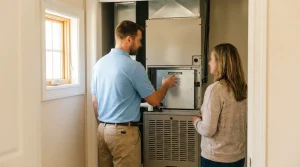
The most valuable single step, and the one homeowners can do themselves. On a mild fall day, switch the thermostat to heat and set it above the current indoor temperature. Let the system run for fifteen or twenty minutes. This checks that it starts, produces warm air at the registers, runs without unusual noise, and shuts off normally when satisfied.
A burning smell during the first few minutes is normal and comes from dust burning off surfaces that have been idle for months. A burning smell that persists past the first cycle is not normal and warrants attention. Doing this in October means any problem you find gets addressed calmly.
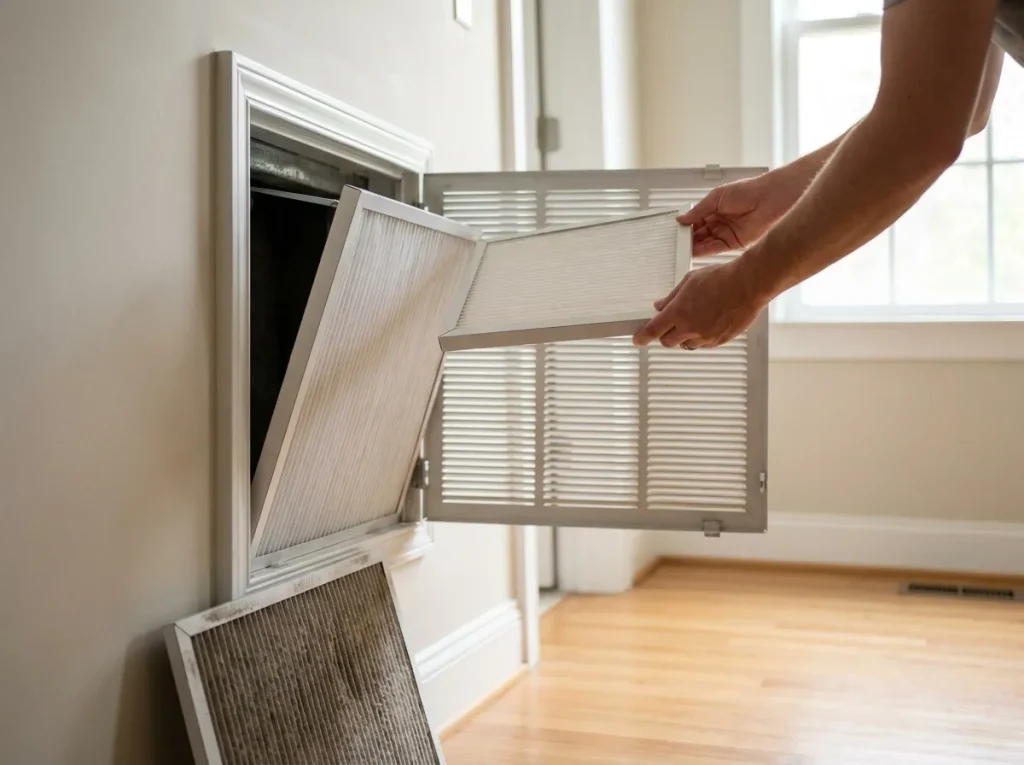
Replace the filter
A filter that worked through an entire Houston cooling season is loaded. Restricted airflow makes heating equipment work harder, reduces output, and in gas furnaces can contribute to overheating and safety shutdowns. This is the cheapest and highest-value item on the list.
Check thermostat function in heating mode
Thermostats can fail in heating mode while working perfectly in cooling, and many homeowners have never operated theirs in heat. Confirm the mode switches properly, the setpoint holds, and any programming reflects your actual winter schedule rather than settings from last February.
Inspect vents, registers, and returns
Furniture gets rearranged over eight months. Registers get closed and forgotten. Returns get blocked by a new bookshelf. Walk the house and confirm supply registers are open and unobstructed and that return grilles have clear space around them.
Clear the outdoor unit if you have a heat pump
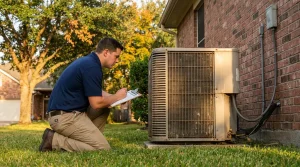
Heat pumps extract heat from outdoor air, so the outdoor unit needs to breathe during heating just as it does during cooling. Clear vegetation, debris, and stored items away from it, and make sure it is not sitting where water will pool and freeze around the base.
Test carbon monoxide alarms
If you have any fuel-burning appliance, working CO alarms are essential. Test them, replace batteries, and check the manufacture date, since CO alarms have a service life and expire. Alarms belong on every level of the home and outside sleeping areas.
Get a professional inspection for combustion equipment
For gas furnaces, a professional look at the heat exchanger, burners, venting, gas connections, and safety controls before the season is the item that most directly addresses safety rather than comfort.
| Task | Who does it | When | Why it matters in Houston |
|---|---|---|---|
| Test run in heating mode | Homeowner | Early to mid fall | Surfaces dormancy problems while weather is mild |
| Replace air filter | Homeowner | Start of fall | Season-long cooling load leaves filters heavily loaded |
| Verify thermostat heating mode | Homeowner | Early fall | Heating-mode faults are invisible during cooling season |
| Clear registers and returns | Homeowner | Early fall | Eight months of furniture changes block airflow |
| Clear heat pump outdoor unit | Homeowner | Before first front | Unit must breathe to extract heat efficiently |
| Test CO alarms | Homeowner | Before first use | Idle combustion equipment carries elevated CO risk |
| Professional combustion inspection | Professional | Fall, before first cold | Heat exchanger and venting safety after long dormancy |
Reading What the Test Run Tells You
The fall test is diagnostic, and the results sort into a few clear categories.
System starts and heats normally
The best outcome and the most common one. Note it, change the filter, and move on with reasonable confidence.
System starts but output seems weak
Weak airflow or air that is warm rather than hot can indicate a restricted filter, blocked ductwork, or a capacity problem. Start with the filter, since that is free and frequently the answer, and escalate if it persists.
Unusual noises
Grinding, squealing, or repeated clicking without ignition all indicate something that should be looked at before the system is relied upon. A noise in October is diagnostic information; the same noise during a freeze is a problem.
Burning smell that does not clear
Brief dust burn-off is expected. A persistent burning smell, especially anything electrical in character, means shut the system off and have it inspected.
System does not start at all
Better to find this in October than in December. Check the thermostat mode and setpoint, check the breaker, and check that the furnace switch has not been turned off. If those are fine, it needs professional attention, and you have weeks rather than hours to arrange it.
Short cycling or inconsistent operation
A system that starts and stops rapidly, or heats unevenly across the house, may have a control problem, an airflow restriction, or a sizing mismatch. This is worth understanding before winter rather than living with it through the season.
How Our Team Approaches Pre-Winter Readiness
Our focus is installation rather than service, so our perspective on fall readiness is about whether a system is positioned to carry the winter and what to do if it is not.
We take the age question seriously
Houston heating systems accumulate relatively few operating hours, so they can reach substantial ages while still running. That cuts both ways: low runtime extends useful life, but a twenty year old furnace is still a twenty year old furnace with aging safety components. When a system of that age shows any concerning behavior during a fall test, the honest conversation is about planning a replacement rather than patching through another season.
Fall is the right planning window
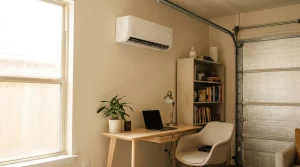
The stretch before heating demand arrives is the calmest time to evaluate options. Nobody is making a decision under pressure, scheduling is flexible, and there is time to consider whether a heat pump makes sense given how favorable our mild winters are for them. Homeowners who wait until the first freeze to consider a heating systems installation decision are making it in the worst possible circumstances.
We look at the whole system
Heating and cooling share ductwork, share a blower, and often share a replacement timeline. A fall heating conversation naturally touches the cooling side, especially for homeowners whose AC just finished a hard summer. Considering both together frequently produces a better outcome than two separate decisions a year apart, which is why a local AC installation discussion often belongs in the same conversation.
We evaluate the house, not just the equipment
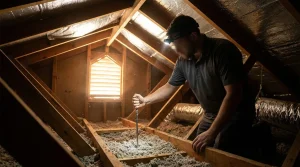
If a home has struggled to stay warm during past cold snaps, the cause is often as much the building as the equipment. Insulation levels, ductwork condition and layout, ceiling heights, window orientation, and airflow distribution all determine whether heat reaches the rooms that need it. A larger furnace does not fix a distribution problem, and oversizing remains the most common HVAC problem we encounter. Getting the full picture is what a thorough home HVAC assessment is for.
Key Takeaways
- Houston heating systems sit dormant seven or eight months, then face full demand with almost no transition period
- A mild-weather test run in early fall is the single most valuable readiness step a homeowner can take
- Dormancy creates specific risks: dust, pest intrusion, corroded connections, and seized components that only appear at startup
- Gas furnaces warrant an annual professional combustion and venting inspection, since carbon monoxide risk is elevated after long idle periods
- Houston homes are built for cooling, so they shed heat quickly during freezes and demand more from heating equipment than expected
- Problems found in October are scheduling conversations; the same problems found during the first freeze are much harder to solve
Frequently Asked Questions
When should I test my heating system in Houston?
Early to mid fall, well before the first cold front arrives. The goal is to run the system while the weather is still mild enough that finding a problem is an inconvenience rather than an emergency. Switch the thermostat to heat, set it above the current indoor temperature, and let the system run fifteen to twenty minutes. Confirm it starts, produces warm air at the registers, runs without unusual noise, and shuts off properly. Because Houston cold fronts arrive abruptly, testing early is the difference between a scheduled repair and a scramble.
Why does my heater smell like burning when I first turn it on?
A brief burning smell during the first heating cycle of the season is normal. Dust settles on the heat exchanger and other surfaces during seven or eight months of dormancy, and it burns off when the system first runs. The smell should clear within the first cycle or two. What is not normal is a burning smell that persists beyond that, or one with a sharp electrical character. In either of those cases, shut the system off and have it inspected before running it further.
What does a pre-winter heating inspection include?
The homeowner portion covers a test run in heating mode, a fresh filter, verifying thermostat operation in heat, confirming registers and returns are unobstructed, clearing the outdoor unit if you have a heat pump, and testing carbon monoxide alarms. The professional portion, which matters most for gas furnaces, covers the heat exchanger, burners, venting and flue condition, gas connections, and safety controls. That combustion inspection is the safety-critical piece, particularly after equipment has been idle for most of the year.
Do heat pumps need winter preparation in Houston?
Yes, though the focus differs from a furnace. Because a heat pump pulls heat from outdoor air, the outdoor unit needs clear airflow, so remove vegetation, debris, and stored items from around it and make sure it is not positioned where water will pool and freeze at the base. Also confirm you know how your backup or auxiliary heat works, whether that is electric resistance or a gas furnace in a dual fuel setup. Heat pumps remain well suited to Houston's mild winters, and this preparation is about the rare freeze rather than the typical season.
How often should a Houston heating system be professionally inspected?
Annually for any fuel-burning equipment, before the heating season begins. The CPSC recommends yearly professional inspection of fuel-burning heating systems because of carbon monoxide risk, and that recommendation applies with particular force in a climate where the equipment sits unused for most of the year. Long dormancy allows venting blockages, pest intrusion, and component deterioration to develop unnoticed. For heat pumps, which carry no combustion risk, an annual check is still worthwhile but the urgency is comfort and reliability rather than safety.
Conclusion
The pattern that defines Houston heating is dormancy followed by sudden demand. Our systems rest for most of the year and then get called on without warning, which is a genuinely difficult duty cycle for mechanical equipment and a poor fit for the way most seasonal maintenance advice is written.
The practical response is simple and worth doing every year: run the system on a mild day in early fall, change the filter, confirm the thermostat works in heating mode, clear the registers and the outdoor unit, test the CO alarms, and get combustion equipment professionally inspected before it runs. None of that is complicated. All of it is much easier in October than in December.
At VeriChill, our team's role in this is mostly about what happens when the fall check reveals that a system is nearing the end of its useful life. That is a planning conversation we would much rather have in the fall, with time to evaluate whether a heat pump suits your home, how your cooling side factors in, and whether the house itself needs attention alongside the equipment. Decisions made in mild weather are better decisions.
Want to know whether your heating system is ready for this winter? Call us at 281-559-6995 or visit verichill.com to schedule a consultation.