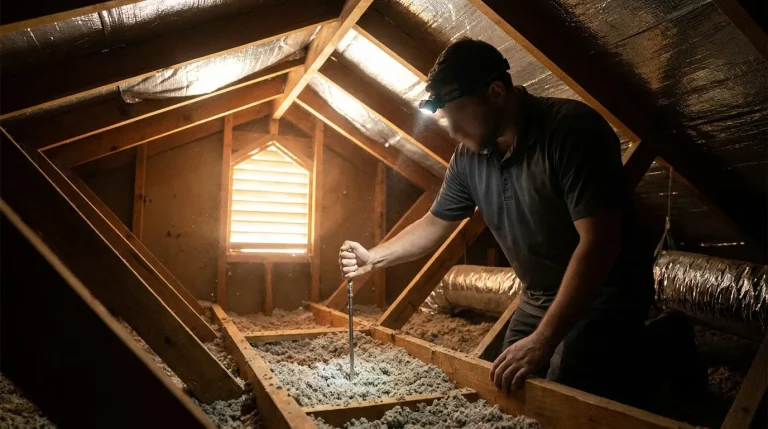
Insulation and heating efficiency in Houston is a topic most local homeowners have never had reason to consider, because our homes were designed around summer. The thermal envelope, meaning the insulation, air sealing, and weatherstripping that separate conditioned space from outside, determines how much heat your home loses and therefore how hard your heating system must work. Houston construction typically optimizes for cooling and humidity control, which leaves real gaps on the heating side. During a cold snap, those gaps mean the house sheds heat faster than the system can replace it, and homeowners blame equipment for what's really a building-envelope problem.
Here is a scenario that plays out across Houston every winter. A cold front comes through, the temperature drops into the thirties, and a homeowner notices the heat running almost constantly while certain rooms stay cold. The natural conclusion is that the heating system is inadequate, so they start researching larger furnaces.
Frequently the system is fine. The house is the problem.
Heating and cooling are not symmetrical problems, and a home that performs acceptably in summer can perform poorly in winter for reasons that have nothing to do with the equipment. Air leakage behaves differently when the temperature difference reverses. Insulation gaps that barely register against a 20 degree summer differential matter much more against a 40 degree winter one. Rooms that are merely warm in August become genuinely uncomfortable in January.
Because our heating season is short, these deficiencies rarely get diagnosed. They surface for a few weeks a year, cause frustration, and then the weather warms up and everyone forgets until next time. Let us take them seriously for a moment, because the fixes are often modest and the comfort difference is substantial.
Why Houston Homes Are Built for Cooling, Not Heating
Understanding how we build here explains the pattern.
Design priorities follow the dominant season
With eight to nine months of cooling demand and humidity averaging above 75 percent, Houston construction reasonably prioritizes keeping heat and moisture out. Radiant barriers, attic ventilation strategies, and moisture management dominate the thinking. Heat retention simply is not the design driver it is in northern markets, and building practice reflects that.
Insulation levels are often adequate rather than generous
Houston homes are typically insulated to meet applicable code requirements rather than to exceed them, and older homes frequently fall short of even current levels. Attic insulation in particular tends to have settled, been compressed by stored items, or been disturbed by years of work on ductwork and wiring. An attic that measured adequately at construction may not measure adequately now.
Air sealing gets less attention than it deserves
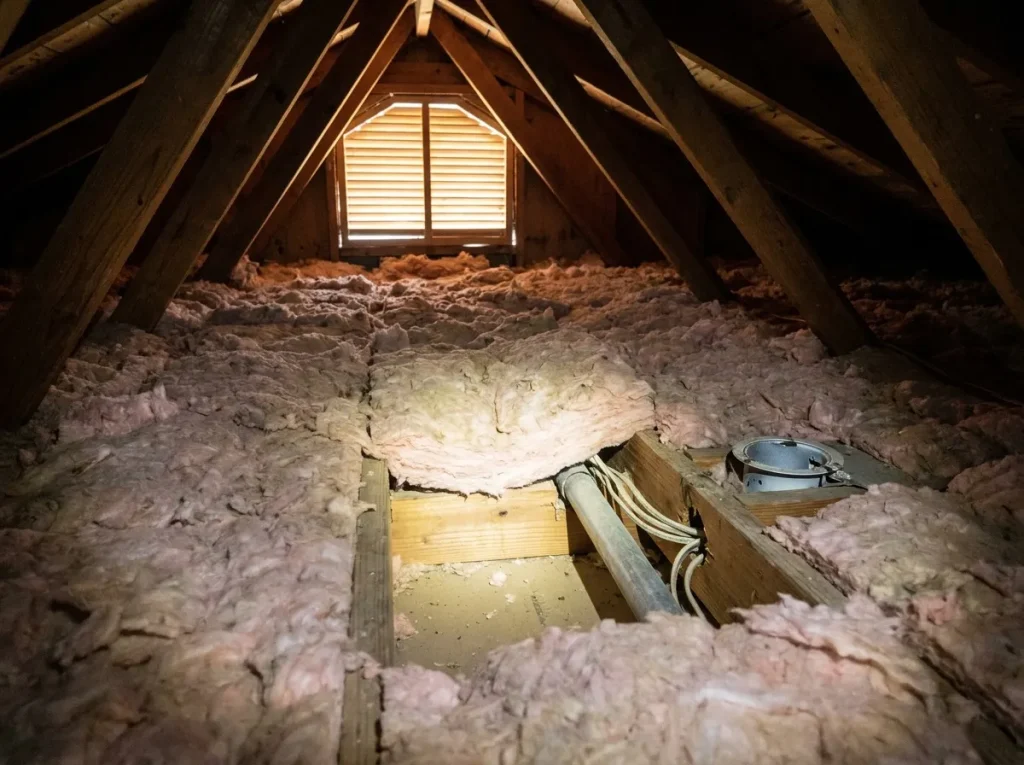
Air leakage is the most underestimated factor in Houston homes. Gaps around plumbing and electrical penetrations, recessed lighting, attic hatches, rim joists, and duct boots let conditioned air escape and unconditioned air in. In summer, this contributes to humidity problems that get blamed on the AC. In winter, it lets warm air out continuously.
Ductwork in unconditioned attics is a structural disadvantage
Most Houston homes run ductwork through the attic, which in winter is a cold space. Every leak in that ductwork dumps heated air where it does nothing, and every foot of poorly insulated duct loses heat on the way to the room. The EPA models a typical existing home as carrying meaningful total duct leakage, and its estimated savings methodology for air sealing and insulating breaks the resulting savings out by climate zone. In a market where ducts live outside the conditioned envelope, the duct portion of that picture matters disproportionately.
Windows and doors were chosen for solar control
Glazing decisions in Houston homes focus on limiting solar heat gain, which is correct for our climate. But older single-pane windows, failed weatherstripping, and poorly sealed exterior doors leak heat in winter regardless of how they perform against summer sun.
How Envelope Problems Show Up in Winter
The symptoms are recognizable once you know what to look for.
The system runs constantly during cold snaps
If your heating runs nearly continuously when it is in the thirties and the house still does not feel warm, the building is losing heat about as fast as the system adds it. That is an envelope signal, not necessarily a capacity signal.
Specific rooms stay cold
Rooms over garages, rooms at the end of long duct runs, rooms with multiple exterior walls, and rooms with large window areas are the usual suspects. If the same room is also the hottest room in summer, that is a strong indication of an envelope or distribution problem rather than an equipment problem.
Noticeable drafts near windows, doors, and outlets
Air movement you can feel near a closed window, an exterior door, or an electrical outlet on an exterior wall indicates direct air leakage. Outlets are a particularly good diagnostic, since feeling air at a receptacle means the wall cavity is connected to outside.
Cold floors over crawl spaces or garages
Floors above unconditioned spaces lose heat directly when the assembly is poorly insulated.
Heating bills that seem disproportionate to a short season
Houston heating costs should be modest because the season is short. Bills that feel high for the small number of cold days suggest the house is working against the system.
| Symptom | Likely envelope cause | Typical remedy |
|---|---|---|
| System runs constantly in cold weather | Overall heat loss exceeds expectations | Attic insulation and air sealing assessment |
| One room consistently cold and consistently hot in summer | Insulation gap or duct delivery problem | Targeted insulation and duct evaluation |
| Drafts at outlets on exterior walls | Wall cavity connected to outside air | Outlet gaskets and exterior air sealing |
| Cold floors above garage or crawl space | Uninsulated floor assembly | Insulate the floor assembly |
| Attic feels as cold as outdoors and ducts run through it | Duct leakage and insulation loss | Duct sealing and duct insulation |
| Visible daylight or airflow at attic hatch | Unsealed, uninsulated hatch | Weatherstrip and insulate the hatch |
Where Improvements Deliver the Most in Houston
Not all envelope work is equally worthwhile here. Our climate changes the priorities relative to national advice.
Air sealing usually beats adding insulation
If you can only do one thing, seal air leaks. Insulation slows heat transfer through materials, but it does very little about air moving freely through gaps. Sealing penetrations at the attic floor, around recessed lights, at the attic hatch, and at plumbing and wiring chases typically delivers more comfort improvement per dollar than adding insulation on top of leaks. It also helps in summer by reducing humid air infiltration, which means the benefit runs year round rather than for a few weeks.
Duct sealing is unusually valuable here
Because Houston ducts typically run through unconditioned attics, duct leakage is a direct loss in both seasons. Sealing duct connections and repairing disconnected or crushed sections improves delivery to every room and is one of the highest-value interventions available in a typical Houston home.
Attic insulation to a proper depth
Once air sealing is done, bringing attic insulation up to an appropriate level is the next priority. Sealing first matters, because insulating over unsealed penetrations traps the leak underneath where it continues to work against you.
Weatherstripping and door seals
Inexpensive, straightforward, and immediately noticeable at exterior doors and operable windows. Worth doing before the first front.
The heating benefit is only half the return
Everything above improves summer performance as well. Reduced infiltration means less humid outdoor air entering, which directly reduces the moisture load on your AC across eight to nine months. In Houston, envelope work should be evaluated on its year-round return, which is much more favorable than the heating-season case alone. This is worth raising with a HVAC experts team, since envelope conditions and equipment sizing are connected.
How Our Team Factors the Envelope Into System Decisions

This is where envelope work and equipment decisions intersect, and where getting the order right matters.
Envelope condition determines correct sizing
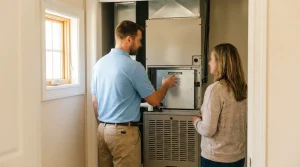
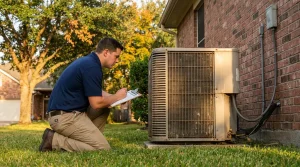
When we evaluate a home for new equipment, the assessment covers insulation levels, ductwork condition and layout, ceiling heights, window orientation and area, and how air actually distributes through the house. Those conditions determine what capacity is appropriate. A leaky, under-insulated house genuinely needs more capacity than a tight one, which creates a trap: sizing equipment to a poor envelope locks in a larger system permanently.
Sequence matters
Where a homeowner plans envelope improvements, doing them before equipment selection produces a better outcome. Seal and insulate first, then size to the improved house, and you end up with smaller, better-matched equipment that runs longer, gentler cycles. Reverse the order and you own an oversized system that short cycles for the next fifteen years. Oversizing is the most common HVAC problem we see in Houston homes, and envelope improvements made after installation are one quiet way homes end up there.
We say when the problem is not the equipment
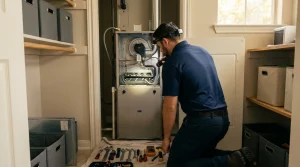
If a homeowner is frustrated by cold rooms and we find the cause is duct leakage, an uninsulated attic hatch, or a missing insulation section over a bonus room, we say so. Selling a larger system to overcome a building problem is both more expensive for the homeowner and worse performing, since the new system inherits the same losses. A home heating system installation recommendation should follow the diagnosis, not precede it.
Better envelopes make better equipment worthwhile
A tighter home holds temperature more steadily, which lets two-stage equipment do what it does best: run long, low-output cycles that maintain even comfort and excellent moisture control. Two-stage systems remain our recommendation as the sweet spot for most Houston homes, and they perform noticeably better in a well-sealed house. The same logic applies on the cooling side, where a good envelope is what lets a correctly sized system from an AC installation contractors evaluation deliver its full comfort benefit.
Key Takeaways
- Houston homes are designed around cooling, which leaves heating-side envelope gaps that only surface during cold snaps
- A system running constantly during a freeze while the house stays cold often indicates heat loss rather than inadequate capacity
- Air sealing generally delivers more comfort improvement per dollar than adding insulation over unsealed penetrations
- Duct leakage is unusually costly in Houston because ductwork typically runs through unconditioned attics
- Envelope improvements pay back year round here, reducing humid air infiltration during the long cooling season
- Sequence matters: improve the envelope before sizing new equipment, or risk locking in an oversized system
Frequently Asked Questions
Does insulation really matter for heating in Houston?
Yes, more than most homeowners expect. Houston construction optimizes for keeping heat and humidity out, which is correct for eight to nine months of the year, but it leaves heat retention as a secondary consideration. During cold snaps, insulation gaps and air leaks let the house shed heat quickly, so the system runs continuously while rooms stay cold. Because our heating season is short, these deficiencies rarely get properly diagnosed. They also cost you in summer, since the same leaks let humid outdoor air in.
Should I add insulation or seal air leaks first?
Seal first, then insulate. Insulation slows heat transfer through materials but does very little about air moving freely through gaps around plumbing penetrations, recessed lights, attic hatches, and wiring chases. Adding insulation over unsealed penetrations traps the leak underneath where it keeps working against you. Air sealing typically delivers more comfort improvement per dollar in a Houston home, and it helps in both seasons by reducing humid air infiltration during our long cooling season.
Why is one room in my house always cold in winter and hot in summer?
That combination strongly suggests an envelope or duct distribution problem rather than an equipment problem. A room that fails in both directions is not getting adequate conditioned air, or it is losing conditioned air faster than the rest of the house. Common causes are a crushed or disconnected duct run, an insulation gap above the ceiling, multiple exterior walls with large window area, or position at the far end of a long duct run. Rooms over garages are especially prone to this.
Will better insulation let me install a smaller heating system?
Often yes, and that is a genuine benefit. Equipment capacity should be sized to the home's actual heat loss, so reducing that loss through air sealing and insulation reduces the capacity required. This is why sequence matters: make envelope improvements before selecting equipment, and you can size to the improved house. Do it in the other order and you are left with an oversized system that short cycles for its whole service life. Smaller, correctly matched equipment running longer cycles delivers better comfort and better humidity control.
Is duct sealing worth it in a Houston home?
It is one of the highest-value improvements available here, specifically because most Houston homes run ductwork through unconditioned attics. Every leak in that ductwork dumps conditioned air into a space that is brutally hot in summer and cold in winter, so the loss works against you in both seasons. Leaky ducts also draw unconditioned attic air into the return side, which brings heat, humidity, and dust into the system. Sealing connections and repairing crushed or disconnected sections improves delivery to every room in the house.
Conclusion
The most useful reframe here is that your heating system and your house are one system, not two. Equipment adds heat. The building decides how long that heat stays. When the second part is working against you, no amount of the first part fully compensates.
Houston makes this easy to miss because our heating season is so brief. A few uncomfortable weeks a year does not create the same pressure to investigate that a long northern winter does, so envelope problems persist for years, quietly costing comfort in winter and moisture control in summer.
At VeriChill, our team evaluates the envelope as part of any system conversation, because insulation levels, ductwork condition, ceiling heights, window orientation, and airflow distribution determine what equipment is actually appropriate. Sometimes that means telling a homeowner that the answer is duct sealing rather than a new system. When a replacement is the right call, we would much rather size it to a home that has been sealed and insulated properly, because that produces smaller, better-matched equipment that runs the long, gentle cycles Houston comfort depends on.
Wondering whether your comfort problem is the equipment or the house? Call us at 281-559-6995 or visit verichill.com to schedule a consultation.