AC compressor failure is usually the result of preventable stresses that build over time: overheating, incorrect refrigerant charge, electrical component wear, restricted airflow, and liquid slugging. For Houston homeowners, the extreme runtime of an eight-to-nine-month cooling season makes these stresses worse than in mild climates, which is exactly why consistent maintenance and a correctly sized, properly charged system protect the most expensive component in your home's air conditioner.
The compressor is the heart of your air conditioning system. It is the component that pressurizes refrigerant and drives the entire cooling cycle, and it is also the single most expensive part to replace. After more than a decade of installing and servicing AC systems across the Houston metro area, our team can tell you that very few compressors fail because of a manufacturing defect. The vast majority fail because of conditions that build slowly and could have been caught.
Houston punishes air conditioners in ways that most of the country never sees. Our cooling season stretches across eight to nine months, relative humidity sits above 75% for long stretches, and outdoor units run for thousands of hours that a system in a milder climate would never accumulate. That extreme runtime turns small problems into compressor-killing problems faster here than almost anywhere else.
Let us walk through what actually causes a compressor failure, why Houston's climate accelerates it, and the specific steps that prevent it. Our goal is to help you protect the component that determines whether your system lasts ten years or twenty.
What the Compressor Does and Why Failure Is So Costly
The compressor sits inside your outdoor condenser unit. It takes low-pressure refrigerant vapor returning from inside your home, compresses it into a high-pressure, high-temperature gas, and pushes it through the condenser coil, where heat is released outside. That pressurized cycle is the engine of the entire system.
Because the compressor does the hardest mechanical work, it operates under high heat and pressure every minute it runs. When it fails, you are not looking at a minor part swap. In many cases, replacing a compressor on an aging system costs enough that homeowners choose a full ac installation houston instead. Understanding the causes is the first step toward avoiding that decision.
The Main Causes of AC Compressor Failure
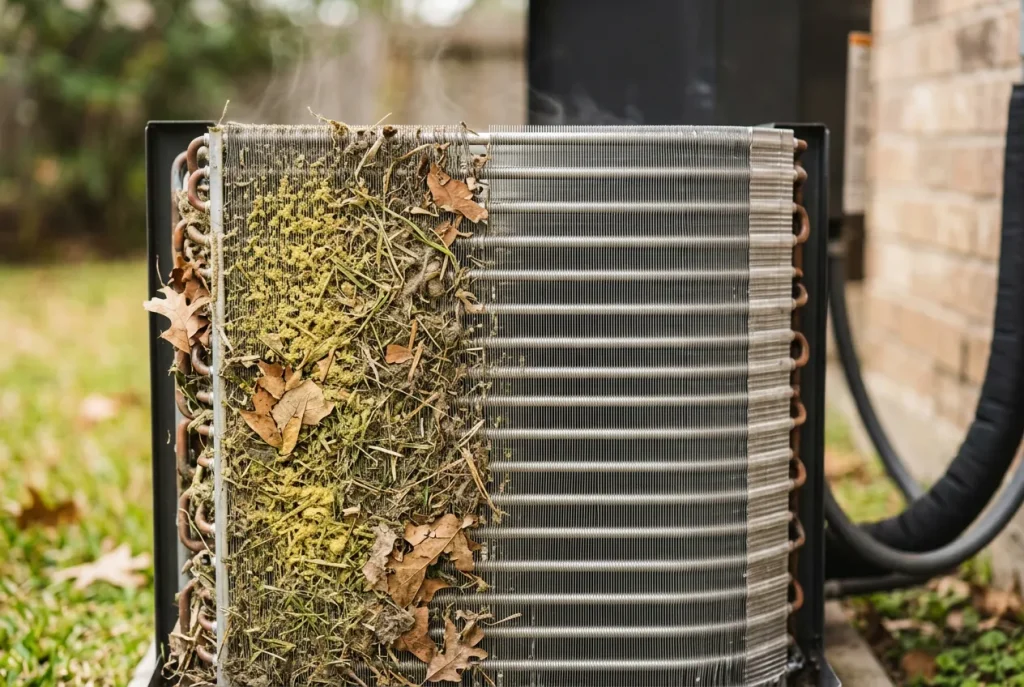
Most compressor failures trace back to a handful of root causes. Here is how each one develops and what it does to the system over time.
| Failure Cause | What Happens | Houston Risk Factor |
|---|---|---|
| Compressor overheating | Internal temperatures climb past safe limits, breaking down oil and windings | High runtime hours amplify heat exposure |
| Incorrect refrigerant charge | Low or overcharged systems strain the compressor and alter pressures | Slow leaks go unnoticed across a long season |
| Electrical component wear | Failing capacitor or worn contactor disrupts start and run cycles | Frequent starts in summer accelerate wear |
| Restricted airflow | Dirty coils or filters force the system to work harder | Heat and pollen load coils quickly |
| Liquid slugging | Liquid refrigerant enters the compressor and damages valves | More likely with charge or airflow problems |
Each root cause develops differently, but they share a common pattern in our climate: Houston's runtime turns a minor condition into a compressor-killing one. Here is how each one progresses:
- Compressor overheating. When a compressor runs too hot, the lubricating oil inside begins to break down, the motor windings degrade, and the protective components wear out. Houston's long runtime means the compressor accumulates heat hour after hour, and a rising discharge temperature is often the first measurable warning that something is pushing it past its limits.
- Low or overcharged refrigerant. A system running low, usually from a slow leak, forces the compressor to work against improper suction pressure and run hotter than designed, while an overcharged system raises discharge temperature and risks liquid returning to the compressor. Both extremes shorten compressor life, and in a long Houston season a small leak can drift the charge out of range before anyone notices.
- Electrical failure and component wear. A weak capacitor cannot deliver the jolt the compressor needs to start cleanly, forcing it to strain, and contactor wear creates pitted contacts that interrupt clean power delivery. Over a Houston summer, with the system cycling start after start, capacitor failure and contactor wear quietly stress the compressor until it gives out.
- Restricted airflow and dirty condenser coils. When the condenser coil is caked with dust, grass clippings, or pollen, heat cannot be released efficiently, and the compressor runs hotter and harder. Indoors, a clogged filter restricts airflow across the evaporator and disrupts the overall pressure balance, making it one of the most preventable causes of compressor stress and one that is common in Houston yards.
- Liquid slugging, oil migration, and acid formation. A compressor is built to compress vapor, not liquid, so when liquid refrigerant slips back in, a condition called liquid slugging, it can damage internal valves almost instantly. Related problems develop more slowly: oil migration leaves moving parts under-lubricated, and chronic overheating can trigger acid formation that corrodes components and contaminates the refrigerant and oil over time.
How Houston's Climate Accelerates Compressor Wear
A compressor in San Diego and a compressor in Houston can be identical models yet lead very different lives. The difference is in the runtime and load. Our equipment simply works more, for more months, under more humidity.
During peak summer, an outdoor unit in the Houston metro can run nearly around the clock. Every one of those hours adds heat exposure and starts cycles. High humidity also means the system works harder to remove moisture, further extending run times. The Department of Energy notes that routine maintenance directly protects efficiency and equipment life, and in our climate that protection matters more than in regions with short cooling seasons.
The practical takeaway is simple. A maintenance habit that a homeowner in a mild climate can skip for a year without consequence will cause real damage here in a single season. Houston does not give compressors much margin for neglect.
How to Prevent AC Compressor Failure
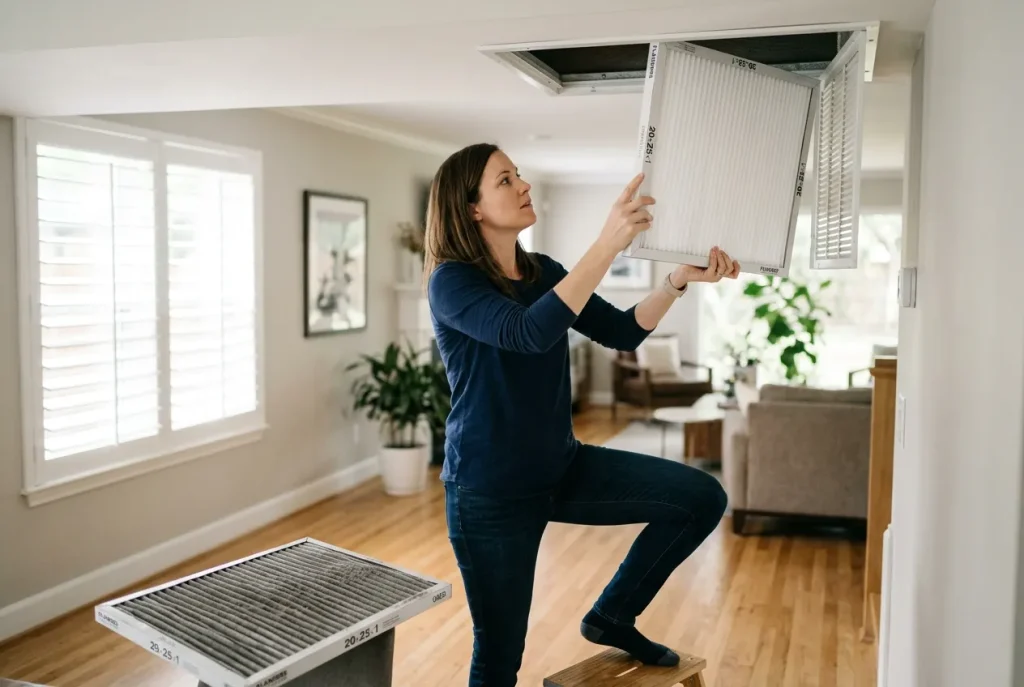
The encouraging news is that nearly every cause above is preventable. Protecting your compressor does not require special knowledge, just consistency and the right professional support at the right intervals.
Protecting your compressor comes down to a short list of habits and the right professional support at the right intervals. These steps directly counter the causes above:
- Change filters on a regular schedule. A clean filter protects airflow across the evaporator coil, which protects the entire pressure balance the compressor depends on. During Houston's long cooling season, check your filter monthly and replace it as needed, because this single habit prevents a surprising share of airflow-related compressor stress.
- Keep the outdoor condenser clean and clear. Maintain at least 2 feet of clearance around the outdoor unit, trim back vegetation, and gently rinse accumulated pollen and debris from the coil fins. A clean condenser lets the compressor run cooler and reduces the discharge temperature that drives overheating failures.
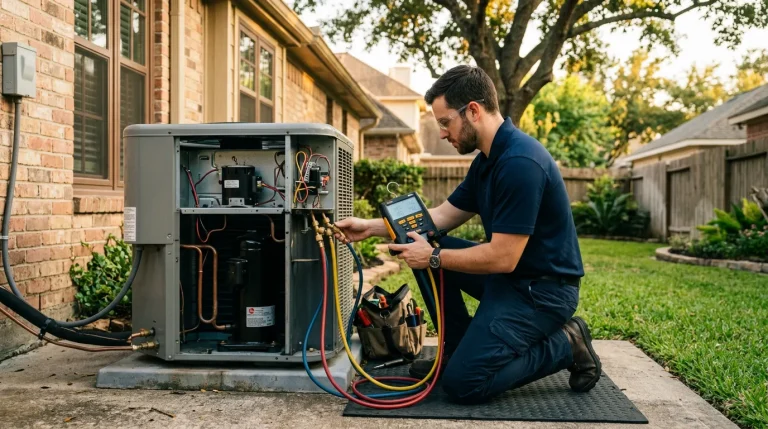
- Schedule professional inspections. A professional inspection verifies refrigerant charge, measures suction pressure and discharge temperature, tests the capacitor, and examines the contactor for wear. Catching a weak capacitor or a drifting charge early is the difference between a small fix and a failed compressor, which is why ENERGY STAR recommends regular professional attention as part of keeping a cooling system efficient and reliable.
- Maintain correct refrigerant charge. Refrigerant does not get consumed, so if your charge is low you have a leak that needs to be found and repaired, not simply topped off. A correctly charged system maintains suction pressure and discharge temperature within their proper ranges, providing one of the most direct protections against overheating and liquid slugging.
- Start with proper sizing. An oversized system short-cycles, hammering the compressor with repeated hard starts, while an undersized system runs nonstop and overheats. A careful cooling load assessment that accounts for your home's square footage, insulation, windows, and ductwork ensures the compressor operates within its intended range, so for any new hvac service houston project, correct sizing is the foundation of compressor longevity.
Warning Signs Your Compressor May Be Struggling
Catching trouble early often means saving the compressor. Watch for these signals and call a professional before stress becomes a failure.
- The outdoor unit makes new clicking, humming, or rattling noises
- The system struggles to start or trips the breaker repeatedly
- Cooling output weakens even though the system runs constantly
- The outdoor unit feels unusually hot or cycles on and off rapidly
- You notice warm air from the vents during peak afternoon heat
These symptoms often point to electrical wear, charging issues, or airflow restrictions. None of them improve on their own, and in Houston's heat, they tend to escalate quickly. Heating components deserve the same attention, so if you are also evaluating heating installation or a full system, an inspection is the right starting point.
Key Takeaways
- The compressor is the heart and most expensive component of your AC, and most failures are preventable rather than defect-driven
- Overheating, incorrect refrigerant charge, electrical component wear, restricted airflow, and liquid slugging are the leading causes of AC compressor failure
- Houston's eight-to-nine-month cooling season and 75%-plus humidity create extreme runtime that accelerates every form of compressor wear
- Regular filter changes and a clean condenser coil prevent the airflow and overheating problems that stress compressors most
- Professional inspections catch capacitor failure, contactor wear, and refrigerant charge drift before they reach the compressor
- Proper sizing at installation sets the foundation for a compressor that lasts the full life of the system
Frequently Asked Questions
What is the most common cause of AC compressor failure in Houston?
In our team's experience, compressor overheating is the most common cause, and it usually traces back to restricted airflow or an incorrect refrigerant charge. Houston's long cooling season means the compressor accumulates thousands of runtime hours, so a dirty condenser coil or a slow refrigerant leak that might be harmless in a mild climate pushes discharge temperature past safe limits here. Overheating breaks down the oil and windings inside the compressor, which is why keeping coils clean and the charge correct matters so much in our climate.
How can I tell if my AC compressor is going bad?
Several warning signs point to a struggling compressor. Listen for new clicking, humming, or rattling from the outdoor unit, and watch for a system that trips the breaker, struggles to start, or cycles on and off rapidly. Weak cooling despite constant operation and an outdoor unit that feels unusually hot are also red flags. These symptoms often indicate capacitor failure, contactor wear, or a refrigerant charge problem. Because they tend to escalate quickly in Houston heat, it is best to have a professional diagnose the cause before the compressor fails.
Does refrigerant charge really affect the compressor that much?
Yes, more than most homeowners realize. Refrigerant charge has to be precise. A system running low forces the compressor to work against improper suction pressure and run hotter than designed, while an overcharged system raises discharge temperature and risks liquid slugging, where liquid refrigerant enters the compressor and damages valves. Refrigerant is never consumed, so if your charge is low you have a leak that needs repair, not a top-off. Maintaining correct charge is one of the most direct ways to protect compressor life.
How often should I have my AC professionally inspected in Houston?
Given Houston's extended cooling season and extreme runtime, an annual professional inspection before the heaviest summer months is a sound habit, and many homeowners benefit from a check at both the start and middle of the season. A technician with gauges can verify refrigerant charge, measure suction pressure and discharge temperature, test the capacitor, and inspect the contactor for wear. Catching these issues early prevents the slow stresses that lead to compressor failure. In our climate, that proactive attention pays off far more than it would in a region with a short cooling season.
Is it worth replacing just the compressor or the whole system?
It depends on the age and condition of your system. On a relatively new unit still under warranty, replacing the compressor can make sense. On an aging system, the compressor replacement cost is often high enough that investing in a complete, correctly sized installation delivers better long-term value, improved efficiency, and a fresh warranty. Our team evaluates each situation individually, weighing the system's age, its overall condition, and how the rest of the components are holding up before recommending a path forward.
Conclusion
The compressor is the heart of your air conditioner, and in Houston it works harder than almost anywhere in the country. The good news is that the conditions that destroy compressors are the same conditions you can control: airflow, cleanliness, correct charge, healthy electrical components, and proper sizing from day one. None of these require a dramatic effort, just steady attention through our long cooling season.
At VeriChill, when our team evaluates a Houston home, we look at the full picture: the condition of the condenser coil, the refrigerant charge, the electrical components, the ductwork, and whether the system was sized correctly for the home in the first place. That assessment tells us whether a compressor can be protected for years to come or whether a fresh, properly matched system is the smarter investment. The goal is always to extend the life of your equipment and keep your home comfortable through every Houston summer.
Ready to protect your AC compressor or plan a replacement that fits your home? Call us at 281-559-6995 or visit verichill.com to schedule a consultation.