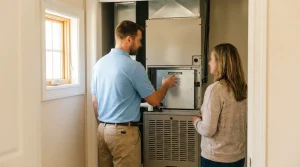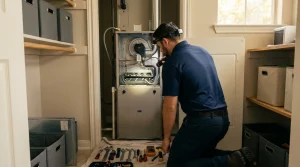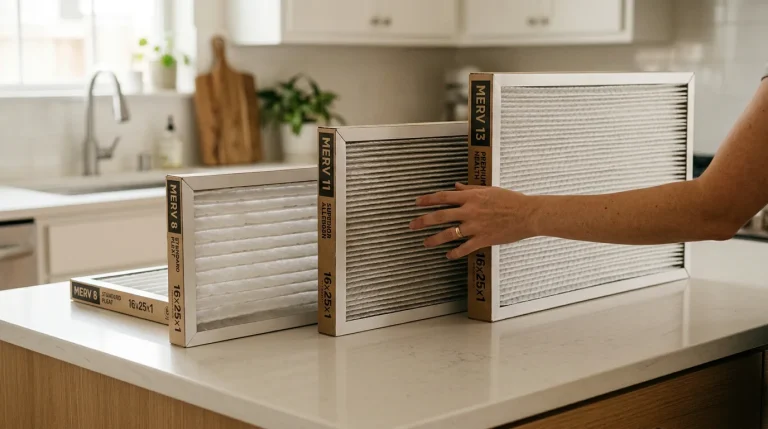
MERV stands for Minimum Efficiency Reporting Value, and it measures how effectively an HVAC filter captures airborne particles. For Houston homes, where humidity drives mold spores, and pollen counts stay elevated for months, choosing the right MERV rating means balancing filtration performance against your system's airflow requirements.
Every homeowner knows they need to change their air filter. Fewer know what the numbers on that filter actually mean, or why the filter they choose affects far more than just air quality. The MERV rating printed on your HVAC filter determines what particles it captures, how much airflow it restricts, and ultimately how well your entire AC system performs.
In Houston's climate, filter selection carries more weight than in drier markets. Our extended cooling season means your system runs 8 to 9 months per year, pulling air through that filter for thousands of hours. High humidity means more biological contaminants circulating through your home. And our heavy pollen seasons add another layer of airborne particles that your filter either catches or allows to recirculate.
After 14 years of working in Houston homes, I have seen the consequences of both under-filtering and over-filtering. Let me walk you through how MERV ratings work, what each level actually captures, and how to match the right filter to your specific home and HVAC system.
What MERV Ratings Actually Measure
The ASHRAE (American Society of Heating, Refrigerating and Air-Conditioning Engineers) developed the MERV scale to standardize how air filters are rated. The scale runs from 1 to 20, with higher numbers indicating finer filtration.
MERV ratings measure a filter's worst-case performance at capturing particles across three size ranges: 0.3 to 1.0 microns, 1.0 to 3.0 microns, and 3.0 to 10.0 microns. The rating reflects the minimum percentage of particles the filter traps in each size range during testing.
For context on particle sizes: a human hair is roughly 70 microns wide. Pollen grains range from 10 to 100 microns. Mold spores are 3 to 30 microns. Dust mite debris is 1 to 10 microns. Bacteria range from 0.3 to 10 microns. The lower the micron number, the smaller the particle, and the higher the MERV rating needed to capture it.
MERV 8, MERV 11, and MERV 13: What Each Level Captures
For residential HVAC systems, the practical conversation focuses on three MERV levels. Here is what each one does and where it fits.
| MERV Rating | Captures Particles Down To | What It Filters | Best For |
| MERV 8 | 3.0 microns | Dust, pollen, dust mites, textile fibers | Basic filtration, budget-conscious, and older HVAC systems |
| MERV 11 | 1.0 microns | Everything MERV 8 catches, plus pet dander, mold spores, fine dust, and some smoke | Homes with pets, moderate allergies, and most modern HVAC systems |
| MERV 13 | 0.3 microns | Everything MERV 11 catches, plus bacteria, virus carriers, tobacco smoke, fine particulates | Severe allergies, respiratory conditions, and immunocompromised occupants |
MERV 8 is the baseline for residential filtration. It handles the large particles that make up the majority of household dust and pollen. For Houston homes without pets or allergy concerns running older HVAC equipment, MERV 8 provides adequate filtration without restricting airflow.
MERV 11 is where most Houston homes should start the conversation. It captures the finer particles that MERV 8 misses, including pet dander and mold spores. Given Houston's humidity and the mold spore counts associated with our climate, MERV 11 addresses contaminants relevant to our area. Most HVAC systems manufactured in the last 15 to 20 years handle MERV 11 without measurable airflow problems.
MERV 13 is the highest rating the EPA recommends for residential HVAC systems. It captures very fine particulates, including some bacteria and virus-carrying droplets. However, MERV 13 filters create more airflow resistance, and not every residential system can accommodate them without performance impacts. Before installing a MERV 13 filter, verify with your HVAC company that your system's blower can handle the additional static pressure.
Why MERV Rating Matters More in Houston
Houston's climate creates indoor air quality challenges, making filter selection particularly important.
Year-round biological contaminants
Houston's humidity supports mold growth indoors and outdoors for most of the year. Mold spores circulating through your HVAC system require a minimum MERV 11 filter to capture effectively. A MERV 8 filter allows most mold spores to pass through and recirculate throughout your home.
Extended pollen seasons
Houston experiences multiple pollen peaks: tree pollen from December through May, grass pollen from March through October, and weed pollen from August through November. With your HVAC system running nearly year-round, the filter is your primary line of defense against pollen infiltrating your indoor air.
Higher filter loading rates
Because Houston HVAC systems run more hours per year than those in most U.S. markets, filters accumulate more particles. A filter rated for 90-day replacement in a northern climate may need replacement every 60 days in Houston. During peak pollen or dust seasons, monthly checks are appropriate regardless of MERV rating.
Humidity and filter performance
A dirty filter restricts airflow across your evaporator coil. When airflow drops, the coil's ability to remove humidity decreases. In Houston, where dehumidification is as important as temperature control, a clogged filter does not just reduce efficiency. It makes your home feel uncomfortable even when the temperature reading looks correct.
The Airflow Trade-Off: Higher Is Not Always Better
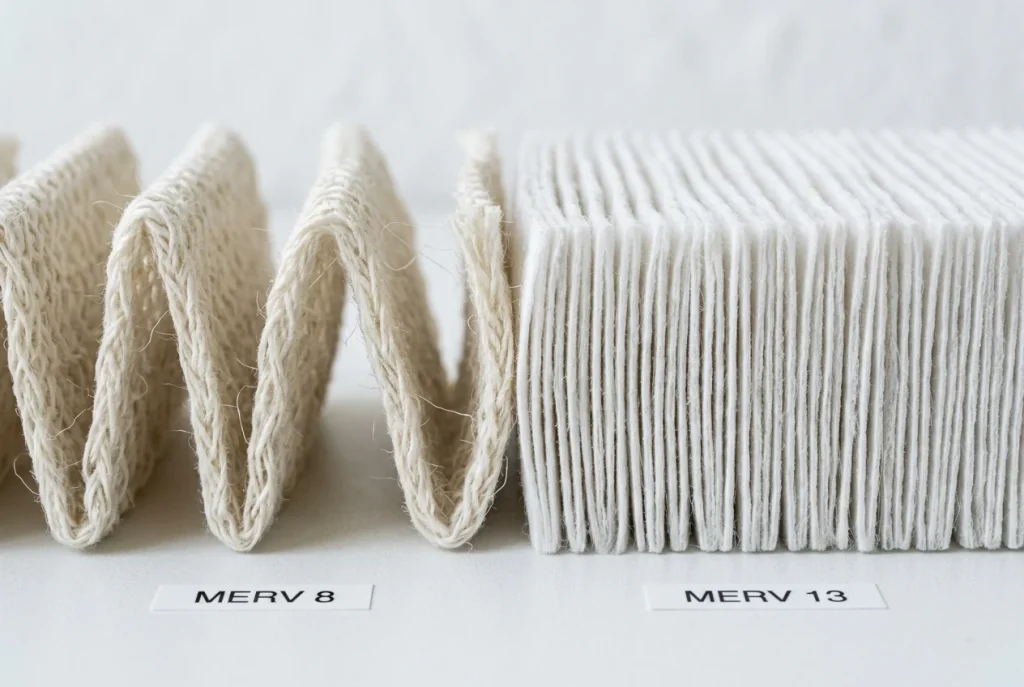
This is where most homeowner confusion lives. If MERV 13 captures more particles than MERV 11, why not always choose the highest rating?
Because filtration and airflow work in opposition. A denser filter medium captures smaller particles but also restricts the volume of air passing through it. Your HVAC system's blower motor is designed to move a specific volume of air against a specific amount of resistance, called static pressure.
When you install a filter with a higher MERV rating than your system can accommodate, several problems follow. The blower motor works harder, consuming more energy and generating more heat. Airflow across the evaporator coil drops, reducing both cooling capacity and dehumidification. The system runs longer to compensate, increasing wear on every component. In extreme cases, reduced airflow can cause the evaporator coil to freeze, shutting down your system entirely.
The right MERV rating for your home is the highest rating your system can handle without exceeding its static pressure tolerance. Your HVAC service Houston technician can measure your system's static pressure and tell you exactly which MERV ratings are compatible with your equipment.
Choosing the Right MERV Rating for Your Houston Home
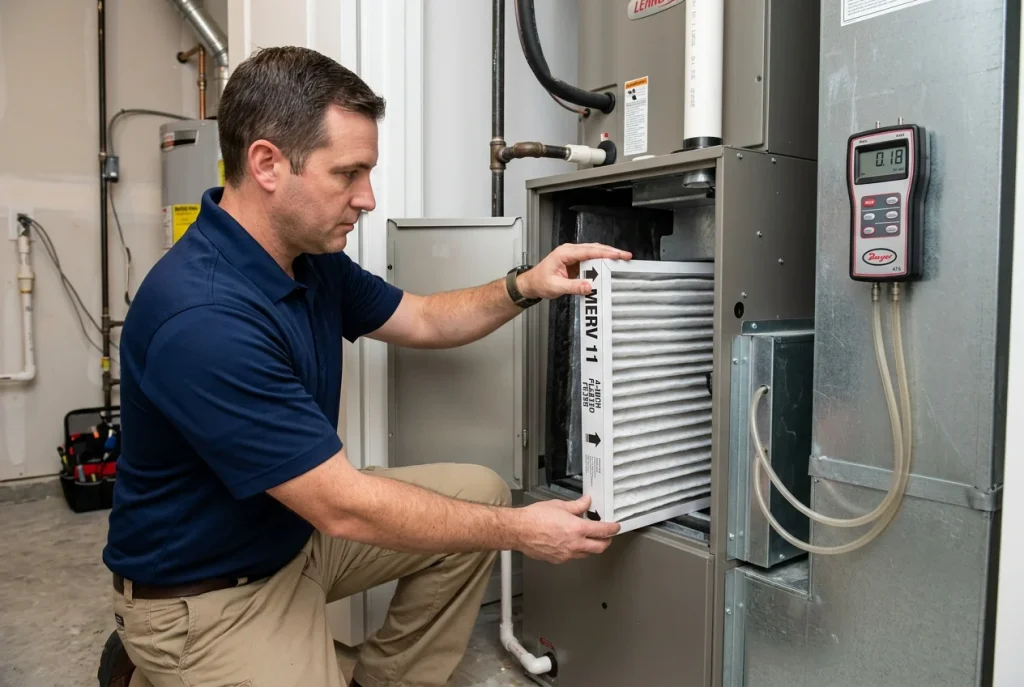
Here is how I approach filter recommendations based on what I see in Houston homes.
Start with MERV 11 for most Houston homes
It captures mold spores and pet dander that are specific to our climate, and virtually all modern residential HVAC systems handle it without issues. This is the baseline recommendation I give to Houston homeowners unless there is a specific reason to go higher or lower.
Consider MERV 13 if health conditions warrant it
Household members with severe allergies, asthma, or compromised immune systems benefit from the finer filtration. But confirm system compatibility first. If your HVAC system cannot handle MERV 13, the airflow restriction will create more problems than the improved filtration solves.
Use MERV 8 only when necessary
Some older HVAC systems with undersized ductwork or aging blower motors cannot handle the resistance of MERV 11. In these situations, MERV 8 is the appropriate choice to maintain proper airflow. When you upgrade your system through an AC installation Houston project, that is the opportunity to move to higher-rated filtration.
Consider filter depth
Standard 1-inch filters in any MERV rating have limited surface area and load faster. If your system accommodates 4-inch or 5-inch media filters, these provide the same MERV rating with significantly more surface area, lower airflow resistance, and longer replacement intervals. A 4-inch MERV 11 filter typically outperforms a 1-inch MERV 13 in both filtration effectiveness and airflow because the larger surface area compensates for the denser filter media.
Filter Maintenance in Houston's Climate
Choosing the right MERV rating is only half the equation. Maintenance determines whether that filter continues to perform as intended.
Check monthly, replace on condition
Rather than relying strictly on calendar intervals, check your filter monthly by pulling it out and holding it up to a light source. If light barely passes through, the filter is loaded and needs replacement regardless of how long it has been installed. Houston's heavy runtime and high particulate loads mean your filter may reach capacity faster than the manufacturer's general recommendation suggests.
Expect faster replacement during peak seasons
Spring pollen season (March through May) and fall ragweed season (August through October) significantly increase filter loading. During these periods, a MERV 11 filter that normally lasts 60 to 90 days may need replacement in 30 to 45 days.
Do not run your system without a filter
If your filter needs replacement and you do not have a spare, do not remove the dirty filter and run the system without a filter. Unfiltered air allows dust and debris to coat the evaporator coil, blower components, and the interior of the ductwork. The damage from even a few days of unfiltered operation can take a professional cleaning to correct.
Stock spare filters
Keep at least two replacement filters on hand so you always have one available when you discover the installed filter needs to be changed. Buying in bulk also reduces per-filter cost.
Beyond Standard Filters: Supplemental Air Quality Options
For Houston homeowners who want air quality improvement beyond what standard MERV-rated filters provide, supplemental options exist that work alongside your HVAC system rather than replacing the standard filter.
UV germicidal lights installed in the air handler neutralize biological contaminants, including mold, bacteria, and certain viruses, as air passes through the system. These work in conjunction with your standard filter, not as a replacement.
Whole-home air purification systems use advanced media or electronic filtration with dedicated fans, allowing higher-efficiency filtration without restricting your HVAC system's airflow. These are particularly relevant for Houston homes where humidity-driven biological contaminants are a year-round concern.
For homeowners upgrading their HVAC system, discussing air quality options during the heating installation or cooling system replacement process is the most cost-effective time to add supplemental filtration, since installation integrates with the system work already being performed.
Key Takeaways
- MERV ratings measure filter efficiency on a 1 to 20 scale, with higher numbers capturing smaller particles
- MERV 11 is the recommended starting point for most Houston homes, capturing mold spores and pet dander relevant to our humid climate
- MERV 13 offers the finest residential filtration but requires system compatibility verification to avoid airflow restriction
- Houston's 8 to 9 month cooling season means filters load faster than in most markets, requiring monthly inspection and more frequent replacement
- A clogged filter reduces both cooling efficiency and humidity removal, making timely replacement critical for comfort in Houston's climate
- Filter depth matters: 4-inch media filters outperform 1-inch filters of the same MERV rating in both filtration and airflow
Frequently Asked Questions
What MERV rating do HVAC professionals recommend for Houston homes?
MERV 11 is the standard recommendation for most Houston homes with modern HVAC systems. It captures mold spores, pet dander, and fine dust particles that are particularly prevalent in Houston's humid climate. MERV 13 is appropriate for households with severe allergies or respiratory conditions, provided the HVAC system can handle the additional airflow resistance. Your HVAC technician can measure static pressure to determine the highest MERV rating your system can accommodate.
Can a high MERV filter damage my AC system?
A MERV rating that exceeds your system's airflow capacity creates excessive static pressure, which forces the blower motor to work harder and reduces airflow across the evaporator coil. Over time, this can lead to increased energy consumption, reduced cooling capacity, diminished dehumidification, and, in severe cases, a frozen evaporator coil. The filter itself does not directly damage components, but the airflow restriction it creates stresses the entire system.
How often should I change my HVAC filter in Houston?
Check your filter monthly regardless of MERV rating. Standard 1-inch filters typically need replacement every 30 to 60 days during Houston's peak cooling season and every 60 to 90 days during lighter-use periods. Four-inch media filters can last 6 to 12 months, depending on conditions. The most reliable method is visual inspection: hold the filter up to a light; if minimal light passes through, it is time to replace it, regardless of the calendar.
Is there a difference between MERV and MPR or FPR ratings?
MERV is the industry standard developed by ASHRAE and used across all filter manufacturers. MPR (Micro-Particle Performance Rating) is a proprietary scale used by 3M for its Filtrete brand. FPR (Filter Performance Rating) is used by Home Depot for its store brands. While all three attempt to communicate filtration efficiency, MERV is the only standardized, independently tested rating. When comparing filters, convert MPR or FPR to their approximate MERV equivalent for accurate comparison.
Do expensive filters actually make a difference compared to cheap ones?
The MERV rating is the primary differentiator, not the price. A MERV 11 filter from a budget brand captures the same particle sizes as a MERV 11 filter from a premium brand. Price differences typically reflect filter construction quality, pleat density, frame rigidity, and marketing. Higher-quality construction can mean better seal in the filter slot and more consistent performance over the filter's life, but the MERV rating itself is a standardized, tested measurement regardless of brand.
Conclusion
Air filtration is one of those HVAC topics that sounds simple until you dig into the details. The right filter for your Houston home depends on your specific system, your household's air quality needs, and how consistently you maintain it. A MERV 11 filter changed monthly during peak season will outperform a MERV 13 filter left in place for six months, every time.
At VeriChill, filter selection is part of every system evaluation we perform. We measure your system's static pressure, assess your household's air-quality priorities, and recommend the filter that delivers the best balance of filtration and airflow for your specific equipment. When we install new systems, we design the filter configuration from the start to support the filtration level your family needs.Have questions about which filter is right for your Houston home? Call us at 281-559-6995 or visit verichill.com to schedule a consultation.