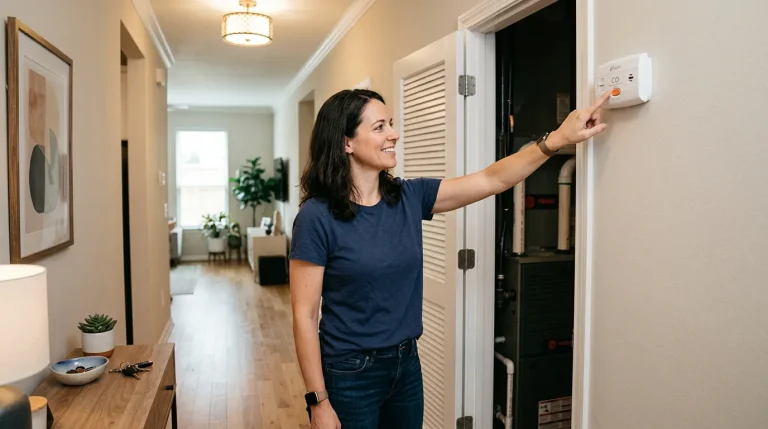
Carbon monoxide is a colorless, odorless gas that a gas furnace can release when something goes wrong with combustion or venting, including a cracked heat exchanger, incomplete combustion, or a blocked flue. The most important protections for any Houston home are UL-listed CO alarms on every level, a yearly professional combustion inspection of gas heating equipment, and a clear plan to leave the house and call 911 the moment an alarm sounds.
Houston winters are short, and that shapes how local families think about their furnaces. We run the heat hard for a handful of cold snaps, then forget the system exists for the rest of the year. After more than a decade installing gas heating equipment across the Houston metro, our team can tell you that this seasonal complacency is exactly what makes heating safety worth a closer look.
Carbon monoxide does not care that our cold spells are brief. A furnace that sat idle through a mild fall can fire up in December with a venting problem nobody noticed, or with a heat exchanger that quietly developed a crack. Because the gas is invisible and odorless, the only reliable way to know it is present is a working detector and an honest professional inspection.
Below, we walk you through how gas systems produce carbon monoxide, the warning signs to watch for, where to place and replace detectors, and when to bring in a professional. This is a safety topic, so we will be direct about what you should handle and what you should never touch.
How a Gas Furnace Can Produce Carbon Monoxide
A gas furnace burns fuel to produce heat, and clean combustion produces mostly carbon dioxide and water vapor, which vent safely outside. Carbon monoxide forms when that process breaks down. Three common failure points account for most CO problems, and each one shows why combustion safety depends on the whole system working together:
- Cracked heat exchanger. The heat exchanger is the metal barrier that separates the combustion gases from the air your blower pushes through the house, and years of heating and cooling cycles can cause metal fatigue and cracks. When that barrier fails, combustion byproducts, including CO, can mix into the air circulating through your home, which makes this one of the most serious furnace failures and one no homeowner can inspect or repair safely.
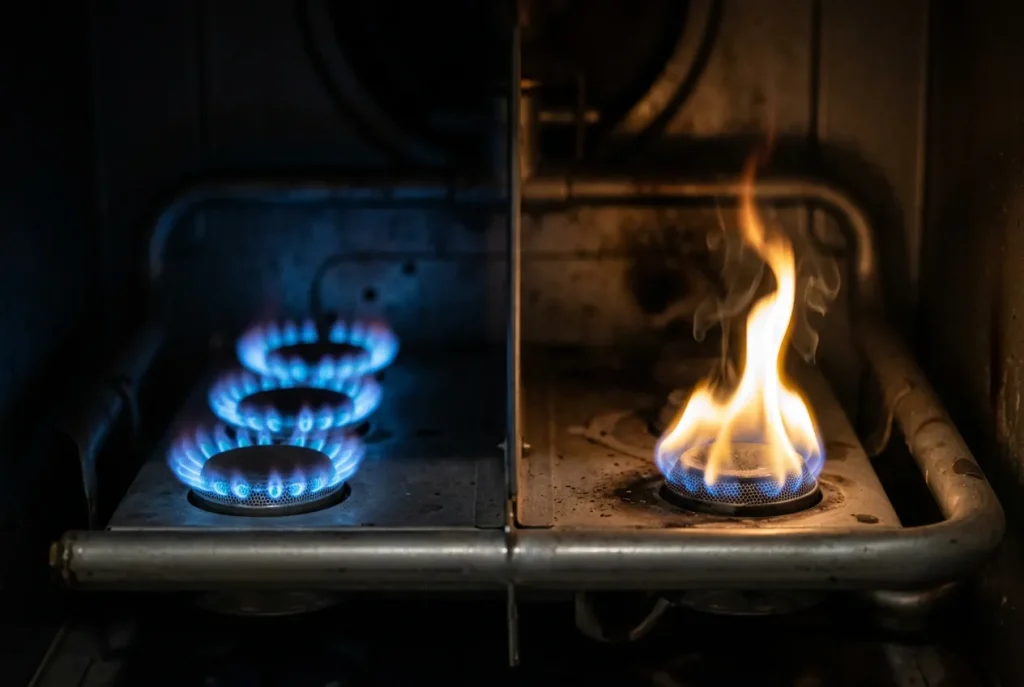
- Incomplete combustion. A gas burner needs the right balance of fuel and air to burn cleanly, and when that balance is off, it produces more carbon monoxide than a healthy flame. Dirty burners, improper gas pressure, or restricted airflow can all lead to incomplete combustion, and the flame's appearance often tells the story.
- Blocked or disconnected venting. Even a perfectly tuned furnace is dangerous if the exhaust cannot leave the house, because a flue pipe can become blocked by debris or a nest, and a vent connector can separate at a joint. When exhaust venting fails, combustion gases back up into the living space instead of going outside, which is why flue pipe inspection and draft testing matter so much.
Why Houston Homeowners Skip Heating Safety Checks
In a climate where the air conditioner is the hero for nine months a year, the furnace becomes an afterthought. Families schedule AC service religiously and never give the heating side a thought until something feels wrong on a cold night.
The problem is that idle equipment is not the same as safe equipment. A furnace can develop venting issues, collect dust on the burners, or sit beneath a flue that pests entered during the warm months, and none of that announces itself. The short Houston heating season actually raises the stakes, because problems that built up unnoticed all year get their first real test when the family is home, and the house is sealed against the cold.
This is why heating safety houston conversations should not wait for a crisis. A brief seasonal check on a gas system removes the guesswork from a hazard you cannot see or smell.
Warning Signs of a Carbon Monoxide Problem
There are two categories of warning signs: clues on the equipment itself and symptoms in the people inside the home. Knowing both gives you the best chance of catching a problem early. The table below summarizes what to watch for.
| Warning Sign | What It May Indicate | What To Do |
|---|---|---|
| Yellow or flickering burner flame | Incomplete combustion (a healthy flame is steady and blue) | Stop using the system, schedule a professional inspection |
| Soot or brown staining near the furnace or vents | Combustion or venting problem | Schedule a professional inspection before further use |
| Excess condensation on windows near the furnace | Possible venting or combustion issue | Have the equipment inspected |
| Stale, stuffy air or a faint chemical odor | Possible exhaust backup | Increase ventilation, schedule inspection |
| Headaches, dizziness, nausea, or fatigue indoors | Possible CO exposure | Leave the home and call 911 immediately |
Symptoms in the home
The human symptoms of CO exposure can mimic the flu, so the pattern matters as much as the symptom itself:
- Watch for headache, dizziness, nausea, shortness of breath, and unusual fatigue, since these are the body's earliest responses to carbon monoxide exposure.
- Notice whether the symptoms ease when you leave the house and return when you come back, because that telling pattern points toward the home rather than a virus.
- Treat it as an emergency if multiple people or pets feel unwell at once, as simultaneous symptoms strongly suggest a problem inside the home.
Clues on the equipment
A healthy gas flame is steady and blue, and the equipment itself often signals trouble before anyone feels unwell:
- A yellow, lazy, or flickering flame signals incomplete combustion, since a clean burn keeps the flame crisp and blue.
- Soot marks and brown staining around the furnace cabinet or vents indicate a combustion or venting problem that warrants a professional inspection.
- Unexpected condensation on nearby windows can indicate that exhaust is not leaving the home the way it should.
If Your CO Alarm Sounds: Take It Seriously
A carbon monoxide alarm is not a smoke detector, and a sounding CO alarm is never a nuisance to be silenced. According to the CPSC, carbon monoxide is responsible for more than 200 accidental deaths in the United States each year, which is exactly why the response needs to be immediate and consistent.
If your CO alarm sounds, follow the same response every time, in this order:
- Get everyone, including pets, out of the house into fresh air right away, before doing anything else inside.
- Once you are safely outside, call 911 and your gas utility so trained responders can take over.
- Do not go back inside to open windows or hunt for the source, and let emergency responders and the gas company determine whether it is safe to return.
- Apply the same rule if anyone feels CO symptoms even without an alarm sounding, because leaving first and calling for help second is always the right call.
Carbon monoxide affects indoor air quality in ways you cannot detect on your own, which the EPA explains in detail. The alarm exists precisely because human senses cannot. Trust the device.
CO Detector Placement and Replacement
Detectors only protect you when they are present, positioned correctly, and current. The National Fire Protection Association recommends a CO alarm on every level of the home and outside each separate sleeping area. Proper detector placement turns a simple device into a genuine layer of family protection.
| Location | Recommendation |
|---|---|
| Every level of the home | At least one CO alarm, including the basement if present |
| Outside sleeping areas | One alarm near or outside each bedroom grouping |
| Mounting height | Follow the manufacturer's instructions; CO mixes through the air |
| Near fuel-burning appliances | Maintain the clearance the manufacturer specifies, not directly above |
| Replacement interval | Replace the unit per the manufacturer's date, commonly five to seven years |
A few placement and upkeep rules turn a good device into reliable protection:
- Choose UL-listed alarms so you know the device met a recognized safety standard before it ever reached your wall.
- Keep alarms away from dead-air corners and out of the direct path of supply vents that could disperse the gas before it reaches the sensor.
- Test the units monthly and change batteries as directed, since a silent alarm protects no one.
- Replace the entire alarm with its printed expiration date, because the sensor degrades over time even if the unit still powers on.
Combine alarms with ventilation awareness
Detectors are your last line of defense, not your first. Reasonable ventilation requirements and keeping vents and flues clear support combustion safety alongside the alarms. The alarm catches what slips through; good airflow and clear exhaust venting reduce how much ever reaches it.
When to Schedule a Professional Combustion Inspection
Knowing where homeowner work ends, and professional work begins keeps everyone safe:
- A homeowner can change a furnace filter and test a detector, which are appropriate, low-risk tasks that support combustion safety.
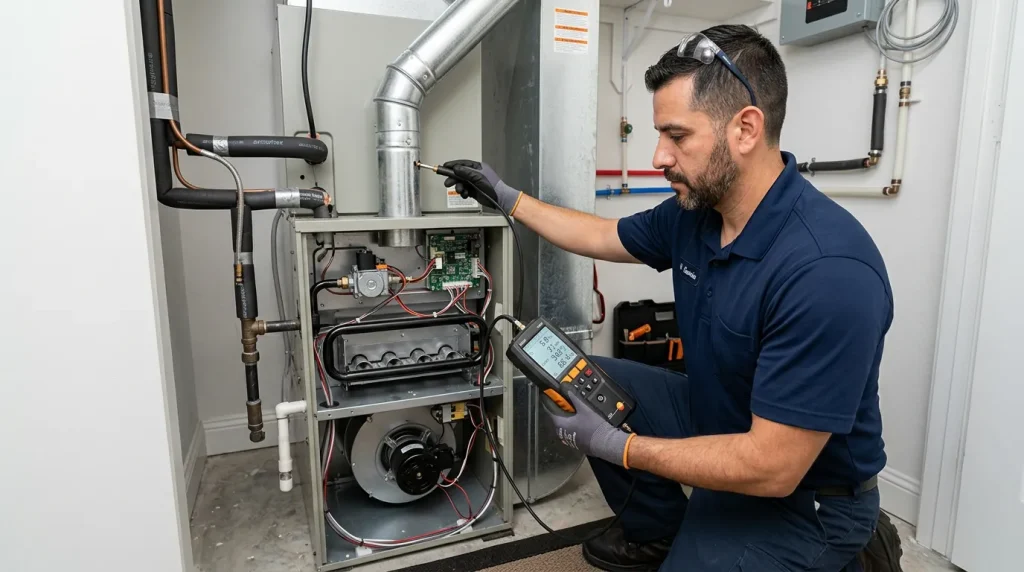
- A homeowner should never attempt draft testing, open a heat exchanger, or adjust gas components, as these tasks require training and specialized equipment, and a mistake can make a CO hazard worse.
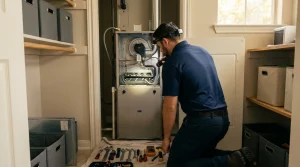
We recommend a professional combustion inspection of any gas heating system once a year, ideally before the heating season begins. A proper inspection covers several checks that confirm the system is burning and venting safely:
- Flue pipe inspection to confirm the exhaust path is clear and intact from the furnace to the outside.
- A look at flame appearance and burner condition, since a clean blue flame and clean burners signal healthy combustion.
- Verification of safe exhaust venting and draft testing to confirm combustion gases are actually leaving the home rather than backing up indoors.
If a heat exchanger crack or venting fault is found, the equipment should be taken out of service until it is repaired or replaced.
At VeriChill, our role is professional heating installation and the inspection of the equipment we install. Heating system carbon monoxide safety starts with a correctly installed, properly vented system, and we stand behind the workmanship on the systems we put in. For broader HVAC service in Houston, questions or pairing a new furnace with your cooling system, the same standards apply across our AC installation Houston work.
Key Takeaways
- Carbon monoxide is invisible and odorless, so working CO alarms and professional inspection are the only reliable defenses against a gas furnace problem
- Gas furnaces can produce CO from a cracked heat exchanger, incomplete combustion, or blocked and disconnected venting
- Short Houston winters breed complacency, but idle equipment can develop venting and combustion problems that show up the moment the heat runs
- Watch for a yellow flickering flame, soot, excess condensation, and flu-like symptoms that ease when you leave the house
- If a CO alarm sounds or anyone feels symptoms, leave the home immediately and call 911 and your gas utility before re-entering
- Install UL-listed CO alarms on every level and outside sleeping areas, replace them by their printed date, and schedule a yearly professional combustion inspection
Frequently Asked Questions
Can a gas furnace really leak carbon monoxide if it seems to be working fine?
Yes, and that is what makes carbon monoxide so dangerous. A furnace can heat the house normally, while a hairline heat exchanger crack or a partially blocked flue allows CO into the air or back exhaust into the home. Because the gas is colorless and odorless, the system can appear to run fine while a hazard is present. This is exactly why UL-listed CO alarms and a yearly professional combustion inspection matter, since neither you nor the thermostat can detect the gas.
Where should I place carbon monoxide detectors in my Houston home?
The National Fire Protection Association recommends a CO alarm on every level of the home and outside each separate sleeping area, so a sounding alarm wakes everyone. Follow the manufacturer's instructions for mounting height, keep alarms out of dead-air corners and away from the direct airflow of supply vents, and avoid mounting directly above a fuel-burning appliance. Choose UL-listed units, test them monthly, and replace each alarm at its printed expiration date, typically every 5 to 7 years, since the sensor wears out even when the unit still powers on.
What should I do the moment a CO alarm goes off?
Treat it as an emergency every time. Get everyone, including pets, outside into fresh air immediately, then call 911 and your gas utility from outside the home. Do not go back inside to open windows, search for the source, or reset the alarm. Let emergency responders and the gas company confirm the home is safe before anyone re-enters. The same response applies if people feel headaches, dizziness, or nausea that improve outdoors, even if the alarm has not sounded. When carbon monoxide is the question, leaving first is always the right call.
Why is heating safety a concern in Houston when our winters are so mild?
Short winters are precisely the risk, because a furnace that sits unused for most of the year can develop problems that go unnoticed. Pests can enter a flue during warm months, dust can collect on burners, and vent connections can loosen, none of which announces itself. When the first real cold snap arrives and the house is sealed up, that neglected equipment gets its hardest test with the family at home. A brief seasonal check on a gas system removes the guesswork from a hazard you cannot see or smell.
Can I inspect or fix a heat exchanger or venting problem myself?
No. Changing a filter and testing your detectors is appropriate homeowner work, but inspecting a heat exchanger, performing draft testing, or adjusting gas components is not. These tasks require specialized instruments and training to do safely, and a mistake can make a CO hazard worse. If you suspect a combustion or venting problem, stop using the system and schedule a professional inspection. If an alarm is sounding or anyone feels symptoms, leave the home and call 911 first, then arrange for qualified service once it is safe.
Conclusion
Carbon monoxide safety comes down to a few disciplined habits that are easy to maintain even when the furnace runs only a few weeks a year. Working UL-listed alarms on every level, awareness of the warning signs, a clear plan to leave and call 911 if an alarm sounds, and a yearly professional inspection of your gas heating equipment together cover the hazard from every angle.
The Houston instinct to ignore the heating system through our long warm season is understandable, but it is the one habit worth breaking. A short conversation and a seasonal check protect the people who matter most, and they cost far less than the consequences of a problem you never saw coming. At VeriChill, we build that safety in from the start with correct, properly vented installations and honest inspection of the equipment we put in your home.
Ready to make sure your Houston heating system is installed and vented safely? Call us at 281-559-6995 or visit verichill.com to schedule a consultation.