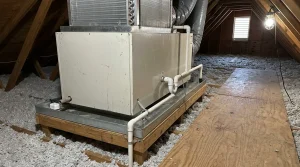
Yes, you need a permit for HVAC replacement in Houston, TX. The City of Houston requires a mechanical permit to install, repair or replace a condensing unit, or to alter an existing system by adding or removing equipment. A licensed contractor registered with the City applies through iPermits, and the finished work must pass a City inspection.
Replacing a worn-out air conditioner feels like a simple swap, especially when the new condensing unit sits on the same pad as the old one. The City of Houston still treats it as permitted mechanical work, so the paperwork belongs in your plan from the first estimate, not as an afterthought once the old unit is on the curb.
Most homeowners never handle the permit directly, since the licensed contractor usually applies, but knowing the process helps you ask better questions and spot an estimate that quietly leaves the permit out. If you are comparing quotes from a Houston air conditioning contractor or two, the permit line is one of the first things worth reading.
In this guide, you'll learn what the City of Houston requires before you replace an HVAC system, who is allowed to pull the permit, how the application and inspection steps fit together, how the City figures the fee, and what can go wrong when a replacement skips the process entirely.
What the City of Houston Requires Before You Replace an HVAC System
The City of Houston requires a mechanical permit for any HVAC replacement that installs, repairs or replaces a condensing unit, and for any change that adds or removes equipment from an existing system. Those two rules cover nearly every residential replacement, from a straight condenser swap to a full change-out of the outdoor unit, indoor coil and air handler.
The Houston Permitting Center handles these permits through its Mechanical Section, and the City lists both plan review and inspection as required steps for alterations to an existing system, with the depth of plan review depending on the scope of the job.
A same-type, same-capacity replacement still counts as a replacement under these rules, which surprises a lot of homeowners. Swapping a unit for another of the same tonnage does not exempt the job, because the City's language covers replacing a condensing unit regardless of whether the size changes.
| Replacement scenario | Is a City of Houston mechanical permit needed? | What the rule covers |
|---|---|---|
| Replacing the outdoor condensing unit, same size | Yes | Installation, repair or replacement of condensing units |
| Replacing the condensing unit with a larger or smaller one | Yes | Installation, repair or replacement of condensing units |
| Adding equipment, such as a new air handler or zone | Yes | Altering an existing system by adding parts or equipment |
| Removing equipment from an existing system | Yes | Altering an existing system by removing parts or equipment |
| A homeowner doing the work on the home they live in | Yes, the municipal permit and inspection still apply | State registration exemption does not remove City permit requirements |
These rules apply inside Houston city limits. Nearby communities such as Katy, Cypress, Spring, Sugar Land and Tomball can have their own permit offices and requirements, so a replacement outside the city limits should be checked with that local authority rather than assumed to follow Houston's process.
Who Pulls the Permit: Licensed Contractor or Homeowner
In Houston, the permit for an HVAC replacement is normally pulled by a licensed contractor who has registered that license with the City of Houston. The City requires licensed contractors who alter an existing HVAC system to register with it before they can obtain the mechanical permit, which ties the permit to a specific, accountable license holder.
That registration step gives you a simple screening question before hiring: are you registered with the City of Houston to pull mechanical permits? A licensed Texas HVAC company should be able to answer that directly.
Homeowners are a narrower case. The Texas Department of Licensing and Regulation (TDLR) says its air conditioning registration rules do not apply to a person doing the work in a building they own and live in solely as their home. TDLR is equally clear that people who fall under that exemption must still seek the municipal permits, inspections and approvals the work requires, so the exemption changes who may do the work, not whether the City needs to see it.
| Who does the replacement | State licensing (TDLR) | City of Houston permit and inspection |
|---|---|---|
| Licensed HVAC contractor registered with the City | License required | Contractor applies for the mechanical permit; inspection required |
| Homeowner working on the home they own and live in | Exempt from TDLR registration rules | Must still seek municipal permits, inspections and approvals |
For most families, the practical answer is to hire a licensed contractor registered with the City and confirm in writing that the permit is included in the price.
How the Houston Permit and Inspection Process Works, Step by Step
The Houston HVAC permit process runs in a set order: the contractor registers with the City, applies online through iPermits, completes plan review where the scope calls for it, installs the equipment, and then passes a City inspection. Each step has an owner, and knowing who handles what makes it easier to follow the job.
- Contractor registration. The licensed contractor registers their license with the City of Houston before applying, which the City requires for anyone altering an existing HVAC system.
- Online application. The contractor applies for the mechanical permit through iPermits, the City of Houston's online permit portal, and the City lists processing of up to an hour for this kind of application.
- Plan review. The City lists plan review as required for alterations, and the depth of that review can depend on the job's scope.
- Installation. The replacement is installed under the issued permit.
- Inspection. A City inspector checks the completed work, and the City lists inspection as a required step.
- Corrections, if needed. When the inspector asks for corrections, the contractor fixes the items and reschedules the inspection.
| Step | Who handles it | Where it happens |
|---|---|---|
| Register the contractor's license | Licensed contractor | City of Houston, before any application |
| Apply for the mechanical permit | Licensed contractor | iPermits online portal |
| Plan review | City of Houston Mechanical Section | Houston Permitting Center |
| Install the replacement system | Licensed contractor | Your home |
| Inspection | City of Houston inspector | Your home, after installation |
| Corrections and reinspection | Contractor, then City inspector | Your home, rescheduled through the City |
The inspection is the step that gives you independent confirmation that the replacement meets the code requirements the permit covers, which is the general purpose of a building permit and the inspections attached to it.
If you are planning a larger change, such as moving from a single-stage unit to one of the two-stage cooling systems available for homes, the same permit path applies, and the scope of the change shapes the plan review rather than skipping it.
How the City Figures the Fee and How Long the Permit Takes
The City of Houston figures the mechanical permit fee for an HVAC alteration as a percentage of the job's value plus flat charges, so the fee rises with the size of the replacement. The City's own documents agree on the core of the formula, 2% of the job cost plus $47.00, but they list the added charge differently, so the exact total should be confirmed in iPermits at checkout.
| Fee component | Figure listed by the City of Houston | Notes |
|---|---|---|
| Percentage of job value | 2% of total job cost or valuation | Appears on both the alteration page and the application document |
| Flat charge | $47.00 | Appears on both the alteration page and the application document |
| Added charge on the alteration page | $33.56 administrative fee | Listed on the City's alteration permit page |
| Added charge on the application document | $91.06 minimum fee | Listed on the City's permit application document |
These figures were listed by the City as of October 2026, and City fees change over time. Treat the table as a guide to how the fee is built, and ask your contractor to show the permit cost as its own line on the written estimate.
The application itself is quick once the contractor is registered. The City lists processing of up to an hour through iPermits, although plan review, scheduling and any corrections after inspection can add time to the full job. Financing for the system is a separate question from the permit.
What Can Go Wrong When an HVAC Replacement Skips the Permit
Skipping the permit on an HVAC replacement means the work never receives the City inspection that confirms it meets code, and that gap can follow the house for years. Building permits exist so that construction work is authorized and inspected, and work done without one can bring penalties under local rules.
The most immediate risk is that nobody independent has checked the installation, so you are relying entirely on the installer's word about connections, clearances and electrical work. Unpermitted work can also surface later, for example when you sell or refinance and records do not match the equipment on site, although the consequences vary with the buyer, lender or insurer involved. Fixing it after the fact usually means applying for the permit late and arranging an inspection on equipment that is already installed.
A few warning signs suggest a replacement estimate may be skipping the process:
- The estimate has no permit line and the installer says it is "not needed for a straight swap."
- The installer cannot confirm they are registered with the City of Houston.
- Nobody mentions scheduling an inspection after the installation.
How VeriChill Approaches an HVAC Replacement in Houston
We approach every replacement as a measured, instrument-verified installation. VeriChill is a licensed Texas HVAC company focused on residential installation across Houston and the surrounding service area, and our install process follows the same measured steps.
| Install step | What we do | Why it matters |
|---|---|---|
| Sizing | Manual J load calculation for your home | The system size comes from a load calculation for your home |
| Refrigerant connections | Brazing under nitrogen | Refrigerant joints are brazed under nitrogen |
| Evacuation | Vacuum pulled to 500 microns | The vacuum is measured to 500 microns |
| Refrigerant charge | Charged by calculation | The refrigerant charge is calculated for the system |
| Airflow | Verified with a manometer | Airflow is checked with an instrument |
| Warranty | 10-year parts and compressor warranty, registered within 90 days | The warranty is registered within 90 days |
That measured, instrument-verified process sits alongside the permit rather than replacing it: the City inspection confirms the job meets the City's requirements, and the install steps set the system up for your home.
If you are weighing replacement HVAC systems for a Houston home, we give written estimates with no "today only" pricing and no upsells, so every line is visible before you decide.
Key Takeaways
- The City of Houston requires a mechanical permit to install, repair or replace a condensing unit. The same applies to altering an existing system by adding or removing equipment.
- A same-type, same-capacity swap still counts as a replacement. Keeping the same tonnage does not remove the permit requirement.
- Licensed contractors must register their license with the City of Houston before pulling the permit. Asking about that registration is a quick way to screen installers.
- Homeowners working on the home they own and live in are exempt from TDLR registration rules. They must still seek the City permit, inspection and approvals.
- The City figures the fee from 2% of the job cost plus $47.00 and an added charge. Confirm the exact total in iPermits, since the City's documents list the added charge differently.
- Applications go through iPermits, and the City lists processing of up to an hour. Plan review, inspection and any corrections add time to the full job.
- Skipping the permit leaves the work uninspected and can cause trouble later. Ask for the permit as its own line on a written estimate.
Frequently Asked Questions
Do you need a permit to replace an AC unit in Houston?
Yes. The City of Houston requires a mechanical permit to install, repair or replace a condensing unit, which is the outdoor part of a central air conditioner. That applies to a full system replacement and to an outdoor unit swap alike.
Does a same-for-same HVAC swap need a permit?
Yes. Replacing a unit with one of the same type and capacity still counts as replacing a condensing unit under the City's rules. Matching the old tonnage does not make the job exempt.
How much is an HVAC permit in Houston?
The City lists a fee built from 2% of the job cost plus $47.00, with an added administrative or minimum charge that varies between City documents. Confirm the final figure in iPermits at checkout.
How long does an HVAC permit take in Houston?
The City lists online processing of up to an hour through iPermits once the contractor is registered. Plan review where needed, the inspection date and any corrections can extend the full timeline.
Can a homeowner replace their own HVAC system in Texas?
TDLR's registration rules do not apply to someone working on the home they own and live in. That person must still seek the City of Houston permit, inspection and approvals for the work.
Does a furnace-only replacement need a permit?
The City has a separate permit type for replacing a heater only, so a furnace job has its own process. Check that page with the Houston Permitting Center, or ask your contractor, before the work starts.
Is an HVAC inspection required after installation?
Yes. The City lists inspection as a required step for HVAC alterations. If the inspector asks for corrections, the contractor fixes them and reschedules the inspection through the City.
Does a licensed contractor have to be registered with the City?
Yes. Licensed contractors who alter an existing HVAC system must register their license with the City of Houston before they can obtain the mechanical permit for the job.
Can unpermitted HVAC work affect a home sale?
It can raise questions, since a buyer or lender may notice that records do not match the installed equipment. The effect varies by buyer and lender, and fixing it usually means a late permit and inspection.
Who do I call at the City about an HVAC permit?
HVAC permits are handled by the Mechanical Section of the Houston Permitting Center. Its contact details are listed on the City's permit pages and application documents.
Conclusion
Yes, an HVAC replacement in Houston needs a permit, whether you are swapping a condensing unit of the same size or changing equipment in the system. A licensed contractor registered with the City applies through iPermits, the fee is built from a percentage of the job plus flat charges, and the work is finished only once it passes inspection.
The simplest protection is to ask for the permit in writing before work starts. When you are ready to plan your replacement, you can talk to us about your HVAC replacement and we will walk you through the estimate line by line.
Call VeriChill at 281-559-6995 about your replacement.
Ask us for your estimate in writing.