A dual fuel HVAC system pairs an electric heat pump with a gas furnace as a single hybrid heating system, using the heat pump for most of the year and automatically switching to gas backup when outdoor temperatures fall below a preset balance point. For Houston homeowners, whose mild winters make the heat pump the primary workhorse for months at a time, a dual fuel system delivers the best of both worlds: efficient day-to-day electric operation plus guaranteed capacity during the rare hard freeze.
Every year, sometime between late November and early February, Houston gets hit with a few days of genuinely cold weather. Most winters it is uneventful. Once every couple of years, it is a Valentine's Day 2021 memory that no one who lived through it wants to repeat. That single reality shapes almost every heating decision our team helps homeowners think through in this market.
The question we hear most often from thoughtful buyers is whether a heat pump alone can carry a Houston home through the cold snaps we do get, or whether they should invest in a dual fuel setup that adds a gas furnace as backup. The short answer is that both configurations work for most homes, but the trade-offs are real and worth understanding before you sign.
Let us walk through what a dual fuel system actually is, how it decides which fuel source to use, when it makes sense in Houston, and when a straight heat pump or straight gas furnace is the smarter buy.
What Is a Dual Fuel HVAC System?
A dual-fuel HVAC system, sometimes called a hybrid heating system or gas-and-electric heating setup, integrates two heating sources under one control system. The primary source is an electric heat pump that provides both cooling in summer and heating during mild and moderate winter conditions. The backup source is a gas furnace that takes over when outdoor temperatures drop below the point where the heat pump can operate efficiently.
The control system decides which source to use based on outdoor temperature and a homeowner-configurable balance point temperature. Above that setpoint, the heat pump runs. Below it, the gas furnace fires up, and the heat pump waits its turn.
This is what people mean when they talk about a dual-fuel heat pump, a heat pump with gas backup, or dual-source heating. It is not two competing systems fighting each other. It is one coordinated heating strategy that uses each fuel where each fuel is at its best. For homes served by a trusted Houston HVAC team, the dual fuel configuration has become a common answer for owners who want to hedge against unpredictable cold snaps without paying a heating penalty during our long mild season.
How Dual Fuel Systems Decide Which Fuel to Use
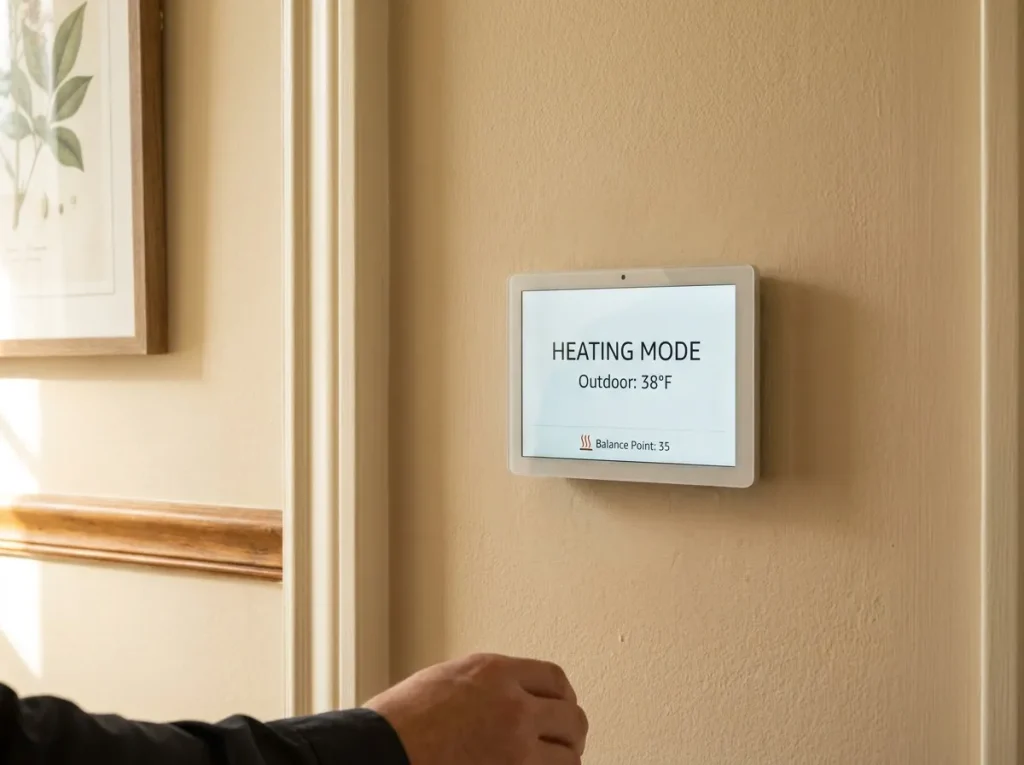
The mechanics of the switchover are simpler than they sound, and understanding them is the key to sizing your expectations.
- The outdoor temperature sensor feeds real-time weather data to the thermostat or control board, which is constantly comparing it against the configured balance point.
- The balance point temperature is the threshold at which the system swaps from heat pump to gas furnace. It is set based on your electric and gas rates, your heat pump's cold-weather capacity curve, and how you want to prioritize efficiency versus fast recovery. In Houston, we typically set this in the 32 to 40 degree range depending on the equipment and the homeowner's preferences.
- System switching happens automatically. When the outdoor temperature falls below the balance point during a heating call, the thermostat locks out the heat pump and stages in the gas furnace. When temperatures climb back above the setpoint, the heat pump resumes primary duty.
- The gas furnace also serves as emergency backup if the heat pump develops a fault during a cold event, which is a genuine peace-of-mind benefit during a Houston freeze.
| Condition | Active Source | Why |
|---|---|---|
| Cooling season | Heat pump (cooling mode) | Same equipment covers AC year-round |
| Winter above balance point | Heat pump (heating mode) | Cheaper per BTU than gas at moderate temps |
| Winter below balance point | Gas furnace | Full capacity when heat pump efficiency drops |
| Heat pump fault during cold | Gas furnace | Reliable emergency capacity |
Why Houston's Climate Makes Dual Fuel a Nuanced Choice
In climates where hard freezes stretch for weeks at a time, the case for dual fuel is straightforward. Houston's climate makes the decision more nuanced, and that nuance is exactly where good advice matters.
- Our winters are mild for most of the season. December through February daytime highs typically sit in the 55 to 68 degree range, well within a modern heat pump's efficient operating band. On those days, the heat pump is dramatically cheaper to run than a gas furnace.
- Genuine cold snaps are rare but real. Every few years, a Gulf Coast freeze pushes temperatures into the low 20s or teens for two or three days. Those events are when heat pump capacity drops and gas backup earns its keep.
- Gas rates in Houston are historically favorable because of the region's natural gas infrastructure. That makes the gas backup portion of a dual fuel system reasonable to operate during the few days per year it runs.
- Electric rates vary by provider and rate structure, and Houston's competitive retail electricity market means each household's exact math shifts based on their plan. ENERGY STAR's certified furnaces overview documents how high-AFUE gas equipment fits into a whole-home heating strategy, which is the backup half of a dual fuel decision.
- Modern heat pumps handle Houston winters well on their own. Cold-climate heat pumps and inverter-driven models maintain useful capacity down to the low 20s, and many Houston homes never see conditions where the gas backup on a dual fuel system would actually run more than a handful of times a year.
The upshot is that a dual fuel system Houston homeowners install is not necessary for every home, but it is a legitimate hedge for those who want guaranteed capacity during rare freezes without paying the operating cost of a gas furnace for the other 355 days of the year.
When a Dual Fuel System Makes Sense for Your Home
Some Houston homes are natural fits for dual fuel. Others are better served by a straight heat pump or a straight gas furnace. These are the situations where our team sees dual fuel earn its price.
- Homes with an existing serviceable gas line and gas connection. If gas is already at the house and the furnace slot is straightforward to fill, adding a gas backup to a heat pump upgrade is a smaller lift than starting from scratch.
- Larger homes with heating loads that stress a heat pump-only design during freezes. When square footage, ceiling heights, or insulation gaps push the heating load beyond what a properly sized heat pump can cover in the 20s, a gas backup carries the difference.
- Homeowners who want the peace of mind of a redundant heat source. The 2021 Texas freeze made this more than an abstract concern for many families. Dual fuel gives you a second heating source that operates independently of the heat pump's compressor and refrigerant circuit.
- Rural or edge-of-metro homes where power outages during cold events are more common. Some dual fuel configurations can operate the gas furnace on a small backup power source when a whole-home generator is not in the budget, which keeps heat running during an outage.
- Homeowners who want to run the heat pump aggressively in summer and shoulder seasons while banking on gas for the rare freeze. This can be an attractive combination for larger, upgrade-minded homes considering AC replacement services alongside a heating upgrade in the same project.
When a Straight Heat Pump or Straight Furnace Is Smarter
Dual fuel adds cost, complexity, and two systems to maintain. Sometimes the simpler answer wins.
- Well-insulated small to mid-size Houston homes often see plenty of comfort from a well-sized modern heat pump without any gas backup. Cold-weather performance on current-generation equipment is strong down into the range where Houston winters actually live.
- Homes without existing gas service face a real cost to bring gas to the property, and that cost usually will not pay back through the handful of hours per year the gas backup would actually run.
- All-electric homes by choice, whether for environmental reasons or utility simplicity, are better served by an inverter-driven heat pump sized with cold-weather capacity in mind.
- Older homes with existing high-efficiency gas furnaces in good condition may not need the added complexity of a dual fuel conversion. A straight AC-only upgrade paired with the existing furnace is often the more sensible move.
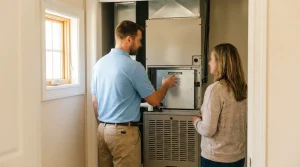
For every homeowner deciding between these paths, the honest answer comes from a walkthrough that evaluates insulation, ductwork, ceiling heights, window orientation, and airflow distribution alongside the heating load and your fuel preferences. Any furnace and heating installation recommendation from our team is built on that assessment, not on selling a specific configuration.
What Installation Actually Involves
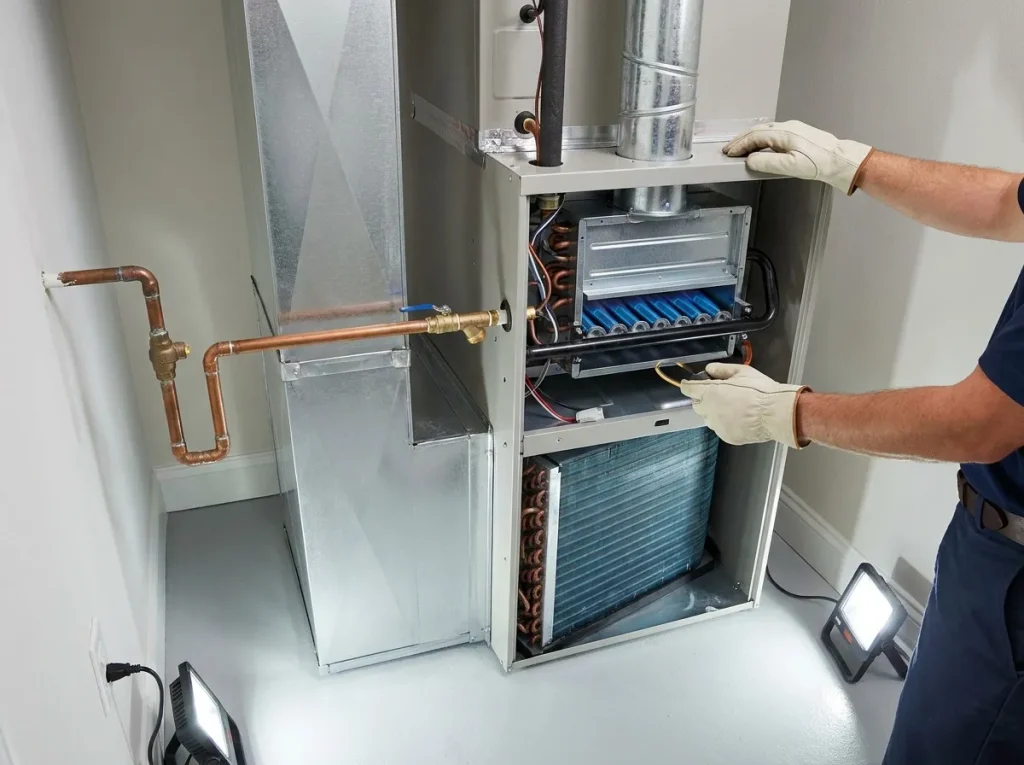
If a dual fuel setup is the right call, here is what the installation looks like in practice.
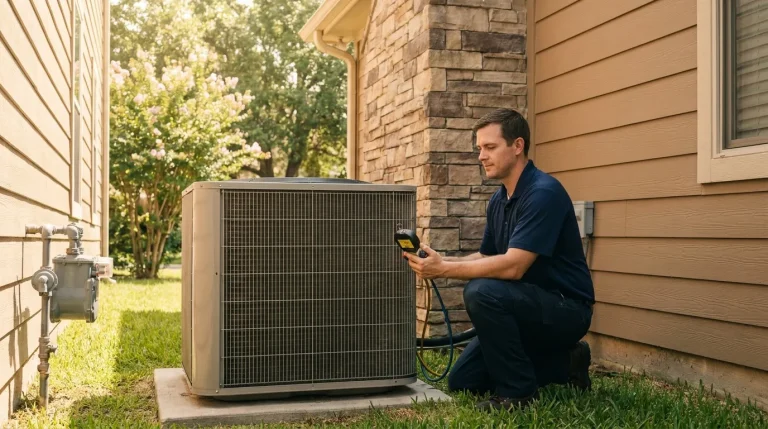
- The outdoor heat pump replaces or takes the place of the traditional AC condenser on the pad next to the house, connected by refrigerant lines to the indoor unit.
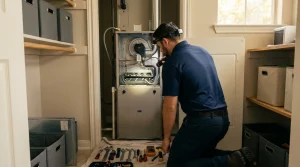
- The indoor unit combines a gas furnace with a heat pump indoor coil in a single cabinet, sharing the same air handler blower for both heating modes and cooling.
- A dual fuel compatible thermostat or control board manages the balance point setpoint, the fuel switchover logic, and cooling operation. Modern communicating systems handle this seamlessly and let you adjust balance points from the wall.
- Gas piping and venting are checked and updated as needed to handle the furnace's requirements. Existing gas connections often work, but venting and combustion air supply need to meet current code.
- Refrigerant charge and airflow are tuned so both the cooling and heating modes deliver rated capacity across Houston's operating conditions.
Warranty coverage on our installations is 10 years on parts and compressor, with VeriChill handling the 90-day registration on your behalf. Financing through Wells Fargo, Synchrony Bank, and Goodleap is available for homeowners who want to spread the investment.
Key Takeaways
- A dual fuel HVAC system pairs an electric heat pump with a gas furnace and switches between them based on outdoor temperature and a homeowner-configurable balance point
- Houston's mild winters mean the heat pump handles most heating calls, while the gas furnace acts as backup during rare freezes and heat pump faults
- Dual fuel makes strong sense for homes with existing gas service, larger heating loads, or homeowners who want a redundant heat source after events like the 2021 freeze
- Straight heat pumps are often sufficient for well-insulated small to mid-size Houston homes without adding gas backup complexity
- All-electric homes are typically better served by an inverter-driven heat pump than by adding gas service just to enable dual fuel
- Balance point configuration, thermostat compatibility, and correct gas venting are all installation details that determine whether a dual fuel system actually delivers its promised benefits
Frequently Asked Questions
Does a Houston home really need a gas backup for a heat pump?
Not necessarily. Modern heat pumps, particularly cold-climate and inverter-driven models, hold useful capacity through nearly every temperature Houston actually sees in winter. Dual fuel is a legitimate hedge for homeowners who want guaranteed capacity during rare hard freezes or who already have gas service and want to keep it in play. For most well-insulated small to mid-size Houston homes without existing gas, a properly sized cold-climate heat pump handles the winter on its own.
What temperature does a dual fuel system switch to gas?
The balance point is configurable and gets set by your installer based on your equipment, your electric and gas rates, and your comfort priorities. In Houston, we typically set balance points somewhere in the 32 to 40 degree range. Below the balance point, the gas furnace takes over. Above it, the heat pump keeps running. Some homeowners set a lower balance point to squeeze more use out of the heat pump. Others prefer an earlier switchover to gas for faster recovery on cold mornings.
Is a dual fuel system more expensive to install than a heat pump alone?
Yes, because you are buying two heating systems and the controls that coordinate them. The premium is real but manageable, especially if gas service is already at the home. Where the math changes is if the house has no gas connection, because bringing gas to the property adds a significant cost that a dual fuel system rarely recoups in a Houston climate given how few hours a year the gas backup actually runs.
How does a dual fuel system compare to just having a gas furnace?
A dual fuel system uses the heat pump for the vast majority of winter operating hours, which is meaningfully cheaper than running a gas furnace during Houston's mild days. A straight gas furnace is simpler and cheaper to install, but you lose the year-round efficiency of using the heat pump for both cooling and moderate heating. For most Houston homes considering an upgrade, dual fuel splits the difference well when gas is already on site.
Will a dual fuel system keep my house warm during a hard freeze?
That is exactly what the gas furnace half of the system is designed to do. When outdoor temperatures fall below the balance point, the gas furnace takes over and delivers full heating capacity independent of the heat pump. During the kind of cold event Houston sees every few years, the gas side of a properly installed dual fuel system is what keeps your home warm and your pipes from freezing when heat pump capacity alone would be stretched.
Conclusion
Dual fuel systems occupy a useful middle ground in Houston heating. They give you the efficiency of a heat pump for the long mild season, and the reassurance of a gas furnace during the rare hard freezes that stick in every Houstonian's memory. Whether that combination is worth the added complexity and cost depends on your home, your existing gas service, and how much peace of mind the backup source is worth to you.
At VeriChill, when our team evaluates whether dual fuel is the right call, we walk through insulation, ductwork condition, ceiling heights, window orientation, and airflow distribution alongside your gas service, your heating load, and your comfort priorities. Sometimes a dual fuel system is clearly the right call. Sometimes a modern inverter heat pump alone is the smarter buy. The goal is matching the right configuration to your specific home, not selling redundancy you do not need.
Ready to see whether a dual fuel system fits your Houston home? Call us at 281-559-6995 or visit verichill.com to schedule a consultation.