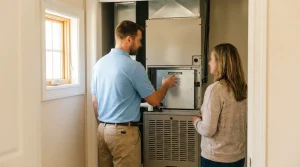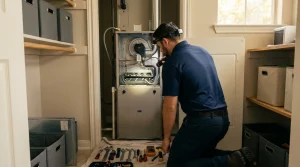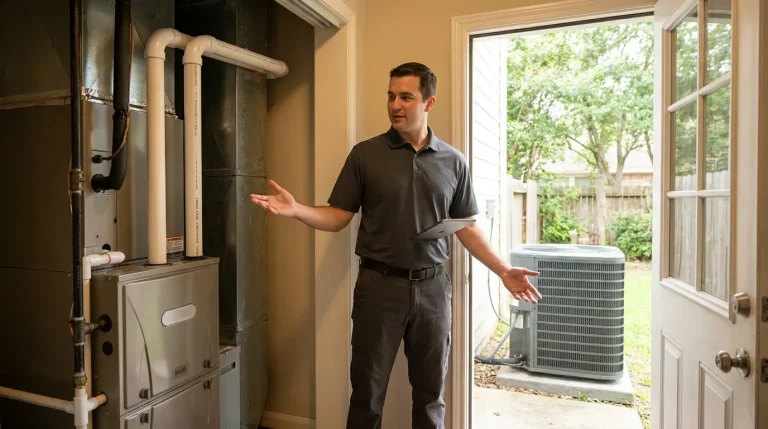
The electric vs. gas heating comparison Houston homeowners weigh today is different from what it was a decade ago. In our mild-winter climate, an electric heat pump is almost always the cheaper heating source to operate for the moderate temperatures we see most of the season, while a gas furnace delivers a stronger warm-air feel and faster recovery during the rare hard freeze. For most Houston homes, the honest electric heat vs. gas heat comparison lands on a modern high-efficiency heat pump as the primary answer, with a gas furnace either replaced by the heat pump entirely or retained as backup in a dual-fuel configuration for homes with existing gas service and a desire for freeze-day reassurance.
Electric or gas heat is one of those decisions where the answer used to be simple and the answer today is genuinely nuanced. A decade ago, gas was cheaper to operate per unit of heat in most of the country, gas furnaces produced warmer air, and heat pumps struggled in cold weather. All three of those historical truths have shifted in Houston, and the current comparison looks different than it looked a few HVAC generations ago.
Our team has this conversation almost every week during winter with homeowners weighing a replacement. The right answer depends on what you have now, your gas service situation, your home's insulation and ductwork, and how much winter warm-air feel matters to you versus year-round electric operating cost.
Let us walk through the honest current-day comparison of electric versus gas heating for Houston homes, including where each fuel source wins and where the smart hybrid answer often wins over both.
The Two Main Heating Approaches for Houston Homes
Before comparing costs and comfort, it helps to name what we are actually comparing. Houston homes typically choose between two main approaches, plus one hybrid.
Electric heat pump
A heat pump uses electricity to move heat from outdoor air into the home rather than generating heat through combustion. The same equipment cools the home in summer and reverses to heat it in winter. Modern inverter heat pumps hold useful capacity well into the range Houston winters actually see.
Gas furnace
A gas furnace combusts natural gas in a heat exchanger and blows warm air through the ductwork. Traditional gas heating produces noticeably warmer supply air than a heat pump and recovers faster from a cold setback.
Dual fuel hybrid
A dual fuel system pairs a heat pump for cooling and moderate heating with a gas furnace for backup during the coldest weather, switching between them automatically based on outdoor temperature. This is the middle path many Houston homes now choose when gas service is already at the property.
For homeowners talking to our experienced HVAC team in Houston about a whole-system replacement, the fuel question usually gets discussed early because it affects both the cooling and heating equipment choices.
Electric vs Gas Heating Houston Cost Comparison: Heat Pumps Win Most Winter Hours
The math on operating cost has shifted enough over the past decade that many Houston homeowners are surprised when they first see it laid out.
Heat pump efficiency
Modern heat pumps deliver a coefficient of performance in the range of 3 or higher across most of Houston's winter temperatures, meaning they deliver roughly three units of heat energy for every one unit of electrical energy consumed. That leverage makes them dramatically more efficient per BTU of heat than gas combustion, which caps around 96-percent efficiency on the highest-tier condensing gas furnaces.
Fuel cost translation
The heating fuel comparison depends on your specific rate for each fuel. In Houston, gas rates through CenterPoint Energy are historically favorable, while electric rates vary substantially by provider and rate plan in the deregulated retail market. Even so, the gas furnace vs electric heat pump math typically produces meaningfully lower operating cost per unit of heat delivered across most winter operating conditions when the heat pump is modern and correctly sized.
Long cooling season efficiency
Because a heat pump is the same equipment as the AC, choosing a heat pump means the electric operating efficiency also applies across the eight to nine month cooling season. That compounds the electric advantage substantially across a year of total operation.
Authority context
AHRI's certification programs overview governs how AFUE, COP, and SEER2 ratings are tested and reported for the equipment on both sides of the electric-versus-gas comparison, which is what lets you compare apples to apples across manufacturers.
Comfort: Gas Furnaces Still Have Some Advantages
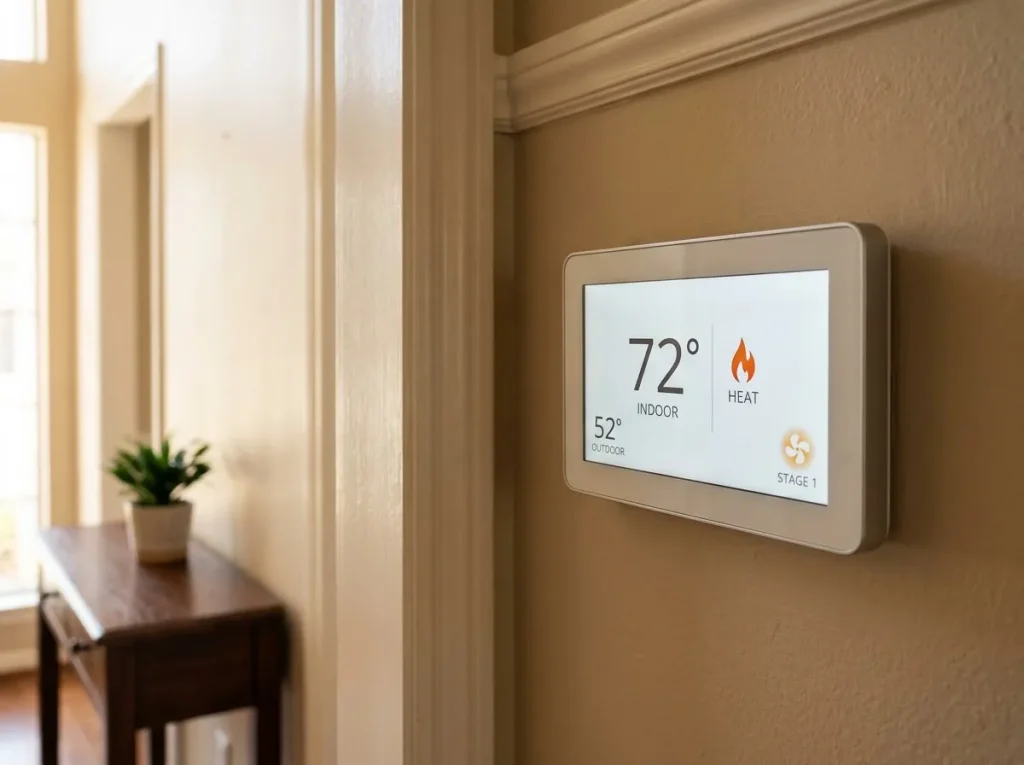
Operating cost is not the only comfort factor, and homeowners who care about how the heat feels sometimes prefer gas for specific reasons that are worth understanding.
- Supply air temperature. Gas furnaces produce supply air in the 120 to 140 degree range, which feels noticeably warm coming out of a register. Heat pumps typically produce supply air in the 90 to 105 degree range, which is warmer than the room but does not feel hot at the vent. Some homeowners strongly prefer the warmer-vent feel of gas.
- Recovery speed after setback. A gas furnace at full output warms a cold house faster than a heat pump. If you let the house cool substantially overnight or while away, gas recovers quickly. Heat pumps recover well but more gently.
- Cold-day capacity. During Houston's rare hard freezes when outdoor temperatures fall into the 20s or lower, heat pump capacity does decrease. Modern cold-climate and inverter-driven heat pumps hold up better than earlier generations, but a gas furnace is unaffected by outdoor temperature and delivers full rated output regardless.
- Warm-air feel through longer running. A heat pump often runs longer at moderate output to deliver the same total heat as a gas furnace running short and hot. That gentler continuous warmth is different from the hot-blast-then-cool pattern of gas, and preference varies genuinely by household.
For homeowners weighing whether the comfort differences matter enough to bias the choice, our team walks through insulation, ductwork condition, ceiling heights, window orientation, and airflow distribution alongside the fuel decision. Sometimes the comfort issue is the fuel. Sometimes the comfort issue is actually a duct or insulation issue that any fuel choice will improve with the right envelope work.
Installation Considerations That Shift the Math
The upfront installation situation often affects the fuel choice as much as ongoing operating cost.
- Existing gas service. Homes with gas already at the property, an existing gas furnace slot, and code-compliant venting can add or replace a gas furnace with relatively modest additional infrastructure work. Homes without gas service face a real cost to bring gas to the property that rarely pays back in Houston given how few hours a year the gas would actually run.
- Existing electrical service. All-electric heat pumps require a properly sized electrical circuit and disconnect at the outdoor unit. Most Houston homes have this capacity already, but older homes may need a service upgrade during a heat pump installation.
- Ductwork condition. Because heat pumps deliver larger volumes of gentler warm air than gas furnaces deliver, ductwork sizing and sealing matter differently for each fuel source. Undersized or leaky ducts hurt any system but affect heat pump comfort particularly noticeably.
- Venting requirements for gas. Modern high-efficiency gas furnaces require sealed venting through PVC that meets current code. Older masonry chimneys often cannot serve modern high-efficiency furnace venting, which adds installation complexity in retrofit scenarios.
- Location constraints. Outdoor heat pump units need clearance and airflow around the condenser. Homes with tight side yards or restricted equipment locations sometimes prefer a gas furnace with a smaller outdoor AC condenser paired with it.
For homeowners planning a whole-system project, including new heating installation in Houston and cooling upgrades together, walking through these installation factors early helps prevent surprises during the design phase.
When Each Choice Makes the Most Sense
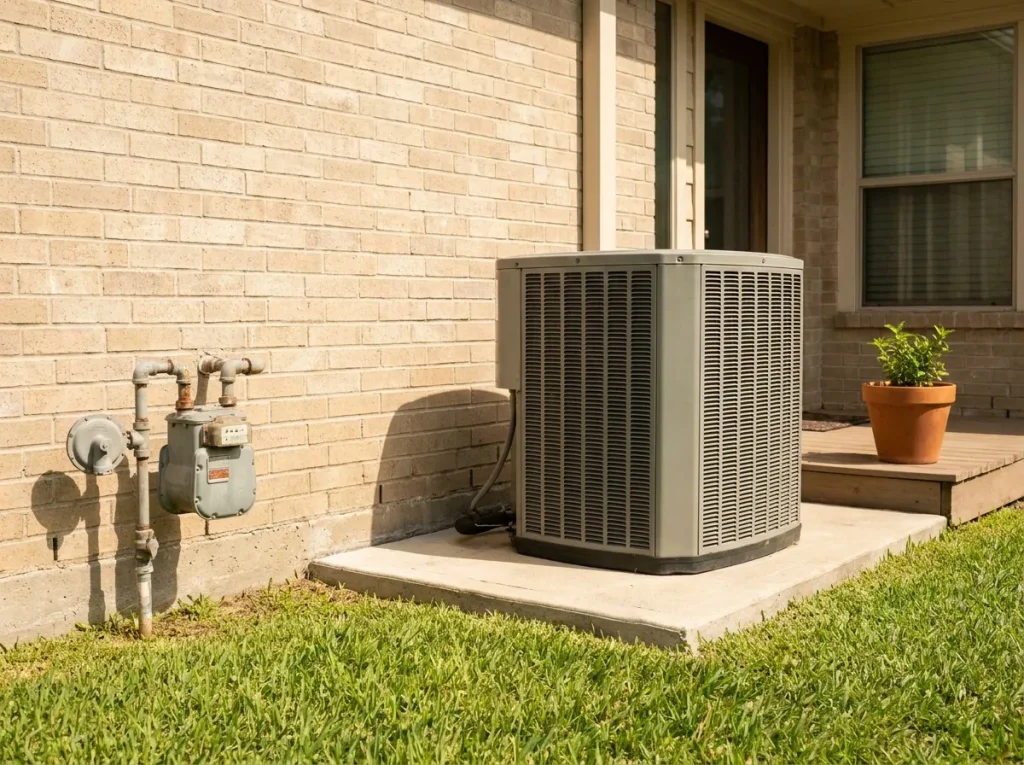
Rather than declaring a universal winner, here is how our team frames the fuel choice by home type.
- All-electric heat pump makes the most sense when. The home has no existing gas service and adding it would be costly. The homeowner prefers all-electric operation for environmental or utility-simplicity reasons. The house is well-insulated with sound ductwork. Ownership horizon is long enough to enjoy the cumulative operating cost advantage. Electric heating Houston homes see today from a modern inverter heat pump is a very different capability than resistance-strip electric heating of 20 years ago.
- Gas furnace with paired AC makes the most sense when. Existing gas service is in place. The homeowner strongly prefers the warmer supply air feel of gas. Recovery speed from significant setback matters. Budget priorities favor lower installation complexity when the existing furnace slot is straightforward to fill.
- Dual fuel makes the most sense when. Existing gas service is in place. The homeowner wants the operating cost benefit of the heat pump for the long mild season plus the reassurance of gas backup during rare cold snaps. Peace of mind after events like the 2021 Texas freeze is a significant driver.
- Straight AC-only with existing furnace makes the most sense when. The existing gas furnace is in good condition, has years of useful life remaining, and only the AC side needs replacement. Piecing a new heat pump into an incompatible existing setup is usually more trouble than value.
For homeowners exploring new cooling system installation alongside the heating fuel question, the two decisions almost always benefit from being made together rather than sequentially.
Common Misconceptions Our Team Corrects
A few misconceptions come up often enough that they are worth addressing directly.
- Heat pumps do not work in cold weather. They do, and modern inverter-driven heat pumps hold most of their capacity well into the range Houston winters actually see. Cold-climate variants push that even further. The old reputation was from a generation of equipment that has been substantially improved.
- Gas heat is always cheaper. In Houston, when comparing modern equipment operating cost across a typical winter, heat pumps typically deliver lower cost per unit of heat despite Houston's favorable gas rates, because the heat pump's efficiency multiplier is larger than the fuel cost gap.
- Electric heat means resistance strip heat and huge bills. Modern heat pumps are not electric resistance heat. Resistance heat only kicks in as auxiliary during unusual conditions, if the system includes it at all. The primary heating source is compressor-driven heat transfer, which is dramatically more efficient than resistance heat.
- Any HVAC contractor can install either equally well. Heat pump installation, refrigerant charging, control setup, and duct considerations differ from gas furnace installation. Ask specifically about the installer's heat pump experience if that is your direction.
Key Takeaways
- Modern heat pumps typically deliver lower operating cost per unit of heat than gas furnaces across most of Houston's winter operating conditions, thanks to a coefficient of performance around 3 or higher
- Gas furnaces still win on supply air temperature feel, recovery speed from cold setback, and cold-day capacity during rare hard freezes
- Dual fuel systems occupy a useful middle ground for homes with existing gas service and a desire for freeze-day backup
- Installation factors including existing gas or electric service, ductwork condition, venting requirements, and equipment location constraints often shift the fuel choice as much as operating cost
- All-electric heat pumps make the most sense for well-insulated homes without existing gas and long ownership horizons
- Gas furnaces make the most sense for homes with existing gas, comfort-focused homeowners who strongly prefer warmer supply air, and situations where installation simplicity matters
- Modern heat pumps hold up in Houston winters far better than their older-generation reputation suggests
Frequently Asked Questions
Which is cheaper to operate in Houston, a heat pump or a gas furnace?
For most Houston winters, a modern heat pump is meaningfully cheaper to operate per unit of heat delivered. The reason is efficiency: heat pumps deliver a coefficient of performance around 3 or higher in Houston's typical winter temperature range, meaning they deliver roughly three units of heat energy for every unit of electric energy consumed. Even with Houston's favorable natural gas rates, gas furnaces capped at around 96-percent efficiency on the highest-tier condensing models generally cannot match the heat pump's efficiency advantage over a full winter of moderate temperatures.
Do heat pumps really work in Houston's cold snaps?
Yes, though performance depends on the equipment generation and outdoor temperature. Modern inverter-driven heat pumps hold most of their rated capacity down into the range Houston winters actually see, which is the mid-30s and above for most of the season. During rare hard freezes into the 20s or lower, capacity drops but does not disappear, and most modern systems include electric auxiliary heat that can supplement when needed. Cold-climate heat pump variants push effective capacity even further, and they are worth considering for owners who want maximum freeze-day reassurance without going dual fuel.
Why does gas heat feel warmer than heat pump heat?
Because the supply air temperature is genuinely higher. Gas furnaces produce supply air in the 120 to 140 degree range at the register, which feels warm when you put your hand near a vent. Heat pumps produce supply air in the 90 to 105 degree range, which is warmer than the room but does not feel hot at the vent. Both deliver the same total heat if sized correctly, but the sensory experience at the register is different. Some homeowners strongly prefer the warmer-vent feel of gas. Others prefer the gentler continuous warmth of a heat pump. Preference varies genuinely by household.
Is a dual fuel system a compromise or the smart choice?
For Houston homes with existing gas service, dual fuel is often the smart choice rather than a compromise. It uses the heat pump for the vast majority of winter operating hours, which is meaningfully cheaper than running gas. It uses the gas furnace as backup during the rare hard freezes when heat pump capacity might be stretched. It also provides a redundant heat source if either component develops a fault during a cold event, which the 2021 Texas freeze made more than an abstract concern for many Houston families.
What if my current gas furnace is still working but my AC needs replacement?
That situation happens often, and the right answer is not automatic. If your gas furnace is in good condition with meaningful useful life remaining, replacing only the AC condenser and matching indoor coil is often the sensible move rather than tearing out the furnace for a heat pump conversion. If the furnace is aging or the AC side has significant problems that would benefit from full-system coordination, replacing both sides together may make more sense. The assessment is the honest way to see which situation applies to your specific home.
Conclusion
The electric-versus-gas heating question in Houston has moved substantially over the last decade, and today's honest comparison lands differently than it would have a couple of generations of equipment ago. Modern heat pumps are efficient, capable, and increasingly the primary answer for most Houston homes. Gas furnaces still have real advantages in supply air feel, recovery speed, and freeze-day capacity that some homeowners rightly value. Dual fuel splits the difference well for homes with existing gas service.
At VeriChill, when our team helps a homeowner land on the right fuel choice, we walk through insulation, ductwork condition, ceiling heights, window orientation, and airflow distribution alongside your gas service situation, ownership timeline, and comfort priorities. Sometimes the answer is a straight heat pump. Sometimes it is dual fuel. Sometimes it is a gas furnace with a matched AC. The recommendation always follows the home and your priorities, not a fuel bias.
Ready to figure out which heating fuel actually makes the most sense for your Houston home? Call us at 281-559-6995 or visit verichill.com to schedule a consultation.