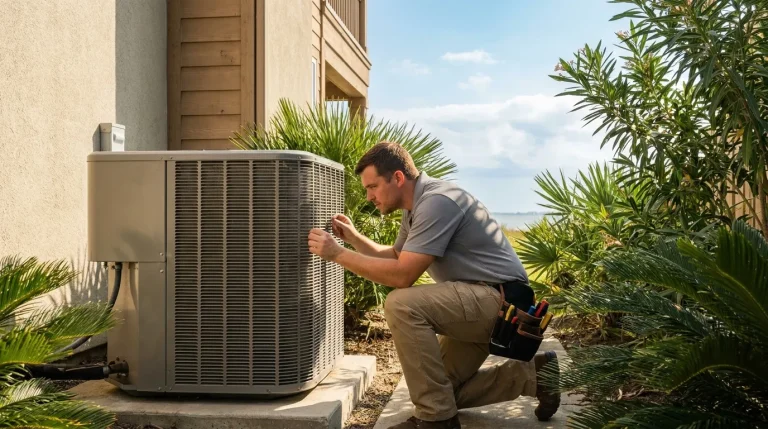
Houston's proximity to the Gulf of Mexico exposes your AC system to conditions inland guides ignore: airborne salt that accelerates corrosion, relentless humidity that keeps metal damp, and storm debris that stresses the outdoor unit. The Gulf Coast weather AC system effect shows up first on the condenser coil, the fins, the electrical connections, and the cabinet, where salt and moisture shorten equipment life if the system is not chosen and protected with the coast in mind. The fix is not exotic: corrosion-resistant equipment, correct placement, and consistent rinsing and assessment go a long way toward getting full life out of an AC in our environment.
Most AC advice is written for a generic climate that does not exist on the Gulf Coast. It assumes clean, dry air and a system that ages on a predictable schedule. Then you install that same equipment forty miles from saltwater, in air that stays humid for weeks, and it wears differently than the brochure promised.
Houston sits close enough to the Gulf of Mexico that salt-laden air reaches our neighborhoods, especially on the south and east sides of the metro and out toward the bay communities. Add our sustained 75-percent-plus humidity and a storm season that throws debris and driving rain at the outdoor unit, and you have an environment that is genuinely harder on an air conditioner than the inland markets most equipment guidance is written for.
This is not a reason to worry. It is a reason to choose and protect equipment with the coast in mind. Let us walk through exactly how Gulf Coast conditions affect an AC system, which parts take the damage first, and what our team does differently for homes closer to the water.
Why the Gulf Coast Is Harder on AC Equipment
Three environmental forces work on a Houston-area AC system at the same time, and they compound one another rather than acting alone.
Airborne salt
Salt carried inland on Gulf breezes settles on the outdoor unit and, in the presence of moisture, becomes an electrolyte that accelerates corrosion. It is most aggressive closer to the coast, but salt influence extends well inland on the prevailing wind. The outdoor condenser, which lives outside twenty-four hours a day, absorbs the brunt of it.
Persistent humidity
Corrosion needs moisture, and Houston supplies it generously. Our humidity keeps metal surfaces damp for long stretches, so the salt that lands on a coil does not just sit there inertly. It stays activated. Humidity also means the coil is condensing water almost constantly during the cooling season, keeping the wet-and-salty combination in play for eight to nine months a year.
Storm and debris exposure
Gulf Coast storm season adds physical stress: wind-driven rain, flying leaves and grit, and the occasional larger debris impact. Driving rain forces moisture into places routine weather does not reach, and debris packed into the coil restricts airflow and traps moisture against the metal.
Which AC Components Take the Damage First
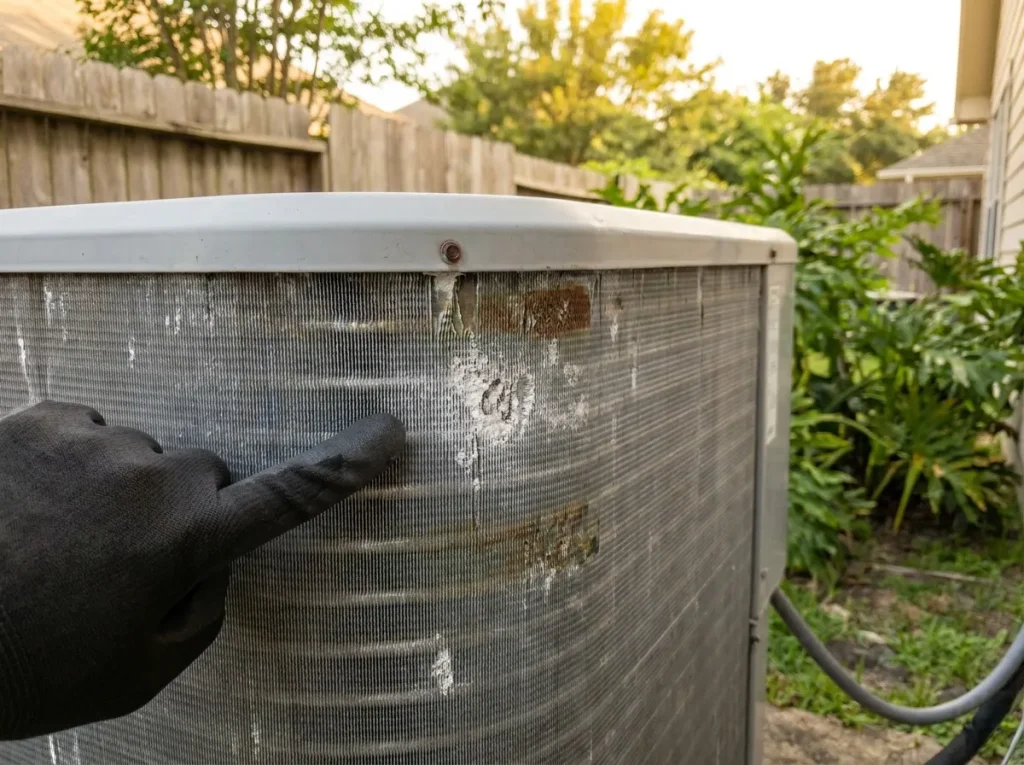
Corrosion and moisture do not attack the whole system evenly. Some parts are far more exposed, and knowing which ones helps you spot trouble early.
| Component | Primary threat | What it looks like |
|---|---|---|
| Condenser coil | Salt and humidity corrosion | Pitting, white or green residue, reduced heat transfer |
| Coil fins | Corrosion and debris | Bent, thinning, or crumbling aluminum fins |
| Electrical connections | Corrosion at contacts | Intermittent operation, discolored or crusty terminals |
| Cabinet and fasteners | Surface rust | Rust streaks, weakened screws and panels |
| Copper line set | Long-term corrosion | Green patina, potential for pinhole leaks over time |
The condenser coil and fins
The outdoor coil and its fins are the front line. Salt residue and constant moisture cause pitting and thinning that reduce the coil's ability to shed heat, which forces the whole system to work harder for the same cooling. Aluminum fins are especially vulnerable, and once they corrode and crumble, airflow across the coil drops.
Electrical connections
Corroded electrical terminals cause some of the most frustrating intermittent problems, because a connection that works one day fails the next as corrosion builds at the contact. These are also the failures most likely to leave a home without cooling during peak heat.
Cabinet, fasteners, and line set
The cabinet, screws, and exposed copper line set corrode more slowly but tell the story of a system's exposure. Rust streaks on the cabinet and green patina on the copper are visible signals that the coastal environment is doing its steady work.
How to Protect an AC System on the Gulf Coast
The good news is that coastal wear is manageable. Our team approaches it in three layers: the right equipment, the right placement, and the right ongoing care.
Choose corrosion-resistant equipment
For homes closer to the water, our team looks at equipment built for coastal exposure: coils with protective coatings, corrosion-resistant fin materials, and cabinets designed to resist salt-driven rust. Some manufacturers offer coastal or seacoast-rated versions of their outdoor units specifically for environments like ours, and specifying that option up front is far cheaper than replacing a corroded unit early. Following industry quality installation standards for placement and setup further protects the equipment in a corrosive environment. Selecting the right equipment for the environment is exactly the kind of decision that separates thoughtful HVAC installation services from a one-size-fits-all install.
Place the unit thoughtfully
Where the outdoor unit sits matters. Our team considers prevailing wind direction, distance from salt exposure, drainage, and protection from the worst of the driving rain, while still preserving the clearance the unit needs for airflow. Good placement will not eliminate salt exposure, but it can meaningfully reduce it.
Rinse and assess consistently
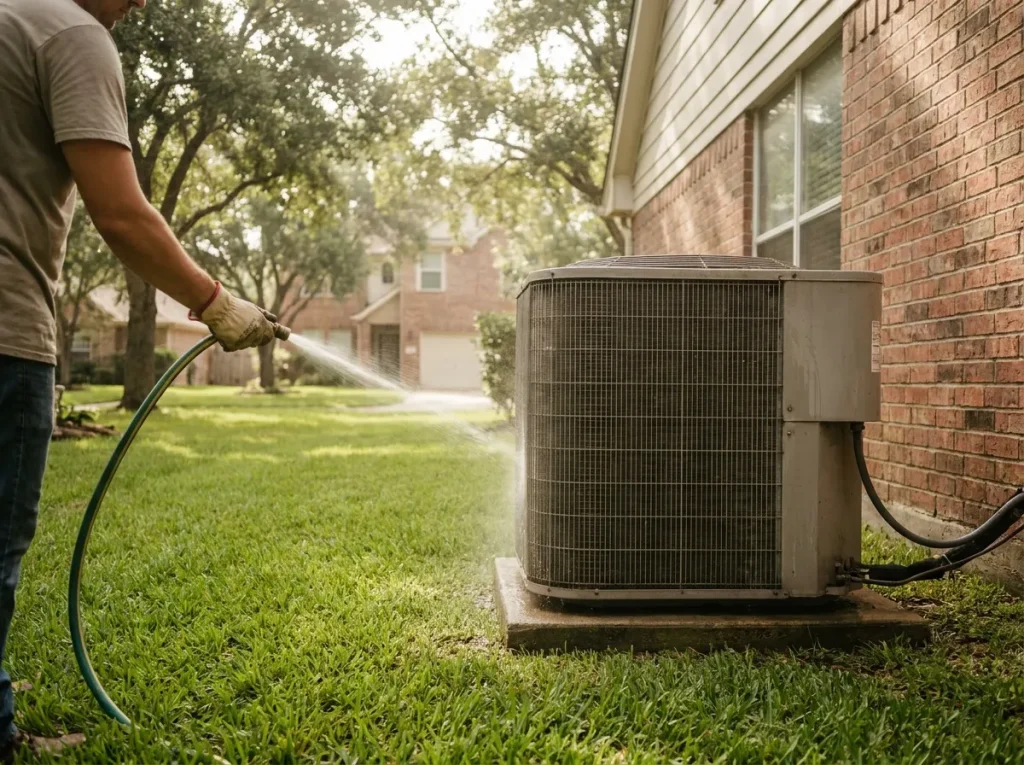
Regular rinsing of the outdoor coil with fresh water removes accumulated salt before it can do its damage, and it is one of the simplest, highest-value habits a coastal homeowner can adopt. Alongside rinsing, a consistent visual assessment of the coil, fins, electrical connections, and cabinet catches corrosion early, while it is still a cleaning issue rather than a replacement issue. When a homeowner is weighing a corroded older unit against a new one, this assessment is what informs a smart repair-versus-replace or AC unit installation decision.
What This Means When You Buy or Replace an AC in Houston
Coastal awareness should shape the buying decision, not just the maintenance routine. A system chosen without the Gulf Coast in mind can corrode its way to an early grave no matter how efficient it looked on paper.
Factor exposure into equipment selection
The closer your home is to the water, the more the corrosion-resistant equipment options pay for themselves. Our team weighs your specific exposure, your home's location relative to the coast, and how long you plan to stay in the property when recommending standard versus coastal-rated equipment.
Do not let corrosion masquerade as a different problem
Weak cooling, rising bills, and intermittent operation can all trace back to coastal corrosion rather than a failed compressor or low refrigerant. A proper assessment distinguishes a corrosion problem from an unrelated mechanical one, which prevents paying for the wrong repair.
Pair coastal-smart equipment with correct sizing
Corrosion resistance does not cancel out the fundamentals. Correct sizing still matters most, because oversizing remains the most common HVAC problem our team sees in Houston, and it hurts a coastal system just as much as an inland one. The strongest outcome pairs coastal-rated, correctly sized equipment with thoughtful placement. Homeowners planning a heating change in the same visit should apply the same environment-aware thinking to the heating side, where a corroded outdoor heat pump raises the same questions that drive a smart residential heating installation.
Key Takeaways
- Houston's Gulf Coast location exposes AC systems to airborne salt, persistent humidity, and storm debris that inland guides do not account for
- The outdoor condenser coil, fins, and electrical connections take the damage first, followed more slowly by the cabinet, fasteners, and copper line set
- Salt plus Houston's 75-percent-plus humidity keeps corrosion active for the eight-to-nine-month cooling season, not just occasionally
- Corrosion-resistant or coastal-rated equipment, thoughtful placement, and consistent fresh-water rinsing are the three layers of protection our team recommends
- Regular assessment catches corrosion while it is still a cleaning issue rather than a replacement issue
- Correct sizing still matters most, because oversizing remains Houston's most common HVAC problem and coastal equipment does not fix it
Frequently Asked Questions
Does salt air really reach AC systems in Houston if I am not right on the coast?
Yes, to varying degrees. Salt-laden air travels inland on Gulf breezes, and while the effect is strongest for homes closest to the water and on the south and east sides of the metro, salt influence extends well inland on the prevailing wind. Homes near the bay communities see the most aggressive exposure, but even homes farther in experience more salt-driven corrosion than a truly inland climate. How much protection your specific home needs depends on your distance from the coast and your prevailing wind exposure, which is part of what our team assesses.
How can I tell if my AC is corroding from coastal exposure?
Look at the outdoor unit. White or green residue and pitting on the condenser coil, bent or crumbling aluminum fins, rust streaks on the cabinet, crusty or discolored electrical terminals, and green patina on the copper line set are all visible signs. Performance clues include weak cooling, rising electric bills, and intermittent operation, since corroded electrical connections can work one day and fail the next. A consistent visual assessment catches these early, while they are still a cleaning issue rather than a replacement one.
What is coastal-rated or seacoast AC equipment?
Some manufacturers offer versions of their outdoor units built specifically for corrosive environments. These typically feature protective coil coatings, corrosion-resistant fin materials, and cabinets designed to resist salt-driven rust. For homes closer to the water, specifying this option up front is far less expensive than replacing a standard unit that corrodes early. Our team weighs your home's distance from the coast and exposure when recommending standard versus coastal-rated equipment.
How often should I rinse my outdoor AC unit in Houston?
Regular fresh-water rinsing of the outdoor coil removes accumulated salt before it can drive corrosion, and it is one of the simplest, highest-value habits for a coastal homeowner. Rinsing more frequently during the salt-and-storm-heavy months is reasonable for homes close to the water. Always rinse gently with plain water and avoid pressure that could bend the delicate fins. Pair rinsing with a periodic professional assessment that checks the coil, fins, electrical connections, and cabinet.
Will coastal conditions shorten my AC system's lifespan?
They can, if the system is not chosen and protected with the coast in mind. Salt and humidity accelerate corrosion on the outdoor unit, which over time reduces heat transfer, restricts airflow, and stresses electrical connections. The counter to that is straightforward: corrosion-resistant equipment, thoughtful placement, consistent rinsing, and regular assessment. With those in place, a Gulf Coast AC system can reach a full, normal service life rather than an early failure.
Conclusion
The Gulf of Mexico gives Houston a lot, but it also hands our AC systems a challenge that inland equipment guidance simply never addresses. Salt, humidity, and storm exposure are a real trio, and they work first and hardest on the outdoor unit that spends every hour of every day in that environment.
At VeriChill, our team factors the coast into the recommendation from the start. We weigh your home's exposure when choosing standard versus corrosion-resistant equipment, we place the outdoor unit to reduce salt and moisture contact, and we build a rinse-and-assess habit into how the system is cared for. Coastal conditions are manageable when you plan for them, and a system designed with the Gulf in mind can last as long here as anywhere.
Concerned about corrosion on your current AC or planning a coastal-smart replacement? Call us at 281-559-6995 or visit verichill.com to schedule a consultation.