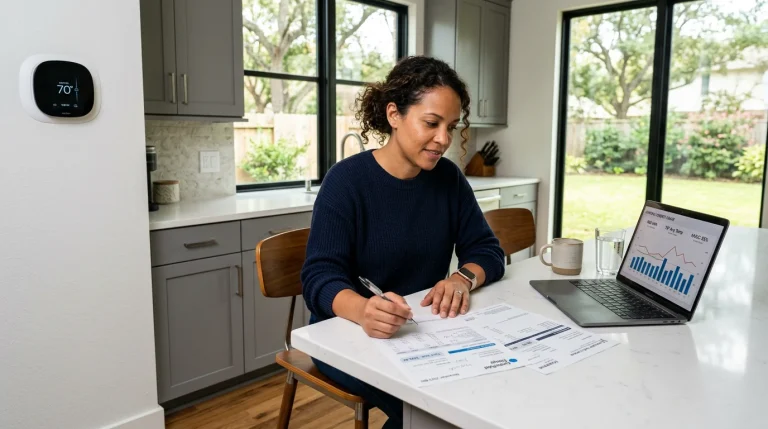
Houston homes with gas furnaces typically consume 800 to 1,200 kWh of electricity and natural gas during the winter months, while homes with heat pumps use 1,200 to 1,800 kWh of electricity monthly under normal winter conditions. Understanding where that energy goes helps you identify whether your heating costs reflect normal operation or a system that needs attention.
Houston homeowners rarely think about heating costs the way they think about summer electricity bills. Our cooling season dominates the annual energy conversation, and rightfully so. But heating energy usage, while seasonal and shorter in duration, often surprises homeowners when they actually look at the numbers.
After 14 years of working with Houston homeowners on HVAC systems, I find that most people have no idea how much energy their heating system consumes, what is normal for their system type, or how to tell whether their heating costs indicate a problem. This matters because heating inefficiency costs you money every winter, and the solutions are often straightforward once you understand where the energy is actually going.
Let me walk through how different heating system types consume energy in Houston's climate, what normal consumption looks like, and how to determine whether your system is operating efficiently or wasting energy.
How Different Heating Systems Consume Energy
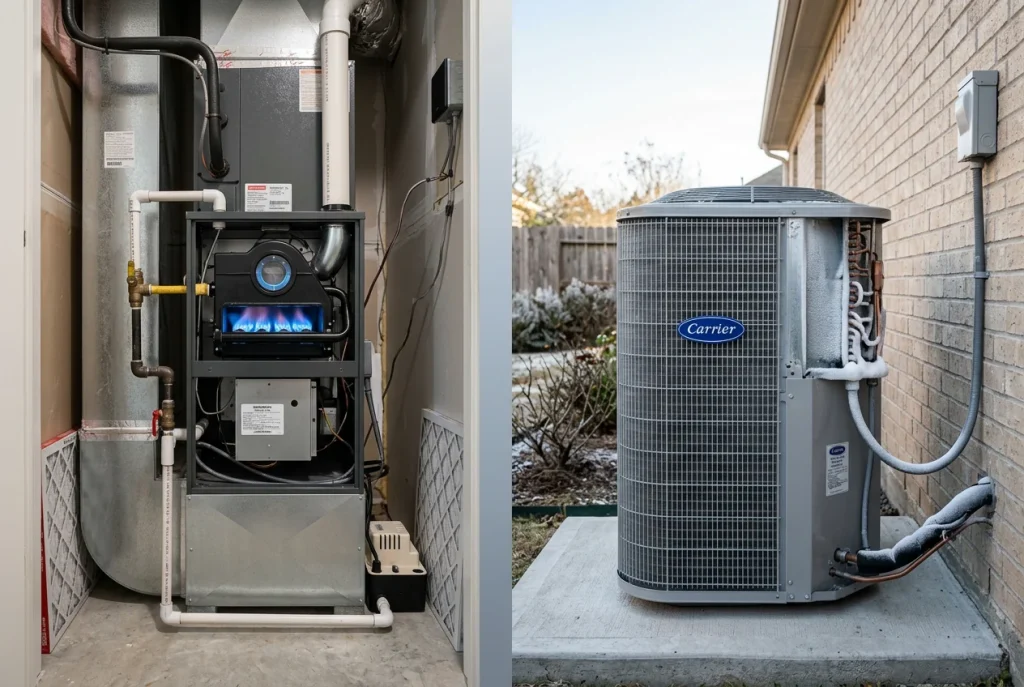
The energy consumption profile of your heating system depends entirely on its type. Houston homes primarily use one of three heating configurations, and each has a distinct energy pattern.
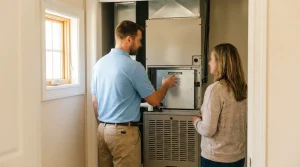
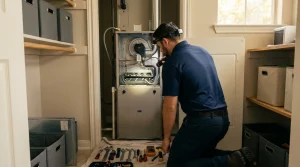
Gas furnaces burn natural gas to produce heat and use electricity to power the blower motor that distributes heated air through your ductwork. Gas consumption is where most of the energy cost lies. The electrical component is relatively small, typically adding 200-400 kWh per month to your electricity bill during the heating season. The average Houston homeowner with a gas furnace spends roughly $40 to $75 per month on natural gas for heating during November through March.
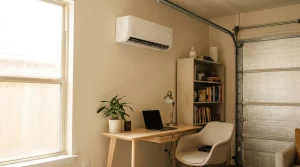
Heat pumps use electricity to transfer heat from outdoor air into your home. They do not generate heat through combustion, which makes them highly efficient in moderate temperatures. In Houston's typical winter conditions, a heat pump for a 2,000-square-foot home consumes 1,200 to 1,800 kWh per month. The important caveat: during sustained cold snaps below 35 degrees, heat pumps activate backup electric resistance heating strips that can spike daily consumption to 80 to 120 kWh, roughly triple the normal rate.
Dual-fuel systems combine a heat pump with a gas furnace backup. The heat pump handles heating during moderate temperatures, and the gas furnace takes over when temperatures drop below a set threshold, typically around 35 to 40 degrees. This configuration optimizes for efficiency across the full range of Houston winter temperatures.
| System Type | Primary Energy Source | Monthly Winter Cost (typical) | Efficiency Rating |
| Gas Furnace (80% AFUE) | Natural gas + electricity | $40-$75 gas + electricity | 80% of gas converts to heat |
| Gas Furnace (96% AFUE) | Natural gas + electricity | $30-$55 gas + electricity | 96% of gas converts to heat |
| Heat Pump (standard) | Electricity only | $120-$200 electric | 250-300% effective efficiency |
| Heat Pump (high-efficiency) | Electricity only | $90-$160 electric | 300-400% effective efficiency |
| Dual-fuel | Gas + electricity | Varies by temperature | Optimizes for both mild and cold |
What Drives Heating Energy Consumption in Houston
Your heating energy use isn't just about your equipment. Several factors specific to your home determine how hard your system works during the winter months.
Insulation quality
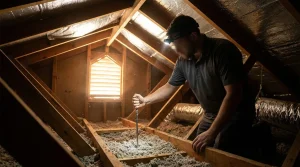
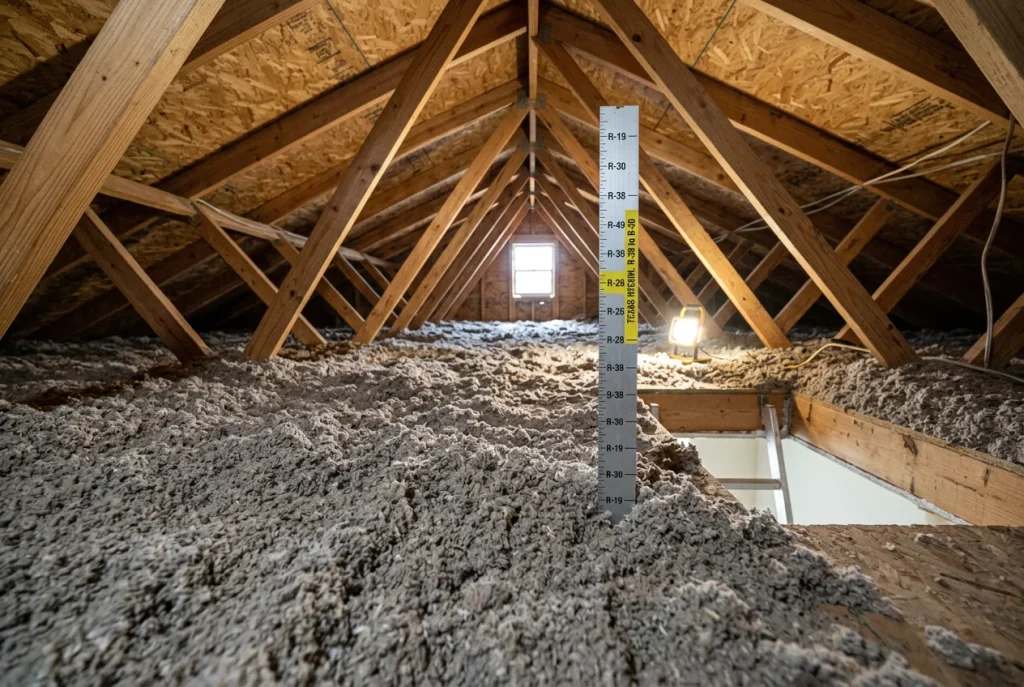
Heat loss through poorly insulated walls, ceilings, and floors forces your heating system to run longer and harder. Houston homes built before updated energy codes often have insufficient attic insulation, which is the single largest source of heat loss in most residential structures. The Department of Energy recommends R-38 to R-60 attic insulation for the Houston climate zone.
Air sealing
Gaps around windows, doors, electrical penetrations, and plumbing create pathways for heated indoor air to escape and cold outdoor air to enter. In many Houston homes, air leakage accounts for a significant portion of heating energy waste. This is the same infiltration problem that affects cooling, but it works in reverse during winter.
Ductwork condition
Ducts running through unconditioned attic spaces lose heated air before it reaches your living areas. In Houston, where most residential ductwork runs through hot attics, duct leakage and inadequate duct insulation waste heating energy just as they waste cooling energy. A leaky duct system can lose 20 to 30% of conditioned air before it reaches the rooms you are trying to heat.
Thermostat behavior
How you set and program your thermostat directly affects consumption. Each degree you raise the thermostat setting increases energy consumption by approximately 3%. Houston homeowners who set their thermostat to 72 or 74 degrees during winter use measurably more energy than those who maintain 68 to 70 degrees.
Window performance
Single-pane windows and poorly sealed window frames allow heat to escape rapidly. South and west-facing windows in Houston homes actually provide beneficial solar heat gain during winter, but north-facing windows are net heat losers. Understanding which windows help and which hurt informs both thermostat management and future window replacement decisions.
How to Tell If Your Heating System Is Wasting Energy
Several indicators suggest your heating system is consuming more energy than it should for the comfort it delivers.
Compare your bills year over year
Pull your winter utility bills from the past two to three years and compare them. If costs are rising without corresponding rate increases from your utility provider, your system is likely becoming less efficient. Gas furnaces lose efficiency as heat exchangers accumulate deposits and components age. Heat pumps lose efficiency as refrigerant charge decreases or compressor performance declines.
Monitor cycle frequency
A properly functioning heating system should run in steady cycles, reaching temperature and shutting off periodically. If your system runs continuously during moderate winter conditions (above 45 degrees), it is either undersized, losing capacity, or fighting excessive heat loss from the building envelope. Short cycling, where the system runs for only a few minutes before shutting off, indicates a different set of problems, including oversizing or mechanical issues.
Check for temperature inconsistency
If some rooms heat effectively while others remain cold, the problem may be ductwork, zoning, or system capacity rather than overall energy consumption. But the energy is still being consumed. It is just not reaching where it needs to go. This is wasted energy from a comfort perspective.
Listen for changes in operation
A gas furnace that produces a different flame pattern, unusual odors, or new sounds is signaling a change in performance. A heat pump that runs its backup electric strips frequently during mild weather is not operating in its efficient heat pump mode. Both scenarios indicate increased energy consumption.
Reducing Heating Energy Usage in Your Houston Home
Several strategies reduce heating energy consumption without sacrificing comfort, and most apply regardless of your system type.
Seal air leaks before upgrading equipment
Addressing air infiltration through weatherstripping, caulking, and sealing penetrations is the most cost-effective step for reducing energy use. No heating system can overcome a leaky building envelope efficiently. Your HVAC service Houston contractor can identify the most significant air leakage points during a system evaluation.
Add attic insulation
If your Houston home has less than R-38 in the attic, adding insulation reduces heat loss through the ceiling, which is typically the largest single source of heat loss in a one-story home. This improvement benefits both heating and cooling seasons.
Seal and insulate ductwork
Ducts in unconditioned attic spaces should be sealed at every joint and insulated to at least R-8. This reduces both heating and cooling energy losses and improves comfort consistency throughout the home.
Use a programmable thermostat strategically
Set your thermostat lower when you are away from home or sleeping, and allow it to warm the home before you return or wake. Even a 5-degree setback for 8 hours per day yields noticeable energy savings over the course of a Houston winter.
Consider system replacement for aging equipment
If your gas furnace is rated at 80% AFUE, upgrading to a 96% AFUE model converts significantly more fuel to usable heat. If your heat pump is more than 12 years old, current models deliver substantially better HSPF2 ratings, meaning more heat output per unit of electricity consumed. An AC installation in a Houston project that includes a heating system upgrade addresses both seasons in a single investment.
Heat Pumps vs. Gas Furnaces: The Houston Energy Equation
For Houston homeowners evaluating heating system options, the energy comparison between heat pumps and gas furnaces is particularly relevant.
Heat pumps do not create heat. They move it. For every unit of electricity a heat pump consumes, it moves 2.5 to 4 units of heat energy into your home, depending on outdoor temperature and equipment efficiency. This makes heat pumps dramatically more efficient than any combustion-based system during moderate temperatures.
Gas furnaces create heat through combustion. Even a 96% efficient furnace converts only 96% of the gas energy to heat. The remaining 4% exits through the flue. In absolute efficiency terms, a heat pump operating in moderate conditions outperforms any gas furnace.
The crossover point is temperature. As outdoor temperatures drop, heat pump efficiency decreases because less heat is available in the outdoor air to extract. Below approximately 35 degrees, many standard heat pumps activate electric resistance backup heating, which operates at 100% efficiency, much lower than heat pump mode. This is where gas furnaces gain an advantage.
For Houston, where the vast majority of winter hours occur above 40 degrees, heat pumps spend most of their heating season operating in their most efficient range. The brief periods below 35 degrees represent a small fraction of total heating hours. This temperature profile is why heat pumps are an increasingly compelling heating installation choice for Houston homes.
Key Takeaways
- Gas furnace homes consume $40 to $75 per month in natural gas for heating, while heat pump homes use 1,200 to 1,800 kWh of electricity monthly during normal winter conditions
- Insulation quality, air sealing, and ductwork condition affect heating energy consumption as much as the equipment itself
- Rising winter energy bills without rate changes indicate declining system efficiency or building envelope problems
- Sealing air leaks and adding attic insulation are the most cost-effective steps to reduce heating energy waste
- Heat pumps outperform gas furnaces in efficiency during the majority of Houston's winter temperature range
- Heat pump backup electric resistance heating during extreme cold can triple daily energy consumption
Frequently Asked Questions
What is a normal winter electricity bill for a Houston home?
For homes with gas furnaces, winter electricity bills typically run lower than summer because the furnace uses minimal electricity. Expect 800 to 1,200 kWh monthly. For homes with heat pumps, expect 1,200 to 1,800 kWh during normal winter months. Bills spike during sustained cold events when heat pump backup heating activates. Your specific consumption depends on home size, insulation quality, thermostat settings, and equipment efficiency.
Does it cost less to heat a Houston home with gas or electricity?
In most years, heat pumps cost less to operate for heating in Houston because they move heat rather than create it, achieving effective efficiencies of 250 to 400%. Gas furnaces max out at 98% efficiency. However, during extended cold snaps, when heat pump backup electric strips activate, gas heating becomes temporarily cheaper. For the full Houston winter season, heat pumps typically deliver lower total heating costs than gas furnaces for homes without pre-existing gas infrastructure.
Why does my heat pump use so much electricity during cold snaps?
When outdoor temperatures drop below approximately 35 degrees, most standard heat pumps cannot extract sufficient heat from the outdoor air to meet your home's heating demand. The system activates backup electric resistance heating strips, which operate at 100% efficiency compared to the heat pump's normal 250 to 400% efficiency. This backup heating consumes roughly three times as much electricity per unit of heat produced, leading to significant increases in electricity bills during sustained cold events.
How can I tell if my heating system is the right size for my home?
An appropriately sized heating system should run in moderate, steady cycles during typical winter weather, reaching your thermostat set point and cycling off periodically. If your system runs continuously during mild winter conditions, it may be undersized. If it turns on and off every few minutes, it may be oversized. Both conditions waste energy and reduce comfort. A professional load assessment determines the correct sizing for your specific home.
Should I upgrade to a more efficient heating system?
Consider upgrading if your current system is approaching the end of life (15+ years for furnaces, 12+ years for heat pumps), if your winter energy bills are significantly higher than those of neighbors with similar homes, or if your system requires increasingly frequent repairs. A modern high-efficiency gas furnace or heat pump delivers measurably lower operating costs that offset the equipment investment over time. An off-season evaluation gives you the data you need to make this decision with confidence.
Conclusion
Understanding your heating energy consumption starts with knowing what is normal for your system type and your home. From there, you can identify whether your costs reflect efficient operation or energy waste that has straightforward solutions. Most Houston homeowners can reduce heating energy consumption through a combination of building envelope improvements and, when the time is right, equipment upgrades.
At VeriChill, our heating evaluations include energy consumption analysis as part of the assessment. We look at your current system performance, your home's thermal characteristics, and your utility patterns to give you a clear picture of where your heating energy goes and which improvements have the greatest impact. Whether the answer is sealing ductwork, adding insulation, or planning a system upgrade, we provide the information you need to make an informed decision.
Questions about your Houston home's heating energy consumption? Call us at 281-559-6995 or visit verichill.com to schedule an evaluation.