HVAC installation in Houston usually takes one working day on site. Replacing only the outdoor condenser and indoor coil takes about 4 to 8 hours, while a full system swap of the AC and the furnace or air handler takes about 8 to 14 hours. Ductwork changes, new construction, or permit timing can add days.
If your system is limping through a Houston summer, the first thing you probably want to know is how long your home will be without cooling once the old equipment comes out. The good news is that a standard replacement rarely stretches past a single day, because most of the planning, sizing and paperwork happens before the crew ever arrives with the new equipment.
The part that surprises many homeowners is the time before installation day. Between the in-home evaluation, the written estimate, equipment availability and the permit your city requires, the full process from first call to a running system usually spans a week or more. Knowing where that time goes makes it much easier to plan around it, especially during the eight to nine month stretch when Houston homes lean hardest on their air conditioning.
In this guide, you'll learn how long each type of installation takes on site, what happens hour by hour on installation day, which factors add time, how the full timeline looks from first visit to final check, and how our team at VeriChill schedules installations so you know what to expect before anyone picks up a tool.
On-Site Installation Times by Project Type
The single biggest factor in how long your installation takes is how much of the system is being replaced. A cooling-only replacement touches the outdoor unit and the indoor coil, while a full replacement adds the furnace or air handler, the thermostat, and often more electrical and drain work inside the home.
| Project type | Typical time on site | What drives the range |
|---|---|---|
| AC only (condenser and evaporator coil) | 4 to 8 hours | Attic access, line set condition, coil fit on the existing furnace |
| Full split system (AC plus furnace or air handler) | 8 to 14 hours | Attic layout, gas or electrical changes, drain and platform work |
| Heat pump system (outdoor unit plus air handler) | 8 to 12 hours | Electrical capacity, air handler location, heat strip wiring |
| Ductless mini-split (single zone) | 4 to 8 hours | Wall penetration, line set run length, electrical circuit |
| Full system with new ductwork | 2 to 3 days | Number of runs, attic space, return and supply redesign |
| New construction rough-in and set | Spread across the build | Framing schedule, inspections, trim-out after drywall |
These ranges match what most Houston homeowners experience on a standard single-family replacement. Your own project can fall outside them when the attic is especially tight, when a second system serves an upstairs floor, or when the existing line set cannot be reused with the new refrigerant.
Why Most Replacements Finish in One Day
A replacement finishes in a day because the crew arrives with the equipment already selected, sized and staged. The evaluation, sizing and estimate work has been done in advance, so installation day is focused on removing the old equipment, setting the new units, making the refrigerant, electrical and drain connections, and testing everything before the crew leaves.
When a Project Runs Into a Second Day
A second day usually means the scope grew beyond equipment. Replacing damaged duct runs, relocating an air handler, adding a return, or upgrading an electrical panel to support a heat pump all add labor that cannot be compressed into the same day without cutting corners on testing.
What Happens on Installation Day, Step by Step
Knowing the sequence helps you plan when the power and cooling will be off and when the crew needs access to different parts of your home. A typical full replacement follows the order below, with the attic work taking the longest in most Houston houses.
- Arrival and home protection. The crew lays drop cloths along the path to the attic or closet and confirms the equipment matches the approved estimate, which usually takes the first half hour.
- Refrigerant recovery and shutdown. Refrigerant in the old system is recovered with a recovery machine rather than vented, and power to the equipment is shut off at the disconnect and the panel.
- Removal of old equipment. The old condenser, coil, and furnace or air handler are disconnected and carried out, which is often the most physically demanding hour of the day in a hot attic.
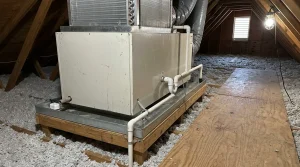
- Setting the new indoor equipment. The new furnace or air handler and coil are set on a platform, with the drain pan, float switch and condensate line connected.
- Setting the outdoor unit. The new condenser or heat pump goes onto a level pad with the required clearances, and the disconnect and whip are connected.
- Line set and refrigerant work. The line set is flushed or replaced, brazed, pressure tested with nitrogen, and evacuated with a vacuum pump before the system is charged with R-454B or R-32 refrigerant.
- Thermostat and controls. The new thermostat is mounted, wired and programmed, and the crew walks you through its settings.
- Startup and performance check. The system is started, airflow and temperature split are measured, the refrigerant charge is verified, and the job is not signed off until the readings are right.
The evacuation and testing steps are the ones you should never let anyone rush. A vacuum that is pulled too quickly leaves moisture in the lines, and in Houston's humidity that moisture turns into acid and early compressor trouble.
Factors That Add Time to Your Installation
Several conditions add hours or days, and most of them are visible during the in-home evaluation, which is exactly why a proper assessment matters before a date is set. If your evaluation uncovers one of these, a good installer will tell you up front rather than surprising you on installation day.
| Factor | Typical time added | Why it adds time |
|---|---|---|
| Tight or low attic access | 1 to 3 hours | Equipment has to be broken down or maneuvered through a small opening |
| Line set replacement | 1 to 2 hours | New copper runs through walls or attic to meet new refrigerant requirements |
| Duct repair or partial replacement | Half a day to a full day | Leaks, crushed runs, or undersized returns found during the evaluation |
| Electrical upgrades | Half a day or a separate visit | New breaker, disconnect, or panel capacity for a heat pump |
| Gas line or venting changes | 2 to 4 hours | Furnace relocation or vent resizing for a new high-efficiency unit |
| Second system for an upstairs floor | 4 to 8 hours per system | Each system is a separate installation with its own testing |
| Permit inspection scheduling | Days, not hours | The city inspection happens after installation on the inspector's schedule |
Houston's refrigerant transition matters here too. New equipment in 2026 ships with R-454B or R-32 rather than R-410A, and depending on the size and condition of your existing copper, the crew may replace the line set rather than reuse it, which adds a couple of hours but protects the new system.
The Full Timeline From First Call to a Running System
Installation day is only one part of the process. From the moment you call to the day the system is running, the timeline usually spans several days to a few weeks, depending on how quickly you decide, whether the equipment is in stock, and how busy the season is.
| Stage | Typical timing | What happens |
|---|---|---|
| In-home evaluation | Scheduled within a few days of your call | Assessment of ductwork, airflow, insulation, window orientation and ceiling heights |
| Written estimate | Same visit or within a day or two | Itemized equipment options and scope of work |
| Your decision | Up to you | Time to compare options and ask questions without pressure |
| Equipment and permit | A few days to two weeks | Equipment ordered or pulled from stock, permit filed with your city |
| Installation day | One day for most replacements | Removal, setting, connections, startup and testing |
| Inspection and warranty registration | Days to a few weeks after install | City inspection, and warranty registration within 90 days |
Peak summer is when this timeline stretches the most, because failures spike across Greater Houston during the hottest weeks of July and August. Planning a replacement in spring or fall, before your old system fails outright, usually gives you more scheduling choice and more time to weigh equipment options such as single-stage, two-stage or variable speed systems.
How the Season Changes Your Wait
Spring and fall are the easiest times to schedule because demand drops once the heat breaks, and a planned replacement can often be booked within days. During a July heat wave, the same project may wait longer simply because every installer in the region is busy with emergency replacements.
How VeriChill Schedules Your Installation
At VeriChill, we focus only on residential installation and replacement, so every step of our process is built around getting the new system right rather than squeezing an installation in between repair calls. Here is how that shows up in your timeline.
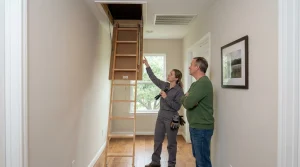
In-home evaluation. Every project starts with a thorough visit to your home, where we assess your existing ductwork, analyze airflow, and look at the characteristics that decide what size and type of system your home actually needs.
Clear written estimate and timeline. You receive an itemized written estimate, and before any work begins we give you a clear timeline for installation day so you know when cooling will be off and when the crew will need access to your attic or closet.
Professional installation. Our crew protects your home, keeps the work area clean, and handles the full residential ac installation from removal of the old equipment through startup.
Performance verification. We verify that your system is operating at peak efficiency and walk you through how it works before we consider the job complete.
Warranty registration. Every system we install carries a 10-year parts and compressor warranty, and we handle the registration within 90 days of installation so your coverage is never at risk.
If you are weighing an older system against a full residential hvac replacement, the quickest way to a firm answer about your own timeline is an evaluation of your home rather than an estimate over the phone. ENERGY STAR's guidance on when it is time to replace heating and cooling equipment is a useful checklist to review before that visit.
Key Takeaways
- A standard HVAC replacement in Houston takes one working day on site. Cooling-only jobs run about 4 to 8 hours, and a full system with the furnace or air handler runs about 8 to 14 hours.
- Most of the real time sits before installation day, in the evaluation, estimate, equipment and permit stages. From first call to a running system, expect several days to a few weeks depending on the season.
- Ductwork repairs, line set replacement, electrical upgrades and second systems are the usual reasons a project runs past one day. A proper in-home evaluation should flag these before a date is set so there are no surprises.
- The evacuation, charging and performance testing steps take time for a reason. In Houston's humidity, rushing the vacuum or skipping the startup check shortens the life of the new compressor.
- New equipment in 2026 uses R-454B or R-32 refrigerant, so your existing line set may need replacing. That adds a couple of hours but protects the new system from contamination.
- Spring and fall are the easiest seasons to schedule a replacement. During July and August heat waves, installers across Greater Houston are busiest and wait times grow.
Frequently Asked Questions
Can I stay home during HVAC installation?
Yes, most homeowners stay home during a replacement. Expect noise, open doors, and crew traffic to the attic or closet, and plan for several hours without cooling on the day itself.
How long will my house be without air conditioning?
For a standard replacement, cooling is usually off for most of the working day, roughly 4 to 12 hours. Starting early in the morning keeps the hottest hours of a Houston afternoon to a minimum.
Does a permit delay HVAC installation in Houston?
Filing the permit rarely delays installation day itself. The inspection usually happens after the system is running, on the inspector's schedule, and the installer coordinates it with you.
How long does a heat pump installation take compared to a central AC?
A heat pump with a new air handler typically takes 8 to 12 hours, similar to a full split system. Electrical upgrades for heat strips or panel capacity can add time.
Is it faster to replace just the outdoor unit?
Replacing only the condenser is quicker, but it usually is not the right choice. Mismatched indoor and outdoor equipment can lose efficiency and may affect warranty coverage, so a matched coil is standard.
How long does ductwork replacement add to an installation?
Replacing or redesigning ductwork usually adds half a day to two full days. The number of runs, attic access, and whether returns need resizing decide where your project lands.
Should I be home for the final walkthrough?
Yes, being there for the final walkthrough is worth it. The crew shows you the thermostat settings, the filter location and size, and the readings that confirm the system is running correctly.
How far in advance should I schedule an HVAC replacement?
If your system still runs, book the evaluation a few weeks ahead, ideally in spring or fall. That gives you time to compare options and pick an installation date that suits you.
Does new construction HVAC installation take longer?
New construction work is spread across the build rather than done in one day. Ducts and line sets are roughed in during framing, and equipment is set and started after drywall.
What slows down an installation on the day itself?
Tight attics, a line set that cannot be reused, surprise duct damage, and electrical fixes are the usual culprits. A thorough evaluation beforehand catches most of them.
Conclusion
For most Houston homes, HVAC installation takes a single working day on site, with cooling-only jobs finishing in about 4 to 8 hours and full system replacements in about 8 to 14 hours. The longer part of the process is everything that comes before installation day, and a careful evaluation is what keeps that day predictable instead of stretching into a second or third.
If your system is aging, planning the replacement before it fails gives you the most control over timing, equipment and scheduling. When you are ready for a firm answer about your own home, book a whole-home assessment and get your installation timeline from our team.
Call VeriChill at 281-559-6995 for your installation timeline. Book a Houston HVAC evaluation before summer peaks.