Choosing the right HVAC system for your Houston home starts with matching equipment to your home's specific needs, not just picking the most popular brand or the cheapest option. The right system balances cooling power, humidity control, energy efficiency, and long-term reliability for our Gulf Coast climate.
If you're in the market for a new HVAC system, you've probably realized that the options can feel overwhelming. Split systems, heat pumps, single-stage, variable speed, SEER2 ratings, tonnage calculations; it's a lot to sort through. VeriChill specializes in residential HVAC installation across Greater Houston, and we walk homeowners through this exact decision every week.
Here's the thing. Houston isn't like other cities. Our combination of extreme summer heat and year-round humidity means your HVAC system works harder and longer than systems in most parts of the country. A system that's perfect for Dallas or Atlanta might struggle here. Getting this right from the start saves you thousands in energy bills and years of comfort headaches down the road.
What Makes Houston's Climate So Demanding on HVAC Systems?
Houston's HVAC challenge is a two-front battle: intense summer heat that pushes cooling systems to their limits, and persistent humidity above 75% that requires specialized dehumidification beyond what basic systems provide.
Most people think about air conditioning as just making the air colder. In Houston, that's only half the job. Our proximity to the Gulf of Mexico means that relative humidity regularly sits between 75% and 90%, and your HVAC system needs to remove moisture from the air while cooling it. An undersized or improperly matched system will drop the temperature but leave your home feeling clammy and uncomfortable. An oversized system is even worse; it cools too fast, shuts off before removing enough moisture, and creates the exact sticky indoor environment you're trying to avoid.
According to the U.S. Department of Energy, an oversized unit won't adequately remove humidity, while an undersized unit won't cool effectively on the hottest days. That sweet spot in the middle is where proper system selection matters most. Houston summers regularly push past 95°F with heat index values well above 100°F, and your system needs to handle those extremes without running 24 hours a day. Here's what makes our climate uniquely challenging for HVAC equipment:
- Extended cooling season: Houston homeowners run AC eight to nine months out of the year, compared to four or five months in northern cities. That means more wear, more energy consumption, and more importance placed on efficiency ratings.
- Humidity as a primary comfort factor: Dropping indoor temperature to 72°F means nothing if relative humidity sits at 65%. True comfort requires both temperature and moisture control working in tandem.
- Mild but unpredictable winters: Houston averages only a handful of days below freezing each year, but cold snaps can be sudden and severe. Your heating installation needs to respond quickly without being overkill for a climate that barely uses it.
- Coastal air quality: Salt air, pollen, and particulate matter from Gulf breezes accelerate corrosion on outdoor equipment if not properly protected.
| Houston Climate Factor | Impact on HVAC | System Requirement |
| Avg. summer high 95°F+ | Extended run cycles | High cooling capacity with efficiency |
| Humidity 75-90% year-round | Inadequate moisture removal | Strong dehumidification capability |
| 8-9 month cooling season | Accelerated equipment wear | Durable, high-SEER2 rated equipment |
| Mild winters (avg. 40-50°F) | Low heating demand | Right-sized heating, not oversized |
| Salt air and Gulf pollen | Corrosion and filter loading | Corrosion-resistant coils, quality filters |
Understanding HVAC System Types: Which One Fits Your Home?
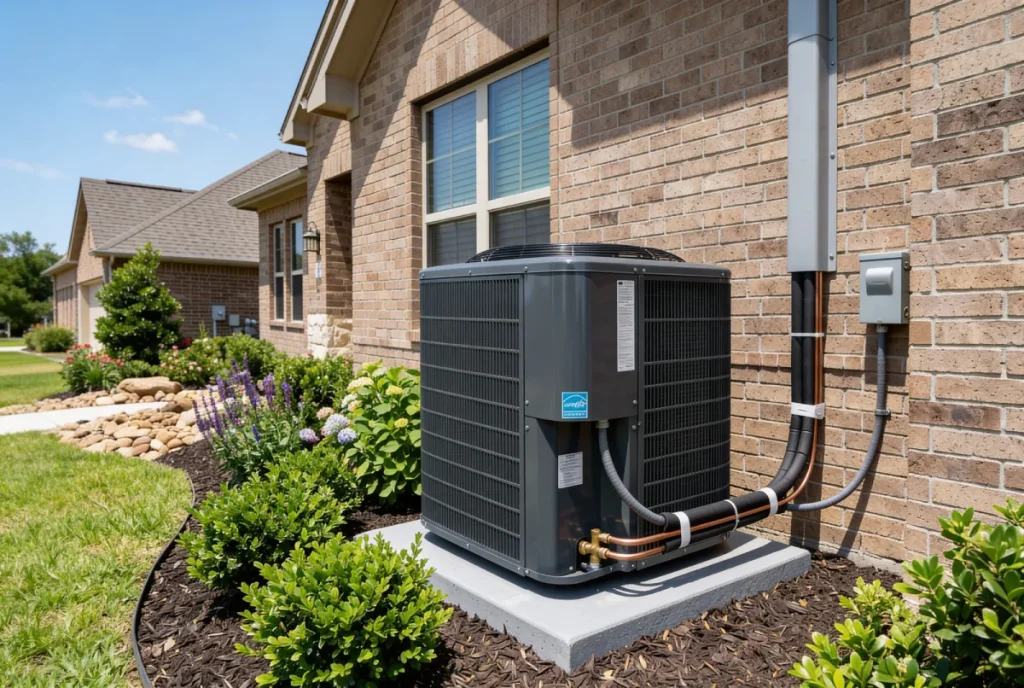
The three main residential HVAC configurations for Houston homes are split systems (most common), heat pumps (increasingly popular for our mild winters), and packaged systems. Your home's layout, ductwork, and heating preferences determine which type works best.
Before you compare brands or efficiency ratings, you need to know which system configuration makes sense for your home. The terminology can be confusing, so let's break it down in practical terms.
Split Systems: Houston's Most Common Setup
A split system puts one component outside (the condenser) and one inside (the evaporator coil and air handler). Most Houston homes built in the last 40 years use this setup. You'll have a separate furnace or air handler in the attic, garage, or closet, connected to the outdoor unit by refrigerant lines. Split systems are versatile, efficient, and offer the widest range of equipment options at every budget level.
Heat Pumps: The Dual-Purpose Option
Heat pumps work like air conditioners in summer but reverse the process in winter to pull heat from outdoor air into your home. For Houston's mild winters, heat pumps are an increasingly smart choice because they handle both ac installation and heating installation in a single system. They're efficient down to about 35°F; well within Houston's typical winter range. When temperatures drop below that threshold during rare freezes, backup electric heat strips kick in.
Packaged Systems: All-in-One Units
Packaged systems combine heating and cooling into a single outdoor unit. They're common in Houston homes without attic space or with slab-on-grade construction. While they're convenient, they generally offer fewer efficiency options than split systems. The Department of Energy notes that packaged units often include electric heating coils, heat pump heating, or a natural gas furnace, which eliminates the need for a separate indoor unit.
| System Type | Best For | Pros | Cons |
| Split System | Most Houston homes | Widest equipment selection, high efficiency options | Requires indoor and outdoor space |
| Heat Pump | Mild-winter climates like Houston | Heats and cools, energy efficient | May need backup heat for rare freezes |
| Packaged System | Homes without attic/closet space | Single unit, simpler installation | Fewer efficiency tiers available |
How to Size Your HVAC System Correctly
Proper HVAC system sizing for Houston homes depends on square footage, insulation quality, window exposure, ceiling heights, and ductwork condition; not a simple "one ton per 500 square feet" rule. Oversizing is more common and more costly than undersizing in our climate.
Here's where most homeowners get bad advice. You've probably heard rules of thumb like "one ton of cooling per 500 square feet" or seen online calculators that spit out a tonnage number based on your home's size alone. Those shortcuts ignore the factors that actually matter in Houston's climate.
What Goes Into Proper System Sizing
A qualified HVAC contractor evaluates your home's specific characteristics during an on-site assessment. This isn't a 15-minute walkthrough; it's a detailed look at the factors that determine how much cooling and heating your home actually needs. The assessment includes checking your home's insulation levels, window count and orientation, ceiling heights, number of occupants, ductwork condition, and existing airflow patterns. In Houston, south-facing and west-facing windows contribute significantly to solar heat gain, directly affecting system sizing.
Why Oversizing Is Houston's Biggest Sizing Problem
A system that's too large for your home will short-cycle, meaning it reaches the thermostat setpoint quickly, shuts off, then restarts minutes later. In Houston, short cycling is a comfort disaster because the system never runs long enough to remove moisture from the air. You end up with a cold, clammy house and an energy bill that's higher than it should be. The compressor also wears out faster from constant starting and stopping.
The Ductwork Factor
Even the perfectly sized system will underperform if your ductwork can't deliver the air efficiently. Houston homes with ductwork in unconditioned attic spaces lose significant cooling capacity through heat gain and leakage. Your contractor should evaluate duct condition, routing, and sizing as part of the overall system assessment. In many cases, duct modifications are as important as the equipment itself.
- Square footage alone doesn't determine system size. Two 2,000 sq ft Houston homes can need very different tonnage based on insulation, windows, and layout.
- Bigger isn't better. An oversized system costs more upfront, runs inefficiently, and fails to control humidity. It's one of the most expensive mistakes in residential HVAC.
- Ductwork matters as much as equipment. Leaking or undersized ducts waste up to 30% of cooled air before it reaches your living spaces.
- Attic conditions affect everything. Houston attics can reach 140°F or higher in summer. Ductwork running through that space loses efficiency unless properly insulated and sealed.
| Sizing Factor | Why It Matters in Houston | What Your Contractor Should Check |
| Home square footage | Starting point for capacity estimate | Total conditioned area, including additions |
| Insulation quality | Poorly insulated homes lose cooled air | Attic R-value, wall insulation, weatherstripping |
| Window orientation | South/west windows add major heat load | Window count, size, type, and sun exposure |
| Ceiling height | Taller ceilings mean more air volume | Room-by-room ceiling measurements |
| Ductwork condition | Leaks waste cooling capacity | Duct routing, connections, insulation, and sizing |
| Number of occupants | People generate heat and moisture | Typical household size and activity levels |
Making the Final Decision: Efficiency, Budget, and Long-Term Value
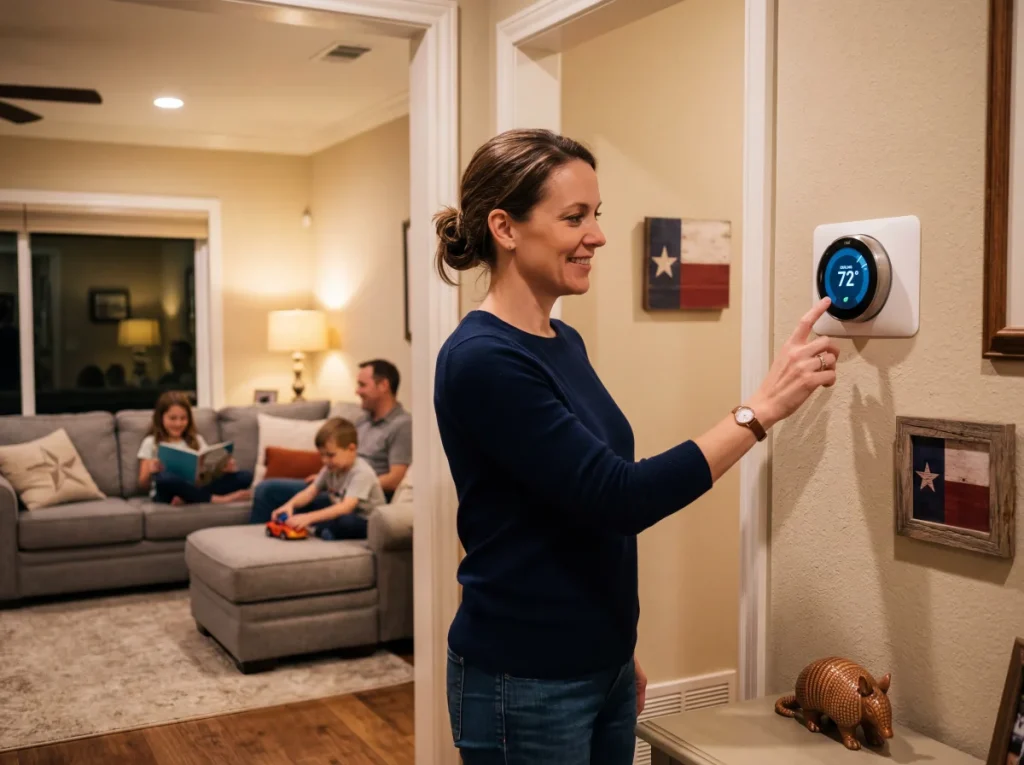
The best HVAC system for your Houston home balances upfront equipment costs against long-term energy savings, aligns with your comfort priorities, and comes with solid warranty coverage backed by professional installation.
Once you know the right system type and size, the final decision comes down to three factors: efficiency tier, budget, and long-term value. And honestly? This is where working with a residential HVAC specialist makes the biggest difference.
Efficiency Tiers: What SEER2 Means for Your Wallet
SEER2 (Seasonal Energy Efficiency Ratio 2) measures how efficiently your system converts electricity into cooling over an entire season. Higher numbers mean lower energy bills. Texas is in the Southeast region, which requires a minimum SEER of 14.3 for split-system air conditioners. You can go higher, up to 20+ SEER2 with variable speed systems, but the cost-to-savings ratio varies. In Houston, where your AC runs most of the year, the payback period for higher efficiency equipment is shorter than in milder climates.
Budget Reality: Investing in Comfort
We don't publish prices because every home is different, and quoting a number without seeing your specific situation would be misleading. What we can tell you is that your HVAC system is one of the largest investments you'll make in your home's comfort. Cheaper equipment with poor installation will cost you more in energy bills and repairs within a few years. VeriChill works with financing partners, including Wells Fargo, Synchrony Bank, and Goodleap, to make quality installations accessible at every budget level.
Warranty and Installation Quality
Equipment warranties mean nothing if the system is installed incorrectly. A 10-year parts and compressor warranty only protects you if the installation meets manufacturer specifications. That's why we handle warranty registration within 90 days of every installation, so your coverage is never at risk. The quality of the installation determines how long your system actually lasts and how efficiently it runs. Every connection, every seal, every calibration matters.
- Don't automatically chase the highest SEER2 number. The sweet spot for most Houston homes is mid- to high-efficiency. Ultra-premium systems have diminishing returns unless your home is optimized for them.
- Factor in the total cost of ownership, not just the purchase price. A higher-efficiency system costs more upfront but less per month on energy, often recouping the difference within a few years.
- Ask about warranty registration. Some contractors leave registration to the homeowner, which means missed deadlines and reduced coverage. VeriChill handles this for you.
- Get multiple evaluations, not just quotes. A contractor who rushes through your home and emails you a number isn't providing proper system design. Look for detailed assessments that explain why they're recommending specific equipment.
Key Takeaways
- Houston's humidity demands HVAC systems that control moisture, not just temperature. Cooling alone isn't enough for comfort on the Gulf Coast.
- System type matters: split systems offer the most options, while heat pumps provide efficient dual-function performance ideal for Houston's mild winters.
- Oversizing is more dangerous than undersizing in Houston. Short cycling kills humidity control and drives up energy costs.
- Proper on-site assessment beats online calculators every time. Your home's insulation, windows, ductwork, and layout determine the right system size.
- SEER2 ratings affect long-term energy costs significantly when your AC runs eight to nine months per year.
- A reliable HVAC contractor evaluates your whole home, not just square footage. Ductwork, airflow, and building envelope matter just as much as equipment selection.
Frequently Asked Questions
What size HVAC system do I need for my Houston home?
System size depends on your home's square footage, insulation quality, window exposure, ceiling heights, and ductwork condition. A professional on-site assessment is the only reliable way to determine proper tonnage for Houston's climate.
How long does an HVAC system last in Houston?
Air conditioning systems typically last 12 to 15 years in Houston due to extended run times. Furnaces often last 20+ years since they run infrequently. Heat pumps fall in the 12 to 15-year range because they handle both heating and cooling.
Is a heat pump a good choice for Houston?
Heat pumps are an excellent choice for Houston's mild winters. They provide efficient cooling in summer and effective heating down to about 35°F, which covers the vast majority of Houston winter days.
What SEER2 rating should I look for in Houston?
Texas requires a minimum 14.3 SEER2 for split-system AC in the Southeast region. For Houston's extended cooling season, mid- to high-efficiency systems (16-18 SEER2) typically offer the best balance of upfront cost and energy savings.
How much does a new HVAC system cost in Houston?
Costs vary significantly based on system type, efficiency rating, home size, ductwork condition, and installation complexity. Contact a qualified contractor for a detailed evaluation and written estimate specific to your home.
When is the best time to install a new HVAC system in Houston?
Spring and fall offer the best installation windows. Contractor availability is higher, scheduling is more flexible, and you'll have your new system ready before peak summer or winter demand.
Can I keep my existing ductwork with a new HVAC system?
Often yes, but your contractor should evaluate ductwork condition, sizing, and sealing as part of the installation assessment. Damaged, leaking, or undersized ducts should be repaired or modified to ensure the new system performs properly.
What's the difference between single-stage, two-stage, and variable speed systems?
Single-stage systems run at full capacity or off. Two-stage systems have a low and high setting for more consistent comfort. Variable-speed systems adjust output continuously for optimal humidity control and efficiency; ideal for Houston's humidity.
Does VeriChill offer financing for HVAC installation?
Yes. VeriChill works with Wells Fargo, Synchrony Bank, and Goodleap to provide flexible financing options that make quality HVAC installation accessible at every budget level.
How do I know if my current HVAC system needs to be replaced?
Rising energy bills, inconsistent temperatures, frequent repairs, excessive humidity, unusual noises, and system age beyond 10 to 15 years are common indicators that replacement may be more cost-effective than continued repairs.
Conclusion
Choosing a new HVAC system for your Houston home is a significant decision that affects your daily comfort, monthly energy costs, and the long-term health of your home. The right system, properly sized and professionally installed, handles Houston's brutal heat and relentless humidity while keeping your energy bills predictable. Take the time to understand your options, ask the right questions, and work with a contractor who specializes in residential installations. VeriChill designs and installs HVAC systems tailored to Greater Houston homes. If you're ready to explore your options, schedule a free in-home evaluation, and we'll walk through exactly what your home needs; no pressure, no surprises.