Clear a working path from your driveway to the equipment locations, empty the space around the indoor unit and outdoor condenser, and make sure attic access is unobstructed. Plan for six to twelve hours without cooling, secure pets away from open doors, and confirm the crew has electrical panel access. Most delays on installation day come from access problems rather than technical ones.
HVAC installation is one of the less disruptive major home projects, but only when the crew can move freely between the truck, the attic, the indoor unit, and the outdoor condenser. Most of what slows a job down has nothing to do with the equipment.
Houston adds specific considerations: summer heat that makes a day without cooling genuinely uncomfortable, attic spaces that reach dangerous temperatures by midday, and humidity that affects how quickly a home warms once the old system comes out. This guide covers what to do in the days before, what to expect on installation day, and how to make the job go faster.
Before Installation Day
Confirm the Scope and Schedule
Before anything else, confirm exactly what is being installed and where. A full system replacement involves both the indoor air handler or furnace and the outdoor condenser, while a partial replacement may touch only one.
Ask how long the crew expects to be on site. Most residential replacements run six to twelve hours, though complex jobs involving ductwork modification or equipment relocation can extend into a second day.
Confirm who is handling the permit. Houston requires permits for HVAC replacement, and your contractor typically pulls it, but knowing rather than assuming avoids problems at inspection. Ask for the permit number once it is issued so you have it on file.
Plan for Time Without Cooling
The old system comes out before the new one goes in, which means your home will be without air conditioning for most of the day. In a Houston summer, indoor temperatures can climb into the nineties within a few hours.
Consider your household when scheduling. Infants, elderly family members, and anyone with respiratory conditions are more affected by extended heat exposure, and arranging for them to spend the day elsewhere is worth the coordination it takes.
Schedule installation for spring or fall when possible. Beyond comfort, contractors are less booked during shoulder seasons, and the crew works more efficiently when attic temperatures are survivable.
Handle Pets and Children
Installation involves doors propped open for hours, heavy equipment moving through the house, and tools left temporarily accessible. Pets should be confined to a room the crew will not need, or boarded for the day.
Tell the crew where pets are so nobody opens the wrong door. This sounds obvious and it is the single most common way a cat gets out during a service call. A note taped to the closed door removes any ambiguity when several people are moving through the house.
Clearing Access
Access problems are what routinely turn an eight-hour job into a twelve-hour one. The crew needs unobstructed paths, and clearing them in advance costs you thirty minutes and saves considerably more.
The Indoor Unit
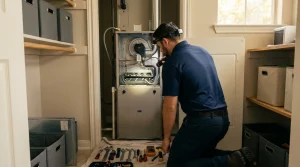
Clear a three to four foot working radius around the air handler or furnace. If it sits in a closet, empty the closet entirely, including shelving contents and anything stored on the floor.
Garage installations need the same treatment. Move vehicles, storage bins, and anything else within the working area, since the crew will be maneuvering equipment that weighs well over a hundred pounds through a confined space.
The Attic
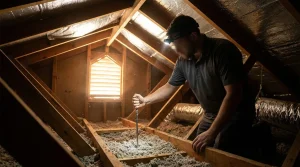
Most Houston homes place the air handler in the attic, which makes attic access by far the most common bottleneck. Clear the area beneath the access hatch and remove anything stored along the path from the hatch to the unit.
If your attic access is in a closet, empty that closet completely. Crews need room to position a ladder and pass equipment through the opening.
Attic work in Houston summers is genuinely dangerous, with temperatures exceeding 130 degrees by afternoon. Crews often start attic work early for this reason, which is another argument for shoulder-season scheduling.
The Outdoor Condenser
Clear at least two feet around the existing condenser pad on all sides, and more if the unit is being relocated. Trim back any shrubs and remove planters, hoses, and decorative items from the area.
The crew also needs a path from the driveway to the condenser wide enough to move equipment on a dolly. Gates should be unlocked and any obstacles cleared in advance, including anything stored along a side yard that the route passes through.
The Path Between
Equipment travels from the truck either through the house or around the outside of it. Clear hallways, remove rugs that could slide, and take down anything hanging in a doorway the crew will pass through repeatedly.
Protecting flooring is worth raising with the contractor directly. Most crews use drop cloths, but confirming beforehand avoids disappointment. The table below summarizes clearance requirements.
| Area | Clearance needed | Common obstacles |
| Indoor unit or closet | 3 to 4 feet on all accessible sides | Stored items, shelving contents |
| Attic hatch and path | Full clearance beneath and along route | Boxes, holiday storage, closet contents |
| Outdoor condenser | At least 2 feet on all sides | Shrubs, planters, hoses, fencing |
| Interior travel path | Clear hallway width | Rugs, furniture, hanging items |
| Electrical panel | Full access to the panel door | Storage, laundry items, shelving |
Electrical and Utility Access
The crew needs access to your electrical panel to disconnect the old system and connect the new one. Clear anything stacked in front of it, which in many Houston homes means temporarily relocating laundry room storage.
Know where your main water shutoff is located in case the condensate line requires work during the job. This is rarely needed, but locating it in advance takes a minute and saves searching under pressure.
If the new HVAC installation requires an electrical upgrade, such as a new circuit or a panel with available capacity, that should have been identified during the estimate. Discovering it on installation day causes real delays.
What Happens on Installation Day
Arrival and Walkthrough
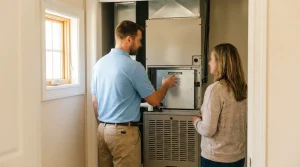
The crew typically arrives early and walks the job with you, confirming equipment locations, reviewing the scope, and identifying anything unexpected. This is your opportunity to ask questions before work starts.
Point out anything you are concerned about, including flooring you want protected, plants near the condenser, or areas of the attic holding fragile storage that should not be disturbed.
Removal and Installation
The old system is disconnected, refrigerant is recovered according to EPA requirements, and the equipment is removed. New equipment is set, connected to existing ductwork and electrical, and the refrigerant lines are brazed and evacuated.
Expect noise throughout the day. Removal and installation involve power tools, equipment moving through the house, and extended periods of activity in the attic directly above living space, which carries more than most people anticipate.
Startup and Testing
Once installed, the system is charged with refrigerant, tested for leaks, and started. The technician verifies airflow, checks temperature differential across the coil, confirms thermostat operation, and inspects the condensate drain.
Do not skip the walkthrough at the end of the job. Ask the technician to show you thermostat operation, filter location and size, the condensate drain, and the outdoor disconnect, and write those details down while someone is there to answer questions.
Houston-Specific Considerations
Humidity and System Sizing
Houston's humidity means proper sizing matters more here than in dry climates. An oversized system cools quickly and shuts off before removing enough moisture, leaving the house cold and clammy.
This should have been addressed during the estimate through a load calculation rather than a rule of thumb based on square footage. If your contractor sized the system by square footage alone, that is worth questioning before installation day.
Attic Conditions
Houston attics routinely exceed 130 degrees in summer, which affects both crew safety and equipment performance. Attic-installed air handlers work harder in these conditions, and adequate attic ventilation and insulation directly affect how the new system performs.
If your contractor recommends attic improvements alongside the HVAC system replacement, that recommendation usually has merit rather than being an upsell.
Storm Season Timing
Hurricane season runs from June through November, and equipment availability across the region tightens noticeably after any major storm. Scheduling replacement outside that window, or well before an anticipated need, avoids competing for both equipment and crew availability.
Permits and Inspection
Houston requires permits for HVAC replacement, and an inspection follows installation. Your contractor should handle both, but confirm the permit was pulled and ask when the inspection is scheduled.
Keep the paperwork somewhere you will find it later. Permit and inspection records matter for warranty claims and for documentation when you eventually sell the home, and reconstructing them years afterward is difficult.
After Installation
Run the system and pay close attention over the first several days of operation. Listen for unusual noises, check that all rooms are cooling evenly, and watch for water around the indoor unit, which would indicate a condensate drain issue.
Register the equipment warranty promptly, since many manufacturers require registration within a limited window after installation and deny coverage otherwise. Your contractor may handle this on your behalf, but confirm rather than assume.
Note the filter size and set a reminder to check it monthly. Houston's dust and humidity mean filters load faster here than in many climates, and a clogged filter is the most common cause of performance complaints in the first year.
Understanding basic air conditioning operation helps you recognize what normal sounds and cycles look like, which makes genuine problems easier to spot early. If something seems off in the first weeks, a Houston HVAC contractor should address it under the installation warranty rather than as a paid service call.
Key Takeaways
- Clear a three to four foot radius around the indoor unit, two feet around the outdoor condenser, and the entire path from your attic hatch to the air handler before the crew arrives.
- Plan for six to twelve hours without cooling, and arrange for infants, elderly family members, or anyone with respiratory conditions to spend the day elsewhere during Houston summers.
- Confine pets to a room the crew will not need and tell them where the pets are, since doors stay propped open for hours during installation.
- Empty any closet housing the indoor unit or the attic access, including shelving contents, since crews need room to position ladders and pass equipment through openings.
- Confirm your contractor pulled the required Houston permit and ask when inspection is scheduled, then keep that paperwork for warranty claims and eventual resale.
- Access problems cause most installation-day delays, not technical ones. Thirty minutes of clearing beforehand routinely saves hours on the day.
Frequently Asked Questions
How do I prepare my Houston home for HVAC installation?
Clear a working path from the driveway to the equipment, empty space around the indoor unit and outdoor condenser, ensure attic access is unobstructed, plan for six to twelve hours without cooling, and secure pets away from open doors.
How long does HVAC installation take?
Most residential replacements run six to twelve hours. Jobs involving ductwork modification, equipment relocation, or electrical upgrades can extend into a second day, so confirm the expected duration with your contractor beforehand.
Will my house be hot during installation?
Yes. The old system comes out before the new one goes in, so you will be without cooling for most of the day. In Houston summer, indoor temperatures can reach the nineties within hours.
How much space does the crew need around the equipment?
Three to four feet around the indoor air handler or furnace, and at least two feet around the outdoor condenser on all sides. If either sits in a closet, empty the closet completely including shelving contents.
What about attic access?
Clear the area beneath the hatch and the entire path from the hatch to the unit. If access is inside a closet, empty that closet so crews can position a ladder and pass equipment through the opening.
Should I schedule installation in summer?
Spring or fall is better when possible. Contractors are less booked, attic temperatures are safer for crews, and you avoid a day without cooling during Houston heat. Emergency replacements obviously cannot wait.
What should I do with pets?
Confine them to a room the crew will not need, or board them for the day. Tell the crew where pets are located, since doors stay propped open for hours and this is the most common way a pet escapes.
Do I need a permit for HVAC replacement in Houston?
Yes, and an inspection follows installation. Your contractor typically pulls the permit, but confirm rather than assume, and keep the paperwork for warranty claims and for documentation when you sell.
Why does system sizing matter so much in Houston?
Because of humidity. An oversized system cools quickly and shuts off before removing enough moisture, leaving the house cold and clammy. Proper sizing requires a load calculation rather than a square-footage rule of thumb.
What should I do after installation?
Run the system and watch for uneven cooling, unusual noises, or water near the indoor unit. Register the warranty promptly, note the filter size, and check the filter monthly since Houston dust loads filters quickly.
Conclusion
Preparing for HVAC installation is mostly about access, and that is genuinely good news because access is entirely within your control. Clear the radius around the indoor unit, empty whatever closet holds it or the attic hatch, open two feet around the condenser, unlock the gate, and make sure nothing is stacked in front of the electrical panel. Thirty minutes of that work reliably saves hours on the day.
The rest is planning around the discomfort. Six to twelve hours without cooling is manageable in April and genuinely hard in August, which is the strongest argument for shoulder-season scheduling when the replacement is not urgent. Arrange for vulnerable household members to be elsewhere, secure pets before doors start propping open, and use the end-of-day walkthrough to learn your filter size, drain location, and thermostat before the crew leaves.
Make installation day go smoothly with the right preparation.
Talk through your installation with the VeriChill team.