Inverter HVAC technology uses a variable frequency drive to continuously modulate compressor speed instead of cycling on and off, matching the system's output to whatever cooling or heating your home actually needs at that moment. For Houston homeowners running their equipment eight to nine months a year in 75-percent-plus humidity, that continuous adjustment translates into noticeably lower bills, quieter operation, and steadier comfort than any conventional single-stage system can deliver.
If you have been shopping for a new AC or heat pump in the last year or two, you have probably seen the word inverter attached to the pricier models and wondered whether it is real technology or marketing polish. It is real technology, and in a climate like ours, it changes almost everything about how the equipment behaves inside your walls.
The short version is that a conventional compressor knows two speeds: full blast and off. An inverter HVAC system now ships with every speed in between. That inverter vs conventional hvac difference sounds small on paper, but stretched across a Houston cooling season, it changes how much electricity an inverter air conditioner uses, how quiet your equipment runs, and how well the system pulls humidity out of the air on a swampy August afternoon.
Let us walk through what an inverter actually does, why Houston homeowners benefit more from it than homeowners in short-season markets, and where the technology genuinely earns its price and where it does not.
What Is Inverter HVAC Technology?
At the heart of any air conditioner or heat pump is a compressor, the pump that circulates refrigerant through the system. In a conventional system, that compressor is either fully on or fully off. When the thermostat calls for cooling, it starts at full speed. When the setpoint is satisfied, it shuts down completely. Every cycle begins with a hard startup and ends with an abrupt stop.
An inverter changes that behavior by adding a variable frequency drive that continuously adjusts the electrical input feeding the compressor motor. Rather than running at one fixed speed, the DC inverter compressor can operate anywhere from a whisper-quiet 20 percent output up to full capacity, and everywhere in between. The system reads what your home needs and delivers exactly that much cooling or heating.
This is what people mean when they talk about continuous adjustment or speed modulation. Instead of large temperature swings between cycles, the equipment settles into a long, gentle run that holds the room within a tight comfort band. For homes served by a Houston HVAC company, inverter technology is quickly becoming the default recommendation on premium tiers because the operating conditions here reward it so heavily.
How Inverter Compressors Actually Work
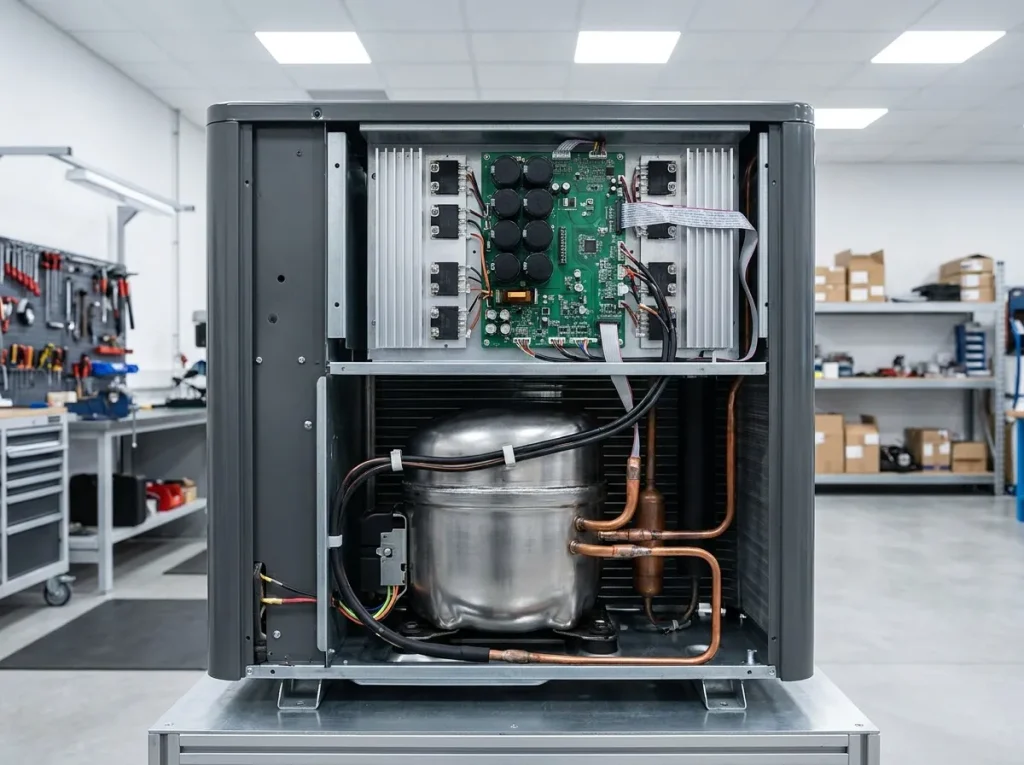
Understanding what is happening inside the outdoor unit helps explain why the technology performs so differently in daily use.
- The variable frequency drive converts the incoming alternating current into direct current, then rebuilds it at a frequency that dictates compressor speed. Higher frequency, faster compressor, more cooling. Lower frequency, slower compressor, gentler cooling.
- Soft start operation eliminates the huge inrush of electricity a conventional compressor draws when it kicks on at full speed. That startup energy elimination is one of the reasons inverter systems are easier on your electrical service and on the compressor itself over the equipment's life.
- Precise output matching lets the equipment settle at whatever partial capacity the home actually needs at that moment, rather than overshooting the setpoint and then shutting off. This is what technicians call load following, and it is where most of the efficiency and comfort gains live.
- Efficient part-load operation is the payoff. Most homes need full cooling capacity only during the peak hours of the hottest days. The rest of the time, the load is partial, and inverter equipment operates at its highest efficiency at those partial loads rather than at full blast.
| Feature | Conventional (Single-Stage) | Inverter |
|---|---|---|
| Compressor speed | On or off | Continuously variable |
| Startup | Hard current inrush | Soft start |
| Run pattern | Short bursts, then off | Long, gentle runs |
| Best efficiency at | Full load | Partial load |
| Humidity control | Modest | Strong |
Why Houston's Climate Rewards Inverter Technology
Inverter equipment is worth the money in many climates. In Houston, the math is especially favorable, and it comes down to how our weather stacks the deck.
- A cooling season stretching eight to nine months means the equipment is running most of the year. Every efficiency percentage point compounds across thousands of runtime hours, and inverter systems accumulate those savings in ways short-season markets never see.
- Relative humidity above 75 percent for long stretches rewards the long, gentle run times inverter equipment produces. Extended runs at reduced capacity pull far more moisture out of the air than the short, aggressive cycles of single-stage equipment, which shut off before the coil has spent enough time removing water vapor.
- Partial-load conditions dominate our days, not the 100-degree extremes. Most Houston afternoons sit in the 88 to 95 degree range, where an inverter can dial down to a comfortable, efficient output while a single-stage system slams on and off, wasting energy at each startup.
- Overnight cooling loads drop sharply as temperatures fall into the mid-70s. Inverter equipment quietly reduces output to match, keeping the house steady without waking anyone up. Single-stage equipment either cycles all night or leaves the humidity climbing, and neither is comfortable.
Because Houston homes ask their equipment to work harder and longer than homes in most of the country, the efficiency at partial load that inverter compressors deliver has an outsized effect on both the electric bill and how the house actually feels. This is a large part of why inverter ac Houston homeowners install today typically outperforms the older-generation single-stage equipment it replaces. This is a large part of why our team pairs inverter systems with recommendations for AC installation services in Houston whenever a homeowner is seriously comparing top-tier equipment.
Real-World Comfort and Efficiency Gains
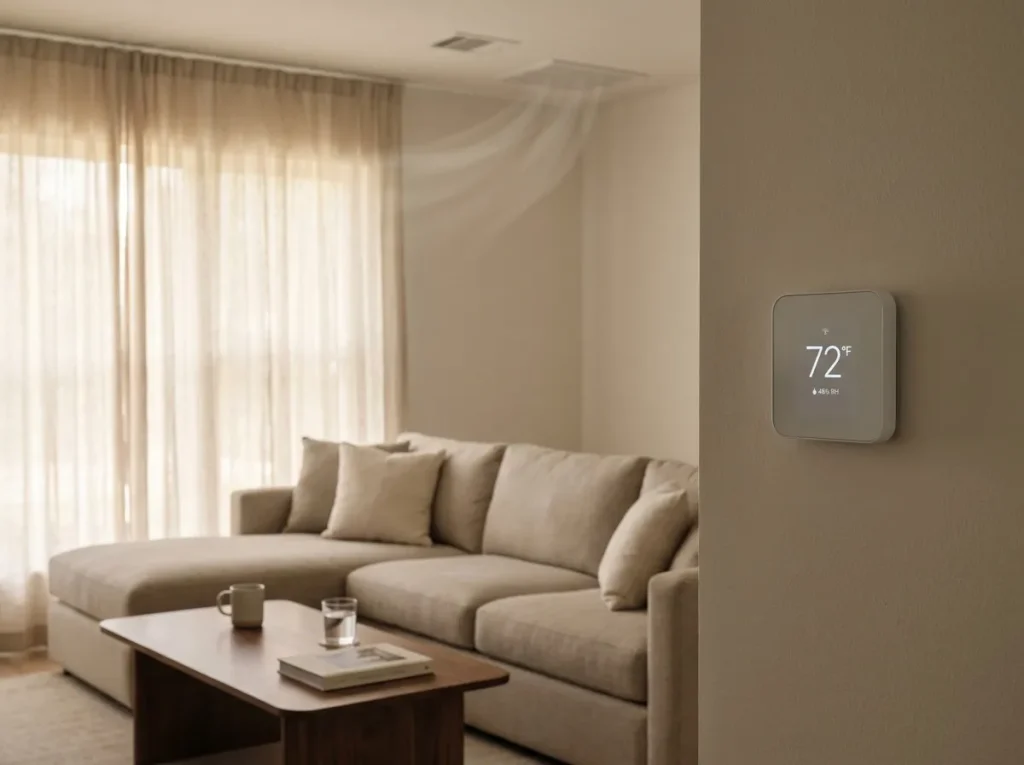
The specification sheets and efficiency ratings tell part of the story, but the day-in, day-out difference shows up in ways homeowners describe consistently after we install an inverter system.
- Steadier temperatures throughout the day. Rather than the two-degree swings a single-stage system produces as it cycles, an inverter holds the setpoint tightly. Rooms feel more even and comfortable at the same thermostat number.
- Better humidity control on muggy days. Because the system runs longer at lower output, more moisture leaves the air and the house feels cooler at higher setpoint temperatures. Many homeowners find they can set the thermostat a degree or two higher without giving up any comfort, which cuts consumption further.
- Noticeably quieter operation, especially at night. Inverter compressors and their variable-speed outdoor fans are engineered to run softly at reduced output. On most nights, the equipment is barely audible from inside the house.
- Real energy savings across the cooling season. The AHRI-rated SEER2 numbers on inverter equipment are typically well above the Southeast minimum of 14.3, and the actual seasonal savings often exceed even those ratings because Houston's partial-load conditions favor the technology. ENERGY STAR's guidance on HVAC quality installation makes clear that inverter-driven and variable-speed equipment only delivers its rated efficiency when the installation itself is done to the specification the equipment expects.
Where Inverter Technology Fits Best in Houston Homes
Inverter equipment is not automatically the right choice for every home, but there are situations where it earns its place quickly.
Homes where comfort inconsistency has been an ongoing problem
If a room bakes, humidity feels high even when the thermostat is low, or the temperature swings noticeably between cycles, inverter technology usually delivers dramatic day-one improvement.
Two-story homes with upstairs cooling struggles
The long, gentle run times inverter equipment produces move more air overall, giving upstairs registers time to actually condition the space rather than getting a short shot of cold air and then nothing.
Homeowners planning to stay in the house long enough to recoup the investment
Inverter equipment carries a premium at installation, but the savings across a Houston cooling season compound each year. For owners staying five years or more, the math typically works in favor of the upgrade.
Homes with quiet-time expectations
Bedroom-adjacent equipment, home offices, or households sensitive to compressor noise benefit significantly from how softly inverter systems run.
For homeowners weighing whether inverter cooling makes sense alongside their heating equipment installation in Houston, we walk through insulation, ductwork condition, ceiling heights, window orientation, and airflow distribution before recommending any particular tier. The equipment is only as good as the design that carries it.
Where Inverter Technology Is Overkill
Because our team's job is to give straight advice rather than sell the most expensive option, it is worth naming when a conventional single-stage or two-stage system is the smarter buy.
- Small, single-story, well-insulated homes with modest cooling loads often see limited practical gain from inverter technology because the load is uniform enough that a two-stage system already handles it comfortably.
- Short ownership horizons under three or four years rarely give the equipment enough time to recoup the premium at installation.
- Extremely tight budgets where the difference between tiers determines whether the customer can finance the project through Wells Fargo, Synchrony Bank, or Goodleap. In those situations, a well-installed two-stage system with SEER2 in the 16-plus range is a strong Houston choice at a more accessible price point.
- Homes with problems that no equipment can fix. Undersized ductwork, missing insulation, or major air-sealing issues will hobble any system. Fixing the envelope first often matters more than moving from two-stage to inverter equipment.
Key Takeaways
- Inverter HVAC technology uses a variable frequency drive to continuously modulate compressor speed rather than cycling on and off, matching the system output to real-time home load
- Houston's eight to nine month cooling season and 75-percent-plus humidity multiply the value of the technology compared to short-season markets
- Real-world benefits show up as steadier temperatures, stronger humidity control, quieter operation, and lower seasonal electric bills
- Inverter equipment pairs especially well with two-story homes, comfort-inconsistent homes, and homeowners planning to stay in the property long enough to recoup the premium
- A two-stage SEER2 16-plus system is often the smarter choice for smaller, well-insulated homes or shorter ownership horizons
- The equipment is only as effective as the installation design, which is why insulation, ductwork condition, and airflow distribution matter as much as the compressor tier
Frequently Asked Questions
Is inverter HVAC technology worth the extra cost in Houston?
For most Houston homes with a five-year-plus ownership horizon, yes. The eight to nine month cooling season and sustained humidity give the technology thousands of runtime hours per year to convert its efficiency advantage into real bill savings. Add the comfort and quiet benefits and the value case becomes strong. The exceptions are small, well-insulated homes with modest loads or short ownership horizons where a well-installed two-stage system is the better financial fit.
How much quieter is an inverter system compared to a conventional one?
Noticeably quieter, especially at night. Because the compressor and outdoor fan run at reduced speed most of the time rather than at full blast, the equipment operates well below the sound level of a single-stage system. Many customers tell us they can barely hear the unit from inside the house, and outdoor conversations near the condenser are no longer interrupted. The difference is most obvious during overnight cooling when the equipment is dialed back to match the lighter overnight load.
Do inverter systems really pull more humidity out of the air?
Yes, and the reason is straightforward. Humidity removal depends on how long the coil stays cold and how much air passes across it. Inverter systems produce long, gentle runs at reduced output, giving the coil far more time to condense moisture out of the air. Single-stage systems run in short, aggressive bursts that satisfy the temperature setpoint before enough dehumidification has happened. In Houston's 75-percent-plus humidity climate, that difference is easy to feel.
Will an inverter system last longer than a conventional one?
Typically, yes, and the reason is mechanical. Every startup of a single-stage compressor is a stress event, drawing a big inrush of current and putting hard mechanical load on the internal components. Inverter systems eliminate most of those hard starts by ramping up smoothly and running longer at lower output. Fewer stress events across the equipment's life generally translates into better longevity, though installation quality, refrigerant charge, and outdoor unit protection still matter enormously.
Can I use an inverter outdoor unit with my existing indoor equipment?
Sometimes, but only when the indoor coil, blower, and control system are compatible and correctly matched. Inverter systems achieve their efficiency and comfort gains through tight communication between components, so mixing new inverter equipment with older indoor gear often loses most of the benefit. In practice, an inverter installation is usually a full system replacement rather than a partial upgrade, which is part of the price and part of why the assessment matters.
Conclusion
Inverter HVAC technology is one of those upgrades where the specification sheet undersells what the equipment actually does in a home. In Houston's climate, the combination of a long cooling season, high humidity, and partial-load conditions means the technology has thousands of hours each year to demonstrate its efficiency and comfort advantages.
At VeriChill, our team evaluates whether an inverter system is the right call for your home by looking at the full picture: how you use the house, your insulation and ductwork condition, ceiling heights, window orientation, airflow distribution, and how long you plan to stay. Sometimes inverter equipment is the clear winner. Sometimes a well-designed two-stage system delivers most of the same comfort at a more accessible price. The goal is matching the right technology to your specific situation, not selling complexity you do not need.
Ready to see whether inverter technology fits your home? Call us at 281-559-6995 or visit verichill.com to schedule a consultation. Financing through Wells Fargo, Synchrony Bank, and Goodleap is available for qualified homeowners.