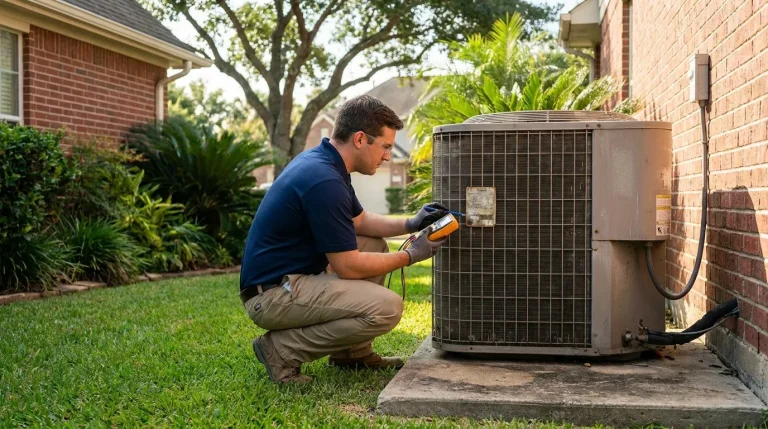
The R-454B and R-32 refrigerant question matters to Houston homeowners because 2026 is the year the industry moves its new equipment off R-410A. Under the federal AIM Act, manufacturers are phasing down high-GWP refrigerants, so new AC and heat pump systems now ship with lower-GWP replacements, primarily R-454B and R-32. These are A2L refrigerants, classified as mildly flammable, and they require installers with updated training and tools. Here is the reassuring part: your existing R-410A system is not banned; it will keep running, and R-410A remains available to service it. The change mainly affects what you buy new, and in cooling-dominated Houston, the refrigerant your next system uses is worth understanding before you shop.
If you have started shopping for a new AC or heat pump, you have probably noticed a new set of letters and numbers on the spec sheets. For years, residential systems ran on R-410A. Starting with 2026 equipment, that is changing, and the refrigerants taking its place, R-454B and R-32, come with a few things worth understanding before you sign anything.
This is not a crisis, and it is not a reason to rush out and replace a system that is working fine. It is a regulatory transition that has been coming for a while, and it changes what new equipment uses, how it is handled during installation, and a couple of practical points for buyers. In a market like Houston, where your AC runs eight to nine months a year and the cooling side dominates your energy use, the refrigerant in your next system is more than a footnote.
Let us walk through what actually changed, what R-454B and R-32 are, what the A2L classification means for safety, and what it all means when you are the one buying.
What Changed and Why: The AIM Act
The shift away from R-410A is not a manufacturer preference. It is federal policy, and understanding the why makes the rest of the transition easier to understand.
The refrigerant phasedown
The American Innovation and Manufacturing Act, or AIM Act, directs a nationwide phasedown of high-GWP hydrofluorocarbon refrigerants. GWP stands for global warming potential, a measure of how much a gas contributes to warming compared with carbon dioxide. R-410A has a high GWP, so it is on the list to be reduced. You can read the EPA's background on HFCs and the AIM Act for the full regulatory picture, but the short version is that production of high-GWP refrigerants is being stepped down over time.
Why 2026 is the pivot year
To meet the phasedown targets, manufacturers redesigned their residential equipment to run on lower-GWP refrigerants, and 2026 is when that new equipment becomes the standard on showroom floors. So if you buy a new system now, it will almost certainly use R-454B or R-32 rather than R-410A. This is a manufacturing and sales transition, not a switch that flips inside your existing home.
What it does not mean
It does not mean your current R-410A system is illegal, unsafe, or about to stop working. The phasedown targets new production, not the systems already installed in millions of homes. R-410A remains available to service and repair existing equipment for years to come. You are not being forced to replace anything before its time.
Meet R-454B and R-32
The two refrigerants replacing R-410A in most residential equipment are R-454B and R-32. They are different formulations, but from a homeowner's point of view, they solve the same problem in similar ways.
R-454B
R-454B is a lower-GWP blend that many major manufacturers selected as their primary R-410A replacement for residential AC and heat pump systems. It delivers cooling performance comparable to R-410A while carrying a substantially lower global warming potential, which is exactly what the phasedown is designed to encourage.
R-32
R-32 is a single-component refrigerant, also lower-GWP, adopted by a number of manufacturers for the same reason. Like R-454B, it offers efficient performance in residential equipment and a much smaller climate footprint than R-410A.
What they have in common
Both are designed to be drop-in replacements at the product level, meaning manufacturers built new systems around them. Both cut GWP dramatically compared with R-410A. And both share one property that changes how they must be handled: they are classified A2L.
| Refrigerant | Status | GWP profile | Safety class |
|---|---|---|---|
| R-410A | Phasing down for new equipment | High | A1 (non-flammable) |
| R-454B | Primary 2026 replacement | Much lower | A2L (mildly flammable) |
| R-32 | Common 2026 replacement | Much lower | A2L (mildly flammable) |
What A2L Means for Safety
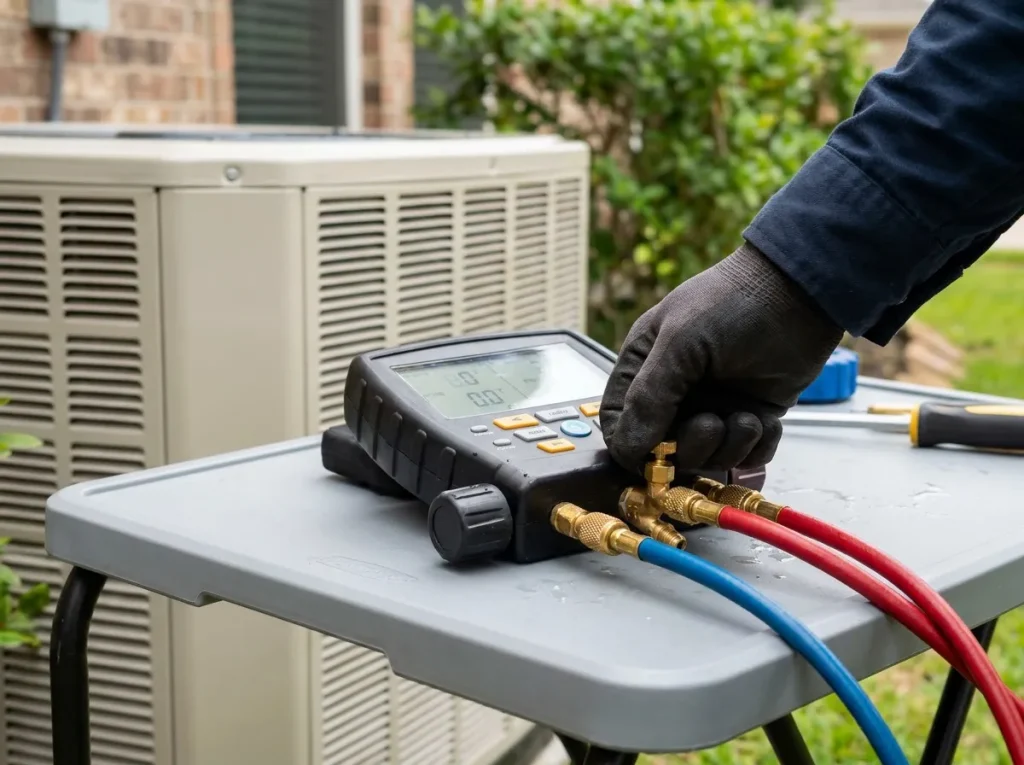
The A2L classification is the detail that gets the most attention, and it deserves a clear, calm explanation rather than either hand-waving or alarm.
Mildly flammable, not explosive
A2L means mildly flammable. These refrigerants require a specific concentration and an ignition source to burn, and they burn slowly rather than exploding. They are a different category from the highly flammable refrigerants used in some other applications. The industry, equipment standards, and building codes were all updated to accommodate A2L refrigerants safely in residential settings before this equipment reached the market.
Engineered safeguards
New A2L systems include built-in safeguards, such as leak detection and mitigation features on many models, designed to manage the small additional risk the classification introduces. The equipment was engineered around the A2L property from the ground up, not adapted after the fact.
Why installer training matters more now
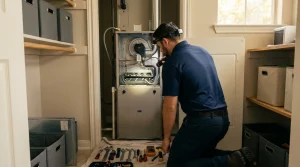
The practical consequence for homeowners is that A2L refrigerants require installers with updated training, updated tools, and updated procedures for handling, charging, and leak checking. This is the single most important buyer takeaway on the safety side: the refrigerant is safe when the system is installed correctly by a properly trained team. Choosing an installer who is current on A2L equipment is not optional, and it is one more reason to work with experienced providers of new HVAC system work rather than the lowest bid.
What This Means When You Buy in Houston

Houston's climate raises the stakes on the cooling side, so the refrigerant transition is worth a moment of attention when you shop, even though the fundamentals of choosing a system have not changed.
The refrigerant matters more here because cooling dominates
Our eight-to-nine-month cooling season and 75-percent-plus humidity mean your system spends the overwhelming majority of its life cooling. Refrigerant properties therefore play out over far more runtime in a Houston home than in a heating-dominated climate. That does not mean one refrigerant is dramatically better than another for you; both R-454B and R-32 perform well. It means the transition is simply more relevant here because you use the cooling side so hard. This applies whether you are weighing a straight cooling system through residential AC installation or a heat pump that also handles your home heating installation.
Do not buy last year's inventory just to avoid the change
As the transition happens, some remaining R-410A inventory may still be around. Chasing an older-refrigerant system to sidestep A2L is usually the wrong move, because you would be buying into the refrigerant that is being phased down rather than the one with a long future ahead of it. New R-454B and R-32 systems are the forward-looking choice.
Sizing and installation still matter most
The refrigerant is a real consideration, but it does not change the fundamentals. Correct sizing, based on an assessment of insulation, ductwork, ceiling heights, window orientation, and airflow distribution, still matters more than the refrigerant label, because oversizing remains the most common HVAC problem our team sees in Houston. A well-chosen, correctly sized two-stage system on a modern refrigerant, installed by a team trained on A2L equipment, is the combination that actually serves a Houston home.
Your existing system is fine to keep
If your current R-410A system is running well, there is no need to replace it early over the refrigerant change. Service it, maintain it, and replace it on its own timeline. When that time comes, the new-refrigerant equipment will be the standard, and a trained installer will handle the transition seamlessly.
Key Takeaways
- In 2026, new AC and heat pump equipment moves off R-410A to lower-GWP refrigerants, primarily R-454B and R-32, driven by the federal AIM Act phasedown
- Your existing R-410A system is not banned and will keep running; R-410A remains available to service it
- R-454B and R-32 are A2L refrigerants, meaning mildly flammable, and equipment was engineered and code-approved around that property with built-in safeguards
- A2L equipment requires installers with updated training, tools, and procedures, which makes installer selection more important than ever
- In cooling-dominated Houston, the refrigerant transition is especially relevant because your system runs on the cooling side eight to nine months a year
- Correct sizing and quality installation still matter more than the refrigerant label, and oversizing remains Houston's most common HVAC problem
Frequently Asked Questions
Will R-410A refrigerant become unavailable for my existing system?
Not anytime soon. The AIM Act phases down production of high-GWP refrigerants for new equipment, but it does not ban servicing the systems already installed in millions of homes. R-410A remains available to charge and repair existing systems for years to come. If your current system is running well, you do not need to replace it early over the refrigerant change. Maintain it and replace it on its normal timeline, at which point new-refrigerant equipment will be the standard.
Is R-454B or R-32 safe for a residential home?
Yes. Both carry an A2L classification, which means mildly flammable, requiring a specific concentration and an ignition source to burn, and they burn slowly rather than explosively. This is a different and much lower-risk category than the highly flammable refrigerants used in some other applications. Building codes, equipment standards, and the systems themselves were all updated to handle A2L refrigerants safely in homes before this equipment reached the market, and many new systems include leak detection and mitigation features. The key to safety is correct installation by a team trained on A2L equipment.
Should I buy a new system now or wait?
Base the decision on your current system's condition, not the refrigerant transition. If your system is aging, inefficient, or failing, buying now gets you modern, forward-looking equipment on R-454B or R-32. If your system is running well, there is no need to rush. Either way, avoid chasing leftover R-410A inventory to sidestep the change, because that means buying into the refrigerant being phased down. The new refrigerants are the choice with a long future ahead of them.
Does the new refrigerant change how well my AC cools in Houston?
No meaningful difference in comfort. Both R-454B and R-32 deliver cooling performance comparable to R-410A, and manufacturers engineered their new systems around these refrigerants for efficient operation. What actually determines how well your AC cools and dehumidifies a Houston home is correct sizing, proper installation, good ductwork, and appropriate staging, far more than the refrigerant type. A correctly sized two-stage system on a modern refrigerant will handle our humidity and heat well.
Do I need a specially trained installer for A2L refrigerant systems?
Yes, and this is the most important practical point. A2L refrigerants require installers with updated training, tools, and handling procedures for charging, leak checking, and safe installation. The refrigerant is safe when the system is installed correctly by a properly trained team, so choosing an installer who is current on A2L equipment matters more than ever. This is one of the clearest reasons to work with an experienced, properly equipped HVAC company rather than choosing on price alone.
Conclusion
The 2026 move to R-454B and R-32 is a real change, but it is a manageable one. It is driven by the AIM Act phasedown of high-GWP refrigerants, it affects the equipment you buy new rather than the system already in your home, and it comes with an A2L safety classification that the entire industry prepared for well in advance. Your existing R-410A system is fine, and R-410A is still available to service it.
At VeriChill, our team stays current on A2L equipment so the refrigerant transition is a non-event for the homeowner. When you are ready for a new system, we help you choose correctly sized, well-staged equipment on a modern refrigerant and install it with the training and tools these systems require. In cooling-dominated Houston, that combination is what keeps your home comfortable for the long run.
Have questions about what refrigerant your next system should use, or whether it is time to replace at all? Call us at 281-559-6995 or visit verichill.com to schedule a consultation.