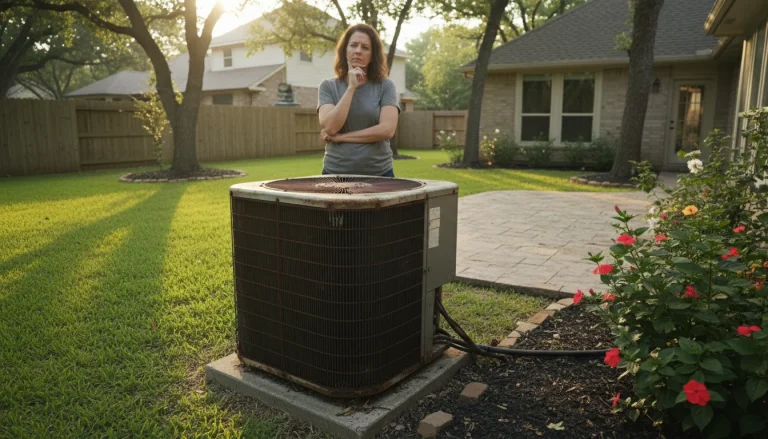
If your Houston HVAC system is over 10 years old, driving up your energy bills, struggling with humidity, or needing frequent repairs, it's likely time to replace rather than repair. Recognizing these warning signs early saves you from emergency breakdowns during Houston's brutal summer months.
Nobody wants to think about replacing their HVAC system until they have to. But waiting until your system dies on a 98°F August afternoon puts you in the worst possible position: stressed, uncomfortable, and making a rushed decision on one of the biggest home investments you'll face. VeriChill helps Houston homeowners evaluate their HVAC systems and plan replacements proactively, before comfort becomes a crisis.
Houston's climate puts extraordinary demand on HVAC equipment. Your system runs eight to nine months of the year, battling heat and humidity that most parts of the country never see. That extended workload accelerates wear, shortens system lifespans, and makes recognizing replacement signs especially important in our market.
The Warning Signs: When Repair Stops Making Sense
The clearest indicators that your Houston HVAC system needs replacement rather than another repair are age beyond 10 to 15 years, rising energy bills without usage changes, frequent repair calls, poor humidity control, inconsistent temperatures, unusual noises, and use of outdated refrigerants.
Sign 1: Your System Is Over 10 Years Old
Age is the single biggest predictor of system reliability. The Department of Energy notes that 88% of U.S. homes have air conditioning, and units typically lose significant efficiency after a decade of operation. In Houston, where your AC runs far more hours annually than the national average, that efficiency decline hits harder and faster. A system that was properly sized and installed 12 years ago is running on borrowed time in our climate.
Sign 2: Energy Bills Keep Climbing
If your electricity bills are increasing year over year without changes in your usage habits, your HVAC system is likely losing efficiency. Aging compressors, worn fan motors, and degraded refrigerant charges all force the system to work harder to produce the same cooling output. In Houston, where HVAC can account for 50% or more of your electricity bill during summer months, even a 10-15% efficiency decline translates to noticeable cost increases.
Sign 3: Repairs Are Becoming a Regular Thing
One repair call per year is normal maintenance territory. Two or three repair visits in a single cooling season? That's a pattern indicating the system is failing at the component level. Here's a useful framework: if the repair cost multiplied by the system's age exceeds the cost of a new system, replacement is the financially sound choice. Houston's extended cooling season means repair-prone systems have more opportunities to break down.
| Warning Sign | What You'll Notice | Houston Context |
| System age 10+ years | Declining performance, older technology | Houston run times accelerate aging vs national averages |
| Rising energy bills | Higher costs without usage changes | 50%+ of the summer electric bill is HVAC in Houston |
| Frequent repairs | Multiple service calls per season | An extended cooling season means more failure opportunities |
| Poor humidity control | Sticky, clammy indoor air despite cool temps | Houston's humidity demands strong dehumidification |
| Inconsistent temperatures | Hot/cold spots throughout the home | May indicate a failing blower, ductwork, or capacity loss |
| Unusual noises | Grinding, rattling, squealing, banging | Worn components signaling imminent failure |
| R-22 refrigerant | Old system using phased-out refrigerant | R-22 is no longer manufactured; refills are expensive |
Houston-Specific Replacement Triggers
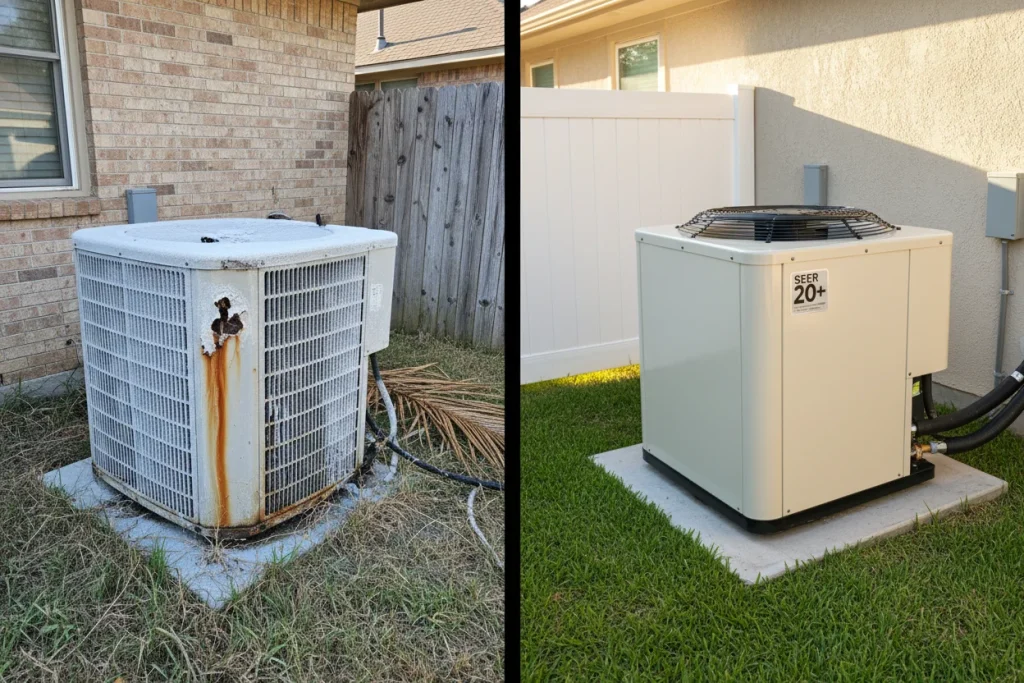
Houston's climate creates unique HVAC replacement triggers that don't apply in milder markets. Persistent humidity problems, systems that can't maintain temperature during peak summer, and dependence on R-22 refrigerant are Houston-specific red flags.
Sign 4: Your Home Feels Humid Even When the AC Is Running
This is the signature Houston HVAC problem. If your air conditioning drops the temperature to 72°F but the air still feels sticky and damp, your system isn't removing enough moisture. Oversized systems, aging compressors, and short-cycle single-stage units are the usual culprits. In Houston, where outdoor humidity regularly exceeds 80%, your HVAC's dehumidification capability isn't optional; it's essential for real comfort.
Sign 5: Rooms Have Inconsistent Temperatures
Some rooms feel like a meat locker, while others stay warm. This often signals a failing blower motor, deteriorating ductwork, or a system that's lost capacity over time. Houston homes with ductwork in unconditioned attics are especially prone to this issue as duct insulation degrades and connections loosen over the years of thermal cycling.
Sign 6: Strange Sounds Have Become Normal
Grinding from the compressor, rattling from loose components, squealing from worn belts, or banging from the air handler aren't quirks of an aging system. They're warnings. Each sound point to specific component failures that, left unaddressed, can cascade into a complete system breakdown. If your system has developed a soundtrack, it's time for a serious conversation about hvac replacement.
Sign 7: Your System Uses R-22 Refrigerant
R-22 (Freon) was phased out of production under EPA regulations due to ozone depletion concerns. If your system runs on R-22, refills are increasingly scarce and expensive. More importantly, any system still using R-22 is at least 10 years old and almost certainly operating below its original efficiency. Converting to a modern system with R-410A or newer refrigerants is both environmentally responsible and financially practical.
- Humidity problems aren't just uncomfortable; they also pose a mold risk. Persistent indoor humidity above 60% in Houston's warm climate promotes mold growth in walls, ceilings, and ductwork.
- Inconsistent temperatures waste energy. Your system works harder to compensate for rooms that aren't receiving adequate airflow.
- Unusual noises get worse, not better. Component failures are progressive. Today's rattle is next month's complete breakdown.
- R-22 systems are ticking time bombs. When the compressor fails on an R-22 system, the repair cost typically exceeds the value of the aging equipment.
Making the Replacement Decision

The replacement decision comes down to three factors: system age, repair cost trajectory, and comfort performance. If two or more warning signs apply to your system, a professional evaluation will clarify whether repair or replacement is the smarter investment.
The Repair vs Replace Framework
Not every aging system needs to be replaced immediately. A 9-year-old system with a single component failure might have years of life left after targeted repair. But a 14-year-old system with rising bills, humidity problems, and a recent compressor repair? That's a system telling you it's done.
Ask yourself: Is my system over 10 years old? Have I spent significant money on repairs in the past two years? Do I have comfort complaints that repairs haven't resolved? If you answered yes to two or more, it's worth scheduling a professional evaluation.
Why Proactive Replacement Beats Emergency Replacement
Planning a new HVAC system installation on your timeline gives you the luxury of research, competitive evaluations, and scheduling flexibility. Emergency replacements during peak Houston summer mean limited equipment availability, rushed decisions, and potentially days without air conditioning. The financial and comfort cost of waiting until failure far exceeds the cost of planning ahead.
VeriChill provides no-pressure evaluations that give you honest answers about your system's remaining life. If repair makes sense, we'll tell you. If replacement is the smarter path, we'll show you why and walk through your options.
Key Takeaways
- System age beyond 10 years in Houston's demanding climate signals declining reliability and efficiency that repairs can't fully restore.
- Rising energy bills without usage changes point to efficiency loss that accelerates with each year of extended Houston run times.
- Humidity problems despite cool temperatures indicate your system can't handle Houston's moisture demands; a clear replacement trigger.
- R-22 refrigerant systems should be replaced proactively before a compressor failure forces an expensive emergency decision.
- Proactive replacement on your schedule saves money and stress compared to emergency replacement during the peak Houston summer.
- A professional evaluation gives you clear data on whether repair or replacement is the smarter financial path for your specific system.
Frequently Asked Questions
How long do HVAC systems last in Houston?
AC systems typically last 12 to 15 years in Houston due to extended run times. Furnaces can last 20+ years since they run infrequently. Heat pumps fall in the 12 to 15-year range.
Should I repair or replace my 12-year-old HVAC system?
It depends on the specific failure, repair cost, and overall system performance. If the system has multiple warning signs and repair costs are mounting, replacement is usually the better financial decision.
Can I replace just the AC and keep my furnace?
Technically, yes, but mismatched equipment can reduce efficiency and void warranties. Your contractor should evaluate compatibility before recommending a partial replacement.
What's the most common reason Houston homeowners replace their HVAC?
Rising energy bills combined with declining comfort, especially humidity control problems. Houston's climate demands strong dehumidification that aging systems can't maintain.
How much can I save on energy bills with a new HVAC system?
Upgrading from a 10+ year-old system to a modern, high-efficiency unit can noticeably reduce cooling energy costs, though exact savings depend on your home and usage patterns.
Is it worth replacing my HVAC before it completely fails?
Absolutely. Proactive replacement gives you time to research options, compare contractors, schedule installation at your convenience, and avoid emergency replacement during peak demand.
What refrigerant do new HVAC systems use?
Most new systems use R-410A, which doesn't deplete the ozone layer. Some newer models use R-454B or similar next-generation refrigerants with even lower environmental impact.
Does VeriChill handle old equipment disposal?
Yes. VeriChill removes your old equipment, recovers refrigerant per EPA regulations, and handles proper disposal as part of every residential hvac installation.
What if only my indoor or outdoor unit needs to be replaced?
Replacing only one component can create efficiency mismatches. Your contractor should evaluate both components and recommend the approach that delivers the best long-term performance and warranty coverage.
How quickly can VeriChill install a new system?
Most installations are completed in a single day. Complex projects involving ductwork modifications or equipment conversions may take two days. We schedule based on your availability.
Conclusion
Recognizing the signs that your Houston HVAC system needs replacement puts you in control of one of your home's most important comfort decisions. Whether it's rising energy bills, persistent humidity, strange noises, or simply a system that's outlived its productive years, catching these signals early lets you plan rather than panic. Houston's climate doesn't forgive HVAC failure, and proactive replacement ensures you're never caught without cooling when you need it most.Ready for an honest assessment of your system? Contact VeriChill for a free evaluation. We'll tell you exactly where your system stands and whether repair or replacement makes the most sense for your home.