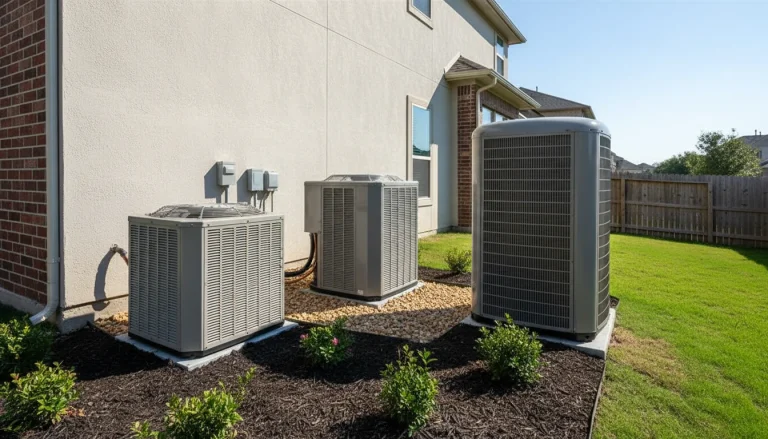
For most Houston homes, a two-stage system hits the sweet spot between comfort, efficiency, and value. Single-stage works for tighter budgets. Variable speed delivers the best humidity control and quietest operation, but costs the most upfront. Your best choice depends on your home's size, your comfort priorities, and how you use your space.
Choosing between HVAC system tiers is one of the most important decisions Houston homeowners face during a new HVAC installation. The difference isn't just about equipment cost. It's about how your home feels day to day, how well humidity gets managed, how much noise you hear, and what your energy bills look like over the next 15 to 20 years.
This comparison breaks down how each tier actually works, what matters most in Houston's climate, and which system type fits different home situations.
How Do These Three System Types Actually Work?
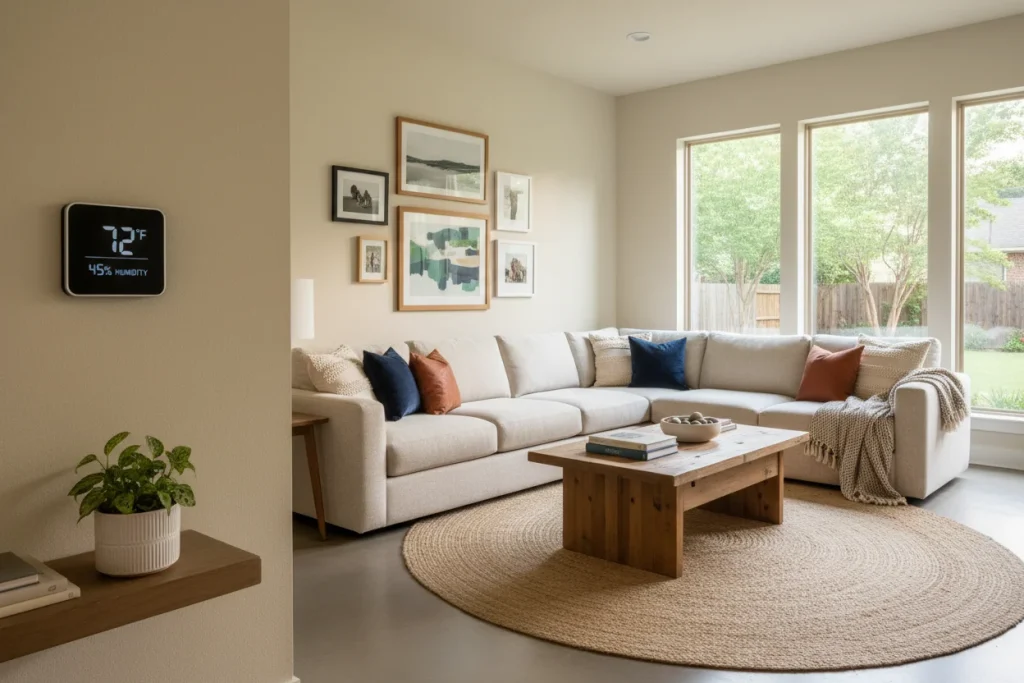
Single-stage systems run at full capacity or not at all. Two-stage systems have a low and high setting, running at reduced output most of the time. Variable speed systems continuously adjust their output from roughly 25% to 100% capacity, matching your home's exact needs moment to moment.
Think of it like driving. A single-stage HVAC system is like a car with only two options: floored or parked. It blasts at full power until it reaches the thermostat setting, then shuts off completely. This on-off cycling is the least efficient approach and creates the most noticeable temperature swings.
A two-stage system adds a cruise control option. It runs at a lower speed, roughly 60% to 70% capacity, most of the time. That lower stage handles most of Houston's cooling demand and kicks up to full power only during the hottest afternoons. The longer, gentler run times improve both efficiency and humidity removal.
A variable-speed system is like adaptive cruise control, constantly fine-tuning itself. The compressor and blower adjust continuously across a wide range of speeds, delivering exactly the output your home needs at any given moment. It runs almost constantly but at very low, efficient levels, maintaining remarkably consistent temperatures and superior humidity control.
| Feature | Single-Stage | Two-Stage | Variable Speed |
| Output Levels | Full on or off | Low (~65%) and high (100%) | Continuously adjustable (25-100%) |
| Run Time Pattern | Short, frequent cycles | Longer runs at low stage | Near-continuous at varying speeds |
| Temperature Consistency | Noticeable swings (2-4°F) | More even (1-2°F swings) | Very consistent (within 0.5°F) |
| Humidity Control | Basic | Good | Excellent |
| Noise Level | Loudest (full blast each cycle) | Quieter most of the time | Quietest (low-speed operation) |
| Equipment Cost | Lowest | Moderate | Highest |
Which System Handles Houston's Humidity Best?
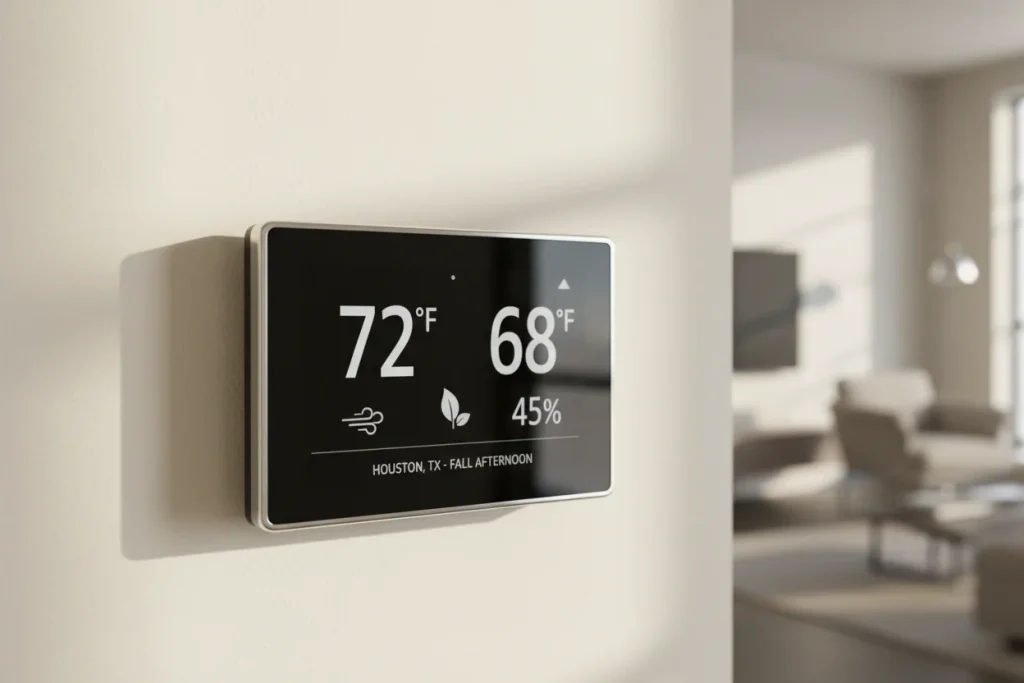
Variable speed systems deliver the best humidity control by far, followed by two-stage systems. Single-stage systems are the weakest at humidity management because their short run cycles don't give the system enough time to pull moisture from the air before shutting off.
Here's where Houston's climate makes this decision more impactful than in most markets. With average humidity exceeding 75% for much of the year, your HVAC system's dehumidification ability is just as important as its cooling. And dehumidification requires run time.
When an air conditioner runs, warm, humid air passes over the cold evaporator coil. Moisture condenses on the coil and drains away. The longer the system runs, the more moisture it removes. Single-stage systems cycle on and off quickly, often before they've had a chance to meaningfully reduce indoor humidity. The result? Your thermostat reads the right temperature, but the air still feels clammy and uncomfortable.
Two-stage systems improve this significantly. By running at lower capacity for longer stretches, they pull substantially more moisture from the air. For most Houston homes, two-stage dehumidification is sufficient to maintain comfortable humidity levels without supplemental equipment.
Variable speed systems take humidity control to another level. Their near-continuous operation at precisely matched output means the evaporator coil is always working, always pulling moisture. Homeowners with variable-speed systems consistently report that their homes feel noticeably drier and more comfortable, even compared to two-stage systems.
The DOE's consumer guide to central air conditioners and heat pumps notes that variable-capacity systems offer exceptional dehumidification and comfort, especially during moderate weather, when standard systems tend to short-cycle.
| Humidity Metric | Single-Stage | Two-Stage | Variable Speed |
| Run time per cycle | Short (8-12 min) | Long (15-25 min at low) | Near-continuous |
| Moisture removal per hour | Lower | Moderate to high | Highest |
| Indoor humidity control | 55-65% RH typical | 50-55% RH typical | 45-52% RH typical |
| Comfort during Houston spring/fall | Clammy feel common | Good comfort | Excellent comfort |
| Need for supplemental dehumidifier? | Often helpful | Rarely needed | Almost never needed |
What's the Long-Term Cost Difference in Houston?
Variable speed systems cost the most upfront but deliver the lowest operating costs. Two-stage systems offer the best balance of purchase price and operating savings. Single-stage systems cost the least to buy but the most to run over the system's lifetime. Houston's extended cooling season amplifies these differences.
The math on HVAC system tiers works differently in Houston than in markets with shorter cooling seasons. When your AC runs eight to nine months a year, efficiency differences compound dramatically. A 5% to 15% efficiency advantage translates to meaningful savings when multiplied across thousands of operating hours annually.
Single-stage systems are the least efficient because cycling on and off repeatedly wastes energy. Each startup draws a surge of electricity, and the system never reaches its most efficient steady-state operation before shutting down again.
Two-stage systems run at their more efficient low stage roughly 80% of the time in Houston's climate. That translates to measurably lower energy consumption compared to single-stage units with similar SEER2 ratings.
Variable-speed systems achieve the highest real-world efficiency by avoiding cycling entirely. Running at precisely the output needed, often just 30% to 50% of maximum during mild weather, they consume the least energy per unit of cooling delivered. Their SEER2 ratings are typically the highest available, often 19 to 22+ SEER2.
Which Tier Fits Which Houston Homeowner?
- Single-stage: Best for budget-conscious homeowners, smaller homes, or investment properties where comfort optimization isn't the priority
- Two-stage: Best for most Houston homeowners who want strong comfort and efficiency at a reasonable price point
- Variable speed: Best for homeowners who prioritize maximum comfort, have large or multi-story homes, or plan to stay long-term and recoup the investment through energy savings
From a heating installation perspective, the same tier logic applies to furnaces. Two-stage and modulating furnaces provide smoother heat delivery during Houston's mild winters compared to single-stage units that blast heat and shut off.
| Cost Category | Single-Stage | Two-Stage | Variable Speed |
| Equipment investment | Lowest | Moderate (15-25% more) | Highest (30-50% more) |
| Monthly energy costs | Highest | Lower (10-15% savings) | Lowest (20-30% savings) |
| Maintenance complexity | Simplest | Moderate | Most complex |
| Expected lifespan | 12-15 years | 15-18 years | 15-20 years |
| Best value timeline | Short-term (under 5 years) | Mid-term (5-12 years) | Long-term (10+ years) |
How Do You Choose the Right Tier for Your Home?
The right choice comes from matching the system tier to your specific home, comfort priorities, and budget. A professional evaluation that assesses your home's insulation, ductwork, size, and airflow requirements tells you which tier delivers the best return for your specific situation.
You can narrow down your choice by answering a few practical questions:
- How large is your home? Larger homes with multiple stories benefit most from variable speed's consistent temperature distribution. Smaller, single-story homes may perform well with a two-stage.
- How sensitive are you to humidity? If clamminess drives you crazy, prioritize a two-stage at minimum, with variable speed being the gold standard.
- How long will you live in this home? The longer you stay, the more time higher-efficiency systems have to pay back their investment through energy savings.
- What's your budget? Two-stage often delivers the strongest value across the widest range of Houston homes and budgets.
A proper evaluation that examines your home's insulation, ductwork, ceiling heights, window orientation, and airflow distribution will confirm which tier matches your home's actual needs. Generic recommendations based on square footage alone miss the factors that actually determine which system performs best in your specific situation. Your AC installation contractor should help you understand the trade-offs clearly so you can make a confident decision.
Key Takeaways
- Two-stage systems offer the best all-around value for most Houston homes, balancing comfort, humidity control, efficiency, and cost.
- Variable speed delivers superior comfort and humidity control but costs significantly more upfront, making it best for long-term homeowners with larger homes.
- Single-stage systems work for budget-focused situations but provide the least humidity control, which matters significantly in Houston's climate.
- Houston's humidity makes dehumidification capability a critical factor, not just a nice-to-have, which favors two-stage and variable-speed systems.
- Longer cooling seasons amplify efficiency differences, meaning Houston homeowners benefit more from stepping up a tier than homeowners in milder markets.
- The right tier depends on your home, budget, and how long you plan to stay, and a professional evaluation helps match the system to your specific situation.
Frequently Asked Questions
Is a two-stage HVAC system worth the extra cost in Houston?
For most Houston homes, yes. The improved humidity control, quieter operation, and lower energy bills make two-stage a strong value proposition in our extended cooling season.
Can a single-stage system handle Houston's humidity?
It can cool your home, but it won't control humidity as effectively as two-stage or variable speed systems. Many homeowners with single-stage systems add a supplemental dehumidifier for comfort.
How much quieter is a variable speed system compared to single-stage?
Variable speed systems are significantly quieter because they run at low speeds most of the time. The difference is especially noticeable indoors, where the blower motor operates at a fraction of its maximum.
Do variable speed systems really run all the time?
They run nearly continuously but at very low output, often just 25% to 40% of capacity. This constant gentle operation is actually more efficient and quieter than cycling on and off repeatedly.
Which system tier lasts the longest?
Variable speed systems tend to last longest because they avoid the stress of constant start-stop cycling. The gentler operation reduces wear on components. Expect 15 to 20 years with proper care.
Does the system tier affect my home's resale value?
Higher-tier systems, especially variable speed, can be attractive to buyers who understand the comfort and efficiency benefits. In Houston's climate-conscious market, efficient HVAC is a selling point.
Can I upgrade from single-stage to variable speed without replacing ductwork?
It depends on your ductwork condition and sizing. Variable speed systems have different airflow requirements, so a professional evaluation will determine whether your existing ducts are compatible.
What tier do most Houston HVAC contractors recommend?
Most recommend two-stage as the best value for Houston's climate. Variable speed for homeowners willing to invest more, and single-stage only when budget is the primary constraint.
How does the system tier affect my energy bills in Houston?
With eight to nine months of cooling, stepping from single-stage to two-stage typically saves 10-15% on cooling energy. Variable speed can save 20-30% compared to single-stage.
Does VeriChill install all three system tiers?
Yes. VeriChill installs single-stage, two-stage, and variable speed systems, and recommends the tier that best matches your home's specific needs and your comfort priorities.
Conclusion
The gap between single-stage, two-stage, and variable-speed HVAC systems matters more in Houston than almost anywhere because our climate demands so much from these systems. Two-stage hits the sweet spot for most homeowners. Variable speed is the premium choice for maximum comfort. And single-stage still gets the job done for simpler situations. The smartest move is getting a professional evaluation that matches the right tier to your specific home. VeriChill can walk you through the options and help you find the system that fits your comfort, efficiency, and budget goals. Call 281-559-6995 to schedule.