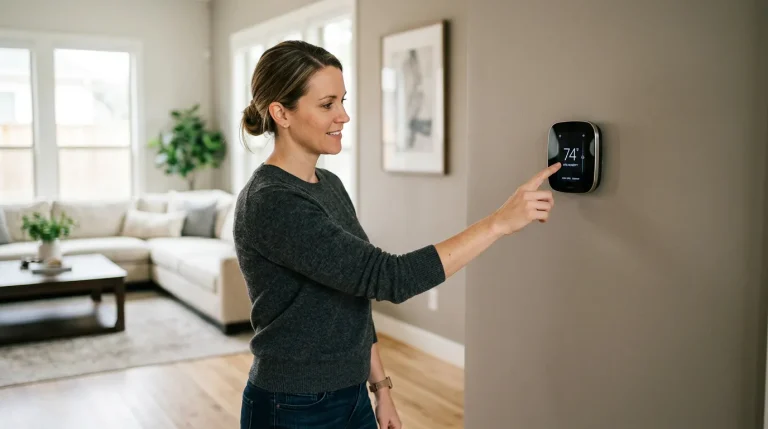
A smart thermostat earns its place in a Houston home through three features that matter in our climate: humidity sensing, compatibility with multi-stage and variable-speed equipment, and geofencing that leverages our 8- to 9-month cooling season. Most of the marketing focuses on touchscreens and voice control, but the real value for a Houston HVAC system comes from how the thermostat manages runtime, moisture, and occupancy.
Every week, a Houston homeowner asks us which smart thermostat they should buy. The honest answer is that the brand on the box matters far less than whether the device fits your HVAC system and controls the features your home needs. Our installers have installed thermostats that transformed a home's comfort, and others that did nothing because the wiring could not support them.
After years of pairing thermostats with new equipment across the Houston metro, our team has watched the marketing drift away from what actually helps. The glossy ads sell learning algorithms and voice assistants. Those are fine, but they are not why a smart thermostat saves energy here. Our long cooling season and relentless humidity reward a few specific capabilities and ignore the rest.
Let us walk through which features genuinely affect comfort and cost in a Houston home, which compatibility issues trip people up, and how to match a thermostat to the system you have or the one you plan to install.
What a Smart Thermostat Actually Controls
A thermostat is the brain of your HVAC system. It decides when the equipment runs, how long it runs, and in some cases, at what capacity. A basic thermostat does only the first of those things. A capable smart thermostat does all three, and that difference is where the value lives.
The features worth paying for are the ones that influence how your system behaves in our climate. Remote access and energy reports are convenient, but the capabilities below are the ones that move the needle on comfort and consumption:
- Scheduling optimization builds and refines a daily plan so the system runs in step with your routine rather than fighting against a fixed setting.
- Occupancy detection determines whether anyone is home, preventing the equipment from cooling rooms that nobody is using during the day.
- System staging control commands the low and high stages of the equipment, which is what enables a two-stage or variable-speed system to deliver its efficiency and humidity advantages.
Features that matter most in Houston
| Feature | What it does | Why it matters here |
|---|---|---|
| Humidity sensing | Reads indoor moisture, can extend runtime to dehumidify | Houston's humidity stays above 75% for months |
| Multi-stage support | Commands the low and high stages on the staged equipment | Let the two-stage systems run their efficient low stage |
| Geofencing | Uses your phone location to adjust before you arrive | A long cooling season multiplies the daily savings |
| Occupancy detection | Senses presence in the home to set back temperatures | Avoids cooling empty rooms during work hours |
| Scheduling optimization | Builds and refines a schedule automatically | Smooths the 8 to 9-month cooling load |
Features that are mostly convenience
The features below are pleasant to have, but they do not change how much your system runs or how well it dehumidifies. We never recommend choosing a thermostat for these reasons alone, because they are the seasoning, not the meal.
- Voice control lets you adjust the temperature by speaking to an assistant, which is convenient but has no effect on runtime or moisture removal.
- App dashboards put your system status on a phone screen, yet they only display information rather than changing how the equipment behaves.
- Color touchscreens look modern on the wall, though the display quality does nothing for comfort or dehumidification in our climate.
- Weather widgets show local conditions on the device, but pulling the forecast onto the screen will not slow down your system.
Humidity Sensing: The Houston Difference
If we had to name one feature that separates a useful thermostat from a basic one in Houston, it would be humidity sensing. Our problem is rarely just temperature. A home can read 74 degrees and still feel clammy because the air holds too much moisture.
A thermostat that senses humidity can keep your system in a cooling cycle slightly longer to remove more moisture from the evaporator coil. Longer, steadier runtime removes more water from the air. The result is air that feels comfortable at the same temperature, which is exactly what our 75% humidity climate demands.
Both ENERGY STAR certified models from brands like ecobee and Google Nest offer humidity readouts, though the depth of control varies. Some let you set a humidity target that nudges runtime. Others simply display the number. During an install, our team checks which behavior a model actually supports rather than trusting the box.
This is also why we caution against aggressive setbacks in summer here. Letting the home drift warm and humid all day, then cooling hard at night, can leave moisture behind. A thermostat with humidity awareness manages that balance far better than a basic timer does.
Compatibility: The Part Nobody Mentions in the Ad
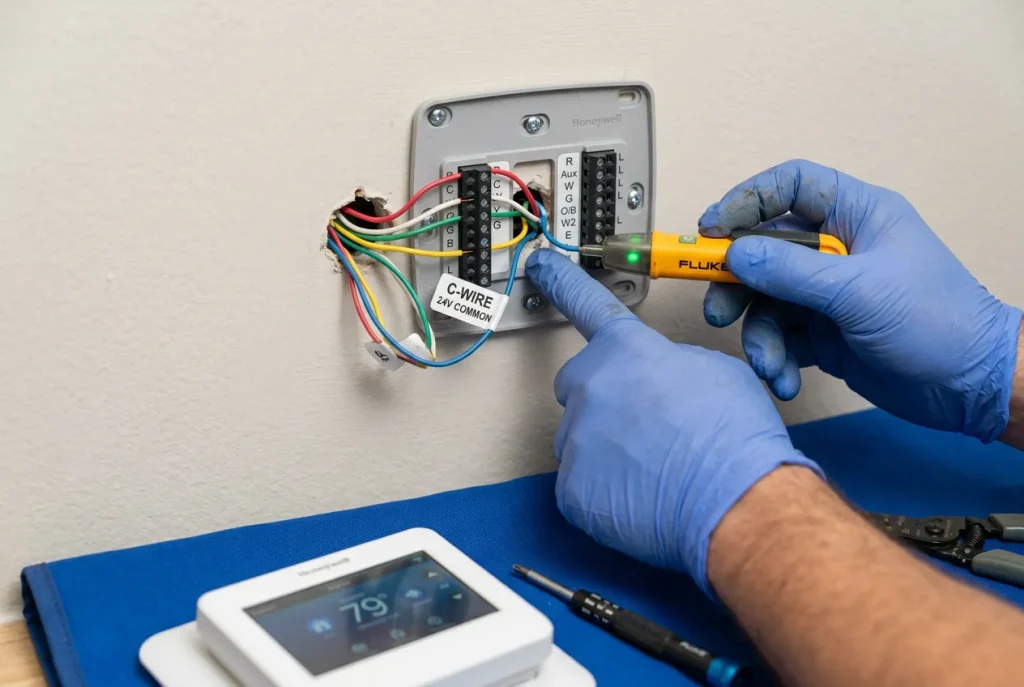
Here is where good intentions meet reality. A smart thermostat only delivers its features if your HVAC wiring can support it. The most common roadblock our team finds on Houston jobs is the missing C-wire.
The C-wire question
The most common power obstacle on Houston jobs is the missing C-wire, and the points below explain why it trips up so many homeowners.
- Smart thermostats need constant power, which they draw from a common wire, or C-wire, rather than borrowing it intermittently, the way a basic thermostat can.
- Many older Houston homes were wired before smart thermostats existed and have no C-wire at the thermostat location, so the connection a smart device expects simply is not there.
- Without a C-wire, a smart thermostat may install but behave erratically, dropping its WiFi connection or rebooting at random until the power issue is resolved.
- Some models include a power adapter or a kit that adds the needed connection, and a proper installation accounts for this before the device ever goes on the wall.
Multi-stage and heat-pump wiring
Compatibility goes beyond power, because a thermostat also has to speak the language of your equipment. The checks below are where staged and heat-pump systems most often run into trouble.
- Two-stage and variable-speed systems require a thermostat that matches them, since the device has to command each stage the equipment offers rather than treating it as one fixed output.
- A thermostat without two-stage support runs staged equipment as if it were single-stage, throwing away the efficiency and humidity benefits you paid for when you bought the better system.
- Heat pumps add more terminals for reversing valves and auxiliary heat, and not every thermostat handles those connections correctly, so the wiring match has to be confirmed before purchase.
| Compatibility item | What to verify before buying |
|---|---|
| C-wire | Present at thermostat, or adapter included |
| System staging control | Thermostat supports your equipment's stages |
| Heat-pump terminals | Reversing valve and aux heat wiring supported |
| HVAC compatibility check | Run the manufacturer's online tool with your wiring |
Most manufacturers offer an online HVAC compatibility checker. We encourage homeowners to run it, but we also verify the wiring in person, because the online tool only knows what you type into it.
Geofencing and Scheduling in a Long Cooling Season
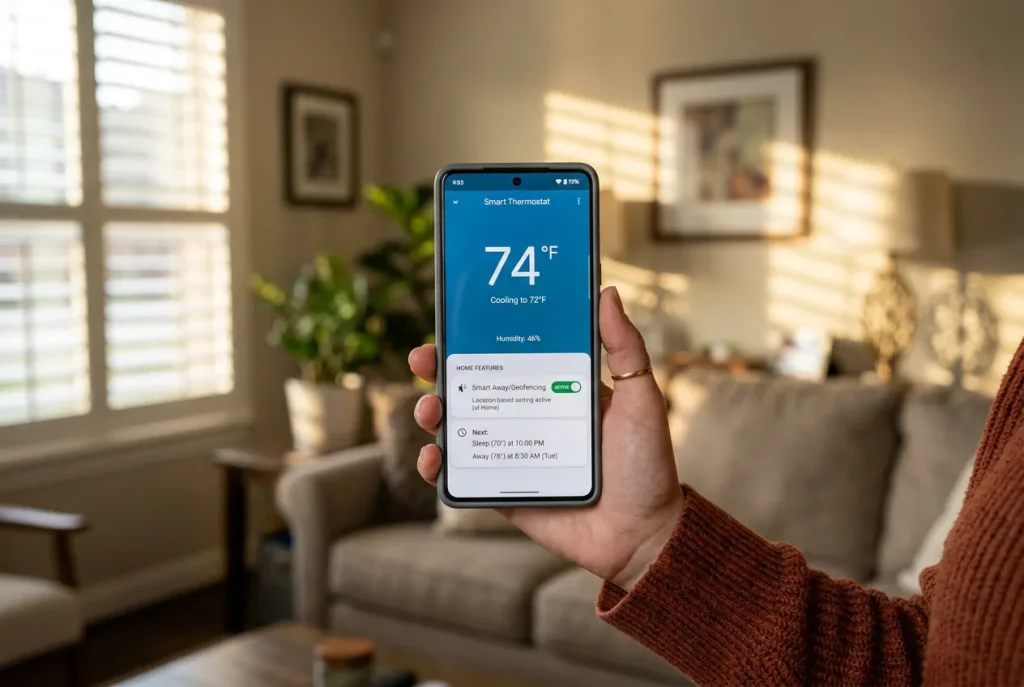
Geofencing uses your phone's location to know when the house is empty and when you are heading home. The thermostat eases off while you are away and brings the home to your target before you walk in. In a mild climate, the savings from this are modest because the cooling season is short. In Houston, the math changes.
We run air conditioning for 8 to 9 months a year. Every day the system avoids cooling an empty house is a day of savings, and we have a lot of those days. Good scheduling optimization and geofencing compound across our long season in a way they simply cannot in Denver or Seattle.
Working together, these three layers keep the system from running hard for nobody:
- Geofencing uses your phone's location to turn off the system when the house empties and to bring the home back to target before you arrive.
- Occupancy detection adds a second layer, since a built-in sensor notices whether anyone is actually home and catches the days your schedule guesses wrong.
- Remote access earns its keep on both fronts, letting you make a quick adjustment from your phone when the situation does not match the plan.
The Department of Energy notes that thermostat setbacks save energy, with the caveat that heat pumps need thermostats designed for them. That heat-pump nuance is another reason proper matching matters here, where many homes run heat pumps in both seasons.
How We Match a Thermostat to a Houston System
At VeriChill, the thermostat is part of the design, not an afterthought, and it shows up differently depending on the project:
- On an AC installation houston project, the device has to match the staging and capacity of the equipment, or the system underperforms from day one.
- In a heating installation involving a heat pump, the thermostat must control the reversing valve and auxiliary heat so the system switches modes cleanly.
The right device depends first on the equipment in the home, and the matching breaks down along these lines:
- For a single-stage system, almost any quality ENERGY STAR thermostat works, and the choice comes down to humidity features and geofencing rather than staging.
- For two-stage or variable-speed equipment, the thermostat list narrows considerably because system staging control becomes essential to capturing the efficiency and humidity benefits of that equipment.
We also weigh who lives in the home, since the household routine changes which features earn their keep:
- A household gone all day benefits enormously from geofencing and occupancy detection, because the system can ease off while the house sits empty across our long cooling season.
- A home with someone present most of the time gets more value from humidity sensing and steady scheduling, since the comfort gains come from moisture control rather than from setbacks.
There is no single best smart thermostat, only the best one for your system and your routine.
Setting Realistic Expectations on Savings
Smart thermostat savings are real, but not magic. Published estimates assume you previously ran your system with no schedule at all. If you already use a reasonable schedule, your gains come more from humidity comfort and convenience than from a dramatic drop in runtime.
The honest framing we give Houston homeowners is that a wifi thermostat hvac upgrade pays you back in a few specific ways, listed below. Treat the device as a tool that makes a well-installed, properly sized system perform to its potential, not a fix for an aging or mismatched one.
- Better moisture control keeps the home comfortable at a higher setpoint, which matters more here than raw temperature because of our humidity.
- Smarter occupancy response across our long season means the system avoids cooling an empty house on the many days we run air conditioning.
- Remote management lets you adjust the home from your phone, while energy reports help you see patterns and fine-tune the schedule over time.
A thermostat cannot overcome poor sizing or leaky ductwork. If your comfort problems run deeper than scheduling, the answer is a proper cooling load assessment and an inspection of the equipment itself, not a fancier thermostat. The best results come from pairing the right device with the right system. That is the heart of good hvac service houston work.
Key Takeaways
- The brand matters less than fit: humidity sensing, multi-stage support, and geofencing are the Houston-relevant features
- Humidity sensing is the standout capability here because our climate stays above 75% humidity for months
- The missing C-wire is the most common compatibility roadblock in older Houston homes
- Two-stage and heat-pump systems need a thermostat with proper staging and terminal support, or you lose the benefits you paid for
- Geofencing and scheduling save more in Houston than in mild climates because our cooling season runs 8 to 9 months
- A smart thermostat optimizes a well-installed, properly sized system; it cannot fix poor sizing or leaky ductwork
Frequently Asked Questions
Do I need a C-wire for a smart thermostat in my Houston home?
Most smart thermostats need a C-wire to receive constant power, and many older Houston homes were wired before these devices existed, so the C-wire is often missing. Without one, a thermostat may install but behave unreliably, losing its WiFi connection or restarting on its own. Some models include a power adapter or an add-a-wire kit that solves the problem. The safest approach is to verify the wiring at the thermostat location before you buy, which is something we check on every installation.
Which smart thermostat features actually save energy in Houston?
The features that change your energy use are scheduling optimization, geofencing, occupancy detection, and humidity sensing. Geofencing and scheduling matter more here than in mild climates because our cooling season runs 8 to 9 months, so every day of smarter operation adds up. Humidity sensing helps your system remove moisture efficiently, which keeps you comfortable at a higher setpoint. Voice control, touchscreens, and app dashboards are convenient but do not meaningfully reduce how much your system runs.
Will a smart thermostat work with my two-stage or variable-speed system?
Only if the thermostat supports system staging control. A device without two-stage thermostat support will run staged equipment as though it were single-stage, which throws away the efficiency and humidity advantages of that equipment. Variable-speed and heat-pump systems have additional wiring for capacity modulation, reversing valves, and auxiliary heat. Before buying, run the manufacturer's HVAC compatibility checker with your wiring details, and ideally have an installer confirm the match in person so the thermostat controls every stage your system offers.
Are ecobee and Google Nest good choices for Houston homes?
Both ecobee and Google Nest make capable ENERGY STAR-certified thermostats with learning algorithms, remote access, and energy reports, and homeowners are happy with both. The right pick depends on your system and your household, not the badge. Check that the model handles your equipment's staging, offers the humidity control you want, and supports the wiring you have. For a home with a multi-stage system, our team focuses on staging support and humidity features first, then lets personal preferences in the app and interface settle the final choice.
Can a smart thermostat fix my humidity problems in Houston?
A smart thermostat with humidity sensing can help by holding your system in a cooling cycle slightly longer to pull more moisture from the air, which improves comfort at the same temperature. That said, a thermostat cannot overcome a system that is oversized, undersized, or paired with leaky ductwork. If your home feels clammy despite a reasonable setpoint, the underlying cause is often equipment sizing or airflow, not the thermostat. The lasting fix is a proper cooling load assessment and correctly matched equipment, with the thermostat fine-tuning an already right system.
Conclusion
Smart thermostats are genuinely useful in Houston, but for reasons the marketing rarely emphasizes. The value is in humidity sensing, real compatibility with your staged or heat-pump equipment, and geofencing that pays off across our long cooling season. The touchscreen and the voice assistant are nice, but they are not why the device belongs on your wall.
At VeriChill, we treat the thermostat as part of the system design rather than a separate purchase. When our team plans an installation, we match the device to the equipment's staging, confirm the wiring supports it, and consider how your household actually lives in the home. That is how a smart thermostat becomes more than a gadget and starts delivering the comfort and savings it promises.
Want help choosing and installing the right thermostat for your Houston system? Call us at 281-559-6995 or visit verichill.com to schedule a consultation.