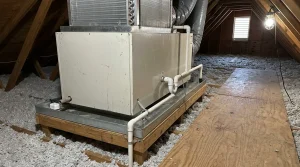
A new HVAC system includes an outdoor condenser or heat pump, a matched indoor evaporator coil, a furnace or air handler, a refrigerant line set, a thermostat, and a condensate drain with safety switch. A complete installation also covers the pad, electrical disconnect, permit, refrigerant charge, startup testing and warranty registration.
When you start collecting quotes for a new system in Houston, it quickly becomes clear that two estimates for the "same" equipment can describe very different jobs. One might list only the outdoor unit and a thermostat, while another spells out the coil, the line set, the drain safety switch, the permit and the testing, and the difference between them is often where the long-term reliability of your system is decided.
That matters more here than in most of the country, because a Houston system runs through an eight to nine month cooling season in humidity that regularly sits above 75 percent. Every component that is skipped, reused past its useful life, or left untested has to work harder under those conditions, and small shortcuts tend to show up as frozen coils, water in the attic, or a compressor that fails years early.
In this guide, you'll learn which pieces of equipment make up a complete system, which installation materials and services should be part of the job, what a thorough installation checks before it is signed off, how to compare what different quotes include, and what our team includes with every VeriChill installation.
The Core Equipment in a Complete HVAC System
Most Houston homes use a split system, meaning part of the equipment sits outside and part sits inside, usually in the attic or a hall closet. A complete new system replaces both halves together so that the outdoor and indoor components are matched and rated to work as a pair.
| Component | Where it sits | What it does |
|---|---|---|
| Condenser (AC) or heat pump | Outside on a pad | Releases the heat pulled out of your home, and a heat pump also reverses to heat in winter |
| Evaporator coil | On top of the furnace or inside the air handler | Absorbs heat and pulls moisture out of the air passing over it |
| Furnace | Attic or closet | Heats with natural gas and moves air with its blower |
| Air handler | Attic or closet | Moves air across the coil in heat pump and electric systems, often with backup heat strips |
| Thermostat | Main living area | Controls the system and, on two-stage and variable speed equipment, manages the stages |
| Refrigerant line set | Between indoor and outdoor units | Carries refrigerant between the coil and the condenser |
Why Matched Equipment Matters
A condenser and coil are tested and rated together, and the SEER2 efficiency on the estimate only applies when that tested pair is installed. Pairing a new condenser with an old coil can lower efficiency, cause charging problems with new refrigerants, and create warranty questions, which is why a full replacement normally includes both.
Furnace or Air Handler, Depending on Your Heating
Homes with natural gas typically pair an AC condenser with a gas furnace, while all-electric homes pair a heat pump with an air handler. Houston's mild winters make heat pumps a strong fit for many homes, and some households choose a dual fuel setup that uses a heat pump most of the winter with a gas furnace as backup.
Installation Materials and Services That Should Be Included
The equipment is only part of the job. A proper installation also includes the materials and work that connect the equipment to your home safely, and these are the items most often left vague on a low-detail estimate.
| Included item | Why it matters in Houston |
|---|---|
| Equipment pad or wall brackets | Keeps the outdoor unit level and off wet ground during heavy rain |
| Electrical disconnect and whip | Gives a safe shutoff at the unit and a code-compliant connection |
| Condensate drain line and float switch | Shuts the system off before a clogged drain can overflow into your ceiling |
| Secondary drain pan in the attic | Catches overflow from an attic unit, which Houston humidity makes common |
| Line set flush or replacement | Removes old oil and contaminants, or replaces copper that cannot be reused with R-454B or R-32 |
| Refrigerant charge | Weighed in and verified to the manufacturer's specification |
| Ductwork connections and sealing | Tightens the joints where new equipment meets existing ducts |
| Permit and inspection | Required by your city for a replacement, and filed by the installer |
| Removal and disposal of old equipment | Includes recovery of the old refrigerant rather than venting it |
| Warranty registration | Activates the extended manufacturer coverage within the required window |
The Refrigerant Change in 2026
New residential equipment now ships with R-454B or R-32 refrigerant as R-410A is phased down. That change is one reason your installer may recommend a new line set, because some existing copper is the wrong size or too contaminated to reuse safely with the new refrigerant.
Permits Are Part of the Job
A replacement in the City of Houston and most surrounding cities requires a mechanical permit, and the installer is the one who pulls it. A quote that leaves the permit out, or suggests skipping it, is leaving out a safety inspection that exists to catch electrical, venting and drain problems.
What a Thorough Installation Checks Before It's Finished
A new system is only as good as the setup work done on installation day. ENERGY STAR's guidance on HVAC quality installation lists the same checks that separate a careful installation from a hurried one, and each should be part of what you are paying for.
- Right-sized equipment. The system should be sized from the actual characteristics of your home, such as ductwork, airflow, insulation, window orientation and ceiling heights, rather than from the size of the old unit.
- Airflow set to specification. Blower speed and static pressure are measured so the air moving across the coil matches what the manufacturer requires.
- Correct refrigerant charge. The charge is measured and adjusted with gauges or digital probes, not guessed, because an over or under charged system loses efficiency and strains the compressor.
- Duct inspection. The ducts connected to the new equipment are checked for leaks, crushed runs and disconnected joints.
- Startup and performance verification. Temperature split, drain operation, safety switches and thermostat control are tested before the job is complete.
These steps take real time on the day, and they are the reason a quality installation for a full system usually fills a working day rather than a few hours.
How to Compare What Different Quotes Include
Because every contractor writes estimates differently, the easiest way to compare them is to line up the same items across each quote. Anything missing from one quote is worth a direct question before you decide.
| Item to check | Complete quote | Incomplete quote |
|---|---|---|
| Indoor coil | New matched coil listed with model number | Coil not mentioned or "reuse existing" |
| Furnace or air handler | Listed with model and efficiency | Only the outdoor unit listed |
| Line set | Flush or replacement stated | No mention of the line set |
| Drain safety | Float switch and pan listed | Drain not mentioned |
| Permit | Included and filed by the installer | Not listed, or left to you |
| Testing | Airflow, charge and startup verification listed | "Install and start up" only |
| Warranty | Coverage length and who registers it | "Manufacturer warranty" with no detail |
The difference between a complete and incomplete quote usually is not the brand on the equipment. It is whether the installation work that protects that equipment is written down, and a quote that lists these items gives you something concrete to hold the installer to.
What VeriChill Includes With Every Installation
At VeriChill, we install and replace residential systems only, so a complete installation is our standard scope rather than an upgrade. Here is what that means for your project, whether it is a cooling replacement or full heating and air conditioning installation.
Comprehensive home evaluation. We start with a thorough in-home assessment of your existing ductwork, airflow and the characteristics of your home, so the recommended system is sized for how your house actually performs.
Itemized written estimate. Your estimate lists the equipment and the installation work in plain language, with no hidden fees, so you can see exactly what is included before you decide.
Professional installation. Our crew removes the old equipment, sets and connects the new system, protects your home throughout, and keeps the work area clean.
Performance verification. Before we consider the job complete, we verify the system is operating at peak efficiency and walk you through how to use it.
10-year parts and compressor warranty. Every system we install includes a 10-year parts and compressor warranty, and we handle the registration within 90 days of installation so your coverage is never at risk.
If you are comparing quotes for a new hvac system installation, bring any existing estimates to your evaluation and we will walk through what each one includes. It is the simplest way to see where the real differences sit.
Key Takeaways
- A new HVAC system includes the outdoor condenser or heat pump, a matched indoor coil, a furnace or air handler, a line set and a thermostat. Replacing both halves together is what makes the SEER2 rating on your estimate apply.
- A complete installation also covers the pad, electrical disconnect, condensate drain, float switch, drain pan, permit and disposal of the old equipment. These are the items most often left vague on a low-detail quote.
- New equipment in 2026 uses R-454B or R-32 refrigerant. Your installer may recommend a new line set because some older copper cannot be reused safely.
- Quality installation means right-sizing, airflow set to specification, a measured refrigerant charge, a duct inspection and startup verification. These checks decide how well the system performs in Houston's humidity.
- The best way to compare quotes is to line up the same items across each one. A missing coil, line set, drain safety or permit is worth a direct question.
- Warranty coverage depends on registration, so ask who registers the equipment and how long the parts and compressor coverage lasts. Missed registration is one of the easiest ways to end up with shorter coverage than you expected.
Frequently Asked Questions
Does a new HVAC system include ductwork?
Most replacements connect to your existing ducts, and new ductwork is added only when an inspection finds damage, leaks or undersized runs that would hold the new system back.
Does a new AC come with a new thermostat?
Most full replacements include a new thermostat, and two-stage or variable speed systems often need a compatible one. Confirm the model on your estimate so you know what is being installed.
Is the indoor coil included when replacing an air conditioner?
A matched coil should be included, because a new condenser needs one for the SEER2 rating to apply and for new refrigerants to work correctly. A quote without a coil deserves a question.
Should a new HVAC system include a float switch?
A new system should include a float switch, which shuts it down when the drain backs up. That prevents water damage to ceilings below an attic unit, a common risk in humid Houston.
Do I need a new line set with a new system?
You need a new line set when your existing copper is the wrong size or too contaminated for R-454B or R-32 refrigerant. Your installer should explain the reason either way.
Who pulls the permit for an HVAC replacement?
The licensed installer pulls the permit with your city. You should not be asked to file it yourself, and the inspection is scheduled after installation.
Does a new system include removal of the old unit?
A complete installation includes removing and disposing of the old equipment. The refrigerant is recovered with a recovery machine rather than released, as federal rules require.
What warranty comes with a new HVAC system?
Coverage depends on the equipment and registration. Every VeriChill installation includes a 10-year parts and compressor warranty, with registration handled within 90 days.
Does a heat pump system include backup heat?
Most heat pump air handlers include electric heat strips for backup during cold snaps. Some Houston homes pair the heat pump with a gas furnace instead, known as dual fuel.
Is performance testing part of a new installation?
Performance testing should always be part of a new installation. Airflow, refrigerant charge, temperature split and safety controls are checked at startup to confirm the system was installed correctly.
Conclusion
A new HVAC system includes far more than the unit you see outside. The matched coil, the furnace or air handler, the line set, the drain safety, the permit and the startup testing all shape how reliably the equipment handles Houston's long, humid cooling season, and they are what make one quote genuinely more complete than another.
When you know what should be on the list, comparing estimates becomes much simpler and much fairer. If you want a clear breakdown for your own home, contact our team for an itemized installation estimate that spells out every item.
Call VeriChill at 281-559-6995 for an itemized system quote. Compare your HVAC quotes with our Houston team.