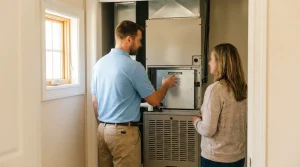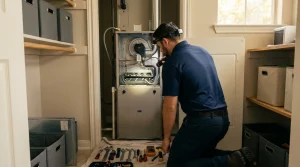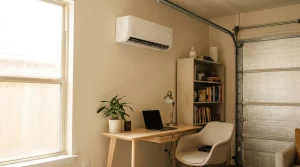
HVAC stands for Heating, Ventilation, and Air Conditioning, the interconnected system controlling temperature, humidity, and air quality in your home year-round.
In Houston, HVAC is essential infrastructure, not a background detail. With average summer temperatures regularly exceeding 95 degrees, humidity levels that routinely surpass 75 percent, and a cooling season stretching eight to nine months, your HVAC system works harder here than in nearly any other region of the country. For homeowners in Houston, Cypress, Katy, Spring, Sugar Land, and Tomball, understanding what HVAC means is the first step toward making smart decisions about installation, replacement, and long-term home comfort.
This guide explains what each component of an HVAC system does, why Houston's climate makes system design more demanding than average, and what to watch for as your system ages. For homeowners already thinking about a replacement, our aircon installation page walks through what the full process involves.
Key Takeaways
- HVAC stands for Heating, Ventilation, and Air Conditioning, three systems that work together to control temperature, moisture, and air quality
- In Houston, the air conditioning component carries the heaviest load, operating 8 to 9 months per year in an intensely hot and humid climate
- Oversized HVAC systems are Houston's most common installation problem; they cool the air without adequately removing humidity
- A whole-home assessment covering insulation, ductwork, ceiling heights, window orientation, and airflow is the accurate way to size a system
- Two-stage and variable speed systems outperform single-stage in Houston because of their superior humidity control during extended operation
- The Southeast regional minimum is 14.3 SEER2; targeting 16 SEER2 or higher is the practical recommendation for Houston's long season
- Systems 15 years or older warrant a replacement evaluation, particularly when energy costs are rising or comfort is declining
Breaking Down HVAC: What Each Letter Represents
The acronym HVAC covers three distinct but connected functions inside your home. Each one plays a different role, and together they determine whether your home stays comfortable, dry, and healthy throughout Houston's demanding climate.
H: Heating
Heating is a secondary concern in Houston compared to cooling, but it remains necessary. Furnaces, heat pumps, and air handlers all fall under this category. In winter months, when temperatures occasionally dip into the 30s, a reliable heating system protects your household and your pipes. In Houston's mild winters, modern heat pump technology handles both heating and cooling efficiently from a single system.
V: Ventilation
Ventilation controls the movement and exchange of air inside your home. This includes mechanical airflow through ducts and vents as well as filtration to remove particulates, allergens, and contaminants. In Houston, ventilation is critical because tightly sealed homes trap humidity if airflow is not managed properly. A well-designed ventilation system keeps air fresh and helps manage moisture before it becomes a structural or health concern.
AC: Air Conditioning
Air conditioning is what most Houston homeowners think about first, and rightly so. Cooling accounts for roughly 60 to 70 percent of annual HVAC energy consumption in this climate. A properly designed air conditioning system does not just lower indoor temperature. It removes moisture from the air, which is the bigger challenge in Houston's environment. A system that cools without dehumidifying leaves homes feeling clammy even at comfortable thermostat settings.
| Component | Primary Function | Houston Relevance |
| Heating | Warms indoor air during cold weather | Essential for winter cold snaps; heat pumps handle this efficiently |
| Ventilation | Circulates, exchanges, and filters indoor air | Critical for humidity management and indoor air quality |
| Air Conditioning | Cools and dehumidifies indoor air | Primary system load; operates 8 to 9 months per year |
Why Houston's Climate Makes HVAC Design More Demanding
Houston sits in ASHRAE Climate Zone 2A, a designation reserved for hot, humid regions. This classification directly influences how HVAC systems should be sized, selected, and installed. What performs adequately in Dallas or Denver may fall short here, because the moisture load and extended cooling season require specific engineering decisions.
Three climate realities drive every HVAC decision in this region.
Humidity Load: Houston's average relative humidity regularly exceeds 75 percent. An oversized HVAC system cycles on and off too quickly to remove moisture effectively, leaving homes feeling damp even when the thermostat reads 72 degrees. This is the most common HVAC installation mistake in Houston, and it compounds every summer.
Cooling Season Length: Most Houston homes run their air conditioning from March through November. That is a nine-month demand on equipment rated for a 15 to 20 year lifespan under average conditions. High annual run-hours accelerate component wear, making proper sizing and quality installation essential for longevity.
Thermal Load Variability: Houston homes absorb significant heat through windows, walls, and roofing. A whole-home assessment that accounts for insulation levels, ceiling heights, window orientation, ductwork condition, and airflow distribution is the only accurate method for determining what a specific home actually needs. Skipping this step produces guesswork, not engineering.
| Climate Factor | Houston | National Average | HVAC Impact |
| Average Summer High (F) | 95 to 98 | 85 to 90 | Higher per-season cooling demand |
| Cooling Season Length | 8 to 9 months | 4 to 5 months | Significantly greater annual run-hours |
| Average Relative Humidity | 75% or higher | 50 to 60% | Elevated moisture removal requirement |
| ASHRAE Climate Zone | 2A (Hot-Humid) | Mixed | Specialized sizing and equipment selection required |
The Four Main HVAC System Types Used in Houston Homes
Houston homeowners replacing older equipment typically choose from four system types. Each offers different levels of efficiency, comfort control, and humidity performance. The right choice depends on the home's size, layout, budget, and comfort priorities.
Single-Stage Systems: The compressor runs at full capacity or not at all. These are the most affordable option and they function reliably, but they are less effective at managing Houston's humidity because shorter cycles do not remove moisture as thoroughly.
Two-Stage Systems: A two-stage compressor operates at a lower output most of the time, stepping up to full capacity only on the hottest days. The extended runtime at lower output is better for humidity control, making two-stage the practical choice for most Houston homes.
Variable Speed Systems: These systems modulate output continuously based on real-time conditions. They deliver the best humidity control and highest efficiency. The upfront cost is higher, but performance in Houston's climate is superior.
Inverter Heat Pumps: Modern inverter-driven heat pumps are well-suited to Houston's climate. They provide efficient cooling in summer and effective heating in mild winters, operating at variable speeds for precise temperature and humidity management.
| System Type | Efficiency Range | Best Application | Humidity Control |
| Single-Stage | 14.3 SEER2 minimum | Budget-focused replacement | Fair |
| Two-Stage | 16+ SEER2 recommended | Most Houston homes | Good |
| Variable Speed | 18+ SEER2 typical | Comfort-priority homes | Excellent |
| Inverter Heat Pump | 18+ SEER2 typical | Year-round efficiency focus | Excellent |
What SEER2 Ratings Mean for Your Houston Home
SEER2 (Seasonal Energy Efficiency Ratio 2) is the current federal standard for measuring air conditioner and heat pump efficiency. As of January 2023, all new residential HVAC equipment sold in the Southeast region must meet a minimum 14.3 SEER2 rating.
In Houston, meeting the minimum is not the target. Given the region's nine-month cooling season, the difference in operating costs between a 14.3 SEER2 and a 16 SEER2 system accumulates significantly over years of use. Higher efficiency also means less energy consumption per operating hour, which matters when the system runs almost year-round.
On refrigerant: R-410A is being phased out in 2026 new installations, replaced by lower global warming potential alternatives including R-454B and R-32. If you are replacing a system now, confirm your installer is using equipment with the newer refrigerants. This affects long-term serviceability and parts availability.
When to Think About HVAC Replacement
Most residential HVAC systems in Houston carry a realistic service life of 15 to 20 years. Due to this climate's extended cooling demands, systems often reach the limit of efficient operation closer to the 15-year mark. The following situations typically indicate replacement is the better financial and comfort decision:
- The system is 15 years or older and repair costs are increasing
- Energy bills have risen without a change in usage habits or utility rates
- The home has persistent humidity problems despite the AC running regularly
- Current equipment uses R-22 refrigerant, which has been phased out and is increasingly expensive to service
- Comfort issues persist: uneven temperatures, hot spots, or weak airflow throughout the home
Talk to a Houston HVAC Specialist
Understanding what your system covers is the first step. The next is talking to someone who can evaluate your specific home and tell you exactly what it needs. Get in touch with VeriChill to schedule a whole-home evaluation with no phone quotes and no pressure.
Call 281-559-6995
Frequently Asked Questions
What does the "V" in HVAC stand for?
The V stands for Ventilation, which covers the circulation, exchange, and filtration of air inside your home. Ventilation controls airflow through ducts and removes contaminants, allergens, and excess moisture. In Houston's sealed, humidity-prone homes, effective ventilation is essential for indoor air quality.
Is HVAC the same as an air conditioner?
No. An air conditioner is one component of an HVAC system. HVAC includes heating, ventilation, and air conditioning working together. In Houston, the cooling component is the dominant one, but a complete HVAC system also manages heating and airflow throughout the home.
How long does an HVAC system last in Houston?
Most residential HVAC systems in Houston last 15 to 20 years. Houston's long cooling season and high humidity accelerate wear, so many systems reach the practical limit of efficient operation closer to 15 years. Annual maintenance extends lifespan.
What SEER2 rating should I look for in Houston?
The Southeast minimum is 14.3 SEER2, but for Houston's nine-month cooling season, 16 SEER2 or higher is recommended. The efficiency difference adds up quickly when a system runs nearly year-round. Higher SEER2 ratings also typically include better humidity management features.
Why does my AC cool the house but it still feels humid?
This usually means the system is oversized. An oversized unit cools the air quickly and shuts off before removing adequate moisture. The result is a home that hits the temperature setpoint but feels clammy. Proper sizing during installation prevents this problem.
Do Houston homes need heating systems?
Yes. While Houston's winters are mild, temperatures occasionally drop into the 30s, which can stress pipes and make homes genuinely uncomfortable without adequate heating. Heat pumps handle both cooling and heating efficiently and are increasingly popular in Houston for this reason.
What refrigerant does a new HVAC system use?
R-410A is being phased out in new installations as of 2026. New systems now use lower-impact refrigerants including R-454B and R-32. If you are replacing a system, confirm the new equipment uses these updated refrigerants for better long-term serviceability.
How do I know what size HVAC system my Houston home needs?
Size is determined by a whole-home assessment that evaluates square footage, insulation quality, ceiling heights, window orientation, ductwork condition, and airflow distribution. Guessing or using square footage alone produces oversized or undersized systems, both of which cause comfort and efficiency problems.
What is the difference between a heat pump and a traditional HVAC system?
A traditional HVAC system uses separate equipment for heating and cooling. A heat pump performs both functions using a single system by moving heat rather than generating it. In Houston's mild winters, heat pumps handle heating efficiently, reducing the need for a separate furnace.
How much does HVAC efficiency affect my energy bills in Houston?
Significantly. Houston's nine-month cooling season means efficiency differences compound quickly. A 16 SEER2 system uses considerably less energy per hour than a 14.3 SEER2 unit. Over a decade of operation, the savings on energy costs are substantial.
Final Thoughts
Understanding what HVAC means gives Houston homeowners the foundation to make confident decisions about installation, replacement, and ongoing performance. This is not abstract knowledge. Houston's climate is demanding enough that a well-designed, properly sized system is a basic requirement for real comfort and effective humidity control, not a luxury upgrade.
If your system is aging, running longer without maintaining comfort, or driving energy bills higher, a professional evaluation is the right next step. As residential hvac contractors, VeriChill serves Houston, Cypress, Katy, Spring, Sugar Land, and Tomball with installation and replacement.
Call 281-559-6995 to discuss your Houston HVAC system.
Book a whole-home HVAC evaluation with VeriChill.