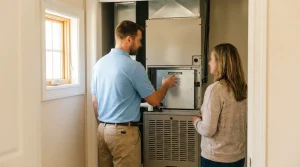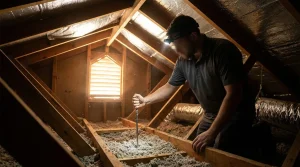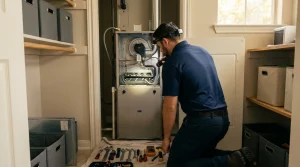
A complete installation covers far more than the equipment. It includes a load calculation to size the system, permit filing, removal and EPA-compliant refrigerant recovery from the old unit, new indoor and outdoor equipment, line set and electrical connections, condensate drain work, thermostat installation, system evacuation and charging, startup testing, and inspection. Quotes that list only equipment and a price are hiding where the differences actually are.
Two HVAC quotes for the same house can differ by thousands of dollars while appearing to describe the same job. The gap almost never comes from the equipment, which is broadly comparable between manufacturers at a given tier.
It comes from what surrounds the equipment: whether a load calculation was performed, whether the line set is being replaced or reused, whether permits are included, and whether the ductwork was evaluated at all. This guide walks through what a complete installation actually includes so you can read a quote critically rather than comparing bottom-line numbers.
Assessment and System Sizing
Load Calculation
A proper installation begins before any equipment is selected. A load calculation evaluates your home's square footage, insulation levels, window count and orientation, ceiling height, air infiltration, and occupancy to determine the actual cooling and heating demand.
This matters enormously in Houston. Humidity means an oversized system cools the air quickly and shuts off before it has removed enough moisture, leaving the house cold and clammy rather than comfortable. Undersizing produces the opposite problem, with a system running constantly and never quite catching up.
Sizing by square footage alone, or by simply matching whatever was there before, is the most common shortcut in the industry. Ask directly whether a load calculation was performed and request to see the output rather than taking the answer on faith.
Ductwork Evaluation
Existing ductwork should be inspected for leaks, undersized runs, poor insulation, and disconnected sections. In many Houston homes with attic duct systems, leakage alone accounts for a meaningful share of lost efficiency.
A quote that installs new equipment onto compromised ductwork delivers less than the system is capable of, and the homeowner rarely knows why performance fell short of expectations. Whether duct repair or replacement is included, excluded, or recommended separately should be explicitly stated in writing.
Equipment Selection
Selection covers system type, capacity, efficiency rating, and component matching. Indoor and outdoor units should be a matched pair from the manufacturer, since mismatched components rarely deliver their rated performance and can affect warranty coverage in ways that surface only when you file a claim.
Efficiency ratings are worth understanding rather than accepting at face value. Higher-rated equipment costs more upfront and returns that cost through lower operating expense over a period of years, which makes the calculation dependent on how long you realistically plan to stay in the home.
Permits and Compliance
Houston requires permits for HVAC replacement, and the contractor typically files them. This should be stated in the quote rather than assumed.
Permit filing carries a fee, and whether that fee is included in the quoted price or billed separately varies between contractors. An unpermitted installation creates real problems at resale and can void manufacturer warranty coverage entirely.
Inspection follows the installation itself. A licensed inspector verifies the completed work meets current code, and the contractor should coordinate that scheduling and be present on site if the inspector requires it.
Removal of the Existing System
Refrigerant Recovery
Federal law requires refrigerant to be recovered rather than vented, and the technicians handling it must hold EPA certification. This is included in any legitimate installation.
Older systems using R-22 require particular attention, since that refrigerant has been phased out of production and its recovery is handled under specific regulatory requirements that a certified technician will follow.
Equipment Removal and Disposal
The old indoor and outdoor units are both disconnected and removed from the property entirely. Disposal or recycling should be included rather than left for you to arrange.
Confirm this explicitly before work begins. Being left with an old condenser sitting in the side yard after the crew departs is an entirely avoidable surprise, and hauling it away yourself is not simple.
Installation of the New System
Indoor Unit
The air handler or furnace is set in place, connected to existing or modified ductwork, and secured. In Houston's attic installations, this includes verifying the platform and ensuring adequate service clearance for future maintenance.
A secondary drain pan with a float switch is standard practice for attic installations in this region. If the primary condensate drain clogs, the switch shuts the system down automatically before overflow water can damage the ceiling below.
Outdoor Condenser
The condenser is set on a pad, leveled, and positioned with adequate clearance for airflow on all sides. In flood-prone areas of Houston, elevating the unit above expected flood levels is worth discussing during the estimate rather than after the first storm.
Line Set
The refrigerant lines connecting indoor and outdoor units are either replaced or, less commonly, reused. Replacement is generally preferable, particularly when moving from R-22 to a modern refrigerant, since residual oil from the old system is incompatible.
If the quote reuses the existing line set, that should be stated along with the reason. This is one of the most common places quotes differ without the difference being visible.
Electrical and Thermostat
Electrical connections include the disconnect at the outdoor unit, whip, and connections at both units. If the new system requires a different circuit size, that work should be identified in the quote rather than discovered mid-installation.
Thermostat installation and configuration are normally included in the scope. Smart thermostats may be standard, an upgrade, or excluded depending on the contractor.
Condensate Management
The condensate drain line is connected, sloped correctly, and tested. In Houston's humidity, systems produce a substantial volume of condensate throughout the cooling season, and drain problems rank among the most common first-year service calls contractors receive.
The table below summarizes what a complete scope covers.
| Category | What it should include |
| Assessment | Load calculation, ductwork evaluation, equipment selection |
| Compliance | Permit filing, fees, inspection coordination |
| Removal | EPA refrigerant recovery, equipment removal, disposal |
| Indoor install | Air handler set and connected, drain pan and float switch |
| Outdoor install | Condenser set, leveled, adequate clearance |
| Connections | Line set, electrical, disconnect, thermostat |
| Commissioning | Evacuation, charging, airflow and temperature testing |
| Documentation | Warranty registration, permit records, homeowner walkthrough |
Commissioning and Testing
Evacuation and Charging
Before refrigerant is introduced, the line set and coil are evacuated to remove air and moisture. This step is invisible to the homeowner and frequently rushed, yet moisture left in a system causes corrosion and eventual failure.
The system is then charged to manufacturer specification, an amount that depends on line set length rather than being a fixed quantity per unit. Charging by guesswork rather than by weight and measurement is a genuine and underappreciated source of premature equipment failure.
Performance Verification
Startup testing verifies airflow, measures the temperature differential across the coil, confirms refrigerant pressures, checks amp draw, and validates thermostat operation. The technician should be able to tell you what the measured values were.
Leak testing on brazed connections happens before the system is charged with refrigerant. A leak discovered months later costs both a repair visit and the refrigerant that escaped in the meantime.
Homeowner Orientation
A walkthrough at completion should cover thermostat operation, filter type and location, the condensate drain and where it terminates, the outdoor disconnect, and the basic maintenance the system will need going forward.
This is included in a professional HVAC installation and is worth asking for if it is not offered.
Documentation and Warranty
Manufacturer warranties typically require registration within a limited window after installation, and coverage can be reduced or denied without it. Confirm whether the contractor registers the equipment or whether that falls to you.
Two separate warranties apply to any installation. The manufacturer covers defects in the equipment itself, while the contractor covers labor and installation workmanship, usually for a considerably shorter period. Both should be documented in writing before work begins.
Keep permits, inspection records, equipment model and serial numbers, and warranty paperwork together in one place. This documentation matters for every future service call and for the disclosure process when you sell the home.
What Is Often Excluded
Understanding common exclusions is as useful as understanding inclusions:
- Ductwork repair or replacement, often quoted separately
- Electrical panel upgrades if capacity is insufficient
- Attic insulation or ventilation improvements
- Zoning systems, air purification, or humidity control
- Repairs to drywall or finishes disturbed during installation
- Relocating equipment to a different location than existing
None of these are unreasonable exclusions, and most contractors will quote them separately on request. They become problems only when a homeowner assumes inclusion and discovers otherwise partway through the project.
Comparing Quotes Meaningfully
When quotes differ substantially, the difference usually lives in these items rather than in the equipment:
- Whether a load calculation was performed
- Whether the line set is being replaced or reused
- Whether permit fees are included
- Whether ductwork was evaluated and what was recommended
- Whether a drain pan and float switch are included on attic installations
- What labor warranty is offered and for how long
Ask each contractor the same set of questions and compare their answers rather than their bottom-line totals. A Houston HVAC company willing to walk through each line item is generally the one whose quote reflects the actual work.
For homeowners weighing options, understanding basic HVAC system components makes these conversations considerably easier, and a free consultation can clarify what your specific home requires before you start collecting quotes.
Key Takeaways
- A complete installation includes load calculation, permits, old equipment removal with EPA refrigerant recovery, new equipment, line set and electrical connections, condensate work, thermostat, evacuation and charging, startup testing, and inspection.
- Load calculation matters more in Houston than almost anywhere, because humidity means an oversized system cools quickly and shuts off before removing moisture, leaving the house cold and clammy.
- Attic installations should include a secondary drain pan with a float switch, which shuts the system down if the primary condensate drain clogs rather than letting water damage the ceiling.
- Line set replacement versus reuse is one of the largest hidden differences between quotes, and replacement is generally preferable, particularly when converting from R-22 to modern refrigerant.
- Common exclusions include ductwork repair, electrical panel upgrades, attic insulation, zoning, and drywall repair. These are reasonable exclusions that become problems only when assumed to be included.
- Compare quotes by line item rather than by total. The equipment is broadly comparable between manufacturers, so the price difference almost always reflects scope rather than hardware.
Frequently Asked Questions
What is included in HVAC installation services?
Load calculation and system sizing, permit filing, removal of the old system with EPA-compliant refrigerant recovery, new indoor and outdoor equipment, line set and electrical connections, condensate drain work, thermostat, evacuation and charging, startup testing, and inspection.
Why does a load calculation matter so much in Houston?
Because of humidity. An oversized system reaches temperature and shuts off before removing enough moisture, leaving the house cold and clammy. Sizing by square footage alone or by matching the old unit is a common shortcut that produces this outcome.
Are permits included in the quote?
They should be stated explicitly. Houston requires permits for HVAC replacement and the contractor typically files them, but whether the fee is included or billed separately varies. Unpermitted work creates resale problems and can void warranties.
What happens to my old system?
It is disconnected, the refrigerant is recovered under EPA requirements by a certified technician, and the equipment is removed from the property. Confirm that disposal or recycling is included rather than left for you to arrange.
Should the refrigerant line set be replaced?
Generally yes, particularly when converting from R-22 to a modern refrigerant, since residual oil from the old system is incompatible. If a quote reuses the existing line set, that should be stated along with the reasoning.
What is a drain pan float switch and do I need one?
A secondary pan beneath an attic-installed air handler with a switch that shuts the system down if the primary condensate drain clogs. On attic installations in Houston it is standard practice and prevents water damage to the ceiling below.
What is evacuation and why does it matter?
Removing air and moisture from the line set and coil before charging with refrigerant. It is invisible to homeowners and frequently rushed, but moisture left in a system causes corrosion and eventual component failure.
What is usually not included?
Ductwork repair or replacement, electrical panel upgrades, attic insulation or ventilation work, zoning and air purification systems, drywall repair, and relocating equipment to a new position. These are typically quoted separately.
How do I compare two very different quotes?
Compare line items rather than totals. Ask each contractor whether a load calculation was done, whether the line set is replaced, whether permits are included, what ductwork was found, and what labor warranty applies.
Who registers the equipment warranty?
It varies, so confirm. Manufacturers typically require registration within a limited window after installation, and coverage can be reduced or denied without it. Two warranties apply: manufacturer for equipment, contractor for labor and workmanship.
Conclusion
The equipment is the part of an HVAC installation that homeowners focus on and the part least likely to explain why two quotes differ by thousands of dollars. Comparable units from reputable manufacturers perform similarly at a given tier. What varies is everything around them: whether anyone calculated the actual load, whether the line set is new, whether ductwork was assessed, whether permits and a proper evacuation and charge are in the scope.
That makes reading a quote a matter of asking specific questions rather than comparing bottom lines. Ask for the load calculation. Ask about the line set. Ask whether an attic installation includes a secondary drain pan and float switch, since Houston humidity produces enough condensate that the answer matters. A contractor who can walk each line and explain why it is there is usually quoting the job that will actually be performed.
Know exactly what your installation quote covers before you sign it.
Request a consultation with the VeriChill team.