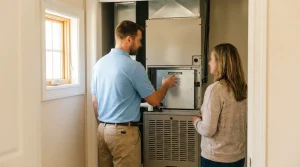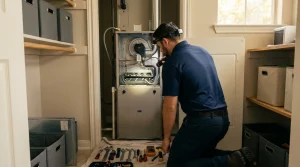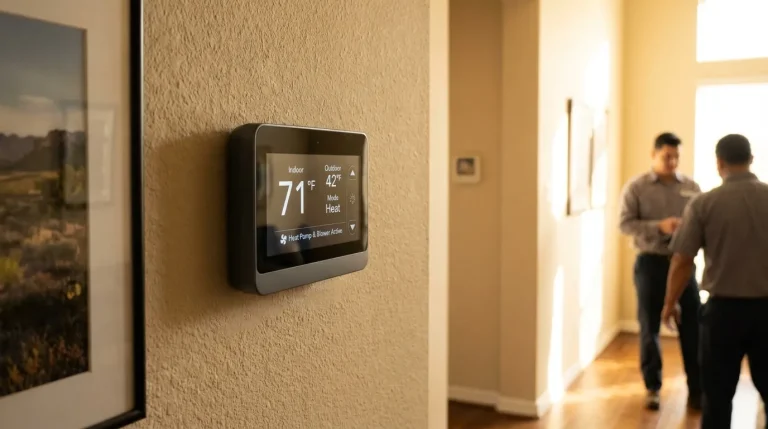
A communicating HVAC system is one where the outdoor unit, indoor unit, and thermostat share data over a dedicated communication protocol, letting the components self-adjust output, diagnose problems, and coordinate operation far more precisely than traditional systems. For Houston heating, that shared intelligence means smoother staging, better humidity handling on the shared cooling side, faster problem diagnosis, and steadier comfort during the mild winters and rare cold snaps our climate throws at the equipment.
If you have shopped for a new HVAC system in the last few years, you have probably heard the term communicating attached to premium models. It is not marketing polish. It represents a real shift in how the components of a modern system talk to each other, and in a climate like Houston's, that difference shows up in day-to-day comfort more than most homeowners expect.
Traditional HVAC systems use simple on-off signals between the thermostat and the equipment. A smart hvac system that communicates replaces those signals with a continuous data conversation. The communicating thermostat knows what the outdoor unit is doing. The outdoor unit knows what the indoor blower or communicating furnace is doing. Every component in this connected heating system adjusts based on what the others are doing.
Let us walk through what communicating HVAC actually means, why it matters for Houston heating specifically, and how it stacks up against traditional systems and against smart thermostats bolted onto standard equipment.
What a Communicating HVAC System Actually Is
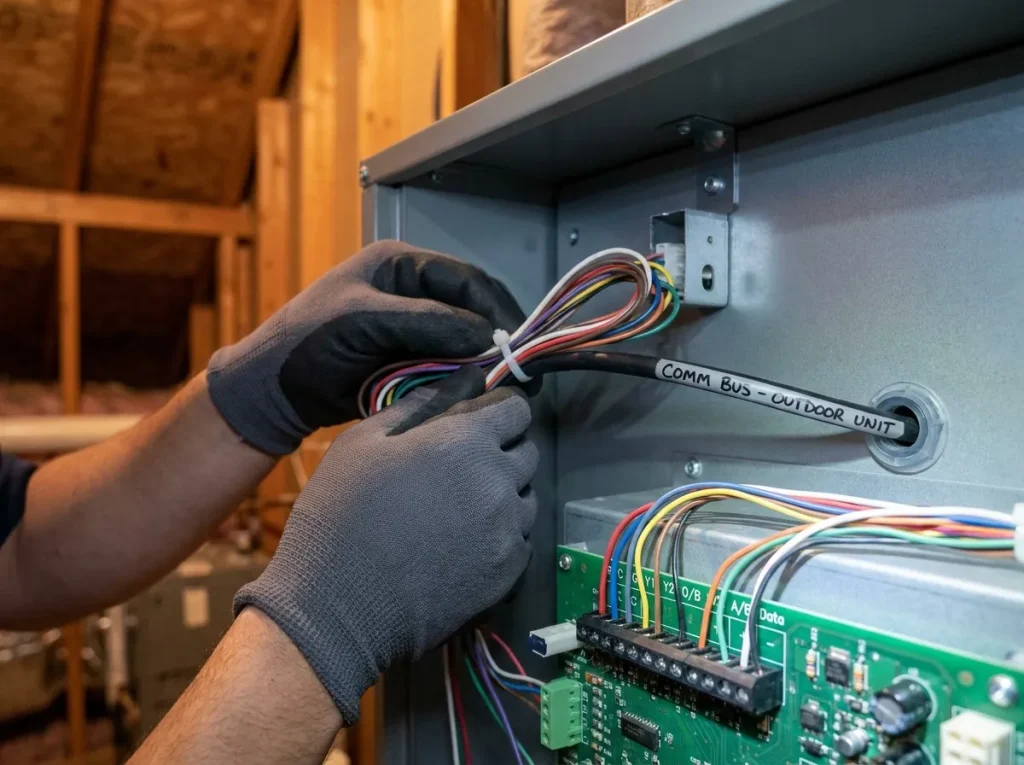
At the heart of a communicating system is a shared data bus that connects the major components of the HVAC equipment. Rather than the thermostat sending a simple close-the-relay signal for heat on and open-the-relay for heat off, it sends structured messages that describe exactly what output it wants and receives back real-time information about what the equipment is doing.
- Continuous data exchange replaces the traditional relay-and-wire signaling. The thermostat, air handler or furnace, and outdoor unit are all in constant communication.
- Self-adjustment across components lets each part of the system tune itself in response to what the others are doing. The blower ramps to match the compressor stage. The compressor stages up or down based on how quickly the indoor sensors report the temperature moving. Everything works together rather than each part guessing.
- Diagnostic data reporting means the system knows why it stopped working, not just that it stopped. Error codes surface at the thermostat rather than requiring a technician to diagnose from external symptoms.
- Proprietary versus open protocols. Most communicating systems use manufacturer-specific communication protocols, which means all the components typically need to come from the same manufacturer family to communicate properly. A Carrier, Trane, or Lennox communicating outdoor unit generally needs its brand-matched indoor unit and thermostat.
For homeowners considering a full-system replacement through Houston HVAC professionals, the communicating decision is one to make at the point of purchase because after-market retrofits rarely work as cleanly.
Why Communicating Matters More for Houston Heating
Communicating systems help in any climate. In Houston, several specific factors amplify the benefit on the heating side.
- Our dual-purpose HVAC works both jobs from the same equipment. Because a heat pump provides both cooling and heating from the same outdoor unit and shares an indoor coil with either an air handler or a gas furnace, the communicating protocol coordinates staging across both seasons rather than optimizing for one. The winter benefit compounds with the summer benefit.
- Mild-winter partial-load conditions favor precise staging. Houston winters spend most of their heating hours at moderate loads where the equipment does not need full output. A communicating system reads real-time indoor conditions and adjusts the compressor and blower to exactly what the house needs, which single-signal systems cannot do as smoothly.
- Rare cold snaps benefit from tight coordination. When Houston does get hit with a hard freeze, the communicating system stages up cleanly and coordinates auxiliary heat or gas furnace backup based on real conditions rather than crude temperature thresholds. That means faster recovery and less overshoot when the freeze breaks.
- Humidity control benefits year-round. Even in winter, indoor humidity matters, and the communicating system's ability to fine-tune blower speed and equipment staging keeps humidity in a comfortable range across both seasons.
- Efficient part-load operation compounds across the long cooling season. Because the same equipment cools the house eight to nine months a year, the efficiency gain of tight component coordination shows up on both winter heating bills and summer cooling bills, with the summer effect being far larger given the hours.
The AHRI overview of the industry provides context on the equipment testing and certification standards that underpin how modern communicating systems are rated for capacity, efficiency, and coordinated operation.
Communicating Systems Versus Smart Thermostats on Standard Equipment
This is one of the most common confusions our team helps homeowners sort out. A smart thermostat and a communicating system are not the same thing.
- A smart thermostat on standard equipment adds scheduling, remote control, learning features, and app integration to a system whose underlying components still use traditional on-off signaling. The thermostat is smarter, but the compressor and blower are not talking back to it.
- A communicating system uses a matched thermostat that speaks the equipment's protocol. The thermostat and the equipment are all part of one intelligent system, sharing data continuously, self-adjusting, and diagnosing themselves.
- Which one matters more for comfort depends on what you are optimizing for. Smart scheduling and remote control benefit any system. Coordinated component operation and self-adjustment benefit only communicating systems.
- The two features are complementary. Modern communicating thermostats are also smart thermostats, offering scheduling, app control, and geofencing on top of the communication protocol.
The value case for a communicating system is not primarily about the thermostat. It is about the coordination of every component in the system, which is why a smart thermostat added to older single-stage equipment produces only a fraction of the benefit that a fully communicating system delivers.
What Diagnostic and Comfort Benefits Look Like in Practice
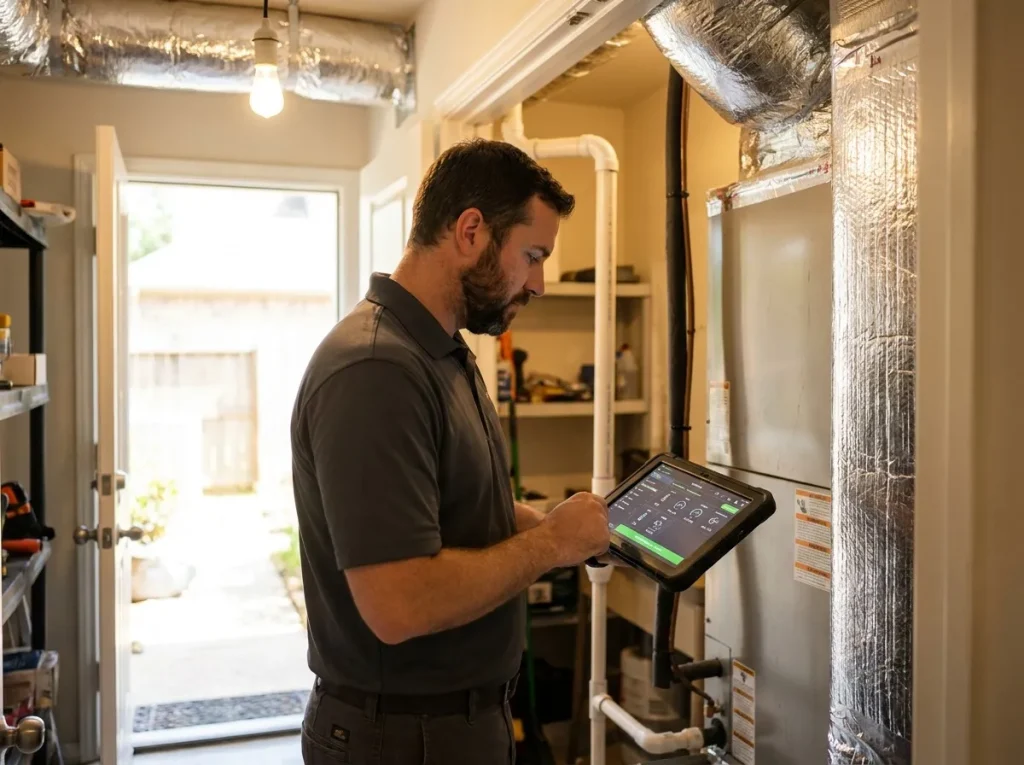
The theory is one thing. What actually happens in Houston homes running communicating systems is what makes the case.
- Error codes surface at the thermostat. When something goes wrong, the thermostat displays a specific error code rather than just showing a generic no-heat or no-cool message. That code lets the technician arrive with the right parts and diagnostic plan.
- Preventive alerts arrive before failures. A drifting refrigerant charge, a filter needing change, an outdoor fan drawing more current than normal, all can surface as maintenance alerts before they cascade into failures.
- Setpoint holds are tighter. Because every component is tuned to what the others are doing, the indoor temperature holds within a much tighter band than a traditional system typically delivers.
- Startup and shutdown are smoother. Communicating systems ramp gently rather than slamming on at full output, which reduces mechanical stress, quiets operation, and improves comfort perception at the start and end of every cycle.
- Multi-zone integration is cleaner. Communicating systems paired with communicating zone controls coordinate damper positions with equipment staging so the system is never fighting itself.
- Firmware updates over time. Some communicating systems can receive firmware updates that improve performance, add features, or fix minor issues without any hardware change.
For homeowners planning a project that includes zoning, high-efficiency staging, or premium comfort as design goals, a communicating platform makes those goals easier to hit, and the heating system installation recommendation from our team almost always includes it when the customer's priorities point that direction.
The Trade-Offs Worth Understanding
Communicating systems carry real advantages. They also carry trade-offs worth naming honestly.
Higher initial cost
Communicating equipment carries a premium over standard equipment. The premium is real and worth budgeting for during the planning stage.
Brand family lock-in
Because most communicating protocols are proprietary, components typically must come from the same manufacturer family. Replacing one component years later usually means either matching the brand or reverting to traditional signaling for that piece.
Requires proper installation setup
Communicating systems need their communication wiring and configuration set up correctly at installation. A shortcut installation can leave the system running in a fallback traditional-signaling mode, capturing none of the benefit.
Diagnostic dependence on qualified technicians
The error codes and alerts help technicians who are trained on the specific system. Homeowners who like to do their own basic troubleshooting will find less to work with on a communicating platform than on traditional equipment.
Firmware and control-board dependencies over time
As with any technology, control boards eventually need replacement, and the availability of matching parts a decade or more out is something to consider on any premium system.
For homeowners weighing whether the communicating premium is worth it for their specific home, our team walks through insulation, ductwork condition, ceiling heights, window orientation, and airflow distribution alongside their comfort priorities, budget, and how long they plan to stay in the property. Financing through Wells Fargo, Synchrony Bank, and GoodLeap is available for qualified homeowners who want to invest in the platform.
When a Communicating System Makes the Most Sense
Not every Houston home should invest in communicating equipment. These are the situations where it clearly earns its premium.
- Whole-system replacements where matched components are being installed anyway. If you are replacing the outdoor unit, indoor unit, and thermostat in one project, the incremental cost to make them communicating is smaller and the benefit is largest.
- Larger or multi-zone homes. Coordination across a bigger system with more parts produces bigger comfort gains than in a small system where a two-stage traditional platform already handles the job well.
- Comfort-critical households. Households where tight temperature control, quietness, and humidity management are high priorities benefit more than households where these are secondary.
- Long ownership horizons. Owners staying ten-plus years amortize the premium across enough years of use to justify it. Shorter-horizon owners typically get more value from a well-installed two-stage traditional system with a modern smart thermostat.
- Homes planning to add zoning or advanced control features. Communicating platforms integrate zone controls, sensors, and future features more cleanly than traditional systems, so building on the platform is easier down the road.
Alongside any project that includes a new AC unit as well as the heating side, the Houston air conditioning installation decision usually gets made together with the heating decision because both benefit from the shared communicating platform.
Key Takeaways
- A communicating HVAC system uses a continuous data exchange between the thermostat, indoor unit, and outdoor unit rather than the simple on-off signals of traditional systems
- Component self-adjustment, diagnostic data reporting, tighter setpoint holds, and smoother startup and shutdown are the day-to-day benefits homeowners feel
- Houston's dual-purpose HVAC, mild-winter partial loads, and rare cold snaps all amplify the coordinated staging benefit that communicating systems deliver
- A smart thermostat on traditional equipment is not the same as a communicating system, though modern communicating thermostats also include smart-thermostat features
- Trade-offs include higher initial cost, brand family lock-in, installation setup requirements, and dependence on qualified technicians for diagnostics
- Communicating systems make the most sense on whole-system replacements, larger or multi-zone homes, comfort-critical households, long ownership horizons, and platforms planning to add zoning or advanced controls
Frequently Asked Questions
Is a communicating HVAC system worth the extra cost?
For most Houston homes doing a whole-system replacement anyway, yes, especially when comfort, quiet operation, and long ownership are priorities. The incremental cost to make all components communicating during a full replacement is smaller than it looks in isolation, and the coordination benefit compounds across both the long cooling season and the mild heating season. For partial replacements or short ownership horizons, a well-installed two-stage traditional system with a modern smart thermostat is often the better value pick.
Can I add communicating equipment to my existing system?
Usually not in a way that captures the benefit. Communicating systems require all major components, the outdoor unit, the indoor unit, and the thermostat, to speak the same protocol. Mixing new communicating equipment with older traditional-signaling components generally forces the new equipment to fall back to standard signaling, which loses the coordination advantage. Communicating systems are almost always full-system decisions rather than piecemeal upgrades.
Is a communicating system the same as a smart thermostat?
No. A smart thermostat adds scheduling, remote control, and learning features to any system, including traditional single-stage equipment. A communicating system uses a matched thermostat that speaks the equipment's protocol so every component shares data continuously. Modern communicating thermostats include smart-thermostat features on top of the communication protocol, but a smart thermostat alone bolted to older equipment does not create a communicating system.
Do communicating systems only work with one manufacturer's equipment?
In most cases, yes. Communication protocols are typically proprietary to a manufacturer family, which means Carrier, Trane, Lennox, and other major brands each have their own protocol. All the communicating components in a system usually need to come from the same brand family to function properly. Some hybrid setups exist where part of the system communicates and part uses traditional signaling, but the coordination benefit is significantly reduced.
What happens when part of a communicating system needs replacement years later?
You typically have two options. The first is to replace the failed part with a matching component from the same brand family, preserving the communicating operation. The second is to install a traditional replacement and let that portion of the system revert to traditional signaling. Because communication is a systemwide feature, single-component replacements matter more on communicating platforms than on traditional systems, which is one of the factors to weigh when choosing to invest in the platform.
Conclusion
Communicating HVAC systems represent a meaningful advance over traditional signaling, and in Houston's climate they earn their premium in more scenarios than in shorter-season markets. The coordinated staging, self-diagnostics, tight comfort holds, and firmware-updatable control platforms all show up in ways that matter across both the cooling and heating sides of a dual-purpose system.
At VeriChill, when our team evaluates whether a communicating system is the right call, we walk through insulation, ductwork condition, ceiling heights, window orientation, and airflow distribution alongside your comfort priorities, budget, and ownership timeline. Sometimes the answer is a communicating platform that gives you the tightest performance the market offers. Sometimes it is a well-installed two-stage traditional system with a modern smart thermostat that delivers most of the benefit for less. The recommendation always follows the home, not a target equipment tier.
Ready to see whether a communicating system fits your Houston home? Call us at 281-559-6995 or visit verichill.com to schedule a consultation.