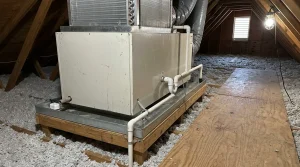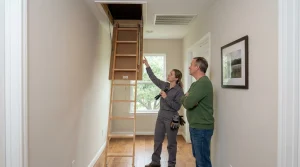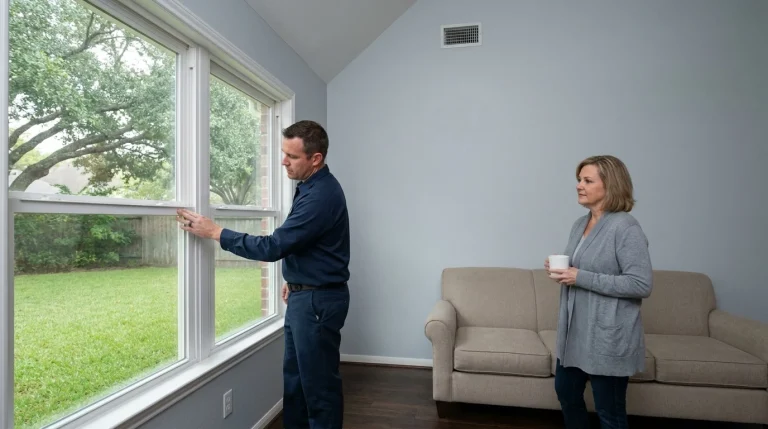
A heating load calculation for a Houston home estimates how much heat the house loses on a cold night, measured in BTUh (British thermal units per hour), so the new furnace or heat pump can replace exactly that amount. It looks at insulation, air leaks, windows and their orientation, ceiling heights, ductwork and the local winter design temperature, room by room. Square footage alone cannot answer the question. Proper sizing matters because equipment that is too big short cycles and wears out early, while equipment that is too small leans on backup heat strips during every cold snap.
Here is a scenario that plays out across Houston every fall. A homeowner gets two quotes for a new heating system. One contractor glances at the house, asks for the square footage and names a size on the spot. The other spends time in the attic, measures windows and asks about rooms that never feel comfortable. The two recommendations can differ by a full equipment size, and only one of them is based on the house itself.
Our heating season is short and usually mild, which tempts people to treat heating capacity as an afterthought. The right size depends on how your particular home gains and loses heat, and getting it wrong affects comfort, noise, utility bills and how long the equipment lasts. This guide explains what a heating load is, what goes into calculating it, and how to tell whether a proposed system actually fits your home.
What Heating Load Means for a Houston Home
Heating load is the rate at which your home loses heat when it is cold outside. The heating system has to add heat back at the same rate to hold the temperature you set.
Heat loss in plain terms
On a winter night, warmth inside the house escapes through the attic, walls, windows, doors, the slab and every gap where outdoor air sneaks in. Contractors express that loss as BTUh, a measure of heat per hour. A BTUh calculation adds up the loss through each part of the building at a chosen outdoor design temperature, and the total is the heating load. Equipment capacity is rated the same way, which is how the two numbers get compared.
Why heating and cooling loads differ here
Houston homes have a larger cooling load than heating load for most of the year. Summer brings intense sun on roofs and west-facing windows, plus heavy humidity that the air conditioner has to remove. Winter brings a handful of cold fronts and the occasional hard freeze. Because the two loads differ so much, the equipment is usually chosen with the cooling load in mind, then checked to confirm it has enough heating capacity for the heating load. A heat pump sized for summer often covers most winter nights on its own, with electric heat strips or a gas furnace helping during the coldest hours.
Why square footage rules of thumb fall short
Rules like "one ton per so many square feet" ignore everything that makes one house different from the next. Two homes of the same size in Cypress and Sugar Land can have widely different heating loads because of insulation depth, window area, ceiling heights, duct location and how airtight they are. A rule of thumb tends to land on the large side, which is one reason oversized equipment is so common across the Houston area.
What Goes Into a Heating Load Calculation
A proper heating load calculation, often called an HVAC load calculation, is a room-by-room look at the building, not a single guess for the whole house. Each factor below changes the result.
Insulation and air leakage
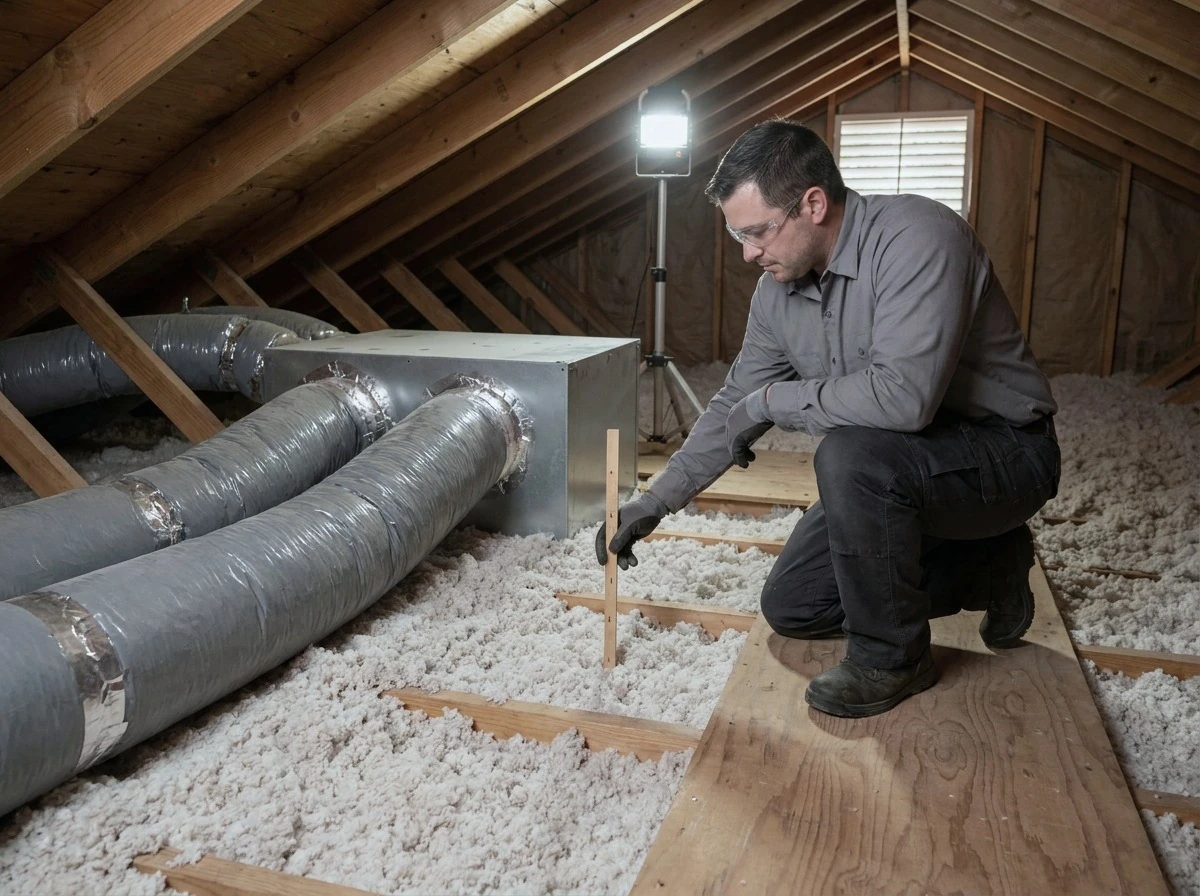
Insulation slows heat moving through the attic floor, walls and ceilings, and its strength is measured as R-value. ENERGY STAR publishes recommended home insulation R-values by climate zone, and notes that a higher R-value means better thermal performance. Air leakage matters just as much. Gaps around attic hatches, recessed lights, plumbing penetrations and older windows let warm air escape and cold air in, which raises the heating load no matter how much insulation sits in the attic.
Windows, doors and orientation
Windows lose heat far faster than an insulated wall, so total window area has a large effect on the result. Orientation matters in both seasons. South-facing glass can collect useful winter sun, while large west-facing windows add heavily to the summer cooling load. Single-pane or aging double-pane windows raise the heating load compared with newer, tighter units.
Ceiling heights and room volume
A room with a vaulted or two-story ceiling holds far more air than a room of the same floor area with a standard ceiling. Warm air also rises and collects near the top of tall spaces, so open living rooms and entry halls often need more heat than their square footage suggests. Many newer homes in Katy and Tomball have exactly these tall, open spaces.
Ductwork location and leakage
In most Houston homes, ducts run through a hot summer attic that also turns cold during a winter freeze. ENERGY STAR's duct sealing guidance says that in a typical house about 20 to 30 percent of the air moving through the duct system is lost to leaks, holes and poorly connected ducts. That lost air is heat you paid for that never reaches the rooms. A sound load calculation accounts for where the ducts run and how well they are sealed and insulated.
Design temperatures and occupants
The calculation uses an outdoor design temperature for the local climate, a cold condition the system should handle comfortably, rather than the single coldest night on record, and a separate cooling design condition covers summer. It also considers the indoor temperature you expect to keep, how many people live in the home and heat from appliances and lighting. Designing for a once-in-a-generation freeze would oversize the equipment for every other night of the winter.
| Factor | How it changes the heating load | What the evaluation looks at |
|---|---|---|
| Insulation | Thin or uneven insulation raises heat loss | Attic insulation depth and coverage, wall insulation where visible |
| Air leakage | Gaps let cold outdoor air replace warm indoor air | Attic hatch, recessed lights, penetrations, door and window seals |
| Windows and orientation | More glass and older windows lose more heat | Window area, type and the direction each one faces |
| Ceiling height | Taller rooms hold more air to heat | Vaulted ceilings, two-story spaces, open floor plans |
| Ductwork | Leaky or poorly insulated ducts waste heat | Duct location, connections, insulation and airflow to each room |
| Occupants and use | People and appliances add some heat | Household size and how the rooms are used |
What Happens When Heating Is Sized Wrong
Sizing errors show up in comfort, noise and repair bills. They run in both directions, and each has its own symptoms.
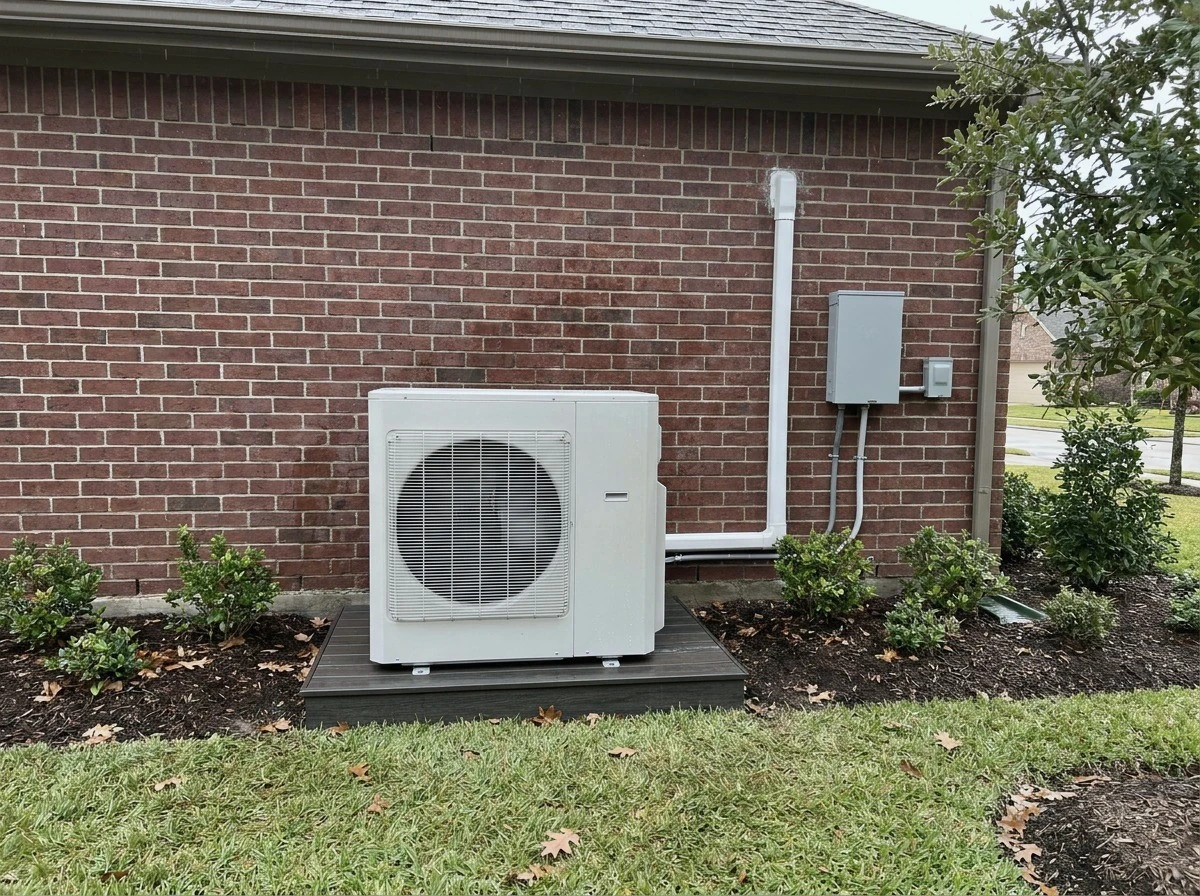
Oversized equipment
An oversized furnace or heat pump heats the house quickly, shuts off, then starts again a few minutes later. This short cycling creates temperature swings, louder operation and more wear on ignitors, blower motors and compressors, since starting up is the hardest moment in any cycle. On the cooling side, oversizing is the most common HVAC problem in Houston homes, because short summer cycles end before the system can pull enough moisture out of the air. Our article on oversized AC problems explains why that matters so much in our humid climate.
Undersized equipment
An undersized system runs nearly nonstop on cold nights and still lets the temperature drift down. With a heat pump, the thermostat calls for backup electric heat strips more often, and those strips use far more electricity than the heat pump itself. Rooms at the end of long duct runs, or above the garage, feel the shortfall first.
Why the cooling side usually drives the decision
In Houston, a heat pump has to be sized for summer first, because an oversized unit will not control humidity well. The heating load then decides whether that heat pump needs help on the coldest nights, and how much. Heat pumps are a strong fit for our mild winters, and a dual fuel system that pairs a heat pump with a gas furnace can make sense where gas service already exists and you want reliable backup heat for a hard freeze.
Staging gives more room for error
Two-stage equipment can run at a lower output most of the time and step up only when the weather turns cold. For most Houston homes, two-stage systems are the sweet spot: they handle mild days quietly and evenly, and still have reserve capacity for a freeze. Variable-speed equipment adjusts in smaller steps and sits at the premium end, while single-stage equipment is the budget option with the least flexibility.
How to Tell If Your Current System Is the Right Size
You do not need a calculator to spot the warning signs. How your system behaves on a cold night tells you a lot.
Signs your heating may be oversized
Watch for a system that runs only a few minutes at a time, then shuts off and restarts often. Other clues include noticeable temperature swings, a blast of warm air followed by long quiet stretches and rooms that feel warm near the vents but cool elsewhere. A furnace that cycles this way on a mild evening is a classic sign of excess capacity.
Signs your heating may be undersized
A system that runs almost constantly during a cold front and still cannot reach the thermostat setting may be too small for the house. Frequent use of auxiliary heat on a heat pump thermostat, high winter electric bills and one or two rooms that never warm up are common clues. Before blaming the equipment, check whether duct leaks or missing insulation are part of the problem.
Questions to ask any installer
Ask how the size was chosen. A good answer mentions room-by-room heat loss, insulation levels, window area and orientation, ceiling heights and the condition of the ductwork. Be cautious with a quote that simply matches the size of the old unit, or one based only on square footage.
Fix the house before you size the system
Improvements to insulation and air sealing lower the heating load, so they should happen before the final sizing, not after. If you plan to add attic insulation or seal ducts, do that first or include it in the evaluation, so the new equipment matches the house you will actually live in. Our guide to insulation and sealing for heating efficiency covers where those upgrades make the biggest difference.
How Our Team Sizes a New Heating System
Our team focuses on new system installations and full replacements for homes across the Houston area. On every one of those projects, HVAC design and equipment selection start with sizing.
The in-home evaluation comes first
Every job begins with an in-home evaluation. We look at your insulation, ductwork, ceiling heights, window orientation and airflow distribution from room to room, then use what we find to work out the heating and cooling loads for your home and to check whether the duct design can deliver the airflow each room needs. That is the information a proper heating system sizing decision depends on, and it cannot be gathered from the driveway.
Matching equipment to the result
Once the heating and cooling load is known, equipment selection follows. For many homes that means a two-stage heat pump, sometimes paired with a gas furnace as a dual fuel system. When the cooling side is due as well, our ac system installation services keep the indoor and outdoor components matched to the same load. Our pillar guide to heating technology in 2026 compares today's heat pumps and furnaces for Houston homes.
Warranty, financing and service areas
VeriChill installations come with a warranty of 10 years parts and compressor, with VeriChill handling the 90-day registration. Financing is available through Wells Fargo, Synchrony Bank and Goodleap for qualified homeowners. Texas HVAC licensing is held at the company level, and we provide professional heating installation services and work as residential hvac contractors across Houston, Cypress, Katy, Spring, Sugar Land and Tomball.
Key Takeaways
- A heating load calculation measures how fast your home loses heat on a cold night, expressed in BTUh, so the new system can replace it.
- Square footage rules of thumb ignore insulation, air leaks, windows, ceiling heights and ductwork, and they tend to oversize equipment.
- In Houston, the cooling load is usually larger, so equipment is sized for summer first and then checked against the heating load.
- Oversized heating short cycles and wears out early, while undersized heating runs nonstop and leans on costly backup heat strips.
- Insulation and duct sealing lower the heating load, so plan those upgrades before the final sizing decision.
- Ask every installer how the size was chosen; a room-by-room answer is a good sign, a quick square footage guess is not.
Frequently Asked Questions
How do I calculate the heat load for my house?
A heat load calculation adds up how much heat leaves each room through the ceiling, walls, windows, doors and floor, plus the heat lost to air leaks and the ductwork. Each piece depends on insulation levels, window type and area, ceiling height and the outdoor design temperature for your area. Online calculators can give a rough idea, but a reliable result needs measurements taken in the home. A qualified HVAC professional can complete a room-by-room calculation as part of an in-home evaluation.
How much heating does my house need in Houston?
There is no single answer, because two Houston homes of the same size can have widely different heating loads. Insulation depth, air sealing, window area and orientation, ceiling heights and duct condition all change the result. Because our winters are mild, many homes need less heating capacity than cooling capacity, and a heat pump sized for summer often covers most winter nights. A room-by-room heating load calculation is the only dependable way to know what your home actually needs.
Is a bigger heating system better?
No. A heating system that is larger than the home needs heats the house quickly, shuts off and restarts often, which is called short cycling. That pattern causes temperature swings, more noise and extra wear on parts that work hardest at start-up. On the cooling side, oversized equipment also removes less humidity, a serious drawback in Houston. The goal is proper heating size, where the system runs steady cycles and keeps every room comfortable on a cold night.
Do Houston homes need a heating load calculation if winters are mild?
Yes. Mild winters do not make sizing unimportant; they make it easier to get wrong. Because the cooling load is usually larger, a heat pump is often sized for summer, and the heating load then decides whether it needs backup heat strips or a gas furnace for hard freezes. Without a calculation, that backup is guesswork. A proper heating load calculation also shows whether insulation or duct improvements would let you choose smaller, quieter equipment.
What is the difference between heating load and cooling load?
Heating load is the rate at which a home loses heat in cold weather, while cooling load is the rate at which it gains heat and moisture in hot weather. They come from different sources: winter loss depends mostly on insulation, air leaks and windows, while summer gain adds intense sun, west-facing glass and humidity. In Houston, the cooling load is usually the larger of the two, so both are calculated and the equipment is chosen to handle each one.
Conclusion
A heating load calculation turns a guess into a decision. It measures how your home actually loses heat, through its insulation, windows, ceilings, air leaks and ductwork, and gives you a capacity target that fits the house rather than its square footage. In Houston, where the cooling load usually leads and winter brings only a few cold fronts, that careful balance between the two sides is what keeps a system quiet, efficient and comfortable all year.
Oversized equipment short cycles and wears out early, and undersized equipment struggles through every freeze. Both problems are avoidable when sizing starts with the house itself, and when improvements like insulation and duct sealing are planned before the final equipment choice.
If you are planning a new heating system, VeriChill can help you start with the right numbers. Call VeriChill at 281-559-6995 or contact our team to schedule an in-home evaluation.