Houston doesn't do brutal winters, but it does do cold snaps that catch everyone off guard. February's 24-hour drops into the 20s. The occasional ice event. Mornings in January that sit at 38°F for a week. The heating system that runs fine in a mild December is the same system that either keeps up or doesn't when a real cold front comes through.
The technology side of residential heating has moved meaningfully over the past five years. New refrigerants have replaced the standard refrigerants of a decade ago. Inverter-driven heat pumps have matured to the point where they perform as the primary heat source in Houston's climate. Dual-fuel systems have become more sophisticated. Smart controls handle variable loads in ways that weren't possible with single-stage equipment. And the federal refrigerant transition, now in full effect, has reshaped what's available and what it costs.
If you're planning a heating upgrade in 2026 or know it's coming soon, this is what matters — from a Houston-specific perspective, not a generic national one.
Why Houston Is a Unique Case for Heating Decisions
Most heating content assumes you live somewhere where the heating system runs six months a year at high load. Houston doesn't work that way. The typical Houston home heats for maybe 90-120 hours across the entire winter at meaningful load, with most of the year's "heating demand" being modest morning warm-ups from 62°F to 70°F.
That radically changes the economics and technology recommendations.
Payback periods are longer
A more efficient heating system in Minneapolis pays for itself in 5-7 years because it runs for so many hours. In Houston, the same upgrade takes 10-15 years to pay back on energy savings alone. The upgrade still makes sense, but usually for reasons other than pure efficiency — comfort, indoor air quality, equipment matching with the AC side, and redundancy during cold snaps.
Heat pump viability is excellent
Houston's winter low temperatures rarely fall below the point at which modern heat pumps lose efficiency. A high-quality heat pump in Houston can cover almost all heating loads on its own. The arguments for gas furnaces in Chicago don't apply here the same way.
Sizing matters even more than in heating-dominant climates
A heating system sized for rare February cold snaps is oversized 95% of the winter. That leads to the same short-cycling problems oversized AC creates — uncomfortable temperature swings, higher wear, and less efficient operation at normal conditions.
Dual-fuel is often overkill
The traditional argument for a heat pump paired with a gas furnace (the gas takes over when the heat pump loses efficiency below 30°F) applies less aggressively in Houston, because we're rarely below 30°F, and modern inverter heat pumps maintain capacity much lower than older units did.
The Heating Technologies That Matter in Houston in 2026
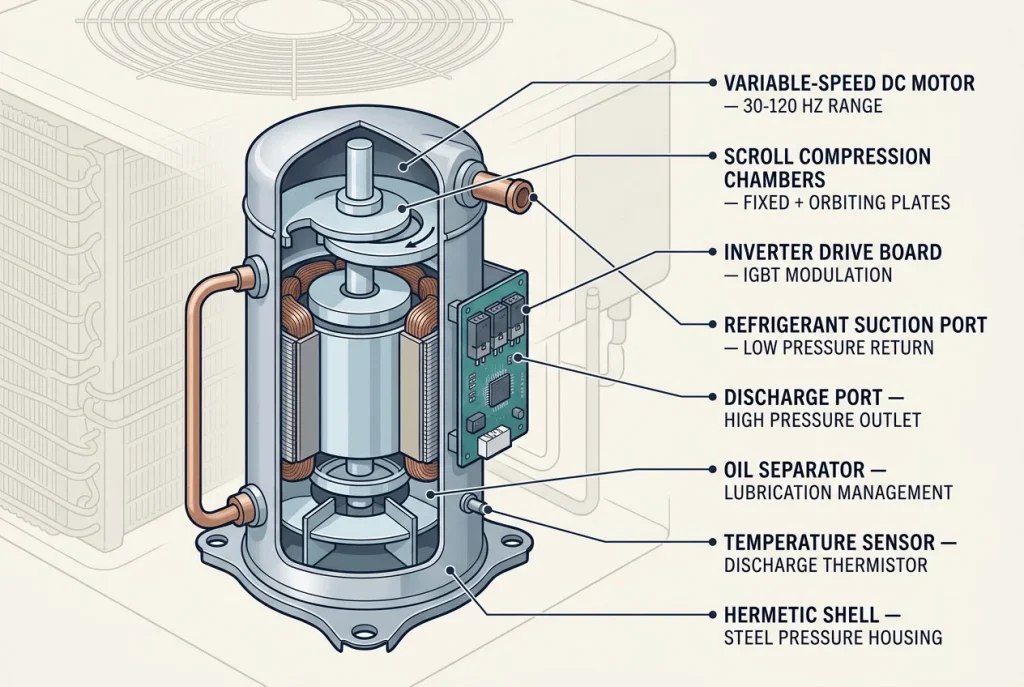
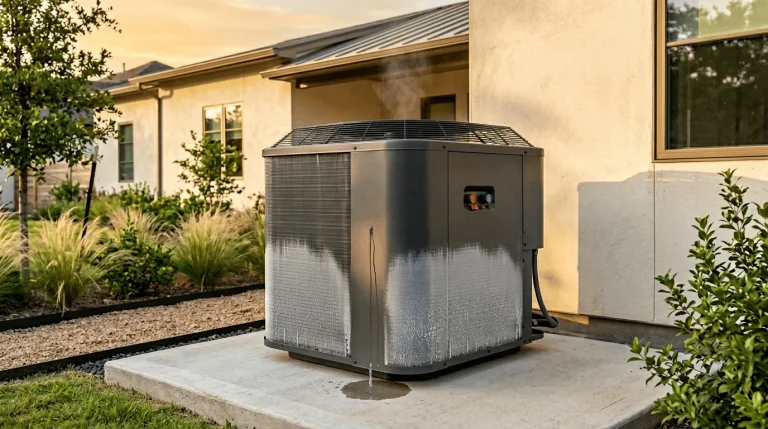
Inverter-Driven Heat Pumps
This is the most important heating development for Houston in a decade. Inverter-driven heat pumps use variable-speed compressors that modulate output continuously rather than cycling on and off at full capacity. The practical effects:
- Longer, quieter heating cycles that stabilize indoor temperature
- Excellent performance at moderate cold temperatures — capacity hold at 35°F that single-stage units can't match
- Efficient partial-load operation for Houston's typical mild winter mornings
- Quiet outdoor unit operation during heating mode
- Natural integration with variable-speed cooling on the same system
For most Houston homes without a strong reason to stay with gas, an inverter heat pump is the 2026 default recommendation.
New Refrigerants (A2L Transition)
The federal EPA refrigerant phase-down took effect January 1, 2025. New residential heat pump and AC systems are now sold with low-GWP (global warming potential) refrigerants — primarily R-454B and R-32, both classified as A2L (mildly flammable). Existing R-410A systems continue to operate, but new installations use the new refrigerants.
What this means for Houston homeowners:
- If you're replacing a system in 2026, it will be on R-454B or R-32
- Equipment is slightly more expensive than the 2024 baseline, though prices are stabilizing
- Repair costs on existing R-410A systems are climbing as refrigerant supply tightens — similar pattern to what happened with R-22 a decade ago
- Service technicians need updated certification for A2L refrigerants; not every local contractor has it yet
This is less a "should I wait or not" question and more a "be aware of the pricing landscape" question. Waiting to replace doesn't save money; it often costs more if you need major repairs on the old refrigerant.
Cold-Climate Heat Pumps (Overkill for Houston)
Cold-climate heat pumps with enhanced vapor injection can maintain capacity down to -15°F . They're engineered for northern climates. In Houston, they're expensive overkill. A standard inverter heat pump has sufficient capacity for any temperature Houston realistically sees. Don't pay for cold-climate specifications you won't use.
High-Efficiency Gas Furnaces (95-98% AFUE)
For homes staying on gas, modern condensing furnaces at 95-98% AFUE extract heat from combustion gases that older 80% AFUE units vent to the outside. Installation is more complex — PVC vents replace metal flues, condensate drains need to be added — but the equipment is efficient, reliable, and appropriate for homes with existing gas service and high heating demand.
In Houston specifically, the efficiency gain of over 80% equipment takes 10-15 years to pay back because we don't heat enough hours. The argument for 95%+ furnaces in Houston is usually ventilation safety (no backdrafting risk with sealed combustion) and equipment matching with a high-efficiency AC.
Dual-Fuel (Hybrid) Systems
A heat pump for mild temperatures plus a gas furnace for cold extremes. The controls automatically switch based on outdoor temperature and economics. This makes strong sense in climates where heat pumps lose efficiency below 25-30°F. In Houston, where inverter heat pumps perform well through most of the winter, dual-fuel is increasingly optional.
Where it still makes sense in Houston:
- Homes with existing, recent gas furnaces that don't need replacement
- Homeowners who want belt-and-suspenders backup during cold snaps
- Higher-heating-load homes (large, older, less insulated)
Where it's unnecessary:
- Well-insulated newer homes
- Homes without existing gas service (new gas service infrastructure is expensive)
- Homeowners prioritizing simplicity and a single-fuel setup
Smart Thermostats and Zoning
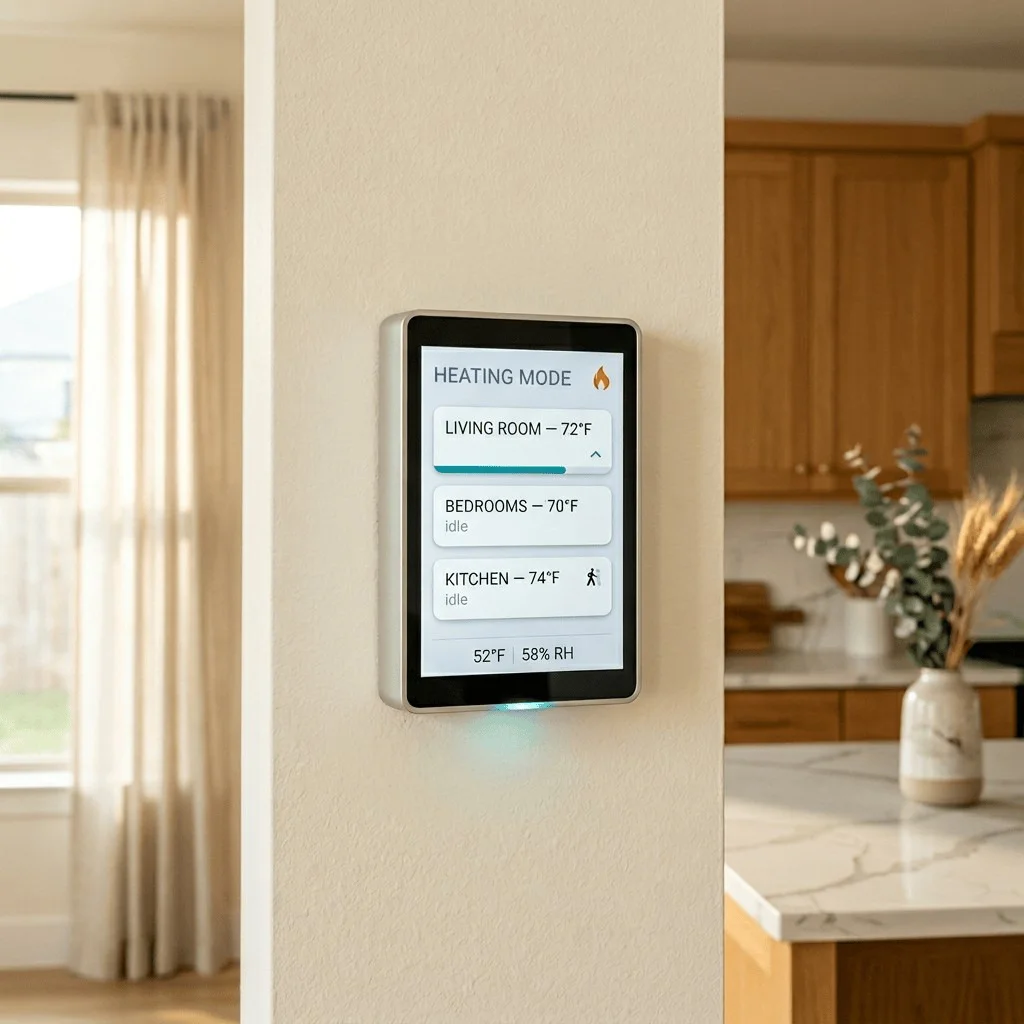
Variable-speed equipment unlocks zoning options that didn't work well with single-stage. Smart thermostats with zone controls can heat occupied rooms aggressively while coasting unoccupied zones, which is especially effective in two-story Houston homes where the upstairs heats to a usable temperature on its own from rising warmth.
Good zoning in a Houston home can cut heating runtime by 20-30% without sacrificing comfort. Bad zoning (too many zones, wrong damper control, mismatched equipment capacity) creates comfort problems. The equipment has to be sized and controlled for zoning to work.
Ductless Mini-Splits for Additions
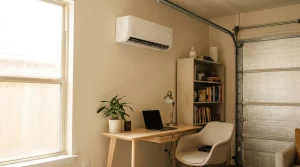
Finished garages, guest suites, detached offices, and additions that never got properly integrated into the main HVAC system are ideal candidates for ductless mini-split heat pumps. They heat and cool the individual space efficiently without the cost of extending ductwork. In Houston specifically, they handle both the heating and cooling seasons without any climate-related compromises.
What's NOT Worth Pursuing for Most Houston Homes
Geothermal heat pumps. Enormous installation cost, long payback, excellent technology — but Houston's mild winters mean the ROI stretches 15-25 years. Rarely is the right answer here.
Electric resistance heating (as the primary source). Cheap equipment, expensive to run. Backup-only applications.
Hydronic (radiant floor) heating. Lovely comfort, expensive install, minimal benefit in Houston's climate, where you're only heating 2-3 months a year. Specialty applications only.
Oil heating or propane in urban Houston. Gas service availability makes this a non-starter for most of the metro.
Sizing: The Most Underestimated Factor
Whatever technology you choose, sizing matters more than the brand. An oversized heating system creates the same problems oversized cooling creates — short cycling, poor comfort, and accelerated wear. A proper Manual J load calculation provides the actual heating load for your home under design conditions (typically 28-32°F in Houston). Don't size based on the existing equipment's tonnage or BTU rating — that equipment was likely oversized to begin with.
For heat pumps specifically, sizing is usually driven by cooling load in Houston, with heating capacity verified as adequate for the 99% winter design temperature. Inverter heat pumps have enough modulating range to handle both loads well when properly sized for cooling.
Matching Heating and Cooling Decisions
In Houston, the heating system is almost always part of the same equipment decision as the cooling system. Heat pumps provide both. Variable-speed AC air handlers work with both electric and gas heat. Ducts serve both. Controls manage both.
That means heating technology decisions rarely get made in isolation. They get made during AC replacement, and the smart move is to evaluate the heating side at the same time. Some homeowners replace an AC only to realize a year later that the 20-year-old gas furnace should have been replaced at the same time.
If your AC is approaching replacement age, the heating question is part of the same conversation — not a separate one.
What Contractors Should Actually Do in Your Home
A quality heating upgrade evaluation in Houston in 2026 includes:
- A Manual J load calculation for both heating and cooling
- An assessment of your ductwork's ability to handle the new system's airflow
- A discussion of fuel economics — not just equipment costs, but 10-year operating costs including any changes to gas service
- Refrigerant transition awareness (equipment recommendations will be on new refrigerants)
- Zoning feasibility assessment if applicable
- Integration with any IAQ components (filtration, humidity control, ventilation)
- Clear specification of what's "worth it" versus "marketing upgrades"
Anything less and you're buying on price alone, which in HVAC usually means buying the least durable option available.
FAQ: Heating Technology in Houston for 2026
Should I get a heat pump or a gas furnace in Houston in 2026?
For most Houston homes, a modern inverter heat pump is the better choice. It handles both heating and cooling in a single system, performs well in Houston's mild winters, and is the industry's technology direction. Gas furnaces still make sense in specific cases (existing gas service, high heating load, specific preference), but they're no longer the default.
Are the new A2L refrigerants safe?
Yes, when installed by a certified technician. A2L designation means "mildly flammable" — significantly less flammable than natural gas and handled with appropriate installation precautions. Millions of A2L systems are already operating safely worldwide.
Will my existing ductwork work with a new heat pump?
Probably, with an evaluation. Heat pumps move air volumes similar to AC systems, so ducts sized for your current AC generally accommodate them. The exception is when existing ducts are already undersized or leaky — those issues need to be addressed regardless of equipment choice.
How much does a heat pump cost in Houston?
Inverter-driven heat pump systems run $9,000-$18,000 installed, depending on size, efficiency, and complexity. Two-stage systems are $7,500-$13,000. Single-stage systems (less recommended for Houston) are $5,500-$10,000. These are 2026 prices with new refrigerants.
Is a smart thermostat worth it for heating in Houston?
Usually yes — but the benefit is modest because the heating hours are limited. The bigger value is cooling-season optimization. Spend $150-$300 on a quality smart thermostat, but don't expect heating-specific payback on its own.
Should I wait to upgrade in case technology improves further?
No significant technology jumps are visible in the 1-3 year horizon. Refrigerants are settled for the next few years. Inverter technology is mature. Waiting doesn't save you money and may cost you in repair bills on aging equipment. Replace when your equipment's lifespan hits its natural end.
What's the biggest mistake Houston homeowners make on heating upgrades?
Treating heating as separate from cooling. In Houston, they're the same equipment decision 95% of the time, and the smart move is to evaluate the whole system together rather than replacing them on different schedules.
Heating upgrades in Houston are more about comfort, reliability, and equipment matching than pure efficiency economics. The right technology for a specific home depends on heating load, gas availability, ductwork condition, and the rest of the HVAC system. A proper evaluation tells you which direction to go — and, just as importantly, what's not worth paying for.