AC installation costs in Houston are driven by six main factors: system type and efficiency tier, home size and cooling load, ductwork condition and modifications, electrical requirements, installation complexity, and warranty level. Understanding these factors helps you evaluate quotes and make an informed investment decision.
We don't publish prices on our website, and there's a good reason for that. Every Houston home is different, and quoting a number without seeing your specific situation would be misleading at best and dishonest at worst. What we can do is walk you through exactly what drives the cost of an AC installation so you can compare quotes intelligently and understand what you're actually paying for.
Houston homeowners shopping for a new AC system quickly discover that quotes can vary dramatically from one contractor to the next. Some of that variation is legitimate, driven by real differences in equipment quality and the scope of installation. Some of it reflects corners being cut. Knowing which cost factors matter and how they affect your investment helps you tell the difference.
The Six Factors That Drive AC Installation Costs
Equipment selection (system type and SEER2 rating) is typically the largest cost driver, followed by ductwork modifications, installation complexity, electrical requirements, permit fees, and warranty protection level.
Factor 1: System Type and Efficiency Tier
The equipment itself is the biggest variable. A basic single-stage 14.3 SEER2 system costs significantly less than a variable speed 20+ SEER2 system. Both cool your home, but they differ dramatically in humidity control, noise level, energy consumption, and long-term operating costs. For Houston, where your AC runs eight to nine months annually, the efficiency tier you choose directly impacts monthly energy bills for the life of the system.
Heat pumps add another dimension. Since a heat pump handles both heating and cooling, the total system cost may actually be lower than purchasing a separate AC plus furnace. The equipment is typically priced slightly higher than a comparable AC-only unit, but you're buying one system instead of two.
Factor 2: Home Size and Cooling Load
Larger homes require larger capacity systems, which cost more. But it's not a simple linear relationship. A 3,000-square-foot home doesn't automatically cost 50% more than a 2,000-square-foot home. The actual cooling load depends on insulation, windows, layout, and ductwork, which is why a proper assessment is non-negotiable before receiving an accurate quote.
Factor 3: Ductwork Condition and Modifications
This is where hidden costs catch homeowners by surprise. If your existing ductwork is undersized, leaking, poorly insulated, or improperly routed, your new AC system will underperform regardless of how premium the equipment is. Duct sealing, insulation upgrades, or partial redesign add to the installation cost but often delivers better comfort improvement than upgrading to a higher equipment tier. According to the Department of Energy, installation problems like oversizing, improper charging, and leaky ducts result in efficiency losses and shortened equipment life.
| Cost Factor | Impact Level | What Drives the Cost |
| Equipment tier (SEER2) | High | Higher efficiency = higher equipment cost but lower monthly bills |
| Home cooling load | Medium-High | Larger capacity systems cost more; proper sizing prevents overspending |
| Ductwork modifications | Medium-High | Sealing, insulation, and resizing add cost but dramatically improve performance |
| Electrical upgrades | Medium | Panel upgrades, dedicated circuits, and disconnect installation |
| Installation complexity | Medium | Attic access, multi-story homes, and tight equipment locations |
| Permits and inspections | Low | Required by Houston/Harris County code; relatively modest |
Equipment Tiers: What You Get at Each Level
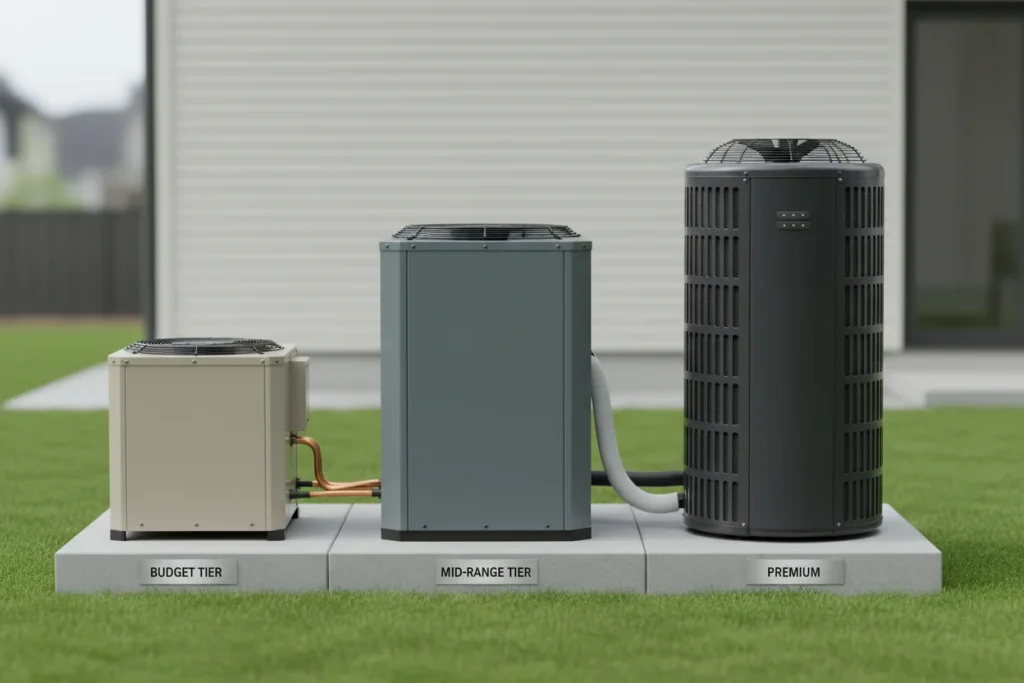
Budget, mid-range, and premium AC equipment tiers offer progressively better efficiency, humidity control, noise levels, and warranty coverage. Houston's extended cooling season amplifies the operating cost differences between tiers.
Understanding equipment tiers helps you match your investment to your priorities. None of these tiers is inherently "bad" or "good." They're different tools for different needs and budgets.
Budget Tier: Single-Stage, 14.3-16 SEER2
These systems meet minimum federal efficiency requirements for Houston's Southeast region. They cool your home reliably and have the lowest upfront cost. The tradeoff is higher energy consumption, louder operation, and basic humidity control. For budget-conscious homeowners or rental properties, this tier gets the job done.
Mid-Range Tier: Two-Stage, 16-18 SEER2
Two-stage systems run at a lower, more efficient speed most of the time and ramp up to full capacity only during peak demand. This means better humidity control, quieter operation, and noticeably lower energy bills compared to single-stage systems. For most Houston homeowners, this tier hits the sweet spot of value, comfort, and efficiency.
Premium Tier: Variable Speed, 18-24+ SEER2
Variable speed systems continuously adjust output to match your home's exact cooling demand. They run at low speed most of the time, providing exceptional humidity control, whisper-quiet operation, and the lowest possible energy consumption. The upfront cost is highest, but the operating cost savings are most significant in Houston's long cooling season.
| Equipment Tier | SEER2 Range | Humidity Control | Noise Level | Best For |
| Budget (single-stage) | 14.3-16 | Basic | Louder | Budget priority, rentals |
| Mid-range (two-stage) | 16-18 | Good | Moderate | Most Houston homeowners |
| Premium (variable speed) | 18-24+ | Excellent | Whisper-quiet | Maximum comfort, efficiency |
Hidden Cost Factors Most Homeowners Miss
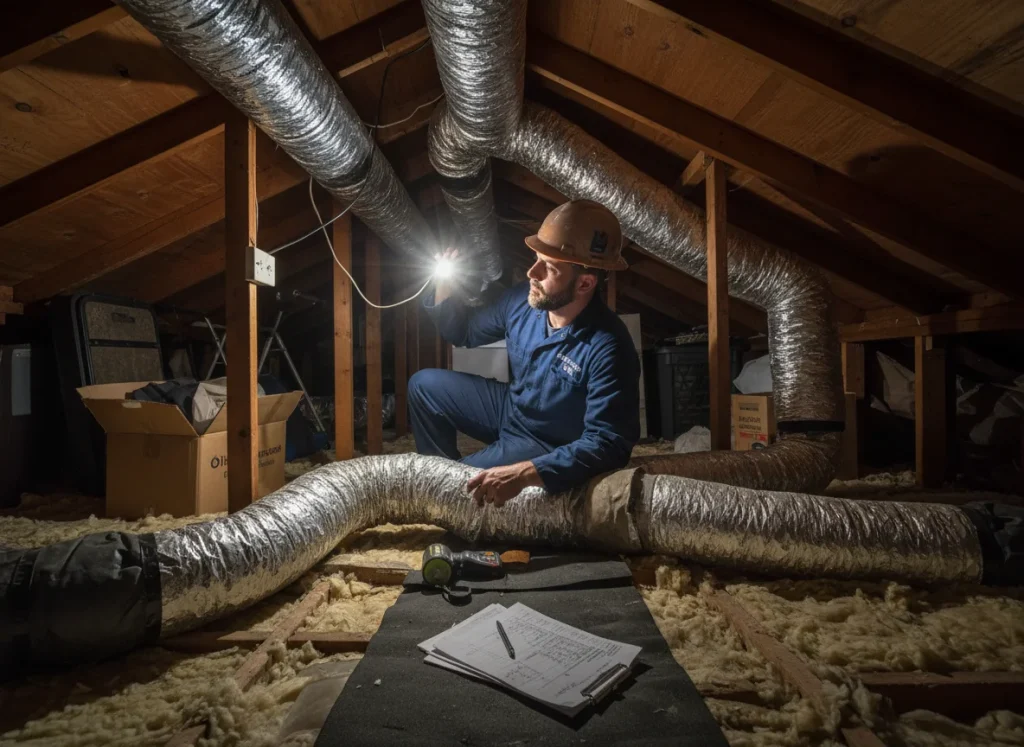
Ductwork modifications, electrical panel upgrades, permit requirements, and equipment access difficulty are common cost factors that don't appear in equipment price lists but significantly affect total installation investment.
Electrical Requirements
Upgrading from a lower-capacity system to a larger or higher-efficiency unit may require upgrading the electrical panel, installing new dedicated circuits, or replacing disconnect boxes. Homes with older electrical infrastructure frequently need these upgrades to safely support modern AC equipment. This isn't an upsell; it's a code requirement that protects your home.
Access and Installation Complexity
Equipment in difficult locations costs more to install. Attic installations in Houston homes often involve navigating tight access points, working in extreme heat (Houston attics can exceed 140°F), and managing heavy equipment through narrow openings. Multi-story homes, equipment locations requiring crane access, and homes with limited outdoor space for condenser placement all increase labor complexity and time.
Permits and Inspections
Houston and Harris County require permits for HVAC installations. Permit fees are relatively modest compared to the overall project cost, but they're not optional. The permit process includes a post-installation inspection that verifies code compliance, proper equipment sizing, and safe electrical and gas connections. VeriChill handles all permitting and inspection coordination as part of our standard installation process.
- Ductwork is the most frequently underestimated cost factor. A new AC system connected to leaking, undersized ducts is like putting a high-performance engine in a car with bald tires.
- Electrical upgrades are required by code, not optional add-ons. Modern AC systems draw more power than their predecessors and require proper electrical infrastructure.
- Difficult access locations legitimately increase labor time. Attic installations in Houston's heat are physically demanding and time-intensive work.
- Permits protect you. The inspection verifies that your installation meets safety and performance standards.
Key Takeaways
- Equipment tier is the largest cost variable, but the cheapest system costs more to operate every month for 12 to 15 years in Houston's climate.
- Ductwork condition can make or break your installation's performance. Spending on duct improvements often delivers more comfort than upgrading the equipment tier.
- Two-stage systems (mid-range) hit the value sweet spot for most Houston homes, balancing upfront cost with meaningful efficiency and humidity improvements.
- Compare quotes based on scope, not just price. The cheapest quote may exclude ductwork evaluation, permit fees, or proper commissioning.
- Financing makes quality installations accessible. VeriChill works with Wells Fargo, Synchrony Bank, and Goodleap so the budget doesn't force you into the cheapest option.
- A detailed written estimate should explain every line item. If a quote is a single number without a breakdown, ask questions.
Frequently Asked Questions
Why do AC installation quotes vary so much in Houston?
Quotes vary based on equipment tier, ductwork scope, electrical requirements, and installation complexity. Contractors who skip the assessment or exclude ductwork evaluation will quote lower but may deliver a system that underperforms.
What's the biggest factor in AC installation cost?
Equipment selection (system type and SEER2 rating) is typically the largest single cost driver, followed by ductwork modifications if needed.
Is a higher SEER2 rating worth the extra cost in Houston?
Generally yes. Houston's 8-9 month cooling season means you'll use your AC far more than national averages, making efficiency differences more impactful on monthly energy bills.
Should I get the cheapest AC installation I can find?
The cheapest quote often reflects lower-quality equipment, skipped assessment steps, or excluded services like ductwork evaluation and proper commissioning. Total cost of ownership matters more than upfront price.
Does ductwork affect AC installation cost?
Yes. If existing ductwork needs sealing, insulation, or modification, this adds to the project cost but significantly improves system performance and efficiency.
Do I need an electrical upgrade for a new AC?
Possibly. Larger or higher-efficiency systems may require panel upgrades, dedicated circuits, or new disconnect boxes. Your contractor should evaluate this during the assessment.
Are AC installation permits required in Houston?
Yes. Houston and Harris County require permits for HVAC installations. The permit process includes a post-installation inspection for safety and code compliance.
Does VeriChill provide detailed written estimates?
Yes. Every VeriChill estimate itemizes equipment, installation scope, modifications, permits, and warranty coverage so you understand exactly what you're investing in.
What financing options are available for AC installation?
VeriChill partners with Wells Fargo, Synchrony Bank, and Goodleap to offer flexible financing that makes quality heating installation and AC installation accessible at every budget.
How long do new AC systems last in Houston?
With proper sizing and professional installation, AC systems typically last 12 to 15 years in Houston. Higher-quality equipment and installation extend the upper end of that range.
Conclusion
AC installation costs in Houston reflect the complexity of matching the right equipment to your home's specific needs and ensuring quality installation that lasts. The cheapest quote isn't always the best value, and the most expensive system isn't always necessary. Understanding what drives costs puts you in a position to make an informed decision that balances comfort, efficiency, and budget. VeriChill provides detailed, transparent estimates that explain every component of your investment. Schedule a free evaluation, and we'll walk through exactly what your home needs and why.