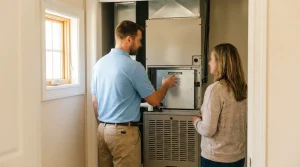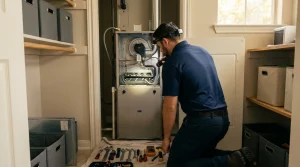
Heating installation costs in Houston depend on five main factors: the type of system you choose, your home's size and layout, the condition of your existing ductwork, the equipment's efficiency rating, and the complexity of the installation. Understanding these factors helps you compare quotes intelligently and avoid surprises.
Replacing your home's heating system is a significant investment, and the cost isn't one-size-fits-all. Two homes on the same street in Katy or Cypress can have dramatically different installation costs depending on their construction, existing equipment, and homeowner choices. The key is understanding what drives those differences so you can make informed decisions.
This guide breaks down each cost factor, explains why Houston's market differs from other regions, and helps you evaluate quotes based on what's actually included rather than just the bottom-line number.
How Does System Type Affect Heating Installation Costs?
The type of heating system you choose is typically the single biggest cost variable. Gas furnaces, heat pumps, dual-fuel systems, and electric furnaces each have different equipment costs, installation requirements, and long-term operating economics. Your home's existing infrastructure and Houston's climate both influence which type makes the most financial sense.
Houston homeowners generally choose between four heating system types, and each carries different installation cost profiles:
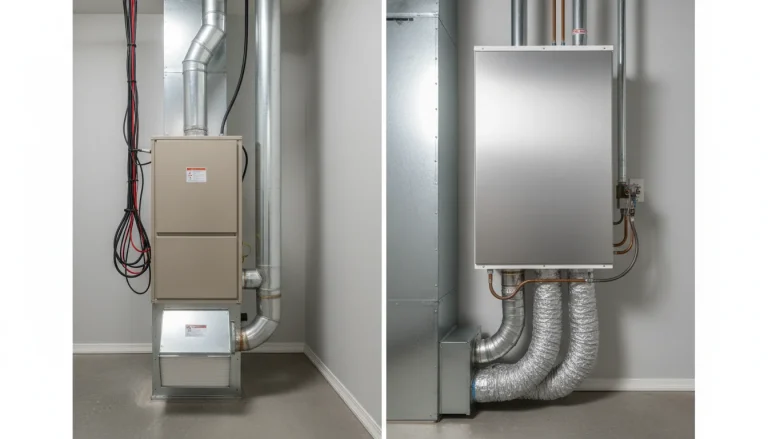
Gas Furnaces remain the most common choice in Greater Houston, especially for homes with existing natural gas connections. Installation involves connecting to the gas line, venting combustion gases, and integrating with your existing ductwork and AC system. Homes that already have gas infrastructure face lower installation complexity than those requiring new gas line runs.
Heat Pumps handle both heating and cooling with a single outdoor unit, which can simplify overall system costs. For Houston's mild winters, heat pumps provide efficient heating without the combustion equipment, venting, or gas connections that furnaces require. The tradeoff is that heat pump equipment itself often costs more than a comparable furnace.
Dual Fuel Systems pair a heat pump with a gas furnace backup, switching automatically based on outdoor temperatures. These systems deliver the best efficiency across Houston's variable weather but involve installing both pieces of equipment.
Electric Furnaces have the lowest equipment costs but the highest operating costs. They're typically only recommended for Houston homes without natural gas access.
| System Type | Equipment Cost Factor | Installation Complexity | Operating Cost (Houston) | Best For |
| Gas Furnace | Moderate | Moderate (requires gas/venting) | Low to moderate | Homes with existing gas lines |
| Heat Pump | Moderate to high | Lower (no gas/venting needed) | Low | Year-round efficiency in mild climates |
| Dual Fuel | Highest | Highest (two systems) | Lowest | Maximum flexibility and efficiency |
| Electric Furnace | Lowest | Lowest | Highest | Homes without gas access |
The DOE's guide to purchasing energy-efficient residential furnaces provides detailed information on how different furnace types compare on lifecycle cost, including the relationship between upfront equipment investment and long-term operating savings.
How Do Home Size and Ductwork Condition Impact Costs?

Larger homes require larger heating systems with more capacity, which increases equipment costs. But the condition of your existing ductwork can affect costs just as much, sometimes more. Leaky, undersized, or deteriorating ducts reduce system performance and may need modification or replacement as part of the installation.
Your home's square footage is the starting point for determining the size of the heating system you need. But it's far from the only factor. A 2,500-square-foot home in Sugar Land with excellent insulation, newer windows, and well-sealed ductwork needs a very different system than a 2,500-square-foot home in Spring with original 1990s insulation and aging ducts.
Ductwork: The Hidden Cost Variable
Here's where many Houston homeowners get surprised. Your new heating system is only as good as the ductwork delivering warm air throughout your home. During a proper evaluation, your contractor should assess:
- Duct sizing: Are the existing ducts appropriately sized for the new equipment's airflow requirements?
- Duct condition: Are there leaks, disconnections, or crushed sections, especially in attic spaces where Houston's heat deteriorates duct connections over time?
- Insulation status: Is the ductwork properly insulated? In Houston's humid attics, poorly insulated ducts cause condensation and energy loss.
- Airflow distribution: Do all rooms receive adequate airflow, or are there chronic hot and cold spots?
If your ductwork is in good shape, the installation cost stays focused on equipment and labor. If modifications or partial replacements are needed, that adds to the project scope. The important thing is that a reputable installer identifies these issues upfront during the evaluation, not midway through the installation.
| Home Characteristic | Cost Impact | Why It Matters |
| Square footage | Direct: larger home = larger system | Equipment capacity scales with cooling/heating load |
| Insulation quality | Indirect: better insulation = smaller system needed | Reduces required equipment size and operating costs |
| Ductwork condition | Variable: good ducts = no added cost | Poor ducts require modification or replacement |
| Number of stories | Moderate: multi-story homes need balanced airflow | May require zoning or duct modifications |
| Ceiling heights | Moderate: higher ceilings increase volume to heat | Affects load calculations and equipment sizing |
Why Does Equipment Efficiency Affect the Price?
Higher efficiency ratings mean more sophisticated engineering inside the equipment, which raises the purchase price. But in Houston's climate, higher efficiency also means lower operating costs year after year. The real question isn't which system costs the least to buy. Which system costs the least to own over 15 to 20 years?
For gas furnaces, efficiency is measured by AFUE (Annual Fuel Utilization Efficiency). The DOE minimum for the South is 80% AFUE, meaning 80 cents of every fuel dollar becomes usable heat. High-efficiency models reach 96% to 98.5% AFUE, capturing nearly all the energy from the fuel.
The price difference between an 80% AFUE furnace and a 96% AFUE model is meaningful upfront. But that 16-percentage-point efficiency gap translates to real savings every month your heating system runs. For Houston, where heating system installation typically serves a shorter heating season, the payback period for premium efficiency is longer than in colder climates but still worthwhile over the system's lifespan.
For heat pumps, efficiency is measured differently: SEER2 for cooling and HSPF2 for heating. Since heat pumps handle both functions, their efficiency impact extends throughout the year, not just during the heating season. That makes the efficiency investment even more impactful in Houston's climate.
The Efficiency Sweet Spot for Houston
Industry professionals often recommend that Houston homeowners target the mid- to high-efficiency range rather than the absolute premium tier. A 92% to 96% AFUE furnace or a 16 to 18 SEER2 heat pump typically delivers the best balance of upfront investment and long-term return for our climate. The ultra-premium tier makes more financial sense in markets with much longer, colder winters.
| Efficiency Tier | AFUE Range | Equipment Cost | Operating Cost | Houston ROI |
| Standard | 80-83% | Lower | Higher | Shorter payback, higher lifetime operating cost |
| Mid-Efficiency | 90-95% | Moderate | Moderate | Strong balance for Houston's climate |
| High-Efficiency | 96-98.5% | Higher | Lowest | Best lifetime value; longer initial payback |
What Should You Look for in a Heating Installation Quote?

A good quote itemizes equipment, labor, any ductwork work, permits, disposal of old equipment, and warranty details. Be cautious of quotes that lump everything into a single number without breaking down what's included. The cheapest quote often leaves out work that a thorough installer would include.
When comparing heating installation quotes in Houston, the bottom-line number tells you almost nothing on its own. What matters is what's behind that number.
Every quality residential heating installation quote should include:
- Equipment specifications: exact model, efficiency ratings, and capacity
- Labor and installation scope: what the crew will do, including any electrical or gas work
- Ductwork assessment results: whether modifications are recommended and what they involve
- Permits and inspections: required by local code for gas equipment and electrical connections
- Old equipment removal and disposal
- Warranty terms: equipment warranty length, labor warranty, and who handles manufacturer registration
- Timeline: expected installation duration and schedule
Red flags in quotes include vague equipment descriptions ("mid-range furnace" without a specific model), no mention of ductwork evaluation, and single-number pricing without line items. These shortcuts often mean the quote either leaves out necessary work or uses lower-quality equipment.
VeriChill provides clear, written estimates with 10-year parts and compressor warranty coverage, handles manufacturer registration within 90 days, and works with financing partners, including Wells Fargo, Synchrony Bank, and Goodleap, to help manage the investment.
Key Takeaways
- System type is the biggest cost variable: gas furnaces, heat pumps, dual-fuel, and electric furnaces each have different equipment and installation cost profiles.
- Ductwork condition can surprise you: leaky or undersized ducts often need modification during installation, adding to the project scope but improving performance.
- Higher-efficiency costs more upfront but saves more over time, and the mid- to high-efficiency range typically offers the best return for Houston's climate.
- Home size alone doesn't determine cost. Insulation quality, ceiling heights, ductwork condition, and number of stories all influence system sizing and installation complexity.
- A transparent estimate should itemize everything: equipment, labor, ductwork modifications, permits, and warranty terms so you can compare quotes accurately.
- Always get a proper home evaluation rather than accepting quotes based solely on square footage, because generic sizing can lead to over- or undersized systems.
Frequently Asked Questions
Why do heating installation costs vary so much between Houston homes?
Every home has different characteristics: size, insulation quality, ductwork condition, number of stories, and existing infrastructure. These variables mean two homes on the same street can require very different equipment and installation approaches.
Is a heat pump cheaper to install than a gas furnace in Houston?
Heat pump equipment often costs more than a comparable gas furnace, but installation can be simpler since there's no gas line or venting required. The total project cost depends on your home's specific situation.
How much does ductwork modification add to a heating installation?
It varies significantly depending on the scope. Minor sealing and insulation improvements are relatively modest, while replacing entire duct runs or resizing for a new system adds more substantial costs to the project.
Should I choose the cheapest or most expensive heating system?
Neither, necessarily. The best value comes from choosing the right system for your home's needs and Houston's climate. Mid-to-high efficiency equipment often delivers the strongest long-term return.
Does VeriChill offer financing for heating installation?
Yes. VeriChill partners with Wells Fargo, Synchrony Bank, and Goodleap to provide financing options that help Houston homeowners manage the investment in a new heating system.
What's included in a VeriChill heating installation estimate?
Every VeriChill estimate itemizes equipment, labor, any recommended ductwork work, permits, old equipment disposal, and warranty details. You'll know exactly what's included before any work begins.
How long does a heating installation take in Houston?
Most standard heating installations are completed in one day. Projects involving ductwork modifications or system type changes may require two days.
Does the brand of equipment affect installation costs?
Yes. Different manufacturers price their equipment differently, and premium brands typically cost more. However, the quality of installation matters as much as equipment brand for long-term performance and reliability.
Why does efficiency rating affect the price of a heating system?
Higher efficiency equipment uses more advanced engineering, including secondary heat exchangers, variable-speed components, and sealed combustion systems. These features cost more to manufacture but reduce operating costs.
When is the best time to get a heating installation quote in Houston?
Fall is ideal. Contractors have more availability after summer's peak cooling season, giving you time for a thorough evaluation and installation before winter cold fronts arrive.
Conclusion
Understanding what drives heating installation costs helps you move from sticker shock to informed decision-making. The biggest factors, system type, home characteristics, ductwork condition, and efficiency level, are all things a thorough evaluation will reveal before you see a final number. The right contractor walks you through each factor so you understand exactly what you're investing in and why.Ready for a transparent evaluation of your Houston home's heating needs? VeriChill's team provides clear, itemized estimates with no hidden costs. Call 281-559-6995 to schedule your consultation.