AC installation in Houston requires equipment matched to our extreme heat and humidity, professional sizing based on your home's specific characteristics, and installation quality that ensures your system performs efficiently for 12 to 15 years. Getting any of these wrong costs you comfort and money every single month.
If you're researching a new air conditioning system for your Houston home, you're making one of the most important comfort investments you'll face. VeriChill specializes in residential AC installation across Greater Houston, and we've seen firsthand how the right equipment paired with proper installation transforms a home's comfort. The wrong combination? That's a recipe for high energy bills, sticky indoor air, and a system that quits years before it should.
Houston isn't a forgiving climate for air conditioning equipment. Your AC runs eight to nine months of the year, battles humidity levels that rarely drop below 75%, and endures summer heat that pushes well past 95°F. This guide covers everything you need to know before your new AC goes in, from choosing the right system type and size to understanding what happens on installation day.
What Goes Into a Proper AC Installation?
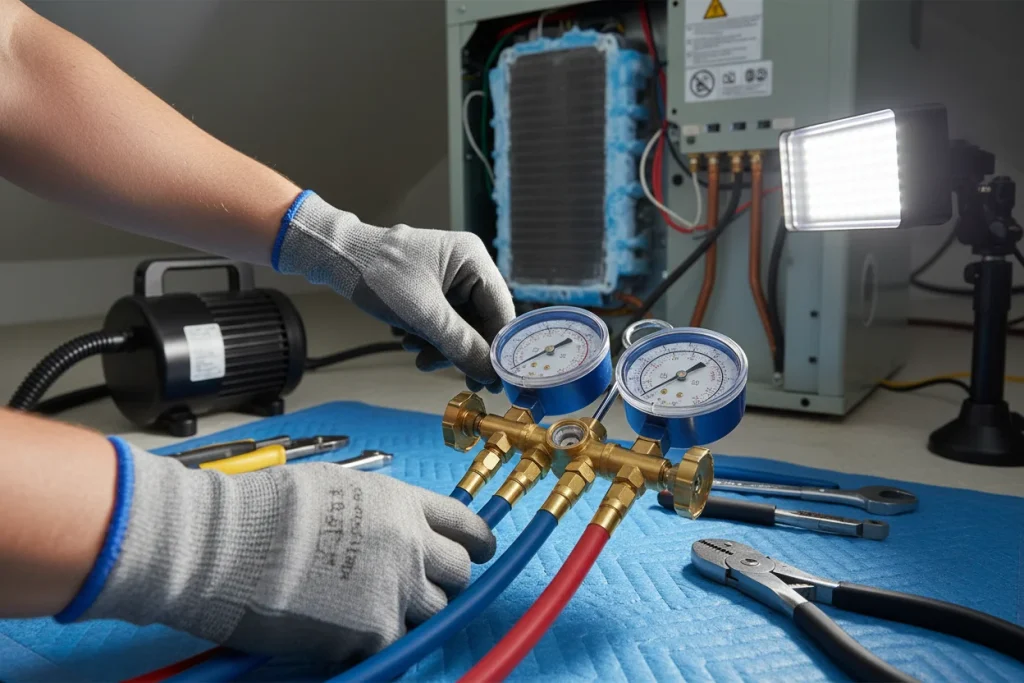
A proper AC installation includes a detailed home assessment, equipment selection matched to your home's cooling load, removal of old equipment, precise placement and connection of new components, refrigerant charging, ductwork evaluation, system testing, and final performance verification.
Most homeowners think of AC installation as swapping an old box for a new one. The reality is far more involved, and the quality of each step directly affects how well your system performs for the next decade-plus. Here's what a professional AC installation service actually includes, from first visit to final walkthrough.
The process starts before any equipment arrives. A qualified HVAC contractor visits your home to evaluate your cooling needs. This isn't a quick measurement of square footage; it's a thorough assessment of insulation, window exposure, ceiling heights, ductwork condition, airflow patterns, and the specific characteristics that determine how much cooling your home requires. In Houston, south-facing and west-facing windows, attic insulation quality, and ductwork routing through unconditioned attic spaces are major factors that generic sizing formulas miss entirely.
- Pre-installation assessment: Your contractor evaluates your home's building envelope, existing ductwork, electrical capacity, and equipment location options. This determines what equipment you need and whether any modifications are required before installation day.
- Equipment selection: Based on the assessment, your contractor recommends specific equipment matched to your home. This includes the outdoor condenser, indoor evaporator coil, air handler or furnace compatibility, thermostat, and any ductwork modifications.
- Old system removal: The existing system is properly disconnected, refrigerant is recovered in accordance with EPA regulations, and the old equipment is removed and disposed of responsibly.
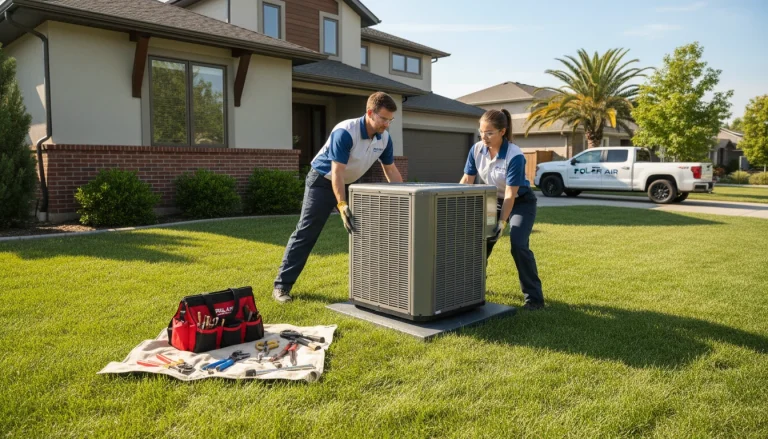
- New system installation: The outdoor unit is placed on a level composite pad; indoor components are installed; refrigerant lines are brazed and pressure-tested; electrical connections are made; and the condensate drain is routed and secured.
- System commissioning: Refrigerant is charged to manufacturer specifications, the system is started, and technicians verify proper operation, including temperature differential, airflow, and thermostat response.
| Installation Phase | What Happens | Why It Matters |
| Home assessment | Evaluate cooling load, ductwork, and electrical | Determines correct equipment and identifies needed modifications |
| Equipment selection | Match the system to the home's specific requirements | Prevents oversizing, undersizing, and compatibility issues |
| Old system removal | Recover refrigerant, disconnect, and remove | Environmental compliance and clean workspace for new install |
| New equipment placement | Position outdoor/indoor units, connect lines | Proper placement affects efficiency, noise, and longevity |
| System commissioning | Charge refrigerant, test performance | Confirms the system operates at manufacturer's specifications |
| Final verification | Airflow check, thermostat walkthrough | Ensures the homeowner understands their new system |
How to Choose the Right AC System for Houston's Climate
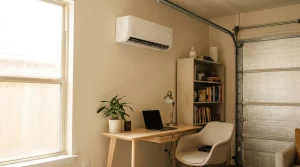
The best AC system for your Houston home depends on your cooling load, humidity control needs, efficiency goals, and budget. Split systems remain the most popular choice, while heat pumps offer dual heating and cooling for Houston's mild winters.
Choosing the right system isn't just about picking a brand or a SEER2 number. It's about matching equipment capabilities to Houston's specific climate demands. And honestly? The humidity piece is where most homeowners get surprised.
Split Systems: Houston's Standard
Split systems pair an outdoor condenser with an indoor evaporator coil and air handler. They offer the widest range of efficiency tiers, capacity options, and brand choices. For most Houston homes with existing ductwork, a split-system AC unit installation is the most practical and cost-effective option. Single-stage models run at full capacity or off. Two-stage models have a high and low setting for better humidity control. Variable-speed systems adjust output continuously, delivering the best dehumidification performance in Houston's muggy conditions.
Heat Pumps: Cooling and Heating in One
Heat pumps work exactly like air conditioners in cooling mode but reverse the cycle in winter to heat your home. For Houston, where heating demand is minimal, a heat pump eliminates the need for a separate furnace. They're energy efficient for heating down to about 35°F, which covers nearly all Houston winter days. The Department of Energy notes that heat pumps offer an energy-efficient and versatile solution for both heating and cooling, making them increasingly popular in mild climates.
Understanding SEER2 Ratings
SEER2 (Seasonal Energy Efficiency Ratio 2) measures cooling efficiency over an entire season. Texas falls within the DOE's Southeast region, requiring a minimum SEER of 14.3 for split-system air conditioners. A higher SEER2 means lower energy bills, but the upfront cost increases as well. In Houston, where your AC runs most of the year, the payback period for higher-efficiency equipment is shorter than in cooler climates. The sweet spot for most Houston homeowners falls in the 16 to 18 SEER2 range, balancing efficiency gains against equipment cost.
| System Type | Efficiency Range | Best For | Humidity Control |
| Single-stage split | 14.3-16 SEER2 | Budget-conscious, smaller homes | Basic |
| Two-stage split | 16-18 SEER2 | Most Houston homes | Good |
| Variable speed split | 18-24+ SEER2 | Maximum comfort, larger homes | Excellent |
| Heat pump (single-stage) | 14.3-16 SEER2 | Homes wanting dual heating/cooling | Basic |
| Heat pump (variable speed) | 18-22+ SEER2 | Year-round efficiency priority | Excellent |
AC Sizing: Why Getting It Right Matters More in Houston

Correct AC sizing for Houston homes requires evaluating square footage, insulation, window orientation, ceiling height, ductwork, and occupancy. Oversizing is the most common and most expensive mistake in our market because it destroys humidity control.
Sound familiar? You've probably heard "one ton per 500 square feet" tossed around as a sizing rule. That shortcut ignores everything that actually matters in Houston's climate. Two homes with identical square footage can need very different tonnage based on insulation quality, window placement, and ductwork condition.
The Oversizing Problem
An oversized AC cools your home too quickly. Sounds like a good problem, right? It's not. The system reaches thermostat setpoint before it's run long enough to pull moisture from the air. It shuts off, humidity climbs, and the system kicks back on minutes later. This short cycling pattern leaves your home cold but clammy, wears out the compressor faster, and uses more electricity than a properly sized system running longer, steadier cycles. In Houston, oversizing is the number one comfort complaint we see in homes where the previous contractor guessed at sizing rather than doing a proper evaluation.
What Your Contractor Should Evaluate
A thorough on-site assessment looks at your home as a complete system, not just a number on a floor plan. Your contractor should walk every room, check attic conditions, inspect ductwork, note window sizes and compass orientation, and assess insulation levels. Houston attics can reach 140°F+ in summer, and any ductwork running through that space loses significant cooling capacity unless it's properly insulated and sealed.
- Insulation levels: R-38 attic insulation is standard for Houston, but many older homes have R-19 or less. Poor insulation increases the cooling load significantly.
- Window heat gain: South and west-facing windows bring substantial solar heat into your home. Low-E glass, window film, and exterior shading all affect sizing calculations.
- Ductwork condition: Leaking ducts waste up to 30% of cooled air. Your contractor should check connections, insulation, and routing before finalizing equipment selection.
- Home layout and airflow: Open floor plans, vaulted ceilings, multi-story layouts, and room additions all affect how air moves through your home and where supplemental capacity might be needed.
| Sizing Factor | Houston Impact | Common Mistake |
| Square footage | Starting point only | Using this as the only factor |
| Attic insulation | Major heat gain source | Ignoring attic R-value |
| Window orientation | South/west windows add a huge heat load | Not accounting for solar gain |
| Ductwork in the attic | Loses cooling to 140°F+ attic heat | Skipping duct inspection |
| Home additions | Often underserved by the original system | Not resizing for added space |
| Occupancy | More people = more heat and moisture | Using generic occupancy estimates |
What to Expect on Installation Day
A typical Houston AC installation takes one day for a straightforward replacement, sometimes extending to two days if ductwork modifications, electrical upgrades, or complex equipment configurations are required. Your contractor should communicate the timeline upfront.
Installation day is when everything comes together. Knowing what to expect helps you prepare and gives you a benchmark for evaluating your contractor's professionalism. A well-run installation follows a predictable sequence, and your contractor should walk you through the plan before work begins.
Before the Crew Arrives
Clear a path to your indoor equipment (attic access, utility closet, or garage) and to the outdoor unit location. Move any furniture or items that might be in the way. Your contractor should have discussed access requirements during the assessment visit. If pets need to be secured, plan for that too. The installation crew will need doors open at various points and may run loud equipment.
During Installation
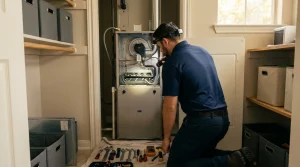
The crew protects your floors and walls before bringing equipment inside. Old equipment is removed first, followed by the installation of new components. Expect to hear brazing torches, vacuum pumps, and general construction noise. A quality crew keeps the workspace organized and communicates progress throughout the day. They should test every connection, verify refrigerant charge with manifold gauges, and run the system long enough to confirm proper temperature differential across the coil.
The Final Walkthrough
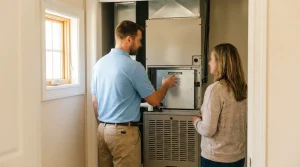
Before the crew leaves, they should walk you through your new thermostat, explain the system's features, review your warranty coverage, and answer every question you have. VeriChill handles manufacturer warranty registration within 90 days of installation, so your 10-year parts and compressor coverage is always secured. You should also receive documentation of your system's settings and specifications for your records.
- Typical timeline: 6 to 10 hours for a standard replacement. Complex installations with duct modifications may take up to 2 days.
- Power interruption: Expect your home to be without AC for most of the installation. Plan accordingly during Houston's warmer months.
- Noise levels: Brazing, drilling, and equipment placement generate significant noise. The crew should notify you before particularly loud work.
- Post-installation: Run your system normally for the first 24 to 48 hours and note any unusual sounds or temperature inconsistencies. Contact your contractor with any concerns.
Key Takeaways
- AC installation in Houston is a system-level project, not just an equipment swap. Assessment, sizing, equipment selection, and installation quality all affect your result.
- Oversizing your AC is the most costly mistake in Houston's climate because it shortens cycles, fails to control humidity, and prematurely wears out the compressor.
- SEER2 ratings matter more in Houston than most markets because your system runs eight to nine months of the year, amplifying efficiency differences.
- Split systems remain the best option for most Houston homes, with two-stage and variable speed models offering the best humidity control for our climate.
- Heat pumps are increasingly viable in Houston because our mild winters fall well within their efficient operating range, eliminating the need for a separate heating system.
- Ductwork evaluation is as important as equipment selection. Leaking or poorly insulated ducts undermine even the most efficient new AC system.
Frequently Asked Questions
How long does AC installation take in Houston?
A standard replacement typically takes six to ten hours, completed in a single day. Complex installations requiring ductwork modifications, electrical upgrades, or difficult access may extend to two days.
What size AC do I need for my Houston home?
Size depends on square footage, insulation, windows, ceiling height, ductwork, and layout. A professional on-site assessment is the only reliable way to determine proper tonnage for Houston's heat and humidity.
How often should I replace my AC in Houston?
Most Houston AC systems last 12 to 15 years. If your system is over 10 years old with rising energy bills, frequent repairs, or poor humidity control, replacement likely makes more financial sense than continued repairs.
What SEER2 rating should I choose for Houston?
Texas requires a minimum 14.3 SEER2. For Houston's long cooling season, systems in the 16 to 18 SEER2 range typically provide the best balance of efficiency and value. Variable speed models at 18+ SEER2 offer the best humidity control.
Is a heat pump better than a traditional AC for Houston?
Heat pumps are an excellent choice for Houston because they handle both cooling and heating efficiently. Our mild winters fall well within heat pump operating range, eliminating the need for a separate furnace in many homes.
Do I need new ductwork with a new AC system?
Not always, but your contractor should inspect existing ductwork for leaks, damage, proper sizing, and insulation condition. Duct modifications or sealing may be needed for the new system to perform at its best.
What brands does VeriChill install?
VeriChill installs high-efficiency systems from manufacturers vetted for Houston's demanding climate. We offer options at multiple price points with 10-year parts and compressor warranty coverage on every installation.
Does VeriChill offer financing for AC installation?
Yes. We work with Wells Fargo, Synchrony Bank, and Goodleap to provide flexible financing options, making quality AC installation accessible at every budget level.
When is the best time to install a new AC in Houston?
Spring and fall offer the best scheduling flexibility, shorter wait times, and comfortable conditions during installation. Avoid waiting until your system fails during a Houston summer heat wave.
What warranty comes with a new AC installation?
Every VeriChill installation includes a 10-year parts and compressor warranty. We handle manufacturer registration within 90 days of installation to ensure your coverage is always active.
Conclusion
AC installation in Houston is one of the most important investments you'll make in your home's comfort and efficiency. The right system, properly sized and professionally installed, handles our brutal summers and persistent humidity while keeping energy costs predictable for years. Don't shortcut the process: thorough assessment, careful equipment selection, and quality installation are what separate a system that performs from one that disappoints. VeriChill designs and installs AC systems specifically tailored to Greater Houston's demanding climate. Schedule a free in-home evaluation, and we'll show you exactly what your home needs, with no pressure and no surprises.