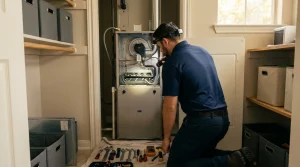
The right AC size for your Houston home depends on far more than square footage. Insulation quality, window orientation, ceiling height, ductwork condition, and Houston's extreme humidity all factor into proper sizing. A professional on-site assessment is the only reliable way to get it right.
You've probably searched "what size AC do I need" and found calculators telling you one ton per 400 to 500 square feet. Sounds simple, right? For Houston, that shortcut is dangerously incomplete. Our climate creates cooling demands that generic national formulas weren't designed to handle. VeriChill performs detailed home assessments for every AC unit installation because proper sizing is the single most important factor in your system's long-term performance.
Getting AC size wrong is expensive in both directions, but in Houston, oversizing is the far more common and more costly mistake. An oversized system actually makes your home less comfortable, not more. Let's break down why and what proper sizing actually looks like in our market.
Why the "One Ton Per 500 Square Feet" Rule Fails in Houston
Generic AC sizing formulas ignore the variables that matter most in Houston: humidity load, solar heat gain through windows, attic conditions, insulation quality, and ductwork efficiency. Two identically sized Houston homes can need very different tonnage.
The one-ton-per-500-square-feet rule was never meant to be a sizing standard. It's a rough starting point that ignores every factor that actually determines how much cooling your home needs. In Houston, those ignored factors are enormous.
Consider two 2,000-square-foot homes in Katy. Home A has R-38 attic insulation, low-E windows, and sealed ductwork in a conditioned attic space. Home B has R-19 insulation, single-pane windows facing west, and ducts that leak into a 140°F attic. Both are 2,000 square feet, but Home B might need a full ton more cooling capacity than Home A. Using the same formula for both guarantees one of them gets the wrong system.
Houston's humidity adds another layer. Your AC doesn't just cool air; it removes moisture. Sizing must account for the latent heat load (moisture removal) as well as the sensible heat load (temperature reduction). In drier climates, the sensible load dominates. In Houston, the latent load can represent 30% or more of your total cooling requirement. According to the Department of Energy, choosing the most effective cooling options for your climate can save money and improve comfort.
- Insulation R-value: R-38 attic insulation is the code minimum for Houston. Many older homes have R-19 or less, dramatically increasing the cooling load.
- Window solar gain: A large west-facing window wall can add the equivalent of a half-ton of cooling demand during summer afternoons.
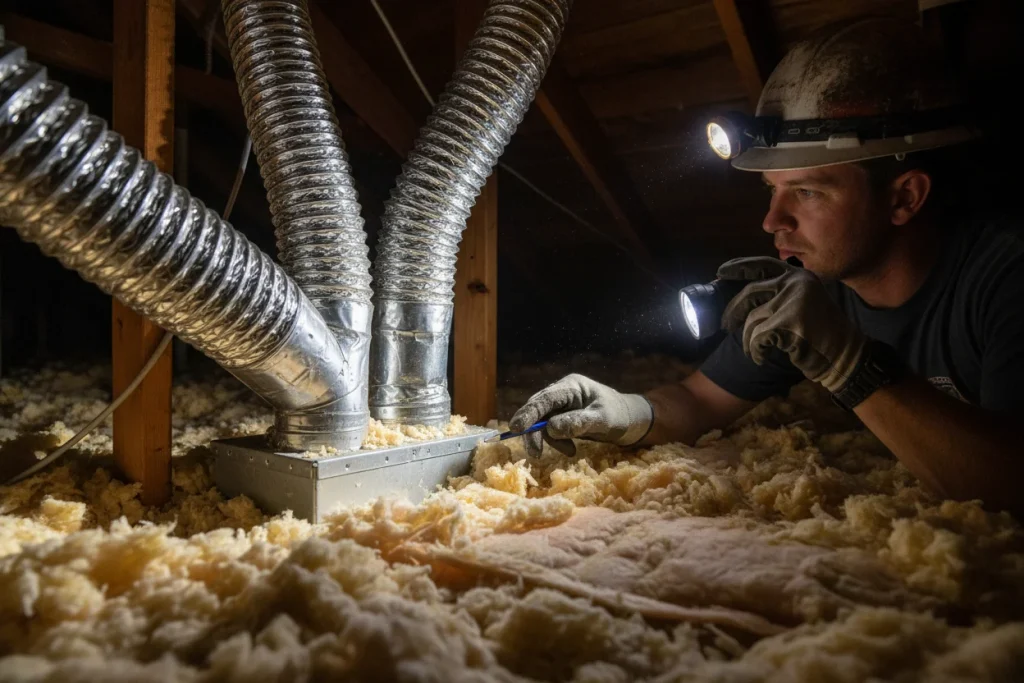
- Ductwork losses: Ducts in Houston attics can lose 25-30% of cooled air to the hot attic space if poorly insulated or leaking.
- Home orientation: Homes with primary living areas facing south and west absorb significantly more solar heat than north-facing layouts.
| Sizing Factor | Low Impact Example | High Impact Example | Tonnage Difference |
| Attic insulation | R-38 (code minimum) | R-13 (older home) | +0.5 to 1.0 ton |
| Window type | Low-E, double-pane | Single-pane, west-facing | +0.5 to 1.0 ton |
| Ductwork location | Conditioned space | Unconditioned attic, leaking | +0.5 to 1.5 ton |
| Home sealing | Tight envelope | Drafty, poor weatherstripping | +0.5 ton |
| Ceiling height | Standard 8 ft | Vaulted 12-16 ft | +0.5 ton |
The Oversizing Problem: Houston's Most Expensive Comfort Mistake
An oversized AC cools your Houston home too quickly, shutting off before removing enough moisture from the air. The result is a cold, clammy house with higher energy bills and accelerated equipment wear from constant short cycling.
This is the part that most homeowners find surprising. Bigger isn't better when it comes to air conditioning, especially in Houston. An oversized system reaches your thermostat setpoint in minutes, shuts off, and then the humidity immediately starts climbing. Within 10 to 15 minutes, the thermostat calls for cooling again, the system blasts on, and the cycle repeats. This is called short cycling, and it creates three serious problems.
First, comfort suffers. Your home oscillates between cold and clammy rather than maintaining consistent, dry comfort. The system never runs long enough to pull sufficient moisture from the air, leaving indoor humidity at 60-65% when it should be 45-55%. Second, energy bills increase. The compressor draws the most electricity during startup. A system that starts and stops 15 times per hour uses more energy than one that runs steadily for longer cycles. Third, equipment life shortens. The compressor, contactor, and capacitor wear out faster with frequent cycling. A system designed to last 15 years might fail in 10.
The right-sized system for Houston runs longer, steadier cycles that effectively remove both heat and moisture. It maintains consistent temperatures, keeps humidity in the comfortable range, and puts less stress on components. Sound familiar from what you've read about choosing the right HVAC system? Proper sizing is the foundation on which everything else depends.
| Sizing Scenario | Run Behavior | Humidity Control | Energy Use | Equipment Life |
| Oversized (too large) | Short cycles, frequent starts | Poor, clammy indoor air | Higher due to cycling | Shortened by 3-5 years |
| Right-sized (matched) | Steady, efficient cycles | Good, consistent comfort | Optimized for climate | Full expected lifespan |
| Undersized (too small) | Runs constantly, can't keep up | Adequate but slow recovery | High due to constant run | Shortened by overwork |
What a Proper AC Sizing Assessment Looks Like

A proper AC sizing assessment for Houston includes evaluating insulation, windows, ceiling heights, occupancy, ductwork, air sealing, and home orientation. Your contractor should walk through every room and inspect attic conditions before recommending specific equipment.
Here's what to expect when a qualified contractor assesses your home for a new AC system installation. This isn't a 15-minute walkthrough with a tape measure. It's a detailed evaluation that examines how your home actually gains and loses heat.
The Assessment Checklist
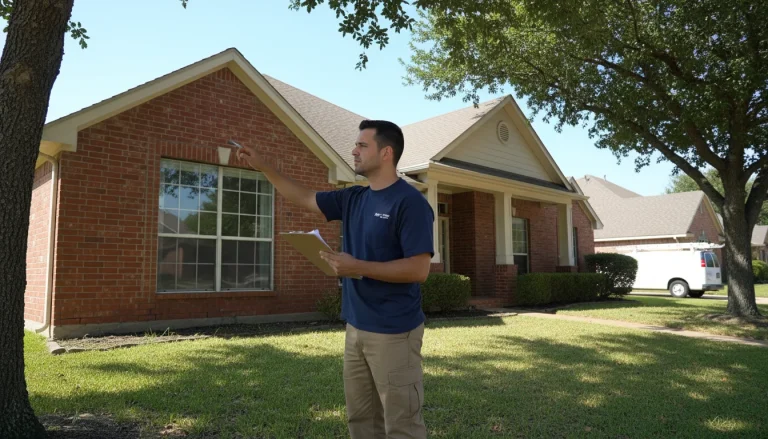
Your contractor starts outside, noting the home's orientation, window count and placement, tree and structure shading, and the condition of the existing outdoor equipment pad. Inside, they check the ceiling heights, window sizes, and register locations in every room. They inspect the attic for insulation depth and condition, ductwork routing and connections, and air handler placement. They also check the electrical panel for capacity and assess the home's overall air-sealing quality.
In Houston specifically, the contractor should pay attention to west-facing and south-facing windows (major heat gain), the condition of attic ductwork (major efficiency loss), and the home's overall moisture management. These Houston-specific factors often determine whether you need a 3-ton or 4-ton system, a difference that dramatically affects comfort and efficiency.
- Expect 45 to 90 minutes for a thorough assessment. Anything faster means corners are being cut.
- Your contractor should explain their findings. A quality evaluation includes a conversation about what they found and why they're recommending specific equipment.
- Get the assessment in writing. Your written proposal should reference the specific factors that determined the recommended system size.
- Compare assessments, not just prices. If one contractor recommends 3.5 tons and another says 5 tons, the one with the detailed home evaluation is more likely to be right.
Key Takeaways
- Generic sizing formulas don't work for Houston's climate. Our humidity, heat, and attic conditions create cooling demands that simple square footage calculations miss entirely.
- Oversizing is Houston's most common and costliest AC mistake. Short cycling destroys humidity control, increases energy costs, and shortens equipment life.
- A right-sized system runs longer, steadier cycles that maintain consistent temperature and humidity for genuine Houston comfort.
- Professional on-site assessment is non-negotiable. Your contractor must evaluate insulation, windows, ductwork, and home orientation before recommending tonnage.
- Ductwork condition can swing sizing by as much as a full ton. Leaking attic ducts are one of Houston's biggest hidden cooling losses.
- Compare contractor assessments, not just price quotes. The most detailed evaluation usually produces the most accurate sizing recommendation.
Frequently Asked Questions
How many tons of AC do I need for a 2,000 sq ft Houston home?
There's no universal answer. A 2,000 sq ft Houston home might need 3 to 5 tons depending on insulation, windows, ductwork, and layout. Only an on-site assessment provides an accurate recommendation.
What happens if my AC is too big for my home?
An oversized AC short cycles, failing to remove enough humidity from Houston's muggy air. You'll feel cold but clammy, pay higher energy bills, and face premature equipment failure.
What happens if my AC is too small?
An undersized AC runs constantly without reaching comfortable temperatures during peak Houston heat. It struggles on the hottest days and can't keep up with demand.
How do I know if my current AC is the wrong size?
Signs include short cycling (frequent on/off), persistent humidity despite cool temperatures, inconsistent room temperatures, and unusually high energy bills during summer months.
Does ceiling height affect AC sizing?
Yes. Vaulted or cathedral ceilings increase the air volume your system must cool. A room with 14-foot ceilings requires more cooling capacity than the same floor area with standard 8-foot ceilings.
How does ductwork affect AC sizing in Houston?
Ductwork in unconditioned Houston attics (140°F+ in summer) loses significant cooling capacity. Leaking or poorly insulated ducts can add a full ton or more to your sizing requirement.
Should I get a bigger AC just to be safe?
No. Oversizing is one of the most expensive mistakes in Houston's humid climate. A properly sized system outperforms an oversized one in comfort, efficiency, and longevity.
How long does an AC sizing assessment take?
A thorough assessment takes 45 to 90 minutes. The contractor evaluates insulation, windows, ductwork, attic conditions, and home layout before making equipment recommendations.
Can I use an online calculator to size my Houston AC?
Online calculators provide rough estimates at best. They can't account for Houston-specific factors like humidity load, attic duct losses, or your home's actual building envelope condition.
Does VeriChill charge for sizing assessments?
VeriChill provides free in-home evaluations for Houston homeowners considering new AC installation. The assessment includes a detailed review of your home and equipment recommendations.
Conclusion
AC sizing isn't a guessing game, and in Houston's demanding climate, getting it wrong costs you comfort and money every month for the life of the system. The right-sized AC runs efficiently, controls humidity, and maintains consistent temperatures throughout your home. It starts with a thorough assessment of your home's specific characteristics by a contractor who understands what Houston's heat and humidity demand from residential cooling equipment. VeriChill evaluates every Houston home individually before recommending equipment. Schedule your free assessment and find out exactly what your home needs for real Gulf Coast comfort.