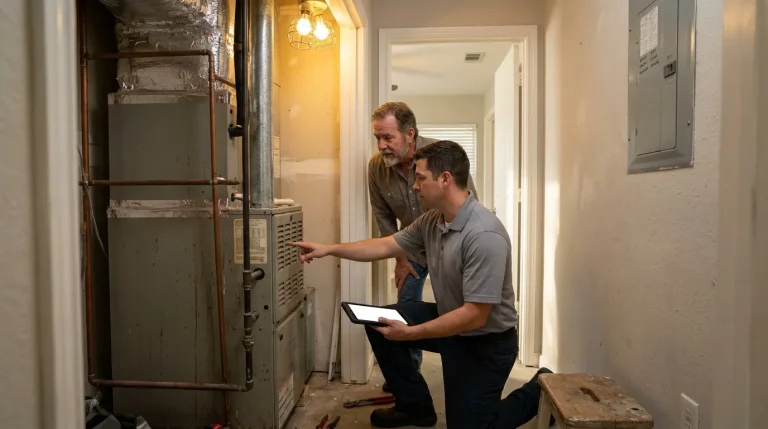
When to replace heating system equipment in a Houston home comes down to age plus warning signs. Most gas furnaces and heat pumps installed here reach the end of their useful heating system lifespan somewhere between 12 and 18 years, and thoughtful homeowners should start heating replacement planning once the equipment is about 12 years old, well before it fails on a cold night. Waiting until the system quits during a cold snap forces emergency decisions that almost always cost more, deliver worse comfort, and rush past the assessment steps that make a replacement actually improve your home rather than just repeat it.
Every winter, the same conversation shows up on our schedule. A Houston homeowner calls after their heating system has quit during a cold morning, tells us the unit is 16 or 18 years old, and asks what it will take to get heat back today. Sometimes we can repair it. More often, the failure is the last chapter of a story that started years earlier, when the system's age signaled replacement was coming and nobody was ready to make the decision.
That situation is stressful, expensive, and completely preventable. Heating equipment does not fail without warning most of the time. It ages predictably, shows increasing signs of decline, and gives thoughtful homeowners a window of two to three years to plan a replacement on their own timeline rather than the equipment's.
Let us walk through how long heating equipment actually lasts in Houston, what signs mean it is time to start planning, and how a proactive replacement strategy protects both your comfort and your budget.
When to Replace Heating System Equipment: How Long It Actually Lasts in Houston
Our light heating season is one reason this question gets tricky. In cold-climate markets, a furnace's calendar age and its lifetime operating hours line up reasonably well. In Houston, our furnaces and heat pumps run relatively few hours per year on the heating side, which sometimes lets equipment stretch a few years past cold-climate expectations.
- Gas furnaces in Houston typically deliver 15 to 20 years of useful life when properly installed and maintained, with well-cared-for premium models occasionally running longer. The heat exchanger, the safety-critical internal component, is the usual limiting factor.
- Heat pumps in Houston typically deliver 12 to 15 years of useful life on the heating side. Because the same equipment cools the house eight to nine months of the year, the cooling season workload determines lifespan more than the heating season does.
- Older builder-grade equipment installed during the 2005 to 2012 residential building boom often underperforms these numbers, particularly if it was oversized at installation or served through leaky ductwork that made it work harder than needed. Old furnace replacement scenarios from that vintage are one of the most common conversations we walk homeowners through today.
- Premium equipment with correct sizing and consistent professional care can routinely exceed the top end of these ranges, and some well-installed premium heat pumps push toward the 18-year mark in favorable Houston conditions.
For homeowners exploring VeriChill's Houston HVAC services for a planned replacement rather than an emergency one, understanding the realistic lifespan of your current equipment is the first step to good timing.
Why Proactive Planning Beats Reactive Replacement
The temptation to squeeze one more year out of aging equipment is understandable. But the math and the comfort story both push in the other direction.
Emergency replacements limit your equipment choices
When the system quits on a Sunday morning during a cold snap, you take what your installer can access quickly, not necessarily what fits your home best. Planning ahead lets you compare tiers, staging, and refrigerant options.
Emergency work happens under time pressure
Rushed load calculations, quick pad pours, hasty ductwork decisions, and shortcut installations all show up in emergency work. A planned replacement lets the installer measure, evaluate, and design properly.
Downtime during a cold event carries real risk
Losing heat during a Houston freeze is not just uncomfortable. It puts pipes at risk, exposes older residents and children to cold, and can force temporary housing costs. Planning replacement avoids that scenario entirely.
Financing options are cleaner when you are not in crisis
Applications through Wells Fargo, Synchrony Bank, or Goodleap take longer than same-day approval, and having the runway to compare terms matters.
Assessment quality drives long-term outcomes
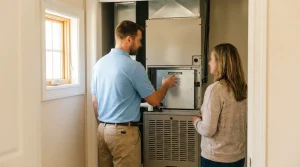
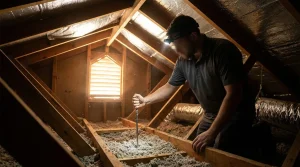
A planned replacement lets our team walk through insulation, ductwork condition, ceiling heights, window orientation, and airflow distribution before recommending equipment. That assessment is what turns a replacement from a repeat of the old system into an actual upgrade.
Signs Your Heating System Is Approaching End of Life
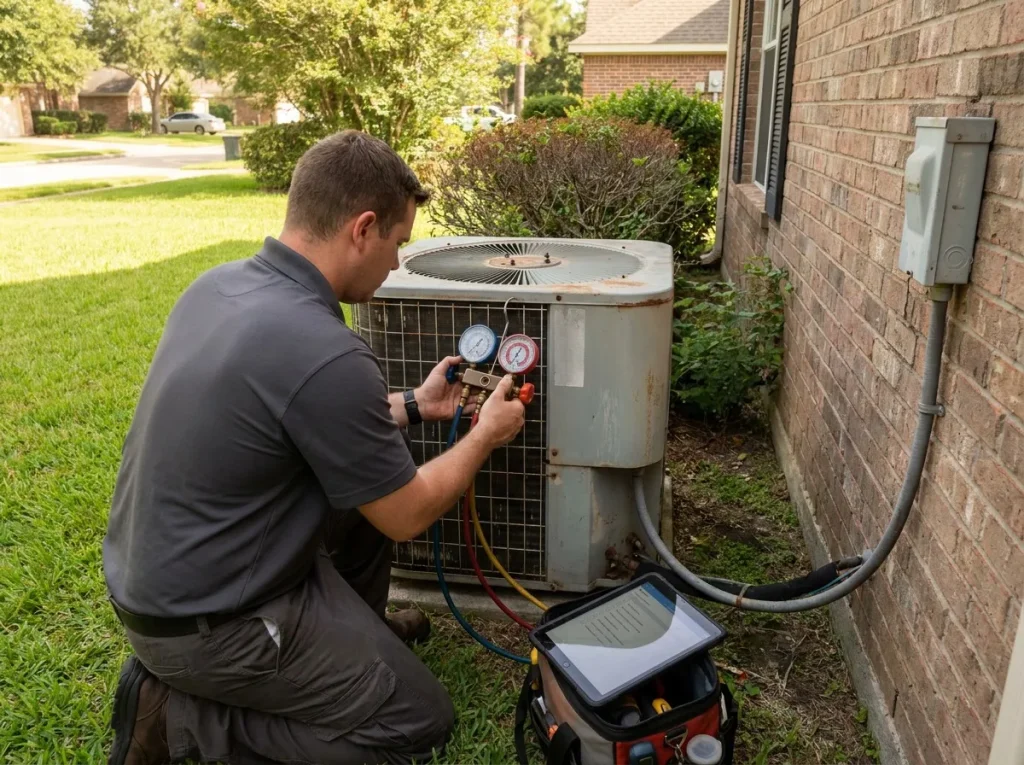
Age alone is not the whole story. Watch for these signs that the equipment itself is telling you the clock is running out.
- Repair costs climbing over the past two winters. A single expensive repair does not indicate end of life. Two or three material repairs over two winters typically does.
- Efficiency loss showing up in bills. If your gas or electric heating bill has climbed noticeably at the same setpoint and usage pattern, the equipment is likely losing efficiency due to age, deposits, or component wear.
- Uneven or diminishing heating output. Rooms taking longer to warm up, cold spots developing where none existed before, or the system running longer to deliver the same result all point to declining capacity.
- Noise changes. New rattles, longer startup sequences, unusual burner sounds on a gas furnace, or new compressor noise on a heat pump all warrant attention. Some are quick fixes. Some are end-of-life signals.
- Rust, corrosion, or discoloration inside the cabinet. Visible degradation on the heat exchanger, blower housing, or electrical components suggests advancing wear.
- A gas furnace approaching 18-plus years or a heat pump approaching 15 years with any of the above symptoms is squarely in furnace age replacement territory, even if the system is still starting on demand.
- A safety issue at any age. A cracked heat exchanger, elevated carbon monoxide readings during service, or a failed safety component is a replace-now situation, not a plan-ahead one.
ENERGY STAR's guidance on when to replace your heating and cooling system walks through age benchmarks and efficiency thresholds that support these general rules, and our team applies them alongside the Houston-specific climate factors that shift the timing.
What Changes Between Your Old System and a Modern Replacement
Understanding what an upgrade actually delivers helps homeowners see the replacement as an investment rather than a cost.
- Efficiency has improved substantially. A modern high-efficiency gas furnace or a modern inverter heat pump uses less energy per unit of heat delivered than equipment installed 15 or 20 years ago, and the difference shows up on the bill each winter.
- Two-stage and variable-speed operation deliver noticeably better comfort. Older single-stage furnaces and heat pumps produce noticeable temperature swings between cycles. Modern staged equipment holds tighter setpoints and pulls better humidity control on the cooling side too, since most Houston replacements pair furnace or heat pump work with the AC.
- Refrigerant transitions. As of 2026, new equipment ships with R-454B or R-32 refrigerants replacing R-410A. That transition is not urgent for existing R-410A owners, but a new install today gets modern refrigerant with better environmental profile.
- Safety features have improved on gas equipment. Modern gas furnaces include better pressure switches, flame sensors, and safety lockouts than the equipment from 15 years ago.
- Warranties are stronger. Our installations include a 10-year parts and compressor warranty with VeriChill handling 90-day registration on your behalf, which is substantially better than the coverage typically shipped on older builder-grade equipment.
For homeowners planning both heating and cooling replacements in the same project, coordinating heating installation work with the AC side often produces cost efficiencies at installation and matched-performance benefits during operation.
Building a Replacement Timeline

A useful heating replacement timeline for a Houston homeowner typically looks like this.
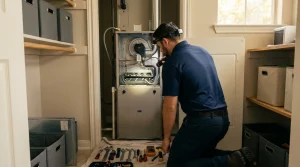
- Two years before target replacement. Have a professional inspection performed and get an honest read on equipment condition, expected remaining life, and repair-versus-replace outlook. This is planning, not commitment.
- One year before target replacement. Complete any minor repairs that keep the equipment running safely through the intervening winter, and begin comparing equipment tiers, financing options, and installer references.
- Six months before target replacement. Complete the formal assessment covering insulation, ductwork condition, ceiling heights, window orientation, and airflow distribution. Get a written scope of work, equipment selection, and quote.
- Three months before target replacement. Finalize equipment selection, secure financing if desired, and schedule installation during a shoulder season when demand is lower and scheduling is easier. Late spring or early fall works especially well in Houston.
- Installation. With planning, the project goes cleanly and on schedule, without the pressure that emergency work creates.
Homeowners planning a full-system upgrade should also consider whether their professional AC installation in Houston side needs replacement in the same project, since installing furnace and AC together produces coordination benefits that piecemeal replacement does not.
Common Mistakes That Push Homeowners into Emergency Replacements
A few patterns push homeowners into the exact situation they wanted to avoid. Watching for them helps you stay in control.
Ignoring the age
A furnace still starts, so the homeowner assumes it is fine. The heat exchanger, the blower motor, and the electrical components are all aging together, and the failure often takes multiple components down at once.
Treating each repair as its own decision
Approving a moderate repair on a 17-year-old furnace last winter, then a larger repair this winter, then facing another sizable repair next winter feels like small isolated decisions. It is actually a slow-motion replacement, and the numbers usually add up worse than a planned upgrade would have.
Assuming the system will make it through one more year
It might. But if it does not, the cost of not being ready is a lot higher than the cost of being ready and unused for one more season.
Skipping the professional assessment
Trying to plan a replacement by reading online reviews and manufacturer brochures often produces a mismatched result. The assessment is what matches equipment to home.
Key Takeaways
- Gas furnaces in Houston typically last 15 to 20 years, and heat pumps typically last 12 to 15 years, with premium correctly-sized equipment often exceeding those ranges
- Proactive replacement planning starting around 12 years of equipment age gives homeowners better choices, better installation quality, and no cold-snap emergencies
- Warning signs include climbing repair costs over multiple winters, efficiency loss showing up in bills, uneven heating output, new noises, and visible cabinet degradation
- A cracked heat exchanger, elevated carbon monoxide, or any safety failure at any equipment age is a replace-now situation
- Modern replacements deliver meaningfully better efficiency, two-stage or variable-speed comfort, current refrigerant standards, improved safety features, and stronger warranty coverage
- A useful planning timeline runs two years out from target replacement through installation, with assessments, financing decisions, and shoulder-season scheduling all handled before urgency arrives
- Emergency replacements limit equipment choice, compress installation quality, and cost more than planned replacements almost every time
Frequently Asked Questions
At what age should I start planning to replace my Houston furnace or heat pump?
Start actively planning around 12 years of equipment age, well before the system fails. Gas furnaces in Houston typically deliver 15 to 20 years of useful life, and heat pumps typically deliver 12 to 15 years. Starting the planning process at 12 gives you two to three years of runway to complete a professional assessment, compare equipment tiers, arrange financing, and schedule installation during a shoulder season rather than during a cold snap. If your equipment is already past those age ranges, the planning window becomes now.
Is it worth repairing an older heating system rather than replacing?
Sometimes, but the pattern of repairs matters more than any single one. A single moderate repair on a 15-year-old system usually makes sense. Two or three material repairs across two winters generally does not, especially when the total repair spending starts to approach a meaningful fraction of what a modern replacement would cost. Repairs that involve the heat exchanger, the compressor, or the electrical control board on aging equipment are usually signals to shift to replacement planning rather than continued repair.
How does a Houston heating system age differently than one in a colder climate?
Our light heating season means Houston furnaces and heat pumps see fewer hours of heating operation each year than equipment in cold-climate markets. That sometimes lets our equipment stretch a few years past cold-climate lifespan expectations. On the flip side, our long cooling season means the same heat pump equipment is heavily worked on the cooling side for eight to nine months a year, which brings the total lifespan back into normal ranges. Gas furnaces do benefit meaningfully from our lighter heating season and often last on the longer end of the range.
What is the biggest advantage of planned replacement over emergency replacement?
Assessment quality and equipment choice. A planned replacement lets our team walk through insulation, ductwork condition, ceiling heights, window orientation, and airflow distribution before recommending equipment, so the new system actually fits your home. An emergency replacement forces decisions in hours instead of weeks, which almost always ends up with equipment picked from what is immediately available rather than what is right for your home. That difference matters for the next 15 years.
Can I mix a new furnace with my existing AC condenser?
Sometimes, but only when the equipment is compatible in size, staging, and refrigerant. In many cases, replacing just the furnace and reusing an older AC condenser produces a mismatched system that neither performs nor lasts as well as a fully matched replacement. Our team walks through what pairings work and what pairings do not during the assessment, and often the right recommendation is to replace both sides of the system together to capture the full comfort and efficiency benefit.
Conclusion
Heating equipment does not have to fail on a cold morning. It fails on a cold morning when nobody planned for the replacement that the age of the equipment was already predicting. Homeowners who track their system's age, watch for the warning signs, and start planning around 12 years of equipment life almost always end up with a better system, installed properly, at a time of their choosing.
At VeriChill, when our team looks at heating equipment approaching end of life, we walk through insulation, ductwork condition, ceiling heights, window orientation, and airflow distribution alongside the equipment condition and your budget timeline. Sometimes we recommend planning replacement for next year. Sometimes we can help you get another two winters out of a still-safe system. Sometimes the honest answer is to replace now. The recommendation always follows the equipment and the home, not a target quote number.
Ready to know where your Houston heating system stands and how to plan ahead? Call us at 281-559-6995 or visit verichill.com to schedule a consultation.