Houston winters average about 15 days below 32°F per year, with most cold snaps lasting just two to three days. This mild pattern means your heating system runs far less than your AC, which changes the math on what type of heating makes the most sense. Heat pumps, gas furnaces, and dual-fuel systems all work here, but Houston's climate strongly favors certain options over others.
When Houston homeowners think about heating installation, the conversation often starts with what they remember from colder climates or what their parents had. But Houston's heating reality is unique. We need reliable heat for genuinely cold weeks, protection against hard freezes, and a system that doesn't waste energy sitting idle nine months.
This guide explains how Houston's climate should influence your heating choice and compares the three main options. For a detailed furnace versus heat pump comparison, our furnace vs heat pump guide covers that matchup in depth.
What Does Houston's Winter Actually Look Like?
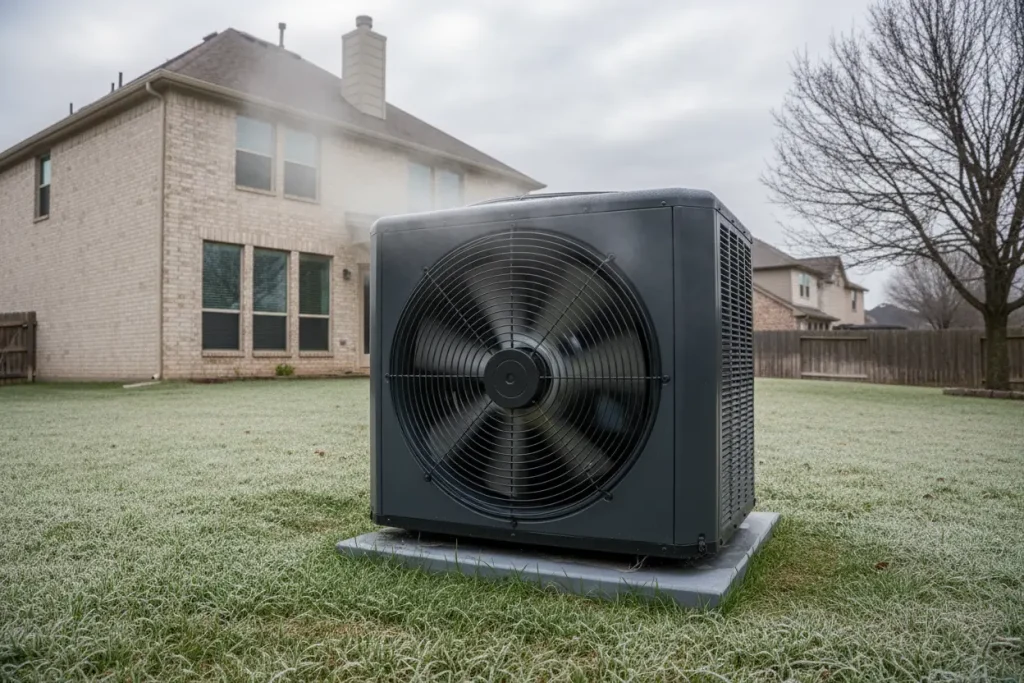
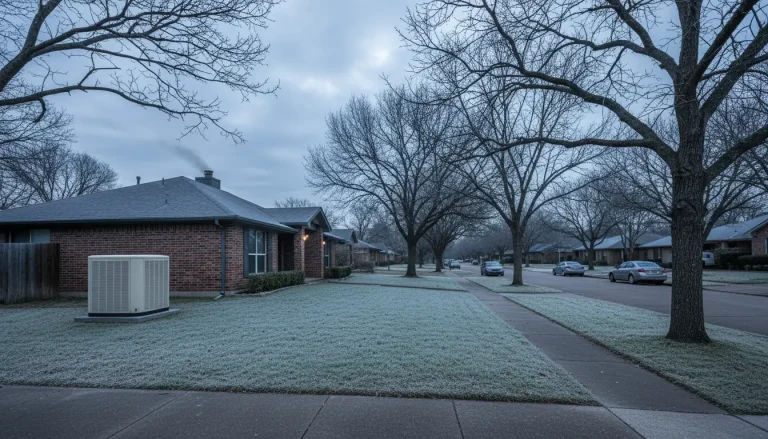
Houston's winters are defined by mild temperatures punctuated by brief cold fronts. Average winter lows range from the mid-40s to low 50s°F, with occasional dips into the 30s and rare hard freezes below 25°F. Most heating demand occurs between December and February, with sporadic cold days in November and March.
National heating guides assume four-to-five-month winters. Houston's heating system might run heavily for a few weeks total. This means your equipment's annual operating hours are a fraction of what it would be in Dallas, let alone Chicago.
That pattern has real implications. A system that costs more upfront but runs efficiently during mild conditions makes more financial sense here than it would in a harsh winter climate. And a system that excels at heating but does nothing for cooling is useful for only about 15% of the year.
The other factor is unpredictability. Houston can go from 70°F to 30°F in 24 hours when a strong cold front pushes through. Your heating system needs to respond quickly when called upon, even if it sits idle for weeks between cold snaps.
| Houston Winter Stat | Typical Value |
| Average January low | 42°F |
| Days below 32°F per year | ~15 |
| Hard freeze days (below 25°F) | 1-3 per year |
| Primary heating months | December through February |
| Heating season as % of the year | ~15-20% |
| Cooling season as % of the year | ~70-75% |
How Do Your Three Main Heating Options Compare for Houston?
Heat pumps are the strongest overall match for Houston's mild winters because they provide both heating and cooling from a single system, operate efficiently across our typical temperature range, and only struggle during hard freezes that happen a few days per year. Gas furnaces deliver the most powerful heat during extreme cold but sit idle during the cooling season. Dual fuel combines both.
Let's break down each option for Houston's specific climate:
Heat Pumps: These work by transferring heat from outdoor air into your home. In Houston's typical winter temperatures (40s-50s°F), heat pumps operate at peak efficiency. They lose effectiveness as outdoor temps drop into the 20s, but that's a handful of days per year here. The biggest advantage? Your heat pump is also your AC. One system handles both seasons, which simplifies your hvac system and can reduce overall equipment costs.
Gas Furnaces: Furnaces generate their own heat through combustion, so they perform consistently regardless of outdoor temperature. During Houston's rare hard freezes, a furnace delivers fast, intense warmth that heat pumps can't match. The trade-off is that you need a separate AC system for cooling, and the furnace itself contributes nothing during our eight-to-nine-month cooling season.
Dual Fuel Systems: These pair a heat pump with a gas furnace. The heat pump handles heating during mild conditions (most of Houston's winter), and the furnace kicks in automatically during hard freezes. It's the most versatile option but involves two heating systems, which means higher upfront costs and more equipment to maintain.
| Factor | Heat Pump | Gas Furnace | Dual Fuel |
| Houston winter performance | Excellent for typical days, reduced in hard freezes | Consistent at all temps | Best of both |
| Cooling capability | Built-in | None (needs separate AC) | Built-in (heat pump mode) |
| Efficiency in mild weather | Highest | Moderate | Highest (uses heat pump) |
| Hard freeze performance | Adequate with backup heat | Strongest | Strongest (switches to furnace) |
| System complexity | Single system | Requires a separate AC | Two heating systems |
| Best for Houston when... | Most homeowners, most situations | Strong existing gas infrastructure, hard freeze priority | Budget allows, want maximum flexibility |
Which Heating System Makes the Most Financial Sense in Houston?
For most Houston homeowners, a heat pump delivers the best long-term financial return because it serves double duty as both your heating and cooling system. You're investing in equipment that works year-round rather than a furnace that operates 15-20% of the year. Gas furnaces make financial sense when your home already has gas infrastructure, and your priority is maximum heating power during freezes.
In a city where heating costs are a small fraction of annual energy expenses, the equipment's cooling performance matters more to your wallet. A heat pump running efficiently for nine months of cooling captures value across both seasons.
Here's the practical framework:
- Choose a heat pump if: You're installing a new system and want one piece of equipment for heating and cooling. You value efficiency during mild weather. Your home doesn't have existing gas lines, or you prefer all-electric operation.
- Choose a gas furnace (with AC) if: Your home already has gas infrastructure. You prioritize the most powerful heating during hard freezes. You're comfortable with separate heating and cooling equipment.
- Choose dual fuel if: Your budget supports the higher upfront investment. You want heat pump efficiency for mild days and furnace power for freezes. You live in a part of Houston that experiences more extreme cold (northern suburbs like Tomball and Spring can be a few degrees colder than central Houston).
Your home's insulation, ductwork, ceiling heights, window orientation, and airflow distribution also influence which option works best. A well-insulated home with tight ductwork needs less heating capacity, making a heat pump even more attractive. An older home with air infiltration issues might benefit more from a furnace's raw heating power during extreme cold.
| Decision Factor | Heat Pump Favored | Gas Furnace Favored |
| Existing infrastructure | All-electric home | Gas lines are already installed |
| Budget priority | Long-term efficiency | Lower upfront for heating+AC |
| Climate concern | Mild winter focus | Hard freeze protection priority |
| System preference | Single unit simplicity | Separate, dedicated systems |
| Environmental priority | Lower carbon footprint | Not a primary concern |
How Should You Decide? Start with Your Home

The right heating system for your Houston home depends on more than climate preferences. Your existing infrastructure, home size, insulation quality, and long-term plans all factor into the decision. A professional evaluation that accounts for both heating and cooling needs gives you the clearest picture of which option delivers the best return.
If your home has gas lines and a furnace, replacing it with another furnace is the most straightforward path. But if you're also replacing your AC, evaluate whether a heat pump could handle both jobs, especially if your heating installation investment can serve double duty.
If you're building new or doing a complete system replacement, the heat pump conversion is especially worthwhile. You avoid installing two separate systems and benefit from year-round efficiency that makes particular sense in Houston's climate.
VeriChill evaluates every home's heating and cooling performance before making recommendations. We'll assess your insulation, ductwork, ceiling heights, and airflow to determine which system type and size delivers the best comfort and value. Every heating system installation includes a 10-year parts and compressor warranty, with registration handled within 90 days.
Key Takeaways
- Houston's ~15 days below freezing means your heating system runs far less than your AC, shifting the value equation toward equipment that serves both seasons.
- Heat pumps are the strongest overall match for Houston's mild winters, providing efficient heating and cooling in a single system.
- Gas furnaces excel during hard freezes but sit idle during the dominant cooling season, making them a heating-only investment.
- Dual fuel systems offer maximum flexibility by pairing a heat pump with a gas furnace, switching automatically based on outdoor temperature.
- The financial case favors year-round equipment since heating accounts for a small fraction of Houston's annual energy costs.
- Your home's specific characteristics determine which option delivers the best comfort and value for your situation.
Frequently Asked Questions
Are heat pumps effective in Houston winters?
Yes. Houston's typical winter temperatures are ideal for heat pump operation. They only lose efficiency during hard freezes below 25°F, which happen a few days per year.
Do I need a furnace in Houston?
Not necessarily. Heat pumps handle most Houston heating needs. Gas furnaces are preferred by homeowners who want maximum warmth during hard freezes or have existing gas infrastructure.
What is a dual fuel system?
A dual fuel system pairs a heat pump with a gas furnace. The heat pump heats and cools during moderate temperatures, and the furnace activates automatically during extreme cold.
How cold does it actually get in Houston?
Houston averages about 15 days below 32°F per year. Hard freezes below 25°F happen one to three times annually. Most winter days stay in the 40s and 50s.
Is a heat pump cheaper to run than a furnace in Houston?
Generally yes, because heat pumps move heat rather than generate it, using less energy in mild conditions. Since most Houston winter days are mild, heat pumps operate at peak efficiency most of the time.
Can a heat pump handle Houston's cooling season too?
Absolutely. Heat pumps provide both heating and cooling. In Houston, you get one system that handles the full year rather than separate heating and cooling equipment.
Should I switch from a furnace to a heat pump?
It depends on your current system, home infrastructure, and priorities. If you're replacing both your furnace and AC, a heat pump can simplify to one system. Your contractor can evaluate whether it makes sense for your home.
What about electric resistance heating in Houston?
Electric resistance heat works but is the least efficient option. It costs significantly more to operate than either a heat pump or gas furnace and isn't recommended for Houston homes.
Does VeriChill install all three heating system types?
Yes. We install heat pumps, gas furnaces, and dual fuel systems throughout Greater Houston. Our recommendation depends on your home's evaluation results and your comfort priorities.
How do I know which system is right for my home?
Start with a professional evaluation that assesses your insulation, ductwork, ceiling heights, window orientation, and airflow. VeriChill provides this evaluation and recommends the best option for your specific situation.
Conclusion
Houston's mild winters create a heating environment where the best system isn't always the most powerful one. It's the one that delivers reliable comfort during our brief cold season while contributing to your home's year-round efficiency. Whether that's a heat pump, a gas furnace, or a dual fuel setup depends on your home and priorities. Ready to figure out which heating option is best for your Houston home? Contact VeriChill for a consultation. We'll evaluate your home's complete comfort needs and recommend a system designed for how Houston's climate actually works.