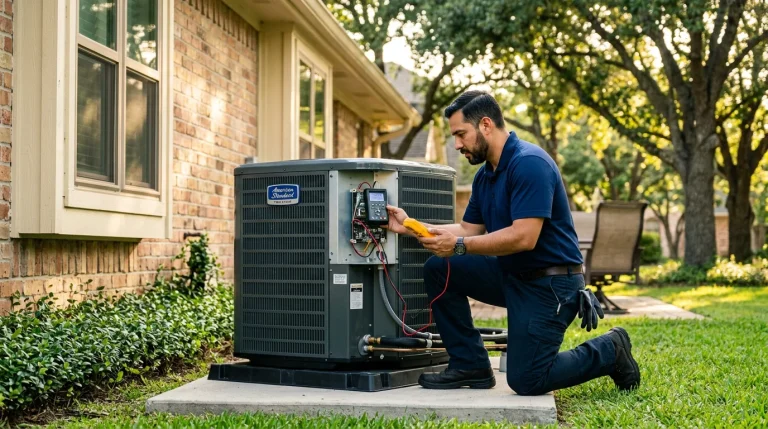
A two-stage AC system operates its compressor at two distinct capacity levels, running at roughly 65% output most of the time and stepping up to full capacity only when conditions demand it. For Houston homeowners, this design delivers measurably better humidity control, more consistent comfort, and lower energy consumption than single-stage equipment that cycles between full-blast and completely off.
When Houston homeowners start researching air conditioning upgrades, the conversation usually comes down to a straightforward question: single-stage, two-stage, or variable-speed? Each system type has a place, but after 14 years of designing and installing AC systems across the Houston metro area, I consistently recommend two-stage equipment as the best balance of performance, comfort, and long-term value for most homes.
That recommendation is not arbitrary. It comes from watching how different system types perform in Houston's specific combination of heat and humidity. A system that works perfectly in Denver or Minneapolis does not automatically translate to the right solution here. Houston's climate creates demands that expose the weaknesses of single-stage equipment and do not always justify the premium of variable-speed technology.
Let me explain exactly how two-stage AC systems work, why they perform so well in our climate, and how to determine whether a two-stage system is the right fit for your home.
How a Two-Stage AC System Works
A two-stage air conditioner uses a compressor that operates at two distinct output levels. The low stage runs at approximately 65% of the system's total cooling capacity. The high stage runs at 100%.
When your thermostat calls for cooling, the system starts in the low-stage mode. If the low-stage brings your home to the target temperature, the system continues to run at that reduced output. If temperatures are extreme or cooling demand is high, the system automatically shifts to the high-stage for full capacity.
Here is why that matters. The low stage is adequate to meet your home's cooling needs roughly 80% of the time. That means for the vast majority of operating hours, your two-stage system runs at a lower, more efficient output level rather than cycling on and off at full power.
| Operating Mode | Capacity | When It Runs | Typical Usage |
| Low stage | ~65% | Mild to moderate cooling demand | ~80% of operating hours |
| High stage | 100% | Peak heat, recovery after extended off-period | ~20% of operating hours |
A single-stage system, by contrast, has only one option: 100% capacity or completely off. It cools your home quickly, shuts down, waits for the temperature to rise past the thermostat threshold, then blasts back on at full power. That on-off cycling is where most comfort and efficiency problems originate.
Why Two-Stage Systems Excel in Houston's Climate
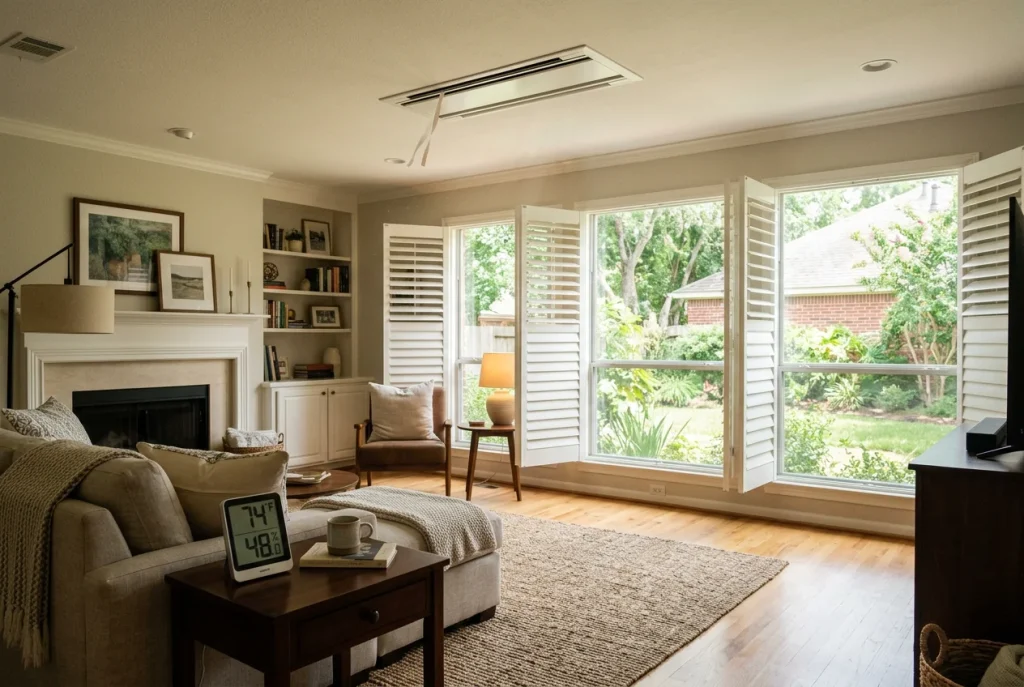
Houston's climate is not just hot. It is hot and relentlessly humid. Average relative humidity stays above 75% for months, and summer dew points regularly exceed 70 degrees. That combination creates specific demands on air-conditioning equipment, making the two-stage design particularly effective.
Humidity removal depends on runtime. Your AC system removes humidity by pulling warm, moist air across a cold evaporator coil. Moisture condenses on the coil and drains away. The longer the air flows through that coil, the more moisture is removed. A two-stage system running at low capacity operates in longer, steadier cycles than a single-stage system that short-cycles at full power. Those longer cycles extract significantly more moisture from your indoor air.
Single-stage short cycling leaves moisture behind. When a single-stage system blasts cold air at full capacity, it often reaches the thermostat's target temperature before adequately dehumidifying the space. The system shuts off, and you are left with air that is technically at the right temperature but still feels clammy. This is the number one complaint I hear from Houston homeowners with older single-stage equipment.
Consistent temperatures throughout your home. Because a two-stage system runs for longer periods at reduced output, conditioned air distributes more evenly through your ductwork. The result is fewer hot spots near windows, fewer cold spots near returns, and a more uniform temperature from room to room. Homes with complex floor plans or rooms that sit over garages benefit especially from this consistent airflow.
Two-Stage vs. Single-Stage: The Practical Differences
The differences between these system types extend beyond the compressor. Here is what you will notice day to day as a homeowner.
Noise levels drop significantly. A compressor running at 65% capacity produces noticeably less noise than one running at full output. If your outdoor condenser sits near a bedroom window, patio, or outdoor living area, the difference matters. Most Houston homeowners I work with mention the reduced noise level as one of the first things they notice after upgrading from single-stage equipment.
Temperature swings shrink. Single-stage systems typically allow indoor temperatures to swing 3 to 4 degrees between cycles. Two-stage systems hold temperatures within a tighter range because the low stage maintains conditions rather than correcting them. You feel the difference as steady, even comfort rather than alternating waves of cold air and warm recovery periods.
Equipment wear distributes more evenly. Starting a compressor at full capacity creates the highest mechanical stress on the system. Single-stage equipment endures this startup stress every time it cycles, often dozens of times per day during a Houston summer. Two-stage systems reduce the number of full-capacity starts, thereby distributing wear more evenly over the compressor's operating life.
Energy consumption drops. Running a compressor at 65% capacity uses less energy than running it at 100%, even accounting for longer run times. The Department of Energy confirms that properly sized, efficient cooling systems with staged or variable operation deliver meaningful energy savings over single-stage equipment in hot, humid climates.
Where Two-Stage Fits in the System Hierarchy
Two-stage AC is not the only option beyond single-stage. Variable-speed systems offer even more precise capacity modulation, adjusting output from as low as 25% up to 100% in small increments. So why do I recommend two-stage over variable-speed for most Houston homes?
The answer is value. Variable-speed systems carry a higher equipment cost and require more complex installation. They deliver excellent performance, but for many Houston homes, the incremental comfort improvement over a well-installed two-stage system does not justify the additional investment. Two-stage captures the majority of the comfort and efficiency benefits at a more accessible entry point.
That said, there are homes where variable-speed makes sense. Large homes with complex ductwork layouts, homes with significant solar heat gain on one side, or homeowners who prioritize maximum efficiency above all other factors may find variable-speed worth the investment. I evaluate each home individually rather than applying a blanket recommendation.
For homes currently running single-stage equipment, the jump to two-stage represents a substantial improvement in every metric that matters: comfort, humidity control, noise, and efficiency. For AC installation Houston projects, two-stage is where I start the conversation for most homeowners.
What to Look for in a Two-Stage AC Installation
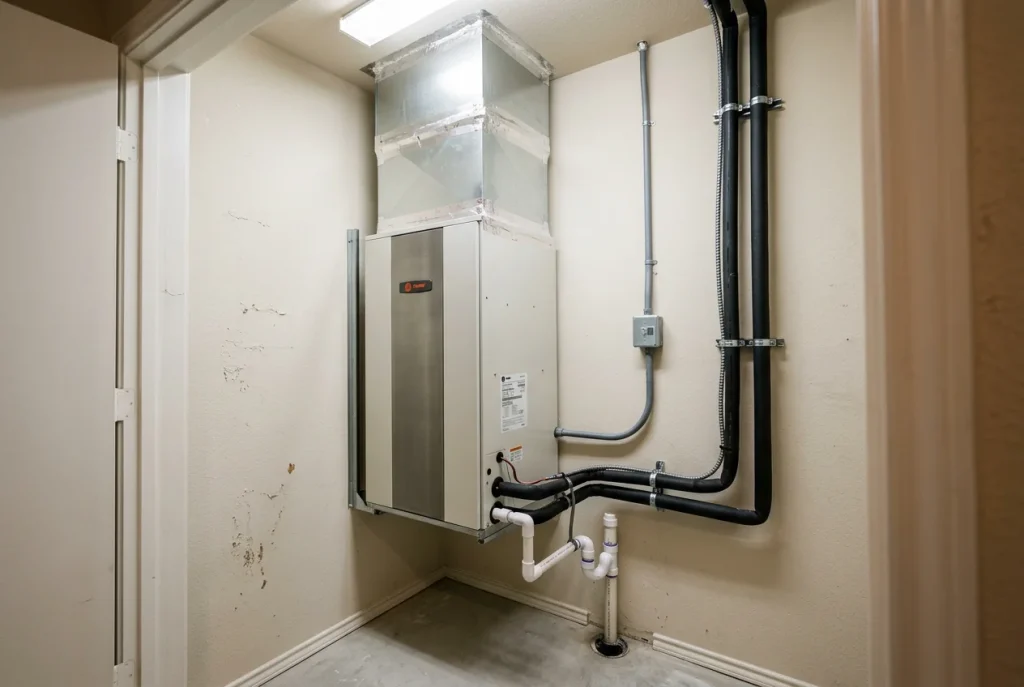
The equipment itself is only part of the equation. How a two-stage system is installed determines whether you actually receive the benefits the technology is designed to deliver.
Proper sizing is critical. An oversized two-stage system will short-cycle even on its low-stage, eliminating the humidity-removal advantage. An undersized system will run on high stage constantly, reducing the efficiency benefit. An accurate cooling load assessment that accounts for your home's insulation levels, window orientation, ceiling heights, and ductwork condition is the foundation of a successful two-stage installation.
Ductwork condition matters. A two-stage system delivers air at different volumetric flows depending on the operating stage. If your ductwork has significant leaks, restrictions, or undersized sections, the system cannot distribute air effectively at either stage. Any responsible hvac service houston contractor should evaluate your existing ductwork before recommending equipment.
Thermostat compatibility. Two-stage systems require thermostats that support staged operation. Most modern programmable and smart thermostats handle this, but if you are keeping an older thermostat, verify compatibility before installation. The thermostat controls when the system shifts between stages, so its programming directly affects performance.
Matched indoor and outdoor components. A two-stage outdoor condenser paired with a mismatched indoor coil or air handler will not perform to its rated efficiency. The Air-Conditioning, Heating, and Refrigeration Institute (AHRI) maintains a directory of certified equipment combinations. Your HVAC company should specify AHRI-matched combinations for any two-stage installation.
Two-Stage and Houston's Heating Needs
Two-stage technology is not limited to cooling. Heat pump versions of two-stage systems provide staged operation for both cooling and heating. Given Houston's mild winters, where heating installation needs are moderate compared to northern climates, a two-stage heat pump can handle both seasons efficiently.
The low stage provides gentle, consistent heating during Houston's typical winter temperatures in the 40s and 50s. The high stage is available for the occasional cold snap that drops into the 30s. This staged heating approach avoids the blast-of-hot-air experience that single-stage heat pumps or furnaces produce, delivering more even warmth throughout your home.
For Houston homeowners considering a complete HVAC system upgrade, evaluating two-stage heat pump options alongside traditional AC and furnace combinations gives you the full picture of what is available for your home and climate.
Key Takeaways
- Two-stage AC compressors run at approximately 65% capacity most of the time, stepping up to 100% only during peak demand
- Longer low-stage run cycles remove significantly more humidity than single-stage short cycling, which is critical in Houston's 75%+ humidity climate
- Two-stage systems reduce temperature swings, lower noise levels, and distribute equipment wear more evenly than single-stage alternatives
- Proper sizing and ductwork evaluation are essential to realizing the full benefits of two-stage technology
- Two-stage represents the recommended balance of comfort, efficiency, and value for most Houston homes
- Heat pump versions of two-stage systems provide staged operation for both cooling and heating seasons
Frequently Asked Questions
Is a two-stage AC system worth the higher upfront cost compared to a single-stage?
For Houston homes, the answer is almost always yes. The improvement in humidity removal alone justifies the difference for most homeowners. When you add the energy savings from reduced cycling, the quieter operation, and the more even temperatures throughout your home, two-stage systems deliver measurable daily benefits that compound over the 15 to 20-year life of the equipment. The comfort difference is noticeable from the first day.
How much more efficient is a two-stage AC than a single-stage system?
Two-stage systems achieve higher SEER2 ratings because they spend most of their operating time at reduced capacity. A two-stage unit running at 65% capacity for 80% of its operating hours uses less total energy than a single-stage unit cycling between 100% and off throughout the day. The exact savings depend on your home's insulation, ductwork, and usage patterns, but most Houston homeowners see meaningful reductions in summer electricity bills.
Can I install a two-stage outdoor unit with my existing indoor equipment?
The outdoor condenser and indoor coil or air handler must be matched as a system to achieve rated performance. Installing a two-stage condenser with an older, mismatched indoor unit will compromise both efficiency and comfort. In most cases, a two-stage upgrade includes both indoor and outdoor components to ensure the system operates as designed and meets AHRI certification requirements.
Does a two-stage system need special maintenance compared to single-stage?
Two-stage systems require the same fundamental maintenance as any AC system: regular filter changes, annual professional inspections, keeping the outdoor condenser clean and unobstructed, and monitoring refrigerant performance. The staged compressor itself does not add maintenance requirements. In practice, two-stage systems often experience less wear-related maintenance over time because they avoid the constant full-capacity start-stop cycling that stresses single-stage compressors.
How do I know if my home is a good candidate for a two-stage system?
Most Houston homes benefit from two-stage technology. The homes that benefit most are those where occupants are home during the day, where humidity complaints are common, where ductwork is in reasonable condition, and where the home has adequate insulation. Homes with severely undersized or deteriorated ductwork may require ductwork improvements before a two-stage system can deliver its full performance potential. An evaluation of your home's specific conditions is the best way to determine the right system type.
Conclusion
Two-stage AC technology is not new, but its value in Houston's climate has never been more relevant. As equipment efficiency standards continue to rise and manufacturers' product lines evolve, two-stage systems represent the point at which engineering improvements deliver the most impact for the investment.
At VeriChill, when I evaluate a Houston home for an AC replacement, I assess the full picture: your home's insulation, ductwork condition, window orientation, ceiling heights, and how your family actually uses the space. That evaluation determines whether a two-stage is the right recommendation or whether your specific situation calls for a different approach. The goal is to match the right system to the right home, not to sell the most expensive option on the shelf.
Ready to find out which AC system type fits your Houston home? Call us at 281-559-6995 or visit verichill.com to schedule a consultation.