The top five HVAC systems for Houston homes are inverter heat pumps, variable speed central air systems, two-stage central air systems, high-efficiency gas furnaces paired with AC, and ductless mini-split systems, each chosen based on the home's needs, budget, and long-term comfort priorities.
Houston's climate narrows the field when it comes to HVAC system selection. The combination of a nine-month cooling season, persistent humidity, and occasional winter cold snaps eliminates equipment that performs adequately in drier or more temperate climates. The systems that work here share two traits: they run efficiently over long periods and they manage moisture, not just temperature.
This guide walks through the five HVAC system types that consistently perform well for Houston homeowners, with practical guidance on who each system suits best. For context on how sizing works before any system is selected, our home ac installation page explains what a proper whole-home evaluation covers.
Key Takeaways
- Inverter heat pumps are the strongest all-around option for most new Houston installations, combining excellent humidity control with year-round efficiency
- Variable speed and two-stage systems outperform single-stage equipment in Houston because their longer runtime at lower output removes more moisture from the air
- Mini-split systems are the best choice for additions, older homes without ductwork, or targeted zone solutions rather than whole-home replacement
- System choice depends on ductwork condition, gas availability, home size, and budget; no single system is right for every situation
- A whole-home assessment of insulation, ductwork, ceiling heights, window orientation, and airflow is necessary before any system recommendation
- Targeting 16 SEER2 or higher is recommended for Houston; the efficiency difference compounds over the long cooling season
- New 2026 installations use R-454B or R-32 refrigerant; confirm any replacement system uses updated refrigerants
How Houston's Climate Filters HVAC Options
Before ranking specific systems, understanding why Houston requires specific equipment decisions matters. Three climate factors drive every recommendation on this list.
Humidity Control Requirement: Houston's average relative humidity exceeds 75 percent. An HVAC system must remove moisture, not just cool the air. Systems that cycle on and off rapidly, like oversized single-stage units, cool quickly but dehumidify poorly. The result is a home at the right temperature but with uncomfortable, damp air.
Long Cooling Season: Eight to nine months of active cooling means a Houston HVAC system accumulates roughly twice the annual run-hours of a system in a moderate climate. Equipment efficiency matters more here than anywhere in the country because it runs so long.
Mild Winters: Houston's winters are short and relatively warm, which makes heat pump technology practical and efficient. A system that provides excellent cooling in summer and adequate heating in winter is more valuable here than a high-performance furnace paired with a baseline AC.
The Top 5 HVAC Systems for Houston Homes
1. Inverter-Driven Heat Pump
Inverter heat pumps are the strongest overall choice for most new Houston installations. An inverter-driven compressor modulates its output continuously rather than cycling on and off, which produces two significant advantages: superior humidity control and lower energy consumption per operating hour.
In Houston's mild winters, a heat pump handles heating efficiently without the gas or high-resistance electric heat that conventional systems rely on. In summer, the same system provides some of the best dehumidification available in residential HVAC. Modern inverter heat pumps use R-454B or R-32 refrigerant, meeting 2026 installation standards.
Best for: Homeowners replacing a complete system who want the most efficient year-round solution and the best available humidity management.
2. Variable Speed Central Air Conditioner with Gas Furnace
For homes with existing natural gas service, a variable speed air conditioner paired with a high-efficiency gas furnace remains one of the most common and effective system configurations in Houston. The variable speed compressor runs at low output most of the time, maintaining steady dehumidification without the sharp temperature swings of single-stage equipment.
This configuration is particularly well-suited for larger Houston homes, where the consistent low-speed airflow of a variable speed system distributes conditioned air more evenly across multiple zones.
Best for: Larger homes with existing gas service, homeowners who prefer gas heat, or homes with established ductwork suited to a gas plus AC configuration.
3. Two-Stage Central Air Conditioner with Heat
Two-stage systems are the practical midpoint between single-stage and variable speed. The compressor operates at low capacity, typically 65 percent of full output, during moderate conditions, and steps up to full capacity only during peak summer demand. The extended low-stage runtime improves humidity removal significantly compared to single-stage equipment.
For most Houston homes in the mid-range of size and budget, a two-stage system is the most cost-effective path to reliable comfort and humidity control. It is a meaningful step up from single-stage performance without the full variable speed investment.
Best for: Most Houston homeowners looking for better-than-baseline comfort and humidity control at a moderate upfront investment.
4. High-Efficiency Gas Furnace with 16+ SEER2 Single-Stage AC
In homes where budget is a priority and the existing ductwork is in good condition, a high-efficiency gas furnace paired with a quality 16 SEER2 or higher single-stage air conditioner provides reliable heating and cooling at the lowest upfront cost among the top five options.
The limitation is humidity control. A single-stage system runs at full capacity or not at all. During moderate weather, it cools the home quickly and shuts off before completing adequate moisture removal. This is manageable but means the home may feel slightly humid during transitional seasons.
Best for: Budget-conscious replacement projects where the existing ductwork is sound and the homeowner understands the humidity control tradeoff.
5. Ductless Mini-Split System
Mini-split systems operate without ductwork, delivering conditioned air directly to individual zones through wall-mounted air handlers connected to an outdoor compressor. They are the top choice for Houston homes with specific challenges: additions not connected to the central system, spaces above garages, older homes without existing duct infrastructure, or rooms that consistently run warmer than the rest of the house.
Modern mini-splits use inverter technology, providing excellent humidity management and high SEER2 ratings. The limitation is coverage: a whole-home mini-split installation covering multiple rooms is a larger project than a central system replacement.
Best for: Additions, converted spaces, older homes without existing ductwork, or targeted zoning solutions for specific problem areas.
Side-by-Side System Comparison
| System Type | Efficiency Tier | Humidity Control | Best Houston Application |
| Inverter Heat Pump | 18+ SEER2 typical | Excellent | Full replacement, year-round efficiency priority |
| Variable Speed AC + Gas Furnace | 18+ SEER2 typical | Excellent | Larger homes, existing gas service |
| Two-Stage AC | 16 to 18 SEER2 typical | Good | Most Houston homes, mid-range investment |
| High-Efficiency Furnace + 16 SEER2 AC | 16+ SEER2 | Fair | Budget-focused replacement, sound ductwork |
| Ductless Mini-Split | 18+ SEER2 typical | Excellent | Additions, older homes, zoning solutions |
What to Consider Before Choosing a System
The right system for your Houston home depends on more than general rankings. Four factors shape the decision most significantly.
| Decision Factor | How It Affects System Choice |
| Existing ductwork condition | If ducts are sound, central systems are practical; if compromised or absent, mini-split may be better |
| Natural gas availability | Gas service supports furnace configurations; homes on all-electric service favor heat pump systems |
| Home size and layout | Larger, multi-story homes benefit most from variable speed and two-stage systems for even distribution |
| Budget range | Inverter and variable speed systems carry higher upfront cost; two-stage is the midpoint; single-stage is the entry level |
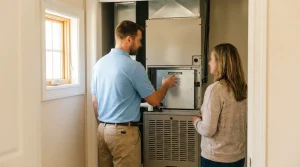
None of these decisions should be made without a whole-home assessment first. The assessment reveals ductwork condition, thermal load, and airflow patterns that determine which system will actually perform in your specific home. A quality hvac installation starts with that data, not a spec sheet.
The Role of SEER2 in Houston System Selection
SEER2 is the current efficiency standard for all residential HVAC equipment. The Southeast regional minimum for new installations is 14.3 SEER2. In Houston, that minimum is the floor, not the target.
All five systems on this list can be installed at 16 SEER2 or higher. Given the nine-month cooling season, the operating cost difference between 14.3 and 16+ SEER2 adds up meaningfully over a decade of use. Higher efficiency also usually correlates with better humidity management, particularly in two-stage and variable speed configurations.
Note on refrigerant: 2026 new installations use R-454B or R-32 refrigerant rather than R-410A, which is being phased out. Any system being installed now should use these updated refrigerants.
Find Out Which System Fits Your Houston Home
A ranked list is a starting point. A whole-home assessment is how you find out which system on this list is actually right for your specific home, ductwork, and budget. Contact VeriChill to schedule your evaluation and get a recommendation based on real data.
Call 281-559-6995
Frequently Asked Questions
What is the most efficient HVAC system for Houston?
Inverter-driven heat pumps and variable speed central air systems deliver the highest efficiency in Houston's climate. Both modulate output continuously, minimizing energy use per operating hour while maintaining better humidity control than single-stage or two-stage equipment.
Do Houston homes need a furnace or can they use a heat pump only?
A heat pump alone handles Houston's mild winters effectively. Temperatures rarely drop low enough to exceed a heat pump's heating capacity. Homeowners who prefer the security of a gas backup can pair a heat pump with an auxiliary heat strip or a dual-fuel configuration.
How does a two-stage system improve comfort in Houston?
A two-stage system runs at lower output most of the time, which means longer cycles with more consistent airflow. This extended runtime removes more moisture from the air than a single-stage system that cools quickly and shuts off. The result is a home that feels comfortable, not just cool.
Are ductless mini-splits good for whole-home cooling in Houston?
Mini-splits work well for whole-home coverage but the installation is more complex and typically involves multiple indoor air handlers. For homes replacing a central system with good ductwork, a central replacement is usually more cost-effective. Mini-splits are strongest for targeted applications.
What SEER2 rating should I require for a new Houston HVAC system?
The Southeast minimum is 14.3 SEER2, but 16 SEER2 or higher is the practical recommendation for Houston's long cooling season. Higher ratings reduce operating costs and often include better humidity management features.
Can I install any of these systems without replacing my existing ductwork?
Existing ductwork should always be evaluated before installation. If ducts are in good condition and properly sized, they can support a new central system. If they are leaking, undersized, or damaged, duct repair or replacement is part of the project.
What is the lifespan of the top-rated Houston HVAC systems?
All five system types on this list carry realistic lifespans of 15 to 20 years with proper installation and annual maintenance. Houston's demanding climate means systems often reach the lower end of this range when installation shortcuts are taken.
How do I know which system is right for my Houston home?
A whole-home assessment by a licensed HVAC contractor is the accurate method. The assessment evaluates insulation, ductwork, ceiling heights, window orientation, and airflow to determine the actual load your system must manage, which drives the equipment recommendation.
What happens if I install a system that is too large for my Houston home?
An oversized system cools rapidly and shuts off before completing moisture removal. The home stays damp despite hitting the temperature setpoint. Comfort suffers, humidity-related issues increase, and the system cycles more frequently, which accelerates component wear.
Do new 2026 HVAC systems use different refrigerant?
Yes. R-410A is being phased out in new installations as of 2026. New equipment uses R-454B or R-32. Confirm your replacement system uses updated refrigerant; it affects long-term serviceability and parts availability.
Final Thoughts
For Houston homeowners, the best HVAC system is the one that controls humidity as effectively as it controls temperature. The five systems on this list consistently deliver that combination, with the right choice depending on your home's specific conditions, existing infrastructure, and budget priorities.
VeriChill handles residential hvac installation and replacement throughout Houston, Cypress, Katy, Spring, Sugar Land, and Tomball. A proper whole-home assessment is where every project starts.
Call 281-559-6995 to find the right system for your home.
Get a whole-home assessment and system recommendation.