A professional Houston HVAC installation moves through an in-home evaluation and Manual J sizing, a written proposal, permits, and installation day, then final commissioning and a city inspection. A straightforward AC replacement usually takes four to eight hours in a single day, and proper sizing, duct sealing, and condensate management matter most in Houston's humid climate.
A new HVAC installation is a major investment, and if you are a Houston homeowner, you probably have questions about what the process actually looks like. How long will the crew be in your home, and what steps should a qualified HVAC contractor take to ensure your system is sized correctly for our hot, humid climate? From the initial consultation and permitting to installation day and final inspection, understanding what to expect helps you choose the right contractor, avoid costly mistakes, and keep your home comfortable for years to come.
This guide walks you through each phase of the installation process so you know exactly what happens before, during, and after your new system goes in. When you understand the steps a quality contractor follows, it becomes far easier to spot the difference between a rushed job and a properly engineered installation built for Gulf Coast conditions.
Pre-Installation Phase
The work that happens before installation day determines whether your system performs well for a decade or struggles from the start. This phase covers assessment, proposal, permits, and preparation.
Initial Consultation and System Assessment
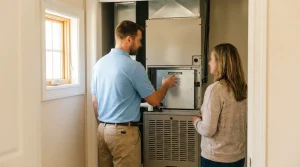
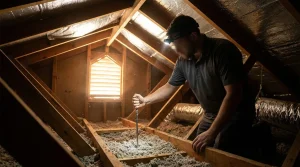
Most residential HVAC installations in Houston begin with an in-home consultation where an experienced technician evaluates your existing system and your home's heating and cooling needs. During this visit, the contractor inspects your current equipment, notes its age and capacity, and checks equipment location, electrical service, and gas lines. The technician also pays close attention to attic conditions, insulation levels, and duct routing to understand how your home's unique characteristics affect performance.
Quality-oriented contractors perform or reference Manual J load calculations, which are standardized engineering methods that estimate your home's heating and cooling loads based on square footage, insulation, window area, orientation, infiltration, and internal gains. This scientific approach is far more accurate than simple rules of thumb like one ton per 500 square feet. Proper sizing is particularly important in Houston, because oversized air conditioners may cool the air quickly but run short cycles that fail to remove sufficient humidity, leading to clammy conditions and potential mold risk.
Equipment Selection and Written Proposal
Following the assessment, the contractor prepares one or more system options and a written estimate that itemizes the equipment and services being proposed. The proposal usually specifies the nominal tonnage of the outdoor unit, the type and capacity of the indoor unit, and the SEER2 or equivalent efficiency ratings. You should also expect to see details about any add-ons such as media air cleaners, UV lights, humidifiers or dehumidifiers, or smart thermostats. These accessories can significantly improve comfort and indoor air quality in Houston's humid climate.
A clear written proposal should describe exactly what is included in the installation. Whether you need a cooling-only replacement or a complete heating and cooling installation, the table below outlines what to look for:
| Proposal Item | Why It Matters |
| Removal and disposal of old equipment | Confirms haul-away is included |
| New pad or mounting for outdoor unit | Ensures a stable, level base |
| Line set flush or replacement | Matches lines to the new refrigerant |
| Thermostat and duct modifications | Accounts for controls and airflow |
| Electrical upgrades | Meets the new system's requirements |
| Permits and post-installation inspections | Keeps the job code-compliant |
Permits and Regulatory Compliance in Houston
In Houston, it is explicitly illegal to install a new HVAC system, perform a unit change-out, or relocate existing equipment without a permit. Permits are generally required even when replacing key components such as coils, condensers, or furnaces rather than the entire system. The Texas Department of Licensing and Regulation requires HVAC contractors performing most residential work to hold an Air Conditioning and Refrigeration Contractor license, which helps ensure that technicians have the training and expertise to perform safe, code-compliant installations.
Mechanical permits create mandatory inspection checkpoints, allowing city or county inspectors to verify that equipment meets adopted mechanical and energy codes, that refrigerant and electrical work are properly executed, and that clearances and venting meet safety standards. Reputable contractors in Houston generally assume responsibility for securing required city permits and coordinating inspections, so you are not left navigating the process alone.
Homeowner Preparation
You should expect to receive pre-installation instructions that focus on access, safety, and protection of belongings. Proper preparation helps the installation proceed smoothly and protects your home. Key preparation steps include clearing a path to the indoor unit and clearing the area around the outdoor condenser, including trimming shrubs and removing debris within several feet; moving fragile items and small furniture away from the work path; securing pets in a separate room or offsite for the day; and ensuring access to electrical panels, gas shutoff valves, and attic access points.
Installation Day
On installation day, the crew works through a defined sequence from setup to cleanup. Understanding that order helps you know what you are seeing and hearing at each stage.
| Step | What Happens |
| Setup | Scope review, floor protection, power and gas shutoff |
| Removal | Old indoor and outdoor units disconnected and hauled away |
| Indoor unit | New unit set, condensate drainage configured |
| Outdoor unit | Condenser leveled on a stable pad, lines connected |
| Evacuation and charging | Vacuum pulled, refrigerant charged to spec |
| Commissioning | Multi-point testing, then homeowner walkthrough |
Arrival and Job Setup
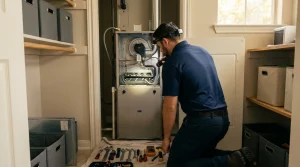
On the scheduled day, the installation crew arrives within the agreed time window, often in the morning, and begins with an introduction and a brief job review. Professional installers confirm the scope of work, walk through the home again to verify equipment locations and access, and answer any last-minute questions. Technicians typically protect floors and surfaces along their work path with drop cloths or runners, then shut off power to the existing system at the appropriate breakers and, where applicable, turn off gas supply to furnaces.
Removal of the Old System
The removal phase involves disconnecting and extracting the existing indoor and outdoor components, which can take one to two hours for a straightforward change-out. Technicians disconnect electrical wiring, low-voltage control wires, refrigerant lines, gas lines for furnaces, condensate drains, and duct connections. Professional contractors use recovery machines to capture refrigerant into certified cylinders rather than venting it, which is both an environmental and legal requirement. Your contractor is responsible for transporting and disposing of old equipment and recovered refrigerant in accordance with environmental regulations.
Installation of the New Indoor Unit and Ductwork Adjustments
Once the old equipment is removed, installers prepare the site for the new indoor unit, which may involve building or reinforcing a platform, adding strapping where required, and ensuring adequate clearances. In Houston homes where equipment is often located in attics, installers must ensure that condensate drainage is correctly configured with primary and secondary drain lines, appropriate traps, and, in many cases, auxiliary drain pans and float switches to prevent ceiling damage from clogs. Given Houston's high humidity, condensate management is especially important.
Ductwork adjustments are common whenever a system is replaced. ENERGY STAR recommends that contractors inspect duct systems, perform leakage tests, and seal duct leaks when installing new HVAC equipment. Leaky ducts can waste 20 to 30 percent of conditioned air, so proper sealing significantly improves efficiency and comfort.
Installation of the Outdoor Unit and Refrigerant Piping
Installers place the new outdoor unit on a stable surface, often a concrete or composite pad, ensuring that the unit is level and that clearances around it meet manufacturer and code requirements for airflow and service access. Proper leveling prevents vibration and extends compressor life. Refrigerant line sets are either flushed and reused or replaced entirely, depending on their age, condition, size, and compatibility with the new equipment's refrigerant and capacity. Newer refrigerants like R-410A or R-32 often require different line sizes than older R-22 systems. Penetrations into the building shell are sealed to prevent water intrusion and air leakage, which is particularly important in Houston's wet climate.
Evacuation, Charging, and System Commissioning
Technicians evacuate the refrigerant circuit using a vacuum pump to remove air and moisture from the lines and coil, a step that is essential for preventing performance degradation and long-term damage to the compressor. During this process, you may hear a loud, persistent humming or hissing from the vacuum pump operating outside, which is a normal part of a thorough installation. After achieving an appropriate vacuum level and verifying that it holds, the system is charged with refrigerant according to manufacturer specifications. Proper charging is critical, since undercharging or overcharging leads to reduced capacity, higher energy use, and increased likelihood of component failure.
Quality-focused contractors follow structured commissioning checklists, systematically verifying electrical connections, temperature rise, condensate drainage, safety controls, and thermostat operation. This comprehensive testing confirms that every aspect of your new system is functioning correctly before the crew considers the job complete.
Homeowner Walkthrough and Cleanup
Once the system passes internal tests, the crew performs a walkthrough with you to demonstrate system operation and highlight key features. This often includes showing how to use the thermostat, explaining different fan or mode settings, pointing out filter locations and recommended replacement intervals, and reviewing maintenance tips. Contractors then clean up the work area, removing old equipment, packaging, and debris, and taking up floor coverings. Your home should be left in the same condition as before the installation, aside from the new equipment.
Duration and Disruption Expectations
For a relatively straightforward residential AC replacement where the existing ductwork is in good condition, many contractors estimate an on-site air conditioning installation time of roughly four to eight hours, allowing the work to be completed in a single day. More complex scenarios can extend to a full day or longer, with some furnace installations stretching from six to ten hours and new systems with major duct modifications requiring up to two days.
| Project Scenario | Typical On-Site Time |
| Straightforward AC replacement | 4 to 8 hours |
| Furnace installation | 6 to 10 hours |
| System with major duct modifications | Up to 2 days |
Noise is an unavoidable part of installation day, and you should expect periods of drilling, hammering, and metal clanking as technicians remove old units, secure new equipment, and modify ducts. Planning to work from home or scheduling the installation when you can be away may be more comfortable.
Houston-Specific Considerations
Hot-Humid Climate and Humidity Control
Houston sits in a hot, very humid climate zone, which means cooling and dehumidification loads dominate much of the year and systems run for long hours in summer, making proper design, sizing, and installation especially critical. Contractors working in this environment routinely address not just sensible cooling, which is the reduction of air temperature, but also latent loads, which are the moisture removal requirements. Because of the high latent loads in Houston, correct equipment sizing and selection are particularly important to ensure adequate dehumidification as well as sensible cooling. Quality-minded contractors may recommend multi-stage or variable-speed air conditioners that can modulate capacity, run longer cycles at lower output, and therefore remove more moisture without overcooling.
Conditioned Attics
Many building professionals now favor locating ductwork and air handlers within conditioned attic spaces insulated with spray foam at the roof deck, rather than in vented, extremely hot attics. This approach keeps equipment in a more moderate temperature environment and reduces duct losses. When installing HVAC equipment in these attics, contractors must pay close attention to condensate management, clearances, and serviceability, since leaks or overflows can quickly damage ceiling finishes and hidden structural elements.
Key Takeaways
- Permits are required by law in Houston for all HVAC installations, change-outs, and relocations, and reputable contractors handle securing permits and coordinating inspections for you.
- Proper sizing using Manual J load calculations is critical in Houston's humid climate, since oversized systems cool quickly but fail to remove enough moisture, leaving your home clammy and at risk for mold.
- Plan for four to eight hours of installation time for a straightforward replacement in a single day, though complex projects with ductwork modifications can take longer, and expect noise throughout the day.
- Quality installation includes duct sealing, proper refrigerant charging, and condensate drainage with secondary drain lines and float switches, which is especially important in Houston attics where leaks can quickly damage ceilings.
- Ask for a written proposal that itemizes all equipment, services, permits, and disposal of old units, and look for contractors who perform comprehensive commissioning tests to verify every component works correctly.
- Regular maintenance after installation preserves performance and extends equipment life, including changing filters before cooling season and clearing condensate drains to prevent blockages.
Post-Installation
Contractor Quality Checks and City Inspections
Some contractors send a representative back to your home after about a week of system operation to conduct a final quality inspection, confirm that the system is performing as expected, and assist with scheduling the required city inspection. This follow-up visit provides an opportunity to address any questions or concerns that have arisen during initial use. City or county inspections are typically scheduled after the contractor notifies the authority having jurisdiction that work is complete and ready for review. In Houston, inspectors examine the installation to ensure it complies with mechanical, electrical, and energy codes and that the work matches the permitted scope.
Ongoing Maintenance
After the new system is installed, proper maintenance becomes the key factor in preserving performance and extending equipment life. Critical tasks include inspecting and changing air filters regularly, particularly before and during the heavy cooling season; cleaning evaporator and condenser coils as needed; and ensuring proper condensate drainage by periodically inspecting drain lines and pans and clearing blockages. Many Houston homeowners use seasonal maintenance schedules to keep systems running efficiently, which helps protect your investment and maintain peak performance year-round. Choosing a specialist for the original residential HVAC installation sets the foundation, and staying on top of simple upkeep protects it. If you are weighing a new system, you can request a free consultation to understand your options.
FAQs
How long does HVAC installation take in Houston?
A straightforward AC replacement typically takes four to eight hours in a single day. Furnace installations can run six to ten hours, and systems needing major duct modifications may take up to two days.
Do I need a permit to install HVAC in Houston?
Yes. Houston law requires a permit for any new installation, unit change-out, or relocation, and often for component replacements too. A reputable contractor secures the permit and coordinates the required inspections for you.
Why is proper sizing so important in Houston?
Houston's humidity creates high latent loads. An oversized system cools air quickly but short-cycles, failing to remove enough moisture and leaving your home clammy. Manual J load calculations size equipment correctly for both temperature and humidity.
What is a Manual J load calculation?
Manual J is a standardized engineering method that estimates your home's heating and cooling loads using square footage, insulation, window area, orientation, air infiltration, and internal gains. It is far more accurate than rough rules of thumb.
What should a written HVAC proposal include?
A clear proposal itemizes equipment tonnage and efficiency ratings, old-equipment removal and disposal, the outdoor pad, line set work, thermostat and duct modifications, electrical upgrades, and permits with post-installation inspections, so you know exactly what you are buying.
How do I prepare my home for installation day?
Clear a path to the indoor unit, clear space around the outdoor condenser, move fragile items away from the work path, secure pets in a separate room or offsite, and ensure access to electrical panels and attic entry points.
What happens during system commissioning?
Commissioning is a structured series of checks after installation. Technicians verify electrical connections, temperature rise, condensate drainage, safety controls, and thermostat operation, confirming the whole system performs correctly before they consider the job complete.
Why does refrigerant evacuation and charging matter?
Evacuation removes air and moisture from the lines and coil, protecting the compressor. Charging to the manufacturer's exact specification is critical, since undercharging or overcharging reduces capacity, raises energy use, and shortens equipment life.
Should ductwork be sealed during installation?
Yes. Leaky ducts can waste 20 to 30 percent of conditioned air. ENERGY STAR recommends inspecting, testing, and sealing ducts when installing new equipment, which improves efficiency, comfort, and humidity control in Houston homes.
What maintenance does a new HVAC system need?
Change air filters regularly, especially before and during cooling season, clean evaporator and condenser coils as needed, and inspect condensate drain lines and pans to clear blockages before they cause ceiling or equipment damage.
Conclusion
A quality HVAC installation in Houston is a sequence, not a single event. It starts with a careful in-home evaluation and Manual J sizing, moves through a transparent written proposal and proper permitting, and culminates in an installation day that ends with thorough commissioning and a walkthrough. Each step exists for a reason, and in our climate, the details that matter most are correct sizing for humidity, sealed ductwork, and reliable condensate management.
When you know what a proper installation looks like, you can hold any contractor to that standard. Insist on load calculations, a permit, an itemized proposal, and verified performance before the crew leaves. Get those fundamentals right, and your new system will deliver comfortable, efficient cooling through Houston's long, demanding summers for years to come.
Schedule your Houston HVAC installation the right way.
Request a free consultation from VeriChill today.