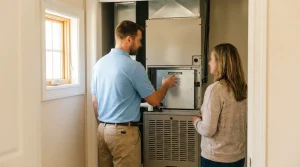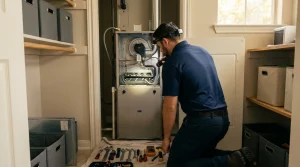
Spring, from March through May, is the best time to replace an HVAC system in Houston. You avoid the summer rush, secure better pricing, and have time to fully test the new unit before extreme heat arrives. Fall is a solid backup window.
If your HVAC system is nearing 10 years old or showing signs of wear, you are probably wondering when to replace it, especially in Houston, where brutal summers and year-round humidity push air conditioning systems harder than almost anywhere else. Replacing during peak summer not only means dealing with emergency pricing and limited contractor availability, it also leaves you vulnerable if installation delays stretch into the hottest weeks of the year.
In this guide, you will discover the best months to schedule your HVAC installation in Houston, how to avoid the summer rush, and what timing strategies can save you money while ensuring your new system is tested and ready before extreme heat arrives. VeriChill helps Houston homeowners plan replacements around exactly these windows.
Understanding Houston's Climate Impact on HVAC Replacement Timing
Houston's climate presents unique challenges for air conditioning systems. The hot season lasts for 3.6 months, from June 2 to September 22, with average daily high temperatures above 89 degrees Fahrenheit. Even more demanding, the muggier period extends for 6.9 months, from April 7 to November 2. This intense humidity forces your system to work overtime, and excess humidity can force your air conditioning system to work longer and harder throughout the day, which accelerates wear and tear compared to drier climates.
HVAC system lifespan in Houston typically ranges from 12 to 15 years for air conditioners due to the region's intense heat and humidity. This is shorter than the national average, making timing your replacement even more critical. The fundamentals of how these systems handle that load are covered well in general references on air conditioning.
The Best Seasons for HVAC Replacement in Houston
The table below summarizes how each season stacks up for a Houston replacement.
| Season | Rating | Why |
| Spring (Mar to May) | Best | Avoids the rush, better pricing, time to test |
| Fall (Sep to Nov) | Good backup | Prep for next summer, heating upgrades |
| Summer (Jun to Aug) | Avoid | Peak demand, high prices, rushed installs |
| Winter (Dec to Feb) | Possible | No cooling test before you need it |
Spring (March to May): The Prime Window
Spring replacement, specifically March through May, helps you avoid the summer rush when everyone needs AC help. This timing offers several strategic advantages for Houston homeowners. Benefits of spring installation include time to test the new system before you need it every day, potential discounts during slower business periods, faster scheduling with more flexible dates, and the ability to address any issues before peak cooling season. Replacing your system in early spring means you will have a fully tested, properly functioning unit before Houston's oppressive summer heat arrives in June. A planned spring HVAC replacement means you are not stuck waiting for an available contractor while temperatures soar.
Fall (September to November): The Secondary Option
Fall is considered the sweet spot for commercial HVAC preventative maintenance and comprehensive system upgrades. While spring remains ideal for most residential replacements, fall works well for certain situations: when your system failed late in the cooling season, when you want to prepare for the next summer well in advance, when you are planning a comprehensive upgrade that includes heating components, or when you missed the spring window but want to avoid summer emergency replacement. A fall project is also the natural time to bundle a heating system installation with your cooling upgrade. The key advantage is that you have already survived another Houston summer, so you know exactly how your current system performed under stress.
When to Avoid HVAC Replacement
Summer months, June through August, represent the worst time to replace your system in Houston. Contractors face peak demand, which means longer wait times, higher prices, and rushed installations. During summer, you will encounter limited contractor availability, higher labor costs due to demand, uncomfortable waiting periods if your system fails, and less time for thorough testing and adjustments.
Winter replacement, December through February, is not ideal either, though Houston's mild winters make it less problematic than in northern climates. However, you will miss the opportunity to test your cooling capacity before you truly need it, which is the whole point of replacing ahead of the season rather than during it.
Key Decision Factors for Replacement Timing
The $5,000 Rule: Age and Repair Costs
The $5,000 rule, age multiplied by repair cost, provides a quantifiable threshold for replacement decisions. Multiply your system's age by the estimated repair cost, and if the result exceeds $5,000, replacement typically makes more financial sense. For example, if your 12-year-old unit needs a $500 repair, that is 12 times $500, or $6,000, which signals it is time to replace rather than repair. If your AC is 12 to 15 years old with rising repairs or bills, or your furnace is nearing 20 to 30 years, plan in spring or fall to avoid peak summer rather than waiting until the system fails completely during a heat wave.
Energy Efficiency Considerations
Energy efficiency calculations require Houston-specific adjustments, as SEER ratings alone do not capture humidity performance. The constant battle against humidity means your system's dehumidification capability matters as much as its cooling power. Homeowners should prioritize equipment with higher latent cooling capacity and consider payback periods shortened by intense cooling demands, typically 3 to 5 years versus national averages. Modern high-efficiency systems can save you 20% or more on energy costs compared to older units, especially in Houston's demanding climate. A variable speed air conditioner is often the most effective upgrade for both efficiency and humidity control.
Refrigerant Compatibility Issues
Older systems using R22 refrigerant face a critical decision point. Refrigerant compatibility issues become more problematic with older R22 systems requiring complete system replacement, since R22 production ended in 2020. If your system uses R22 and needs major repairs, replacement becomes the only practical option. This makes spring timing even more important, since you can plan the replacement proactively rather than facing an emergency situation in July.
Proper System Sizing for Houston's Climate
System sizing accuracy proves critical in Houston's humid environment, as oversized units fail to properly dehumidify by cycling too frequently, while undersized systems run constantly without achieving comfort. Both scenarios lead to premature failure and higher operating costs. Many homeowners assume bigger is better, but an oversized unit will cycle on and off too frequently, fail to remove humidity effectively, create temperature swings, and waste energy. Undersized systems face different problems, running constantly without reaching your desired temperature, wearing out components faster and driving up costs. Contractor selection criteria should include verification of experience with Houston's climate-specific challenges, including proper Manual J load calculations that account for high humidity. A qualified new ac installation starts with detailed calculations rather than simply matching your old unit's size.
Cost Considerations Beyond Equipment Price
Hidden Installation Costs
Total cost considerations extend beyond equipment price to include potential ductwork modifications, adding $3,000 to $6,500, electrical upgrades, and refrigerant compatibility issues. The table below lists the extras that most often surprise homeowners.
| Hidden Cost | Typical Trigger |
| Ductwork repairs or modifications | Leaky or undersized existing ducts |
| Electrical panel upgrades | Modern high-efficiency units |
| Thermostat replacement | Programmable or smart models |
| Old equipment removal | Disposal of the existing system |
| Permits and inspections | Required by local codes |
Spring installation gives you time to budget for these extras without the pressure of an emergency replacement.
Rebates and Incentive Programs
Rebate and incentive timing affects decision-making, particularly with Texas HOMES and HEAR programs currently in planning phase. These programs may make fall 2026 or spring 2027 more advantageous for replacement when programs launch. However, do not delay replacement of a failing system just to wait for potential rebates, since the energy waste and repair costs from an inefficient, aging system often exceed any future incentive value. Check with your utility company and local government for current rebate programs, since many offer incentives for high-efficiency equipment that can offset 10 to 20% of your installation costs.
Real-World Replacement Scenarios
A Houston homeowner with a 12-year-old AC unit notices rising repair frequency and increased humidity complaints in April. After calculating age times repair cost exceeding $5,000 and confirming the refrigerant is R22, they schedule replacement in early May. This timing allows them to avoid summer heat during installation, take advantage of spring contractor availability, complete installation before peak humidity season begins in June, and test the system thoroughly under moderate conditions. The homeowner saves money compared to emergency summer replacement and enjoys a full cooling season with a properly functioning system. The contrast with a July breakdown is stark, since an emergency replacement during peak demand would have meant higher pricing, a longer wait in the heat, and far less time to verify the new system was performing correctly before it was needed daily.
A contractor serving Houston implements a flattening-the-curve strategy by offering 10% spring installation discounts in March and April to shift 30% of their workload from summer months. Homeowners who take advantage of these seasonal promotions receive lower installation costs, priority scheduling, more thorough installation with less time pressure, and better customer service during slower periods. This demonstrates why spring remains the optimal window, since contractors have both capacity and motivation to offer better service and pricing.
Key Takeaways
- Spring, March through May, is the best time to replace your HVAC system in Houston, since you avoid the summer rush, get better pricing, and have time to test your new unit before extreme heat arrives.
- Use the $5,000 rule to decide between repair and replacement, multiplying your system's age by the repair cost, and replacing if the result exceeds $5,000.
- Houston's intense humidity shortens HVAC lifespan to just 12 to 15 years, so start planning replacement when your system hits 10 to 12 years old, before it fails during a heat wave.
- Proper system sizing is critical, since oversized units cycle too frequently and fail to remove humidity, while undersized systems run constantly and wear out faster, so insist on Manual J calculations.
- Avoid summer, June through August, when you face limited availability, higher emergency pricing, and uncomfortable waits during the hottest months.
- If your system uses R22 refrigerant and needs major repairs, replacement is the only practical option since R22 production ended in 2020, so budget for ductwork and electrical extras beyond equipment price.
Making Your Final Decision
The best time to replace your HVAC system in Houston is during spring, March through May, with fall, September through November, as your backup option. This timing helps you avoid the summer rush, secure better pricing, and ensure proper installation before you need maximum cooling capacity. Start planning your replacement when your system reaches 10 to 12 years old, even if it is still functioning.
This proactive approach lets you choose your timing rather than having an emergency dictate it during the worst possible moment, a 100-degree day in July. Consult with experienced HVAC contractors who understand Houston's unique climate challenges, since they can assess your current system, calculate proper sizing for a replacement, and help you schedule installation during the optimal window for your specific situation.
Frequently Asked Questions
When is the best time to replace an HVAC system in Houston?
Spring, March through May, is ideal. You avoid the summer rush, often get better pricing, and have time to fully test the new system before Houston's extreme heat arrives in June.
Is fall a good time to replace my HVAC?
Yes, fall is a strong backup window. It works well if your system failed late in the season, you want to prepare early for next summer, or you are bundling a heating upgrade.
Why should I avoid replacing in summer?
Summer is peak demand, which brings limited availability, higher labor costs, rushed installations, and uncomfortable waits if your system fails during the hottest weeks of the year.
What is the $5,000 rule?
Multiply your system's age by the estimated repair cost. If the result exceeds $5,000, replacement usually makes more sense than repair. A 12-year unit needing a $500 repair equals $6,000.
How long do HVAC systems last in Houston?
Typically 12 to 15 years, shorter than the national average, because intense heat and humidity force the system to run longer and harder. Start planning replacement around 10 to 12 years.
My system uses R22 refrigerant. What does that mean?
R22 production ended in 2020, so older R22 systems needing major repairs usually require full replacement. Planning the swap in spring avoids an emergency when the system finally fails.
Why does system sizing matter so much?
Oversized units short-cycle and fail to dehumidify, while undersized units run constantly and wear out fast. A Manual J load calculation produces the correct size for your home and climate.
What hidden costs should I budget for?
Beyond equipment, plan for possible ductwork modifications of $3,000 to $6,500, electrical upgrades, a new thermostat, old equipment removal, and permits. Spring timing gives you room to budget.
Should I wait for new rebate programs?
Do not delay replacing a failing system just to wait. Energy waste and repairs from an aging unit often exceed future incentives. Check current utility and federal rebates instead.
How much can a high-efficiency system save?
Modern high-efficiency systems can cut energy costs by 20% or more in Houston's demanding climate, with payback periods shortened to roughly 3 to 5 years by the region's heavy cooling demand.
Conclusion
In Houston, when you replace your HVAC system is almost as important as what you install. Spring gives you the rare combination of better pricing, attentive contractors, and enough lead time to test the new unit before the heat makes it non-negotiable. Fall is a reliable fallback, while summer is the window to avoid at almost any cost.
The smartest move is to plan ahead at the 10 to 12 year mark, use the $5,000 rule to time the decision, and insist on proper sizing for the humidity. VeriChill specializes in correctly sized systems built for Houston's climate, and a planned spring replacement is how you beat the summer rush instead of being caught by it.
Plan your replacement for spring, not summer.
Beat the Houston heat with proactive timing.