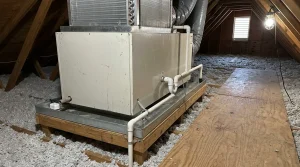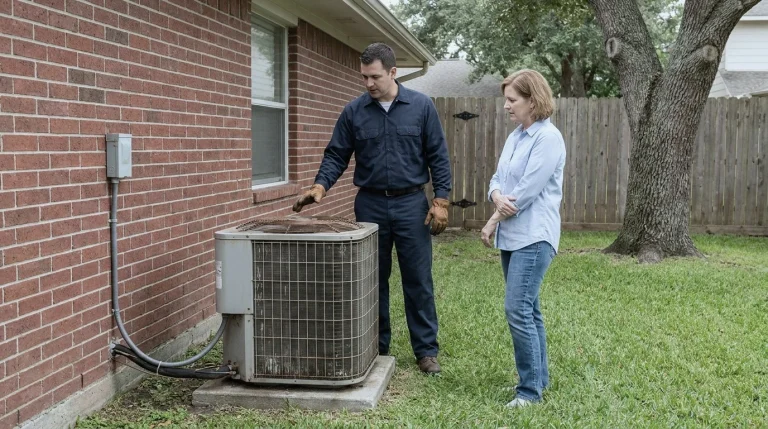
Whether to replace your AC or repair it comes down to five things: how old the system is, how large the repair is compared to the value left in the equipment, how often it has failed lately, whether it still keeps your Houston home cool and dry, and which refrigerant it uses. A younger system with a single worn part is usually worth fixing. An older system that needs a compressor or coil, runs on R-22 refrigerant, or leaves rooms humid and uneven is usually the better candidate for replacement, especially before another long cooling season.
Here is a scenario that plays out across Houston every fall. The air conditioner limps through August, a technician fixes a part in September, and by October the homeowner is staring at a second repair quote and wondering whether to keep paying for fixes or start over with a new system. When it comes to AC repair vs replacement, no single number answers the question for every house.
What helps is a framework. The questions below are the same ones a careful contractor works through before recommending a path, and they apply whether your home is in Cypress, Katy, Spring or inside the Loop. Work through them in order and the decision usually becomes clear.
Five Questions That Frame the AC Repair vs Replace Decision
Start with the facts about your system, not the size of the latest invoice. A repair that looks expensive can be the smart choice on a young unit, and a cheap repair can be money poorly spent on a system near the end of its life.
How old is the system, and how has it been treated?
Age matters less as a single number than as a signal. A system that has been cleaned, kept charged and properly sized can stay reliable for years, while a neglected one wears out early. In Houston, the long cooling season adds far more running hours per year than a milder climate does, so equipment here ages faster on the calendar. Check the installation date on your paperwork and think about how many hard summers it has already carried.
How big is this repair compared to the value left in the unit?
Small electrical parts such as capacitors, contactors and fan motors are routine fixes. A failed compressor or a leaking evaporator coil is a different category, because those are the heart of the system. When the repair cost approaches a large share of the replacement cost, and the unit is old, the money usually works harder in a new unit.
How often has it needed repair lately?
One major repair after years of quiet service is normal. Two or three AC repairs in a single season suggest a system that is wearing out part by part. Each fix may be reasonable on its own, but together they add up and rarely restore lost efficiency.
Does the house still feel comfortable?
Comfort is part of the decision. If some rooms stay warm, the air feels sticky even when the thermostat is satisfied, or the system runs for long stretches without catching up during a heat wave, the air conditioning system may no longer match the home's needs. Repairs fix broken parts; they do not fix a system that was the wrong size or type for the house.
Which refrigerant does it use?
Older systems often run on R-22, a refrigerant that is no longer produced in the United States. That single fact changes the economics of any repair that involves the refrigerant circuit, as the next sections explain.
When Repairing Your AC Makes Sense
Repair is often the right call, and it is worth saying so plainly. Not every breakdown means a homeowner needs a new system.
A younger system with a wear part
Capacitors, contactors, condensate switches and blower motors wear out on systems of every age. If your unit is relatively young, has a clean service history and the failed part is one of these, a repair is the cost-effective choice and restores normal operation. The same goes for a clogged condensate drain, a common Houston problem that can shut a system down without damaging it.
A system that still holds its charge and its comfort
If the refrigerant level has stayed steady, the coils are in good condition and the house cools evenly, the core of the system is healthy. Fixing the part that failed is the sensible move. Our guide to getting the most life out of your AC covers the habits that help a healthy system stay that way.
Buying time with a plan
Sometimes a repair is the bridge, not the destination. If your system is older but the current fix is modest, repairing it now and planning a replacement for a cooler month lets you compare options without the pressure of a breakdown in July. The key is to treat that repair as a deliberate choice with an end date in mind, not the first of many surprises.
Signs It Is Time to Replace Your Houston AC
Some signals point clearly toward replacement. When several of them show up together, continuing to repair an older unit tends to cost more over time than starting fresh.
A major component fails on an older system
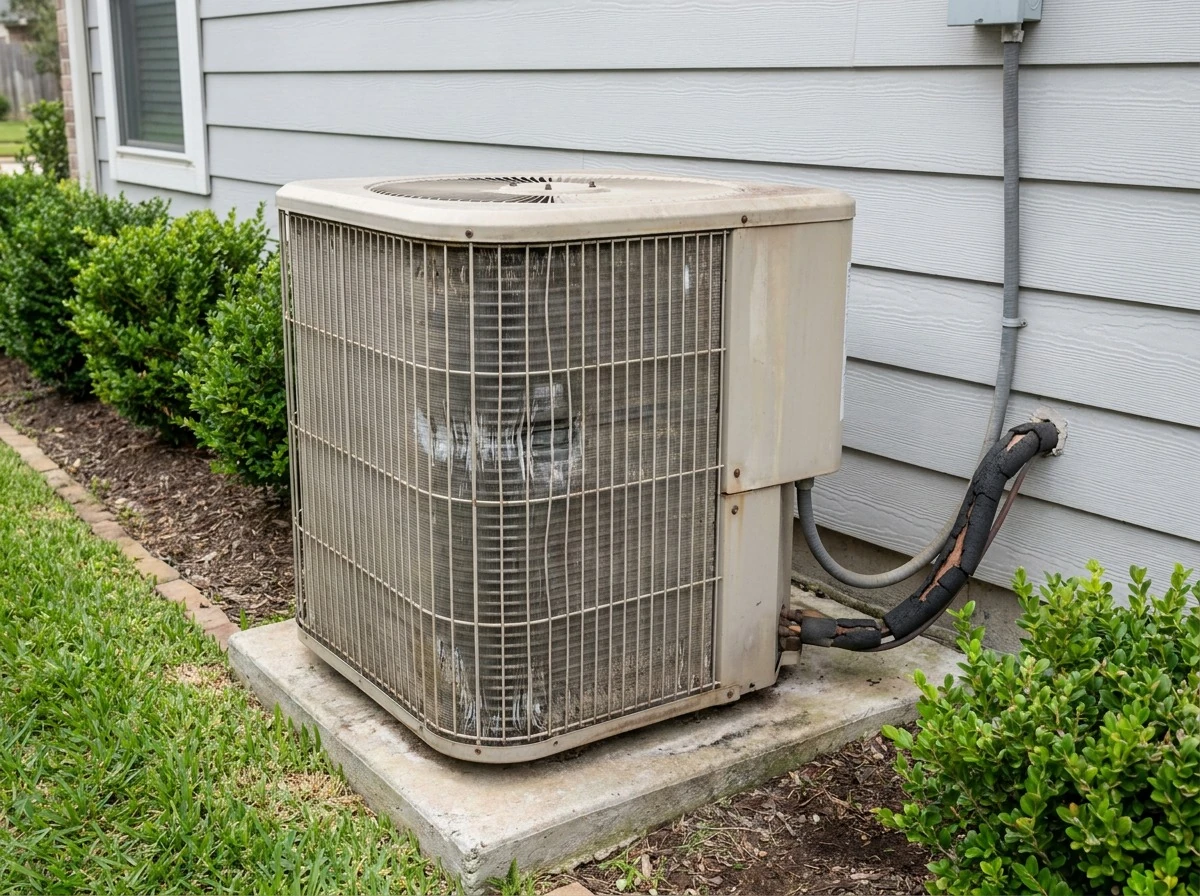
A failed compressor, a leaking evaporator coil or a cracked condenser coil on an aging system is the clearest signal. These repairs are among the most expensive an air conditioner can need, and putting a new compressor into an old system leaves every other worn part in place. A homeowner in that position is often better served by a planned residential hvac replacement that resets the whole system at once.
Your system still runs on R-22
According to the EPA's HCFC phaseout schedule, production and import of HCFC-22, the refrigerant commonly called R-22, ended in 2020, after an earlier step in 2010 that limited it to equipment manufactured before January 1, 2010. Servicing existing equipment is still allowed, but supply now depends on refrigerant that has already been made or recovered. If an R-22 system develops a leak, recharging it gets harder to justify each year, and the leak itself usually means more trouble ahead.
Rising bills and long run times
An air conditioner that loses efficiency works longer to deliver the same cooling. If your summer bills have crept up while your habits stayed the same, the outdoor unit or indoor coil may be the cause. Our article on why summer AC bills spike walks through the other usual suspects to rule out first, such as attic heat, duct leaks and a dirty air filter.
Humidity and uneven rooms
In Houston, an air conditioner has two jobs: cooling the air and pulling moisture out of it. A system that no longer removes enough humidity leaves the house feeling clammy at a comfortable temperature, and that problem rarely improves with repairs. Rooms that stay several degrees warmer than the rest of the house point to airflow or sizing issues that a new system, designed for the home, can address.
The system was never sized right
Oversizing is one of the most common HVAC problems in Houston homes. An oversized unit cools the air quickly and shuts off before it removes enough moisture, then cycles on and off all day. If your system has always behaved that way, replacing it with the right capacity is often the only real fix.
AC repair vs replacement at a glance
The table below pulls these signals together. Use it as a starting point, then confirm the details with an in-home look at the system.
| Factor | Leans toward repair | Leans toward replacement |
|---|---|---|
| Age and history | Younger system, few past repairs | Older system, several repairs in recent seasons |
| Type of failure | Capacitor, contactor, fan motor, drain line | Compressor, evaporator coil, condenser coil |
| Refrigerant | R-410A or newer, holding its charge | R-22, or a recurring refrigerant leak |
| Comfort and humidity | Even temperatures, dry indoor air | Warm rooms, sticky air, long run times |
| Energy bills | Steady from year to year | Climbing with no change in habits |
| Sizing | Cycles normally on hot days | Short cycles or never catches up |
| Other equipment | Furnace or air handler in good shape | Indoor equipment of the same age and wear |
What a Replacement Changes in a Houston Home
A new system is more than a newer version of the old one. Efficiency ratings, refrigerants and equipment options have all moved on, and the right choices make a real difference in our climate.
Efficiency is rated in SEER2
SEER2 (Seasonal Energy Efficiency Ratio 2) is the current rating standard for central air conditioners and heat pumps. It measures cooling output against the energy used over a typical season, under test conditions that better reflect real ductwork than the older SEER scale. For Houston's long cooling season, we generally recommend equipment rated 16 SEER2 or higher, because the extra efficiency pays back over more running hours than it would in a milder climate.
New refrigerants replace R-410A
New residential systems installed in 2026 use lower global warming potential refrigerants such as R-454B and R-32 in place of R-410A. Both are classified A2L, meaning mildly flammable, so they call for equipment and installation practices designed for them. For a homeowner, the practical point is simple: a new system starts on a refrigerant with a long service future ahead of it.
Two-stage systems fit most Houston homes
A single-stage system runs at full capacity or not at all. A two-stage system can run at a lower setting for most of the day, giving longer, quieter cycles that pull more humidity out of the air. For most Houston homes, two-stage equipment is the sweet spot between cost and comfort, while variable-speed systems are the premium option for homeowners who want the tightest humidity control.
Matched indoor and outdoor equipment
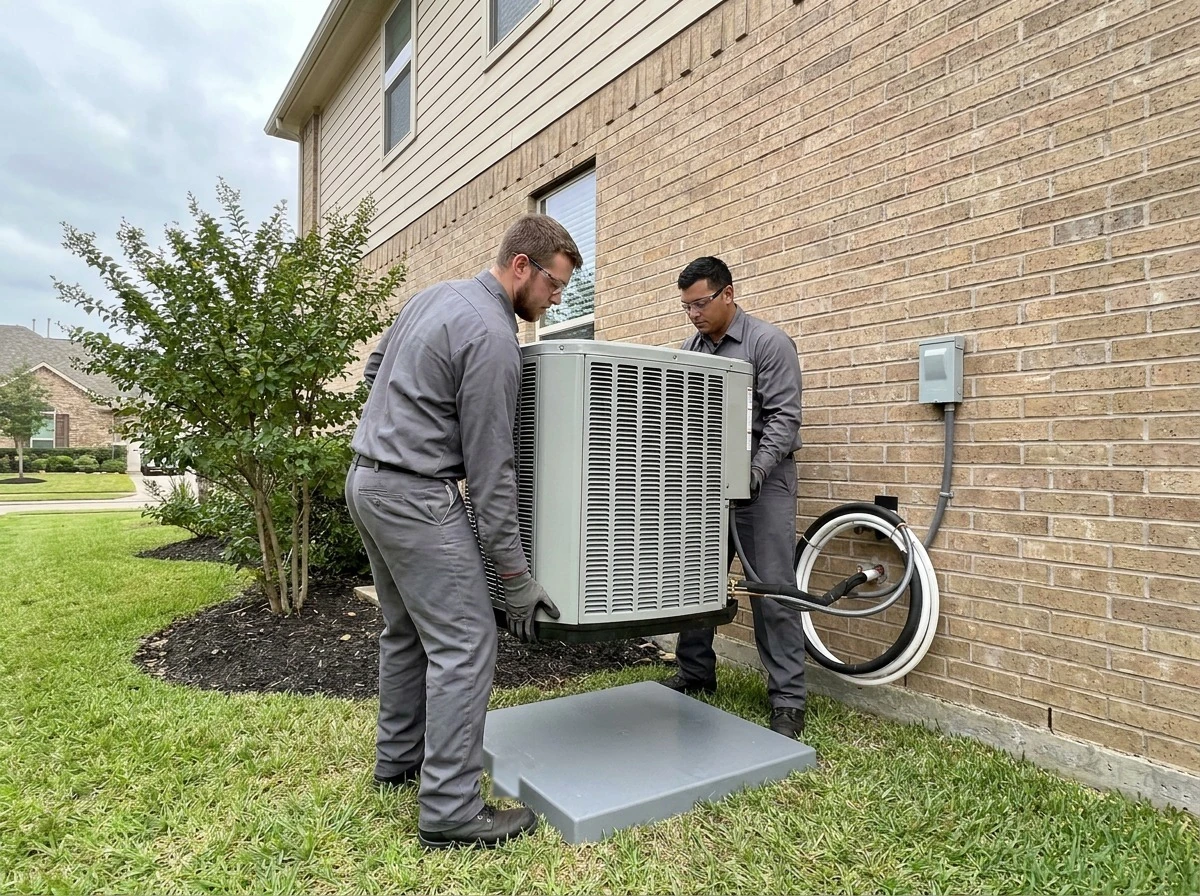
Replacing only the outdoor condenser and keeping an old indoor coil is a common shortcut that causes problems. The two halves are designed to work together, and a mismatch can reduce efficiency and reliability. A proper AC replacement installation pairs a matched condenser and coil, checks the line set and confirms airflow through the ducts.
A chance to rethink heating too
If your furnace or air handler is the same age as the air conditioner, replacing your heating and cooling equipment together avoids a second project a year or two later and lets the indoor and outdoor equipment be matched from the start. Many Houston homeowners also look at a heat pump at this stage, since our mild winters suit one well. A combined air conditioning and heating installation is worth pricing alongside an AC-only replacement.
How Our Team Approaches a Replacement Decision
Our team focuses on new system installations and full replacements for Houston-area homes, so the goal of a visit is to give you a clear, honest picture of where your system stands and what a new HVAC system would involve.
It starts with an in-home evaluation
Every job starts with an in-home evaluation. We look at your insulation, ductwork, ceiling heights, window orientation and how air is distributed from room to room, because those details decide what size and type of system the house actually needs. A replacement sized from the old unit's label can repeat the old unit's mistakes.
Timing the project on your terms
Fall is a practical time to plan. The pressure of peak summer is gone, the system can be swapped on a mild day and the new equipment is ready before next spring's heat. If your system made it through the summer but struggled, our fall AC assessment guide explains what to look for while the season's performance is still fresh in your mind.
Warranty and financing
VeriChill installations carry a warranty of 10 years parts and compressor, with VeriChill handling the 90-day registration so the coverage is in place without extra paperwork on your end. For qualified homeowners, financing options are available through Wells Fargo, Synchrony Bank and Goodleap. We serve Houston, Cypress, Katy, Spring, Sugar Land and Tomball.
Key Takeaways
- Weigh five factors together: system age and history, the size of the repair, how often it fails, comfort and humidity, and the refrigerant it uses.
- Wear parts such as capacitors, contactors and fan motors are usually worth repairing on a younger, healthy system.
- A failed compressor or coil on an older system is the strongest signal to replace rather than repair.
- R-22 is no longer produced or imported, so leaks in R-22 systems get harder to justify fixing every year.
- Humidity problems, warm rooms and short cycling often point to sizing issues that repairs cannot correct.
- A replacement works best when it starts with an in-home evaluation and pairs matched indoor and outdoor equipment.
Frequently Asked Questions
How many years should an AC last in Houston?
There is no fixed lifespan, because care, sizing and installation quality matter as much as age. Houston systems also run far more hours each year than units in milder climates, so they tend to show wear sooner on the calendar. Instead of waiting for a specific birthday, watch for the signals that matter: a major component failure, repeated repair calls, rising bills, sticky indoor air and rooms that never quite cool down. When several of those appear on an older system, it is time to plan a replacement.
Is it worth repairing an AC that uses R-22?
Small repairs that do not touch the refrigerant, such as a capacitor or fan motor, can still make sense on an R-22 system that otherwise runs well. Repairs involving a refrigerant leak are harder to justify. Production and import of R-22 ended in 2020, so servicing relies on existing or recovered supply, and a leak usually returns. For most older R-22 systems, the better use of the money is a planned replacement with equipment designed for current refrigerants.
What is the most expensive part of an AC unit to replace?
The compressor is usually the most expensive part to replace, followed by the evaporator or condenser coil. Both jobs involve opening the refrigerant circuit, recovering and recharging refrigerant, and significant labor. On a younger system still under its parts warranty, the cost may be manageable. On an older system, paying for a new compressor while every other component keeps aging is often the point where homeowners decide a full replacement is the better investment.
Should I replace my AC and furnace at the same time?
It often makes sense when both are close in age. Replacing them together lets the indoor and outdoor equipment be matched from the start, avoids a second installation project a few years later and gives you the option to consider a heat pump instead. If your furnace is much newer and in good condition, replacing only the air conditioner and indoor coil can be reasonable. An in-home evaluation helps you weigh both options with real information about your house.
Is fall a good time to replace an AC in Houston?
Yes, fall is one of the most practical times to replace an air conditioner here. The worst heat has passed, so the house stays comfortable during the swap, and you have time to compare options instead of deciding during a July breakdown. A system installed in the fall is also ready well before the next cooling season starts. If your unit struggled this summer, the weeks after the heat breaks are a good window to plan the change.
Conclusion
The repair or replace question gets easier when you stop looking at a single invoice and start looking at the whole system. Age, the type of failure, repair history, comfort, humidity and refrigerant each tell part of the story. A younger system with a worn part deserves a repair. An older system facing a compressor, a coil or an R-22 leak usually deserves a fresh start.
In Houston, the stakes are higher than in most places, because your air conditioner carries the house through a long, humid cooling season. A system that is the right size and type for your home keeps rooms cool and dry, runs efficiently and gives you years of predictable service instead of a string of surprise repairs.
If you are weighing a replacement, VeriChill can help you see the full picture before you spend anything on another fix. Call VeriChill at 281-559-6995 or contact our team to set up an in-home evaluation.