Most Houston homeowners treat indoor air quality as a side issue. It isn't. In a city where summer humidity sits at 75–80% for months, and pollen counts spike twice a year, the air inside your home is shaped almost entirely by one system: your HVAC. When that system is designed, installed, and maintained correctly, you have a fighting chance at clean, comfortable air. When it isn't, you're living with moisture, dust, and pollutants your filter was never built to catch.
VeriChill has spent years evaluating systems across Cypress, Katy, Spring, Sugar Land, and Tomball. In most homes where a homeowner calls about a "dust problem" or a "musty smell," the issue traces back to the HVAC system. Not the equipment brand — the design. How the system handles humidity, what it's filtering, how the ductwork is sealed, and whether any fresh air is being introduced. This guide walks through what's actually in Houston's indoor air, what your HVAC can realistically do about it, and where the system reaches its limits.
Why Indoor Air Quality Is a Bigger Deal in Houston Than Most People Realize
The EPA has been clear about this for years: indoor air is typically two to five times more polluted than outdoor air, and in some cases up to 100 times worse. That's the national number. Houston's climate makes it more complicated.
Three conditions stack the deck against Houston homes. First, humidity. The Gulf Coast keeps outdoor dew points above 70°F from May through September. Moisture migrates into walls, attics, crawl spaces, and ductwork. Anywhere it condenses, you get the conditions for mold growth and dust mite populations. Second, the allergen season runs twice a year. Spring brings pollen from oak, pecan, and pine; fall brings ragweed and mold spores. Both drift indoors through doors, windows, and leaky return ducts. Third, homes here run AC for 8 to 9 months a year. That means your HVAC is the single biggest influence on the air you breathe — more so than in any climate where the system sits idle for half the year.
If you feel tired at home, if your allergies are worse indoors than outdoors, or if you keep dusting the same surfaces every three days, these aren't personality quirks. They're symptoms of poor indoor air quality in a house that was built for the climate in theory, but wasn't tuned to it in practice.
What's Actually in Your Houston Indoor Air
Before discussing solutions, it helps to understand what your HVAC is fighting. Houston homes typically deal with a mix of the following:
- Particulate matter (PM2.5 and PM10). Microscopic particles from dust, pollen, combustion, and vehicle exhaust drift through the air whenever a door opens. PM2.5 is small enough to enter the lungs and bloodstream. The American Lung Association lists Houston among the top 25 U.S. metros for particle pollution.
- Volatile organic compounds (VOCs). Chemicals off-gassing from paints, adhesives, cleaning supplies, vinyl flooring, pressed-wood furniture, and new carpet. Formaldehyde is the most recognized one. VOCs are highest in newer homes and after renovations
- Mold and mold spores. Houston's humidity is a mold engine. Spores float in from outside and find moist surfaces — around AC coils, in damp insulation, along bath and kitchen walls, in attic ductwork that sweats.
- Pet dander and dust mites. Dust mites thrive at relative humidity above 50%, which describes most Houston homes without active humidity control. Dander from dogs and cats circulates through ductwork and lands in carpet and upholstery.
- Carbon monoxide and combustion byproducts. From gas ranges, water heaters, and natural gas furnaces. Houston homes with attached garages can also pull in vehicle exhaust through negative pressure.
- Pollen and outdoor allergens. A leaky return plenum or unsealed duct in the attic will literally pull attic air — full of insulation dust, pollen, and fiberglass particles — into the supply side of your system.
That's the typical load your HVAC is tasked with managing. Now the real question: what can it actually do?
What Your HVAC Can Do About Indoor Air Quality
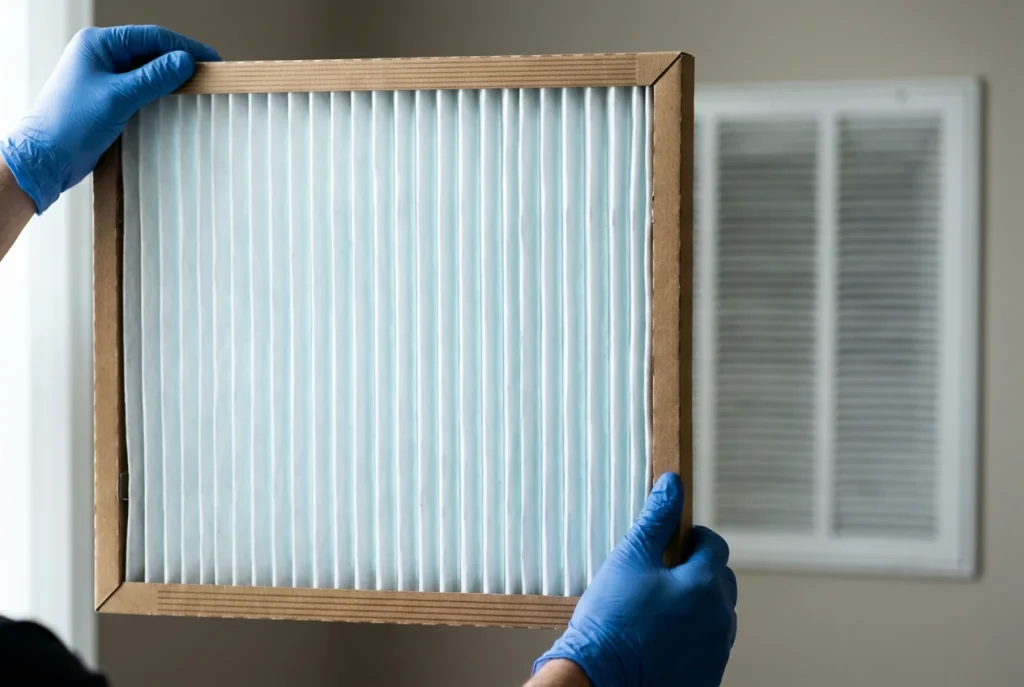
A residential HVAC system has four levers to pull when it comes to indoor air quality. Each one matters. Pulled together correctly, they transform how a home feels. Pulled in isolation, they barely move the needle.
Lever 1: Filtration. Every time your blower runs, air passes through a filter. The filter's MERV (Minimum Efficiency Reporting Value) rating determines what it captures. A standard fiberglass filter at MERV 4 catches lint and large dust. A MERV 11 catches most pollen and pet dander. A MERV 13 captures fine particulate, bacteria, and many virus-carrying droplets. MERV 13 is the sweet spot for most Houston homes — the grade VeriChill recommends by default. That's just the starting point, though. A MERV 13 filter stuffed into a return designed for a MERV 4 will restrict airflow, strain the blower motor, and drop efficiency. Higher filtration only works when the ductwork and return sizing support it.
Lever 2: Humidity control. Your AC removes moisture from the air as a byproduct of cooling. It is not primarily designed to dehumidify. On mild, humid Houston days — think April mornings, October afternoons — your AC doesn't run long enough to remove moisture, and indoor humidity climbs. The standard fix is a whole-home dehumidifier integrated with the HVAC, or a variable-speed system that can run longer at low capacity specifically to pull moisture. Keeping indoor humidity between 45% and 55% stops dust mite populations, prevents mold growth, and makes 76°F feel cooler than 72°F at 65% humidity. Whole-home dehumidification is one of the highest-impact upgrades for Houston homes, and it's the single most underinstalled piece of equipment in the market.
Lever 3: Ventilation. A modern, tightly built Houston home is essentially a sealed box. That's good for efficiency and bad for air quality — there's no natural air exchange to dilute indoor pollutants. An Energy Recovery Ventilator (ERV) solves this by introducing filtered outdoor air while recovering the energy from the air it exhausts. This is especially valuable after renovations, in homes with gas appliances, or anytime the family starts noticing stale, heavy air.
Lever 4: Air purification. Beyond filtration, options like UV-C lamps installed over the evaporator coil kill mold, bacteria, and viruses as air passes through. Bipolar ionization and PCO (photocatalytic oxidation) add another layer for VOCs and odors. These are add-ons — they work with filtration and humidity control, not instead of them.
A well-designed Houston HVAC system uses all four levers. Not one. Not two. Four.
What Your HVAC Cannot Do (An Honest Look)
Here's where our position differs from a lot of what you'll read online. HVAC is not a silver bullet for indoor air quality, and any contractor selling a single device that "eliminates" indoor pollutants is overselling.
Your system cannot remove existing mold from behind the drywall. It cannot offset a gas leak or a chronic water intrusion. It cannot make up for a dryer vent dumping lint into the attic. It cannot compensate for a house that's been closed up with no ventilation strategy while a kitchen remodel off-gasses for six weeks.
The tradeoff is this: HVAC manages the air that moves through it. Anything the HVAC never touches — stagnant zones, behind-the-wall contamination, source pollutants — needs to be addressed at the source. Filtration and humidity control reduce the ongoing load. They don't clean up a problem that's already entrenched.
Houston-Specific IAQ Failure Patterns We See Most Often
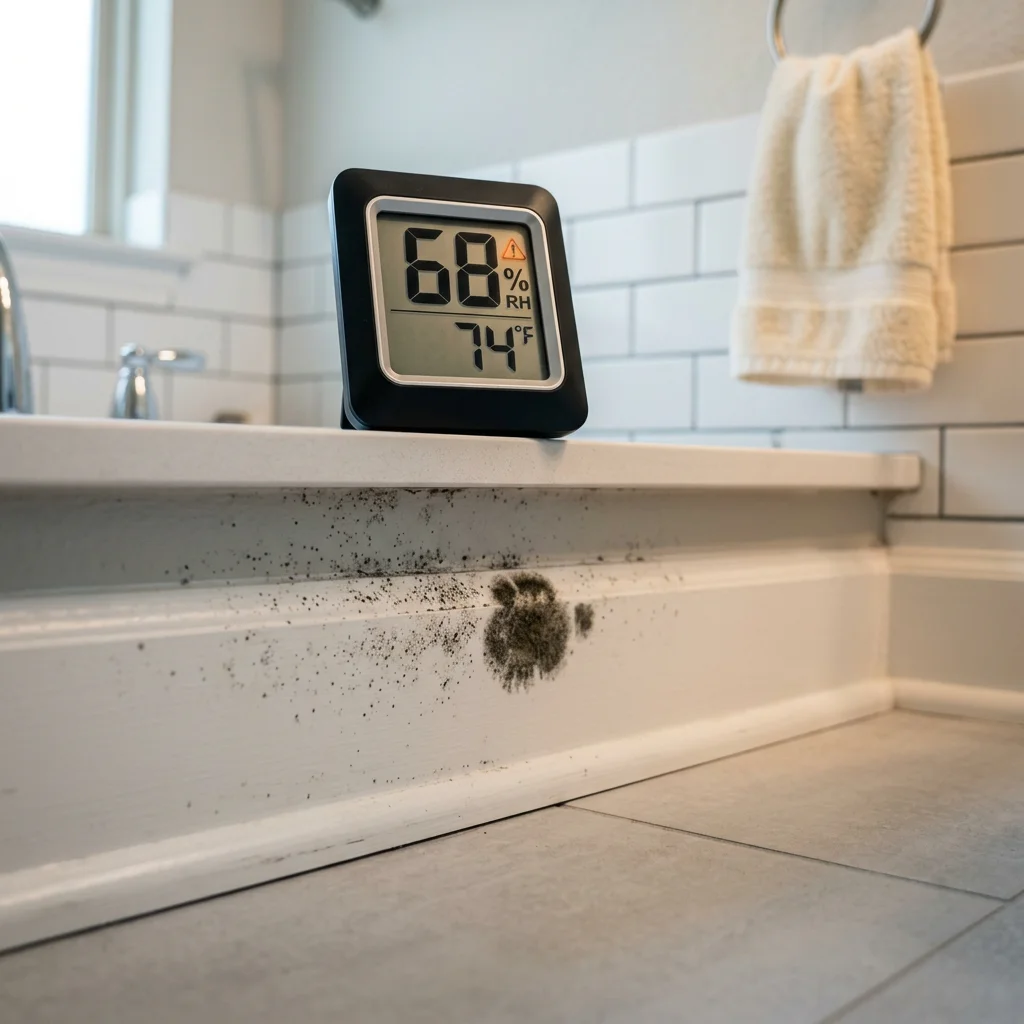
After years of evaluations across the Greater Houston area, a few patterns repeat in the majority of problem homes:
Oversized AC systems
The most common IAQ-damaging design mistake in Houston. An oversized system cools quickly, shuts off before meaningful humidity is removed, and leaves the home at 72°F and 65% humidity — cold, clammy, and mold-prone. Proper sizing via a Manual J load calculation is the fix.
Leaky attic ductwork
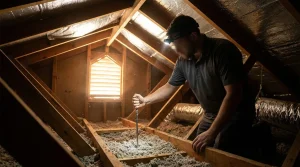
In an unconditioned Houston attic, summer temperatures hit 130–140°F. Unsealed ductwork at those temperatures is pulling attic air — insulation dust, fiberglass, pollen, sometimes rodent droppings — directly into your supply stream. Ductwork problems are sabotaging more Houston HVAC systems than most homeowners realize.
Single-stage systems with no humidity control
Runs hard, stops hard, never at part-load. Fine for a dry climate. Wrong for Houston. Variable-speed equipment runs longer at lower capacity, which is how moisture actually gets pulled out of the air.
Dirty or oversized return filters
A return that's too small for a high-MERV filter will either starve the blower or bypass the filter entirely through gaps around the frame. VeriChill technicians regularly pull MERV 13 filters installed backward, collapsed, or sitting in a slot an inch too small for the filter.
No fresh air strategy
New construction in Katy, Cypress, and The Woodlands is tighter than anything built 20 years ago. Without a mechanical fresh-air plan (ERV or controlled outside-air duct), CO2 climbs, VOCs concentrate, and occupants feel the effects before they can name them.
Practical Steps You Can Take This Month
You don't have to re-engineer your home to start improving IAQ. Here's a realistic sequence most Houston homeowners can work through in 90 days.
- Upgrade your filter — but verify airflow. Move to MERV 11 or MERV 13 if your system supports it. Change it every 60–90 days in peak allergy season, every 30 days if you have pets. If you notice the system running longer or struggling, your return may need to be resized. That's not a failure of the filter; it's a sign the ductwork needs attention.
- Check indoor humidity with a $20 hygrometer. Place it in a central room. If readings are consistently above 55% when the AC is running, you have a humidity control problem, not a cooling problem.
- Schedule a pre-summer AC inspection. Before the June heat, verify refrigerant charge, coil cleanliness, drain lines, and return static pressure. A pre-summer AC checkup catches the issues that turn into July emergencies.
- Identify ductwork weak points. Have someone look at return plenum seals, flex-duct connections, and any visible browned or peeled tape. Attic-run ducts in Houston should be sealed with mastic or UL-181 tape, not cloth duct tape.
- Control moisture at the source. Run bathroom fans for 20 minutes after showers. Use the kitchen range hood. If any crawl space or attic area smells musty, investigate before the weather turns.
- Consider humidity control equipment if readings stay high. A whole-home dehumidifier integrates with the HVAC and handles the load the AC alone can't. Homes with variable-speed equipment may be able to achieve the same result by dialing in a longer runtime strategy — that's where the engineering matters.
When to Call a Professional
Call when you've been chasing a symptom and the symptom isn't getting better. Recurring allergies that worsen indoors. Musty smells that return after cleaning. Dust accumulation that returns within 48 hours of wiping surfaces. Higher-than-expected energy bills, paired with complaints about humidity. Uneven room-to-room comfort. Any of these indicates a system that isn't doing its job on IAQ, regardless of how new the equipment is.
A proper indoor air quality evaluation in a Houston home includes a Manual J-style capacity check, static pressure readings on the return and supply sides, a visual inspection of the ductwork, humidity readings in multiple zones, and an examination of the filtration and coil conditions. If the contractor spends 15 minutes and recommends an air purifier without measuring anything, keep looking. Most contractors skip the measurement step. It's the step that matters.
How VeriChill Approaches IAQ
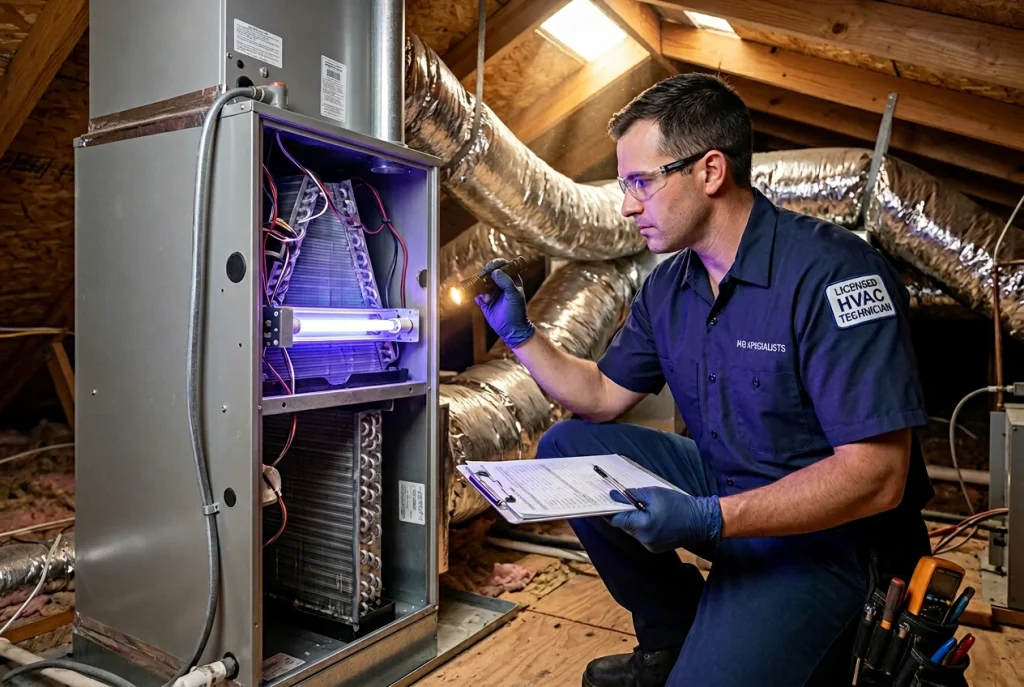
Every system VeriChill designs starts with a load calculation — not a tonnage guess. That's the foundation for everything else. Right-sized equipment runs longer at lower capacity, which pulls moisture and keeps filtration steady. From there, we evaluate the ductwork because a perfect system attached to leaky ducts is an expensive mistake. We specify MERV 13 filtration when the return supports it, recommend integrated dehumidification for Houston's climate, and offer ERV ventilation for tighter homes or post-renovation situations. UV and ionization are options, not defaults — we only recommend them when the underlying design is solid.
The goal isn't a gadget-heavy system. It's a system that quietly does its job: steady temperature, controlled humidity, clean air, reasonable energy bills. That's what a well-designed Houston HVAC should deliver, and it's what indoor air quality actually looks like in practice.
FAQ: Indoor Air Quality in Houston Homes
Is Houston's indoor air really worse than outdoor air?
In most homes, yes. EPA data shows indoor air is typically 2–5 times more polluted than outdoor air nationally, and Houston's humidity, pollen seasons, and extended AC runtime push that ratio higher in practice. The good news is your HVAC has direct control over most of what's circulating.
What MERV rating should you use in a Houston home?
MERV 13 is the sweet spot for most Houston homes, but only if your return and ductwork support the airflow. A system designed for MERV 4 filters will struggle with MERV 13 unless the return is resized. Work with a contractor who'll check static pressure before recommending a filter grade.
Can an air purifier fix indoor air quality?
An air purifier helps, but it's one tool in a four-tool kit. Filtration, humidity control, ventilation, and purification work together. A purifier alone won't fix a humidity problem or a ductwork leak — and those are usually the root causes in Houston.
What indoor humidity should you target?
Between 45% and 55%. Above 55%, you're inviting mold and dust mites. Below 40%, you're drying out furniture and respiratory tissue. A hygrometer will tell you where you are. If your AC is running and the humidity is still above 55%, the system isn't dehumidifying enough.
Do UV lights in the HVAC actually do anything?
When installed correctly over the evaporator coil, UV-C lamps kill mold and bacteria on the coil surface and in the airflow passing over it. They don't replace filtration and they don't reach contaminants outside the air handler, but they're a reasonable addition when the rest of the system is already well-designed.
How often should you have your ducts cleaned?
Less often than the industry sells. Duct cleaning makes sense after major construction, significant mold contamination, or rodent infestation. For a well-maintained system with clean filtration, duct cleaning every 5–7 years is plenty. Sealing leaky ducts, on the other hand, is worth doing immediately.
Will a new HVAC system automatically improve indoor air quality?
Only if it's designed for it. A new single-stage system with a standard filter in existing leaky ductwork won't move the needle much. A right-sized variable-speed system with MERV 13 filtration, humidity control, and sealed ductwork is a different conversation. The equipment matters less than the design.
If you're noticing IAQ symptoms in your Houston home — humidity, allergies, dust, musty smells — the root cause usually isn't the equipment brand. It's the system design. A proper evaluation takes about 90 minutes and tells you what's actually happening in the air you breathe. That's the starting point for every real fix.