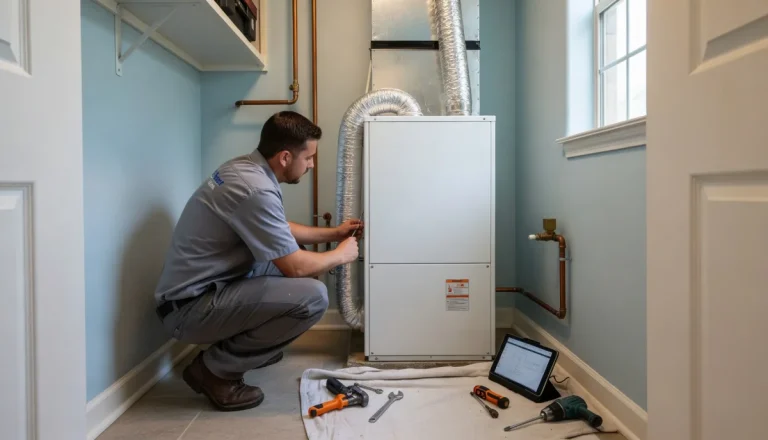
Gas furnaces remain the most common heating system in Houston homes, and for good reason. They deliver fast, reliable warmth during our short but unpredictable winter season, and modern high-efficiency models can heat your home while keeping energy costs manageable even during those occasional hard freezes that catch everyone off guard.
Houston's winters are mild compared to most of the country, but that doesn't mean your heating installation decision is simple. The wrong furnace, the wrong size, or the wrong installation can leave you uncomfortable on the coldest nights and overpaying on energy bills the rest of the season.
This guide covers how gas furnaces work in Houston's climate, what efficiency ratings mean, how installation day unfolds, and why installation quality matters more than most homeowners realize. For a broader context, our complete heating installation guide covers heat pumps and other alternatives.
How Do Gas Furnaces Work and Why Are They Popular in Houston?
A gas furnace burns natural gas to generate heat, which is then distributed through your home's ductwork by a blower fan. They're popular in Houston because natural gas is affordable and widely available here, and furnaces deliver the fast, intense warmth homeowners want during our brief cold snaps when temperatures drop unexpectedly.
Houston's heating season is short but real. We average about 15 days per year below 32°F, and most winters include at least one or two hard freezes, with temperatures dipping into the twenties. When those cold fronts blow through, homeowners want heat that responds quickly, and gas furnaces deliver exactly that. Unlike heat pumps, which move existing heat from outdoor air, furnaces generate their own heat through combustion, meaning they produce warm air regardless of how cold it gets outside.
Natural gas infrastructure is well established across Greater Houston, from Cypress to Sugar Land to Spring. Most homes already have gas lines, which keeps installation straightforward. For homes with existing ductwork, a furnace replacement is one of the most efficient heating installation projects in terms of timeline and complexity.
Gas furnaces aren't automatically the right choice for every Houston home, though. Heat pumps have become increasingly competitive for our mild climate. The best choice depends on your home's existing infrastructure, comfort preferences, and how you weigh heating performance against cooling-season efficiency.
| Feature | Gas Furnace | Heat Pump (Heating Mode) |
| Heat source | Burns natural gas | Transfers heat from outdoor air |
| Performance in hard freezes | Consistent regardless of outdoor temp | Efficiency drops as temps fall |
| Heating speed | Fast, intense warmth | Gradual, steady warmth |
| Houston winter suitability | Strong for cold snaps | Excellent for mild days, adequate for most freezes |
| Requires gas line | Yes | No (electric only) |
| Cooling capability | None (paired with AC) | Built-in cooling and heating |
What Efficiency Rating Should You Look for in a Houston Gas Furnace?
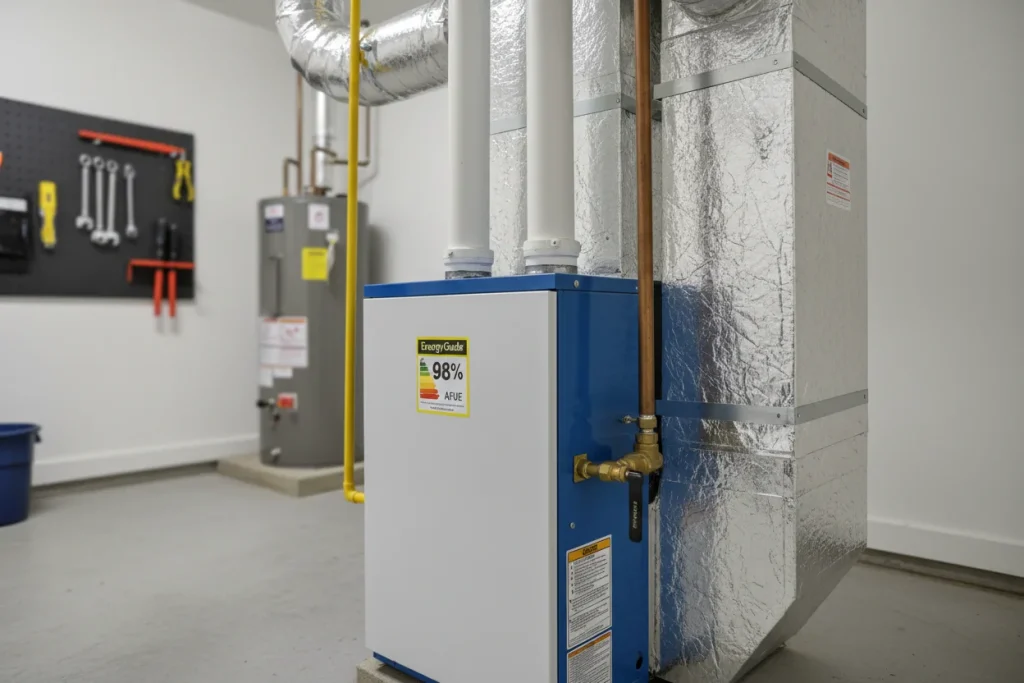
Gas furnace efficiency is measured by AFUE (Annual Fuel Utilization Efficiency), which indicates the percentage of the gas your furnace burns that actually becomes heat for your home. For Houston, a furnace rated 80-90% AFUE handles our mild winters cost-effectively, while 90%+ AFUE models make sense for homeowners wanting maximum efficiency or planning to stay long-term.
Here's what those numbers mean in practice. An 80% AFUE furnace converts 80 cents of every dollar spent on gas into heat, with the remaining 20 cents lost through exhaust. A 96% AFUE furnace captures nearly all that energy. Since Houston's heating season runs roughly December through February with sporadic cold days outside that window, the annual savings gap is smaller here than in cities with five-month winters.
The efficiency tiers break down like this for Houston:
- 80% AFUE (Standard): Natural draft or induced draft venting. Lower upfront cost, reliable performance. Works well for Houston's limited heating demand.
- 90-95% AFUE (High efficiency): Condensing technology that extracts additional heat from exhaust gases. Vents through PVC pipe. Good balance for homeowners planning to stay five-plus years.
- 96-98% AFUE (Ultra-high efficiency): Maximum energy extraction. Strongest financial case in colder climates, but worthwhile in Houston for homeowners prioritizing efficiency across all systems.
Higher-efficiency condensing furnaces produce acidic condensate that needs a drain line. Your installer needs to plan for condensate routing, which can affect placement options in some Houston homes, especially older properties.
| AFUE Rating | Type | Best Houston Application |
| 80% | Standard | Budget-focused, shorter ownership horizon |
| 90-95% | High efficiency (condensing) | Most Houston homeowners, balanced value |
| 96-98% | Ultra-high efficiency | Long-term ownership, maximum efficiency priority |
What Happens During a Gas Furnace Installation in Houston?
A typical gas furnace installation in a Houston home takes one day for a straightforward replacement and up to two days if ductwork modifications or gas line work are needed. The process includes removing your old equipment, installing and connecting the new furnace, testing all safety systems, and verifying performance before the crew leaves.
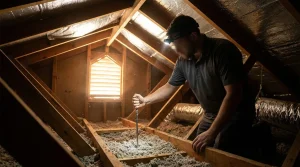
Here's what the process looks like. Before installation day, your contractor should evaluate your existing ductwork, insulation levels, ceiling heights, window orientation, and airflow distribution to determine the right furnace size. This evaluation drives the recommendation, not a quick glance and a square-footage estimate.
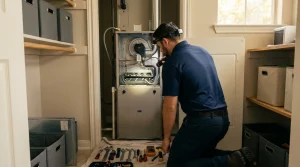
On installation day, the crew shuts off gas and electrical connections, removes your old furnace, positions and connects the new unit to your gas supply, electrical system, and ductwork. If modifications are needed to ensure proper airflow, that work occurs during this phase.
After physical installation, your technician should:
- Test gas connections for leaks
- Verify ignition sequence and burner operation
- Measure airflow at supply and return registers
- Calibrate the thermostat
- Run the system through a complete heating cycle
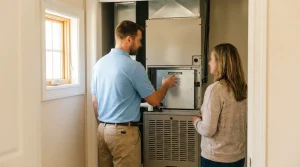
- Walk you through the operation and basic care
A furnace that's connected and running isn't the same as one that's verified to meet its rated efficiency and safety specifications.
| Installation Phase | What Happens | Typical Duration |
| Preparation and old unit removal | Disconnect, remove, and dispose of the existing furnace | 1-2 hours |
| New furnace installation | Position, mount, connect gas, electrical, and ductwork | 3-5 hours |
| Testing and verification | Leak checks, ignition, airflow, thermostat calibration | 1-2 hours |
| Walkthrough and cleanup | Homeowner orientation, site cleanup, paperwork | 30-60 minutes |
Why Proper Sizing and Installation Quality Matter for Your Furnace

An oversized gas furnace is one of the most common problems in Houston homes. Because our heating season is short, contractors sometimes default to larger units "just in case," but oversizing causes short-cycling, uneven temperatures, and wasted energy. Proper sizing based on your home's actual characteristics is the foundation of a furnace that performs well and lasts.
Oversizing sounds harmless, but in practice, an oversized furnace blasts hot air, hits the thermostat target quickly, then shuts off and repeats minutes later. Each startup wastes energy, and the rapid cycling means heat doesn't distribute evenly. Rooms near the furnace overheat while rooms at the end of duct runs stay cool.
Proper sizing requires evaluating insulation levels, ductwork condition, ceiling heights, window orientation, and airflow distribution. In Houston, this evaluation also accounts for our hvac system working primarily in cooling mode. Your furnace and AC share the same ductwork, so the furnace size needs to complement the cooling system's airflow requirements.
Beyond sizing, installation quality affects safety and performance:
- Gas line sizing: The supply line must deliver sufficient volume at the required pressure. Undersized lines reduce output and efficiency.
- Venting: Condensing furnaces require PVC venting with a correct slope for condensate drainage. Standard furnaces need properly sized metal flue pipes.
- Ductwork connections: Loose or poorly sealed connections waste heated air and reduce efficiency.
- Electrical connections: Proper wiring ensures the blower, ignition, and safety controls operate correctly.
VeriChill treats every heating system installation as an engineering project, not a swap-and-go. We evaluate your complete heating and cooling needs, size the furnace to match your requirements, and verify performance before the job is complete. Every installation includes a 10-year parts and compressor warranty, and we handle registration within 90 days.
Key Takeaways
- Gas furnaces deliver fast, reliable heat that performs consistently during Houston's unpredictable cold snaps, regardless of outdoor temperature.
- AFUE ratings measure furnace efficiency; 80% is standard, 90%+ is high efficiency. Houston's mild winters mean the payback period for ultra-high efficiency is longer than in colder climates.
- A typical Houston furnace installation takes one day for a straightforward replacement, with proper evaluation completed before installation day.
- Proper sizing prevents the two biggest problems: an oversized furnace that short-cycles and wastes energy, or an undersized unit that can't keep up during hard freezes.
- Installation quality determines real-world performance. Post-installation testing of gas connections, airflow, and safety systems is non-negotiable.
- Heat pumps are a viable alternative for many Houston homes, but gas furnaces remain the preferred choice for homeowners who want maximum heating output on the coldest days.
Frequently Asked Questions
How long does a gas furnace last in Houston?
Most gas furnaces last 15 to 20 years. Houston's shorter heating season can extend equipment life since the furnace runs fewer total hours annually.
Is a gas furnace or a heat pump better for Houston?
Both work well. Gas furnaces deliver stronger heat during hard freezes, while heat pumps offer year-round heating and cooling efficiency. Your best option depends on infrastructure and comfort priorities.
What size furnace do I need for my Houston home?
Sizing depends on square footage, insulation, ductwork, ceiling heights, and window orientation. A professional evaluation determines the right capacity rather than generic sizing charts.
Do I need a high-efficiency furnace in Houston?
The savings gap between standard and high-efficiency furnaces is smaller here than in colder regions. A 90%+ AFUE model is solid if you plan to stay five or more years.
How much does gas furnace installation cost in Houston?
Costs vary based on furnace size, efficiency, ductwork condition, and complexity. Contact VeriChill for a detailed estimate based on your home.
Can I install a gas furnace in a home that's all-electric?
Yes, but it requires adding a gas line, increasing the scope and cost. Your installer can evaluate whether gas conversion or a heat pump makes more sense.
What maintenance does a gas furnace need?
Regular filter changes, annual inspections, and keeping the area around the furnace clear. Proper installation reduces long-term maintenance needs.
Will a new furnace work with my existing ductwork?
In most cases, yes. Your installer should evaluate the ductwork during the consultation to identify any modifications needed to ensure proper airflow.
What's the difference between single-stage and two-stage furnaces?
Single-stage runs at full capacity every time. A two-stage can run at a lower setting for mild conditions and at full capacity during cold snaps, providing more even heat and quieter operation.
Does VeriChill install gas furnaces throughout Houston?
Yes. We serve Greater Houston, including Cypress, Katy, Spring, Sugar Land, and Tomball. Every installation includes evaluation and performance verification.
Conclusion
Gas furnaces are a proven heating solution for Houston homes, delivering the fast warmth our short winters demand. The key is choosing the right efficiency level, getting the sizing right, and working with an installer who treats the project with precision. If you're considering a gas furnace, contact VeriChill for a consultation. We'll evaluate your home, walk you through your options, and design a heating installation that keeps you comfortable without surprises.