Proper AC installation prevents most of the problems Houston homeowners blame on their equipment. A correctly installed system is sized to the house after an in-home evaluation, paired with a matched indoor coil, connected with clean and tight refrigerant lines, evacuated and charged to the manufacturer's specification, and set up with sealed duct connections, good airflow and reliable condensate drainage. Skip any of those steps and even a high efficiency unit can short cycle, leave rooms humid, leak refrigerant or wear out early. Installation quality decides how the equipment performs for its whole life.
Here is a scenario that plays out across Houston every summer. Two neighbors on the same street in Katy buy the same brand and model of air conditioner in the same year. One house stays cool and dry through August. The other has sticky air, a bedroom that never cools down and a service call before the second summer is over.
The difference is rarely the equipment. It is what happened on installation day. This guide walks through what a proper AC installation includes, why each step matters in our climate and how to tell whether a system in your home was put in the right way.
Why Professional Installation Matters as Much as the Equipment
An air conditioner leaves the factory as a set of parts. Whether those parts become a reliable air conditioning system depends on the contractor who sizes, connects, charges and tests it in your home.
The same unit, two different results
Efficiency ratings are measured under controlled test conditions with correct charge, correct airflow and matched components. In a real house, a system only gets close to that rating when the installation recreates those conditions. A unit that is undercharged, starved for airflow or mismatched with its indoor coil can deliver noticeably less cooling and use more electricity than its label suggests. Our guide to getting the most from your AC over its lifespan shows how much of long-term performance depends on that starting point.
Houston raises the stakes
Our long cooling season and heavy humidity give an air conditioner two jobs at once: lowering the temperature and pulling moisture out of the air. A system here runs for most of the year, often for long stretches on summer afternoons. Small installation mistakes that might go unnoticed in a mild climate show up quickly in Houston as clammy rooms, high bills and early failures.
Problems that trace back to install day
Many common service calls start with an installation shortcut. Refrigerant leaks at poorly made joints, frozen coils from low airflow, water damage from a clogged or unprotected drain line and compressors that fail early from moisture in the system are all examples. A careful installation does not make a system immune to problems, but it removes the ones that never needed to happen.
Sizing Starts With the House, Not the Old Unit
The most important installation decision is made before any equipment arrives. Choosing the right capacity sets the ceiling for everything that follows.
What an in-home evaluation looks at
A proper sizing process looks at the house itself: insulation levels, the condition and layout of the ductwork, ceiling heights, window orientation and how air is distributed from room to room. A west-facing wall of windows in Cypress puts a far different load on a system than a shaded brick home in Sugar Land of the same square footage. Copying the size off the old unit's label repeats whatever mistake was made the last time.
Why oversizing causes humidity trouble
Oversizing is one of the most common HVAC problems in Houston homes. An oversized air conditioner cools the air quickly, satisfies the thermostat and shuts off before the coil has run long enough to pull out much moisture. The house reaches the set temperature but feels damp, and the system cycles on and off all day. Our article on the problems an oversized AC causes covers the warning signs in more detail.
Undersizing has its own cost
A system that is too small runs almost constantly on the hottest days and still falls behind in the late afternoon. Constant running adds wear and raises bills. The goal is a system matched to the real cooling needs of the house, with equipment that can also run at lower output for long, steady cycles. That is one reason two-stage systems are the sweet spot for most Houston homes.
The Installation Steps That Prevent Future Problems
Once the right equipment is chosen, the installation itself decides whether it performs as designed. Each step below targets a specific problem.
Matched indoor and outdoor equipment
The outdoor condenser and the indoor unit's evaporator coil are designed to work as a pair. Installing a new condenser on an old or mismatched coil can reduce efficiency, cause charging problems and shorten the life of the compressor. Good ac unit installation services pair components that are rated to work together.
Clean, tight refrigerant lines
The copper line set carries refrigerant between the indoor and outdoor units. Joints should be made carefully and kept clean inside, and many installers flow nitrogen through the lines while brazing to keep scale from forming in the pipe. Lines should be supported, insulated where required and protected where they pass through walls. A small leak at a rushed joint can slowly drain the charge for months before anyone notices.
Evacuation and charge
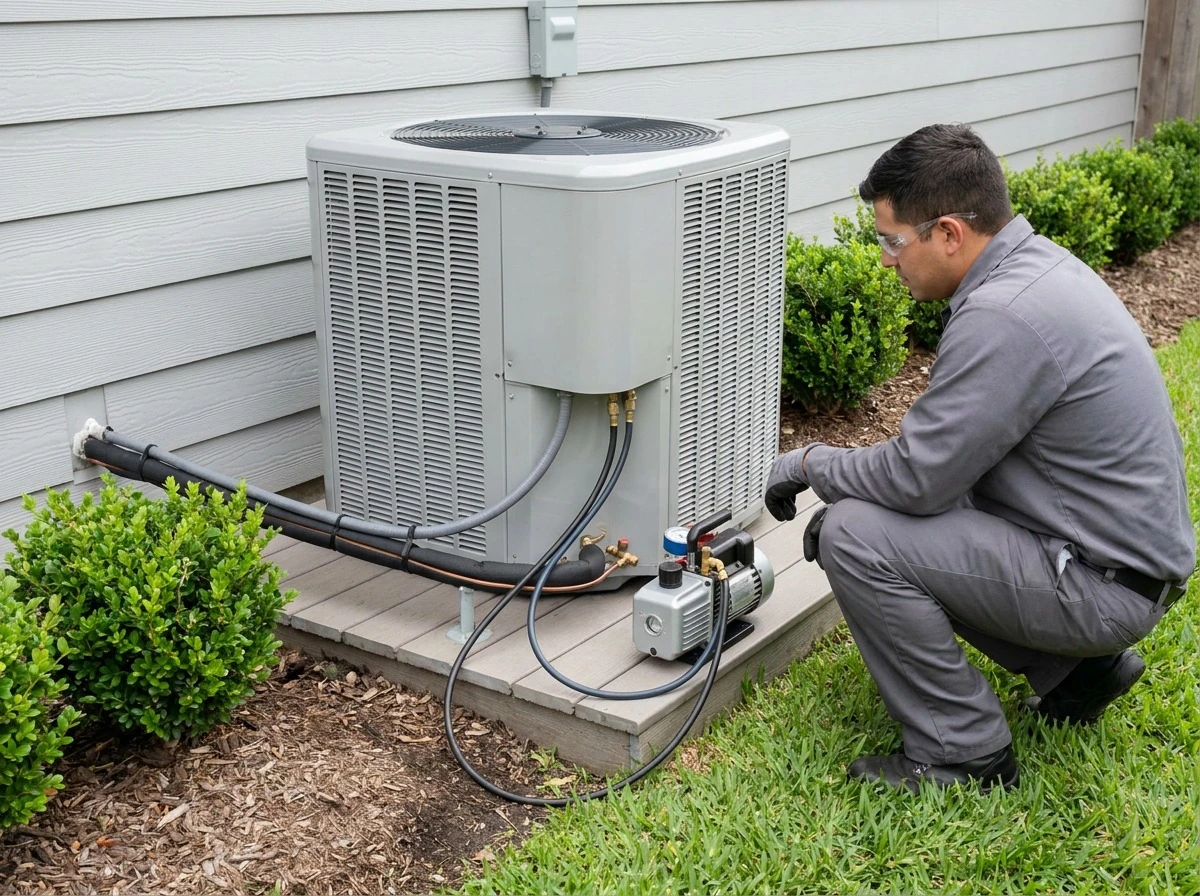
Before refrigerant is released into a new system, the lines and indoor coil are pulled into a deep vacuum to remove air and moisture. Moisture left in a system can react with refrigerant and oil over time and damage the compressor. After evacuation, the charge is set and verified to the manufacturer's specification, not guessed from how cold the lines feel.
Airflow and duct connections
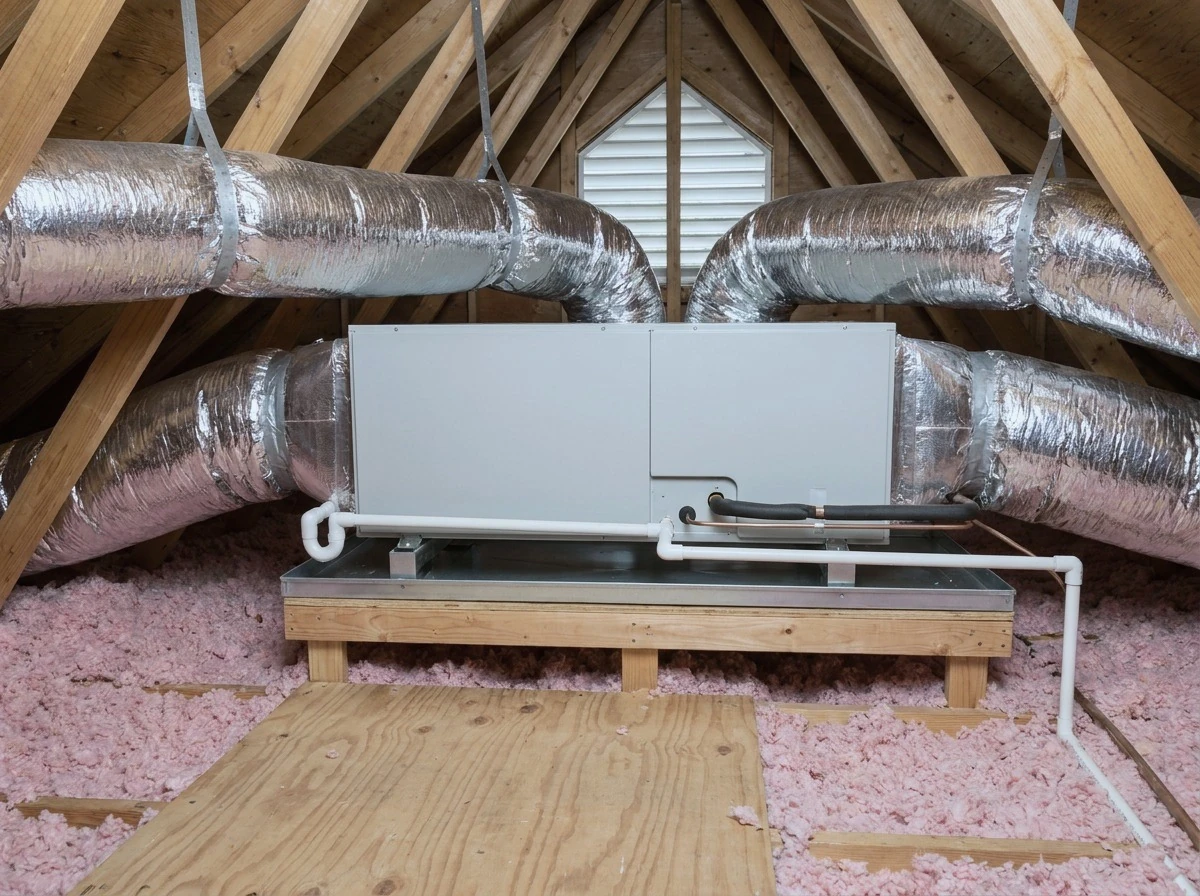
An air conditioner needs the right amount of air moving across the indoor coil. Undersized returns, crushed flex duct or leaky connections all reduce airflow, which can freeze the coil and lower capacity. A careful installer checks the duct connections at the air handler, seals them and confirms that airflow suits the equipment, which protects both comfort and energy efficiency.
Condensate drainage in a humid climate
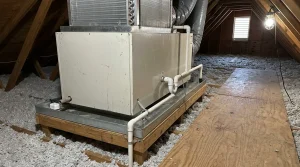
In Houston, an air conditioner removes a large amount of water from the air every day of the cooling season. That water needs a clear path out, and proper drainage is a must. A properly installed drain line has the right slope and a trap where required, and attic systems typically include a secondary drain pan and a safety switch that shuts the system off before an overflow damages the ceiling.
Outdoor unit placement and electrical
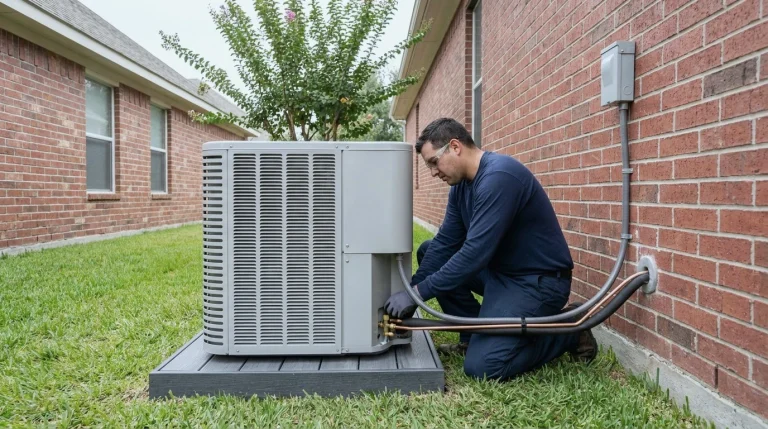
The condenser should sit level on a solid pad, with open space around it so it can move air freely. Shrubs, fences and walls placed too close make the unit work harder. Electrical connections, including the outdoor disconnect, should be sized and installed to code. Where the yard allows, a spot out of harsh afternoon direct sunlight is a small bonus, but open airflow matters more.
Inspection and testing before you sign off
A professional AC installation ends with a final inspection and testing, sometimes called commissioning. The crew should run the system, check temperatures and airflow, confirm the drain works and make sure the thermostat is set up, so you know the new HVAC system works as designed before they leave.
Installation steps at a glance
The table below sums up how each step connects to a problem homeowners commonly see later.
| Installation step | What a careful installer does | Problem it helps prevent |
|---|---|---|
| Sizing | Evaluates insulation, ducts, ceilings, windows and airflow | Short cycling, humidity, constant running |
| Equipment matching | Pairs a rated condenser and indoor coil | Lost efficiency, charging trouble |
| Line set | Makes clean, tight, supported joints | Slow refrigerant leaks |
| Evacuation | Pulls a deep vacuum before charging | Moisture damage to the compressor |
| Charge | Sets refrigerant to the manufacturer's specification | Poor cooling, coil freezing |
| Airflow and ducts | Seals connections and checks airflow | Frozen coils, weak rooms |
| Drainage | Slopes the drain and adds overflow protection | Water damage, mold |
| Placement | Levels the pad and keeps clearances open | Overheating, extra wear |
Refrigerant Rules Every Installer Must Follow
Refrigerant handling is regulated, and the rules are part of what separates a proper installation from a risky one.
Certified refrigerant handling
According to the EPA's Section 608 certification rules, regulations under Section 608 of the Clean Air Act require technicians who maintain, service, repair or dispose of equipment that could release ozone-depleting refrigerants to be certified. When you hire for any work on a refrigerant circuit, it is reasonable to ask how the crew handles and recovers refrigerant.
New A2L refrigerants
New residential systems installed in 2026 use refrigerants such as R-454B and R-32 in place of R-410A. Both are classified A2L, meaning mildly flammable, and they call for equipment, tools and installation practices designed for them. That is one more reason to choose an installer who works with current equipment rather than one who treats a new system like the last one.
Never mix or substitute refrigerants
A system should only ever be charged with the refrigerant it was designed for. The EPA's homeowner guidance warns that refrigerants with "22a" or "R-22a" in their names are highly flammable propane-based products that are not approved for use in existing air-conditioning systems. A proper installation and every service visit afterward should use only approved refrigerant.
How Our Team Approaches an AC Installation
Our team focuses on new system installations and full replacements for homes across the Houston area. The goal is a system that is right for the house from the first day, not one that needs fixes after its first summer.
It starts with an in-home evaluation
Every job starts with an in-home evaluation to ensure the system fits the house. We look at your insulation, ductwork, ceiling heights, window orientation and airflow distribution so the equipment we recommend, whether a straight air conditioner or a heat pump, fits the way your home actually gains heat and moisture. If the furnace or air handler is due too, we can plan a combined heating and cooling systems installation so the indoor and outdoor equipment match.
Warranty paperwork handled for you
VeriChill installations come with a warranty of 10 years parts and compressor, with VeriChill handling the 90-day registration. Registration is an easy step to forget after a new install, so we take it off your list.
Financing and service areas
For qualified homeowners, financing is available through Wells Fargo, Synchrony Bank and Goodleap. Texas HVAC licensing is held at the company level, and we serve Houston, Cypress, Katy, Spring, Sugar Land and Tomball. If you are comparing companies, choosing a residential hvac installer who explains each of the steps above is a good sign.
Key Takeaways
- Installation quality decides how close a system gets to its rated efficiency and how long it lasts.
- Correct sizing starts with an in-home evaluation of insulation, ducts, ceiling heights, windows and airflow, not the old unit's label.
- Oversized systems short cycle and leave Houston homes humid, while undersized systems run constantly.
- Matched equipment, clean refrigerant lines, a deep vacuum and a verified charge protect the compressor.
- Sealed duct connections, correct airflow and protected condensate drainage prevent frozen coils and water damage.
- Refrigerant work is regulated, and a system should only ever be charged with the refrigerant it was designed for.
Frequently Asked Questions
How do I know if my AC was installed correctly?
Look at how the system behaves. A well-installed air conditioner runs in steady cycles, keeps rooms within a few degrees of each other and leaves the air feeling dry, not sticky. Outside, the condenser should sit level with open space around it, and the refrigerant lines should be insulated and neatly supported. Frequent short cycles, sweating ducts, a coil that freezes or a drain pan that keeps filling are signs that something in the installation needs a closer look.
Can a bad installation cause high humidity in my home?
Yes. Humidity problems are among the most common results of a poor installation in Houston. An oversized system shuts off before it removes enough moisture, and low airflow or an incorrect refrigerant charge reduces how well the coil pulls water from the air. Leaky return ducts in a hot attic can also draw in humid air. When the temperature looks right but the house feels clammy, the sizing and setup deserve a careful look before blaming the equipment.
Why does the outdoor unit need to be level and clear?
A condenser that sits level on a solid pad lets the compressor and fan run as designed and keeps oil and refrigerant moving properly. Open space around the unit lets it pull in air and push out heat freely. When shrubs, fences or walls crowd the cabinet, hot discharge air can circulate back into the coil, which makes the system work harder, raises energy use and adds wear on Houston's hottest afternoons.
Does a new AC need new ductwork?
Not always. Many Houston homes have ductwork that can be reused after it is inspected, repaired and sealed at the connections. Ducts that are crushed, badly undersized for the new equipment or leaking heavily in the attic can limit even a well-chosen system, though. An in-home evaluation should include a look at the duct layout and condition so you know whether repairs, changes or a partial replacement belong in the project.
Is a bigger AC better for Houston heat?
No. A bigger air conditioner is not better in Houston's climate. Oversized equipment cools the air quickly and shuts off before it removes enough humidity, leaving the house cool but damp and the system cycling on and off. The right choice is a system sized to the actual heat and moisture load of your home, ideally with two-stage or variable-speed operation so it can run long, steady cycles that keep rooms both cool and dry.
Conclusion
A new air conditioner is only as good as the work that goes into installing it. Sizing based on the house, matched equipment, clean refrigerant lines, a careful evacuation and charge, sealed ducts and reliable drainage turn a box of parts into a system that keeps your home cool and dry for years.
In Houston, those details matter more than in most places, because the equipment runs hard through a long, humid cooling season. Problems that start on installation day tend to show up as higher bills, sticky rooms and service calls long before a system should need them.
If you are planning a new system, VeriChill can walk you through every step before work begins. Call VeriChill at 281-559-6995 or contact our team to schedule an in-home evaluation.