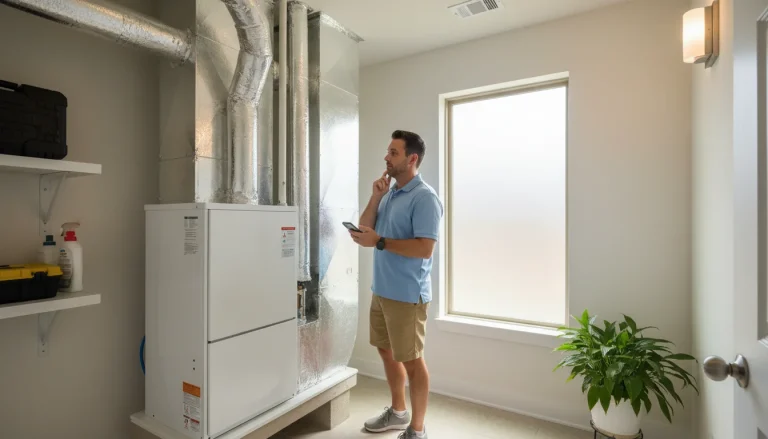
If your heating system is 15 years old or older, struggles to keep rooms warm during cold fronts, or needs frequent repairs, it's probably time to consider a new heating installation. Houston's mild winters can mask declining performance until a hard freeze catches you off guard.
Houston homeowners have a unique relationship with their heating systems. You might only run yours for a few months each year, which makes it easy to ignore warning signs. But when a January cold front drops temperatures into the 20s overnight, that aging furnace or heat pump gets tested in ways it hasn't been all year. The question isn't whether Houston needs heating. It's whether your current system can still deliver reliable warmth when it matters most.
This guide walks you through the real indicators that your heating system has reached the end of its useful life, the Houston-specific factors that affect that decision, and when replacement genuinely makes more sense than another round of repairs.
How Long Should a Heating System Last in Houston?
Most heating systems last 15 to 25 years with proper care, but Houston's climate creates unique wear patterns. Your system's cooling workload, humidity exposure, and seasonal dormancy all affect its heating lifespan differently than in colder regions.
Here's the thing about Houston: your HVAC system works incredibly hard to cool, and that shared stress affects the heating components, too. A furnace paired with an AC unit shares the same blower motor, ductwork, and thermostat controls. Years of heavy cooling use take a cumulative toll on those shared parts.
Heat pumps face a different challenge. Because they handle both heating and cooling, they run nearly year-round in Greater Houston. That constant operation means heat pumps typically reach the end of their useful life closer to the 15-year mark, while gas furnaces that only fire up a few months per year may push past 20.
Your system's annual fuel utilization efficiency (AFUE) rating also degrades over time. A furnace that started at 80% AFUE when it was new might operate closer to 65% or 70% after 15 years of service. That lost efficiency shows up directly on your utility bills during heating season.
| Heating System Type | Typical Lifespan | Houston-Specific Considerations |
| Gas Furnace | 15-25 years | Less runtime than colder climates; shared components with AC wear faster |
| Heat Pump | 10-15 years | Year-round operation in Houston accelerates wear |
| Dual Fuel System | 15-20 years | Heat pump handles most Houston heating; furnace backup sees minimal use |
| Electric Furnace | 15-20 years | Higher operating costs in Texas; limited cold-weather demand |
What Are the Warning Signs You Need a New Heating System?
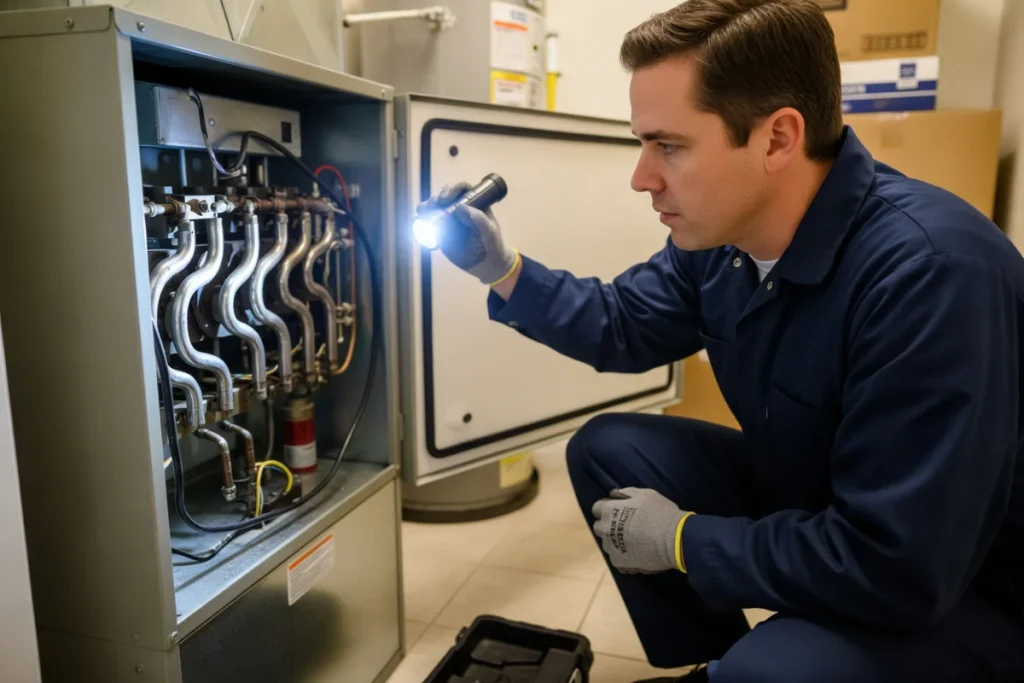
Watch for rising energy bills during winter months, uneven temperatures between rooms, strange noises from the unit, frequent repair calls, and visible rust or cracks on the furnace. Any combination of these signal points toward replacement rather than repair.
Some warning signs are obvious. Others sneak up on you. Houston homeowners often miss early indicators because heating season is short, and we're quick to blame a "weird cold snap" rather than a failing system. Here's what to actually look for.
Rising Winter Energy Bills
If your heating costs keep climbing even though your usage habits haven't changed, your system is likely losing efficiency. Compare your January and February bills year-over-year. A consistent upward trend, especially one that jumps significantly, suggests your equipment is working harder to produce the same amount of warmth.
Uneven Heating Across Rooms
Some rooms staying noticeably colder than others during heating mode isn't just annoying. It often signals that your system can no longer distribute heated air effectively. This could stem from a failing blower motor, deteriorating ductwork connections, or a system that was never properly sized for your home's heating load.
Frequent Repairs and Breakdowns
The general rule among HVAC professionals? If a single repair costs more than half of what a new heating unit installation would run, replacement makes better financial sense. And if you're calling for repairs every heating season, those costs add up fast.
Unusual Noises or Smells
Banging, rattling, or squealing from your furnace signals mechanical problems. A burning smell when the system first kicks on is somewhat normal after months of dormancy, but persistent odors indicate potential issues with the heat exchanger or electrical components. Cracked heat exchangers are a safety concern that typically warrants immediate replacement.
| Warning Sign | What It Could Mean | Repair or Replace? |
| Energy bills rising 20%+ year over year | Declining system efficiency | Likely to be replaced if the system is 12+ years old |
| Rooms with 3-5 degree temperature differences | Blower issues, ductwork problems, or an undersized system | Evaluate; may need a full system assessment |
| Two or more repair calls per heating season | Components failing in sequence | Replace; cascade failures indicate end of life |
| Visible rust on the furnace cabinet or flue | Moisture damage, condensation issues | Replace; structural integrity compromised |
| Yellow or flickering pilot light (gas furnace) | Combustion problems, possible carbon monoxide risk | Immediate professional inspection required |
When Does Repair Make More Sense Than Replacement?
Repair is usually the right call when your system is under 10 years old, the issue is isolated to a single component, and the repair costs less than half the price of a new system. Houston's shorter heating season also means some issues are less urgent here than in colder markets.
Not every problem requires a brand-new system. Houston's mild winters give you more breathing room than homeowners in, say, Chicago or Minneapolis. If your furnace hiccups during a brief cold snap but otherwise runs fine, a targeted repair might be all you need.
Here's a practical framework for the repair-versus-replace decision:
- System age under 10 years: Almost always worth repairing unless the issue is a cracked heat exchanger or a refrigerant-related problem on a heat pump
- Single component failure: A bad ignitor, a worn capacitor, or a faulty thermostat are straightforward fixes that don't signal broader system decline
- Warranty still active: If your system carries an active parts warranty, repairs become significantly more cost-effective
- Overall performance is still strong: If rooms heat evenly, energy bills are stable, and this is the first issue in years, repair makes sense
Where replacement starts winning the math is when repairs become recurring. Two or three service calls in a single heating season, combined with a system past the 15-year mark, usually mean components are failing in sequence. That pattern rarely reverses.
For Houston homeowners considering an hvac replacement, the timing works in your favor. Scheduling a new residential heating installation during the shoulder seasons, like fall or early spring, often means shorter wait times and more scheduling flexibility.
| Factor | Lean Toward Repair | Lean Toward Replacement |
| System Age | Under 10 years | Over 15 years |
| Repair Frequency | First issue in 2+ years | Multiple calls per season |
| Repair Cost | Less than half of the new system | More than half of the new system |
| Comfort Level | Rooms heat evenly, no complaints | Uneven temps, drafts, and humidity issues |
| Efficiency Rating | AFUE 80%+ and performing near rated | AFUE below 80% or significantly degraded |
What Should Houston Homeowners Consider Before Replacing?
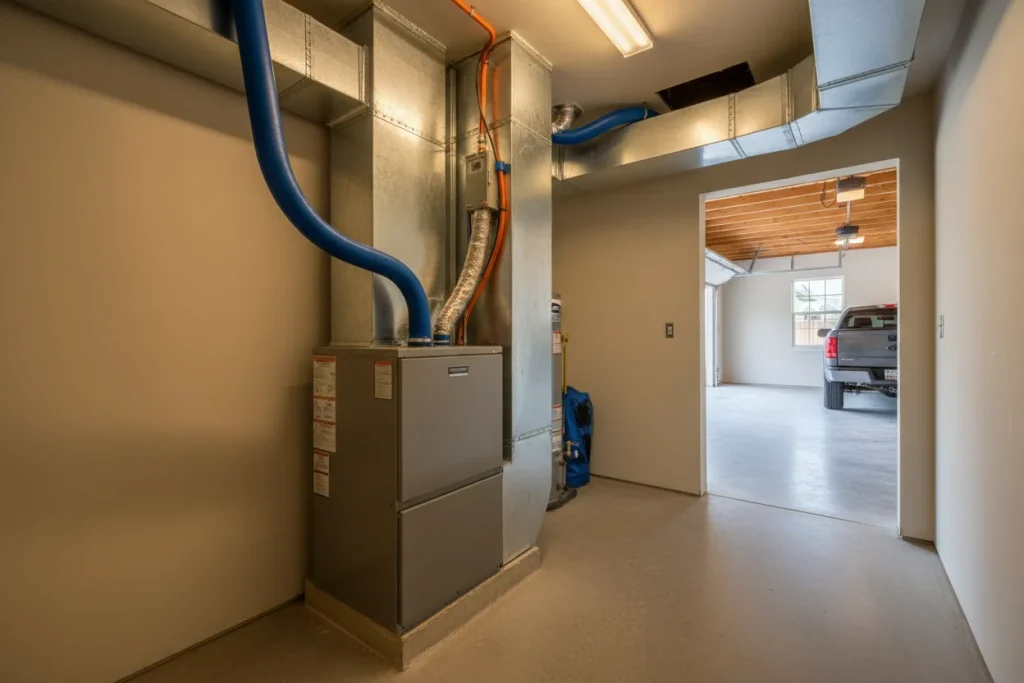
Before committing to a new heating system, get a professional evaluation of your home's actual heating needs. Houston's climate means your heating system works differently than in colder regions, and the right replacement depends on your home's size, insulation, ductwork condition, and how your household uses heat.
Jumping straight to equipment shopping without understanding what your home actually needs is one of the most common mistakes Houston homeowners make. A system that's too large will short-cycle, waste energy, and fail to manage humidity. One that's too small won't keep up during those occasional hard freezes.
A proper evaluation should cover your home's insulation quality, window orientation, ceiling heights, the condition of existing ductwork, and airflow distribution. These factors determine the right system size and type for your specific situation. This is especially important for homes built in Houston's 1990s and 2000s building boom, where original equipment may have been generically sized rather than matched to the home's actual requirements.
Houston homeowners should also consider whether a heat pump might be a smarter choice than a traditional gas furnace. With winters that rarely dip below freezing for extended periods, heat pumps can handle the vast majority of Houston's heating and cooling installation needs with a single system, delivering both warmth and efficient cooling without maintaining separate heating and cooling equipment.
The U.S. Department of Energy's consumer guide to heating and cooling recommends improving your home's envelope, meaning insulation and air sealing, before upgrading equipment. This can reduce the size of the system you need and lower long-term operating costs.
Key Takeaways
- Houston's mild winters can mask declining heating performance until a hard freeze reveals how far behind your system has fallen.
- Most heating systems last 15 to 25 years, but heat pumps in Houston's year-round climate may reach the end of life closer to 15.
- Rising energy bills, uneven temperatures, and frequent repairs are the clearest signals that replacement makes more sense than another fix.
- The repair-versus-replace math is straightforward: if repair costs exceed half the price of new equipment and your system is over 15 years old, replacement wins.
- Houston homeowners have a timing advantage for heating installation because shoulder seasons offer better scheduling flexibility.
- A professional evaluation is the only way to know for certain whether your specific system needs replacement or just a targeted repair.
Frequently Asked Questions
How long does a heating system typically last in Houston?
Most gas furnaces last 15 to 25 years, while heat pumps average 10 to 15 years. Houston's lighter heating demand can extend furnace life, but shared components with your AC system still experience wear from heavy cooling seasons.
Is it worth replacing a heating system in Houston when winters are so mild?
Yes. Even with mild winters, an unreliable heating system leaves your home vulnerable during cold fronts and freezes. A new system also improves overall HVAC efficiency and integrates better with your cooling system for year-round comfort.
What's the most common reason Houston homeowners replace their heating system?
Frequent repairs combined with rising energy bills are the top drivers. When homeowners spend more on fixing an aging system than they'd invest in new equipment, the math tips decisively toward replacement.
How do I know if my furnace is losing efficiency?
Compare your winter energy bills year over year. If costs are climbing without changes in usage, your furnace's AFUE has likely degraded. A professional evaluation can measure actual performance against the system's rated efficiency.
Can a heating system be too big for my Houston home?
Absolutely. An oversized furnace short-cycles, turning on and off rapidly without completing a full heating cycle. This wastes energy, creates uneven temperatures, and puts unnecessary stress on components, shortening the system's life.
Should I replace my heating system at the same time as my AC?
In most cases, yes. Your heating and cooling systems share components like the blower motor and ductwork. Replacing both ensures everything is matched, properly sized, and operating at peak efficiency together.
What's the difference between AFUE and SEER ratings?
AFUE measures heating efficiency, specifically how much fuel your furnace converts into usable heat. SEER measures cooling efficiency for air conditioners and heat pumps. Both ratings help you compare equipment, but they apply to different functions.
Do heat pumps work well for heating in Houston?
Heat pumps are an excellent fit for Houston's climate. They handle mild winter temperatures efficiently and double as your cooling system. Most Houston winters rarely challenge a heat pump's heating capacity.
What should a professional heating evaluation include?
A thorough evaluation covers your home's insulation, window orientation, ceiling heights, existing ductwork condition, and airflow distribution. The goal is understanding your home's actual heating requirements rather than relying on generic sizing rules.
How long does a heating system replacement take in Houston?
Most residential heating installations are completed in one day. More complex projects involving ductwork modifications or system type changes may take two days. Your installer should provide a clear timeline before work begins.
Does VeriChill offer financing for heating system replacement?
Yes. VeriChill works with financing partners including Wells Fargo, Synchrony Bank, and Goodleap to help Houston homeowners manage the investment in a new heating system.
Conclusion
Figuring out whether your Houston home truly needs a new heating system comes down to age, performance, repair history, and how well your current setup handles those occasional cold snaps. The signs aren't always dramatic, but they're consistent: climbing bills, uneven warmth, and mounting repair costs all point in the same direction.
If you're seeing those patterns, or if your system has crossed the 15-year mark and you want honest answers about what's next, VeriChill's team can evaluate your home and walk you through your options. No pressure, no upselling. Just a clear picture of what your home actually needs. Call 281-559-6995 to schedule a consultation.